ENGINE ASSEMBLY INSTALLATION

-
INSTALL ENGINE HANGERS
-
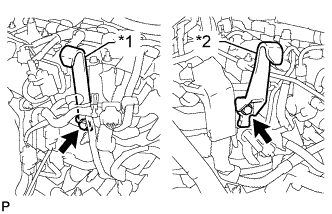
Text in Illustration *1 No. 1 Engine Hanger *2 No. 2 Engine Hanger Install 2 engine hangers with 2 bolts as shown in the illustration.
- Torque:
- 40 N*m { 408 kgf*cm, 30 ft.*lbf }
Tech Tips
Part No. No. 1 engine hanger 12281-26040 No. 2 engine hanger 12282-26010 Bolt 90105-W0042
-
Insert the claw of the No. 1 engine hanger into the hole of the cylinder head sub-assembly.
-
Fit the fork part of the No. 2 engine hanger onto the rib of the cylinder head sub-assembly.
-
-
REMOVE ENGINE FROM ENGINE STAND
-
Install a sling device and chain block to the engine and hang the engine.
-
Remove the engine from the engine stand.
-
-
INSTALL FLYWHEEL SUB-ASSEMBLY (for Manual Transaxle)
-
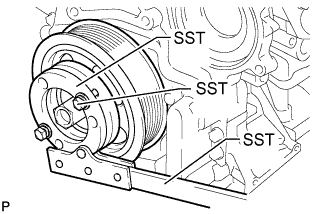
Using SST, hold the crankshaft pulley.
- SST
- 09213-58014 ( 91551-80840 )
- 09330-00021
-
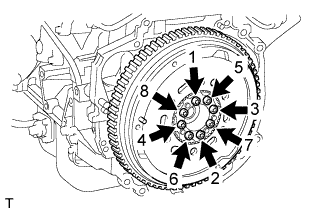
Using a T55 "TORX" socket wrench, install the flywheel sub-assembly with 8 new bolts and uniformly tighten the bolts in several steps in the sequence shown in the illustration.
- Torque:
- 71 N*m { 720 kgf*cm, 52 ft.*lbf }
Note
-
Do not reuse the flywheel installation bolts.
-
Be sure to check the tightening torque within 5 minutes after tightening.
-
Do not impact or damage the flywheel installation bolts. Be sure to handle them carefully.
-
Make sure there is no oil on the bolts.
Tech Tips
Make sure that the seating surface of the flywheel installation bolts and installation surfaces of the crankshaft and flywheel sub-assembly are free from oil and foreign matter.
-
-
INSTALL DRIVE PLATE AND RING GEAR SUB-ASSEMBLY (for Automatic Transaxle)
-
Using SST hold the crankshaft pulley.
- SST
- 09213-58014 ( 91551-80840 )
- 09330-00021
-
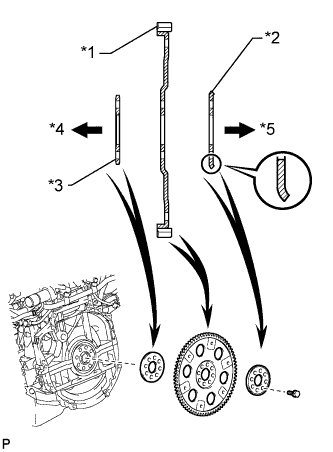
Text in Illustration *1 Drive Plate and Ring Gear Sub-assembly *2 Rear Drive Plate Spacer *3 Front Drive Plate Spacer
(Reversible)
*4 Engine Side *5 Transaxle Side Install the front drive plate spacer, drive plate and ring gear sub-assembly, and rear drive plate spacer to the crankshaft.
Tech Tips
-
The front drive plate spacer is reversible.
-
As the rear drive plate spacer and drive plate and ring gear sub-assembly are not reversible, be sure to install them in the direction shown in the illustration.
-
-
Apply adhesive to 2 or 3 threads at the end of each bolt.
Adhesive Toyota Genuine Adhesive 1324, Three Bond 1324 or equivalent -
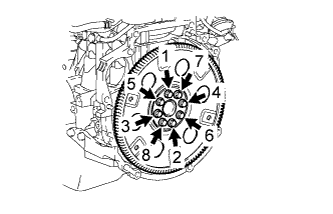
Uniformly install and tighten the 8 bolts in several steps in the sequence shown in the illustration.
- Torque:
- 92 N*m { 938 kgf*cm, 68 ft.*lbf }
-
-
INSTALL CLUTCH DISC ASSEMBLY (for Manual Transaxle)
-
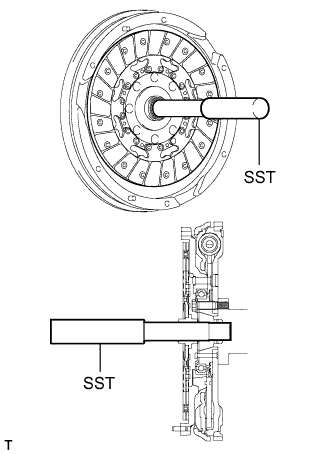
Insert SST into the clutch disc, and then insert them into the flywheel.
- SST
- 09301-00310
Note
Insert the clutch disc with the disc facing in the correct direction.
-
-
INSTALL CLUTCH COVER ASSEMBLY (for Manual Transaxle)
-
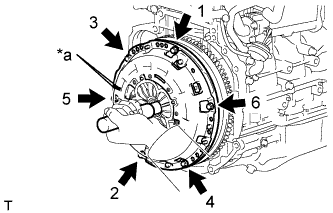
Text in Illustration *a Matchmark Align the matchmark on the clutch cover with the one on the flywheel.
-
Install and tighten the 6 bolts uniformly in the order shown in the illustration, starting with the bolt located near the knock pin on the top.
- Torque:
- 19 N*m { 195 kgf*cm, 14 ft.*lbf }
Note
-
Be sure to uniformly tighten the bolts 180° at a time according to the order in the illustration.
-
Move SST up and down, right and left lightly after checking that the clutch disc assembly is in the center, and then tighten the bolts.
-
-
INSPECT AND ADJUST CLUTCH COVER ASSEMBLY (for Manual Transaxle)
-
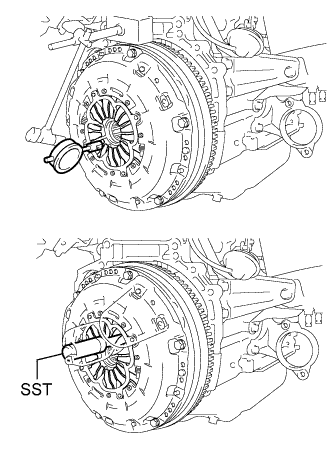
Using a dial indicator with a roller instrument, measure the diaphragm spring tip alignment.
Maximum misalignment 1.3 mm (0.0512 in.) If the misalignment is more than the maximum, using SST, adjust the diaphragm spring tip alignment.
- SST
- 09333-00013
-
-
INSTALL MANUAL TRANSAXLE ASSEMBLY (for Manual Transaxle)
-
INSTALL AUTOMATIC TRANSAXLE ASSEMBLY (for Automatic Transaxle)
-
INSTALL STIFFENER PLATE LH
-
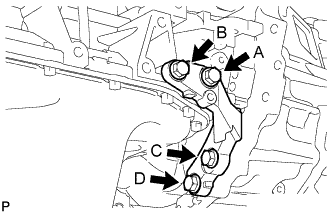
Temporarily install the stiffener plate LH with the 4 bolts.
-
While holding the stiffener plate LH against the transaxle, tighten bolt A, and then tighten bolts B, C and D.
- Torque:
- 46 N*m { 469 kgf*cm, 34 ft.*lbf }
-
-
INSTALL STIFFENER PLATE RH
-
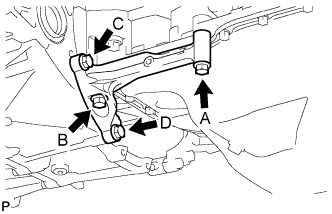
Temporarily install the stiffener plate RH with the 4 bolts.
-
While holding the stiffener plate RH against the transaxle, tighten bolt A, and then tighten bolts B, C and D.
- Torque:
- 46 N*m { 469 kgf*cm, 34 ft.*lbf }
-
-
INSTALL OIL PAN INSULATOR
-
Install the oil pan insulator with the 2 bolts.
- Torque:
- 9.0 N*m { 92 kgf*cm, 80 in.*lbf }
-
-
INSTALL ENGINE MOUNTING INSULATOR RH
Tech Tips
Perform this procedure only when replacement of the engine mounting insulator RH is necessary.
-
Install the engine mounting insulator RH with the 3 bolts.
- Torque:
- 95 N*m { 969 kgf*cm, 70 ft.*lbf }
-
-
INSTALL ENGINE MOUNTING INSULATOR LH
Tech Tips
Perform this procedure only when replacement of the engine mounting insulator LH is necessary.
-
Install the engine mounting insulator LH with the 4 bolts.
- Torque:
- 95 N*m { 969 kgf*cm, 70 ft.*lbf }
-
-
INSTALL ENGINE MOUNTING BRACKET LH
Tech Tips
Perform this procedure only when replacement of the engine mounting bracket LH is necessary.
-
Install the engine mounting bracket LH with the 4 bolts.
- Torque:
- 64 N*m { 653 kgf*cm, 47 ft.*lbf }
-
-
INSTALL REAR ENGINE MOUNTING BRACKET (for Manual Transaxle)
-
Install the rear engine mounting bracket with the 5 bolts.
- Torque:
- 45 N*m { 459 kgf*cm, 33 ft.*lbf }
-
-
INSTALL REAR ENGINE MOUNTING BRACKET (for Automatic Transaxle)
-
Install the rear engine mounting bracket with the 4 bolts.
- Torque:
- 45 N*m { 459 kgf*cm, 33 ft.*lbf }
-
-
INSTALL FRONT ENGINE MOUNTING BRACKET (for Manual Transaxle)
-
Install the front engine mounting bracket with the 3 bolts.
- Torque:
- 64 N*m { 653 kgf*cm, 47 ft.*lbf }
-
-
INSTALL FRONT ENGINE MOUNTING BRACKET (for Automatic Transaxle)
-
Install the front engine mounting bracket with the 4 bolts.
- Torque:
- 64 N*m { 653 kgf*cm, 47 ft.*lbf }
-
-
INSTALL ENGINE WIRE
-
Connect the connectors and attach the clamps, and install the engine wire to the engine with the bracket bolts.
-
-
INSTALL STARTER ASSEMBLY
-
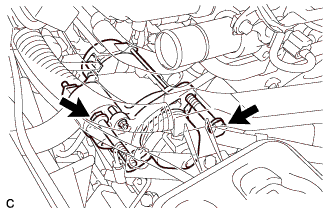
Install the starter assembly with the 2 bolts.
- Torque:
- 64 N*m { 653 kgf*cm, 47 ft.*lbf }
-
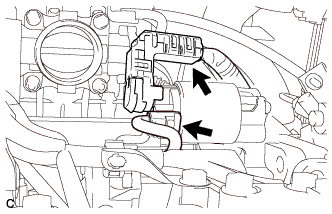
Connect the starter wire with the nut and close the terminal cap.
- Torque:
- 9.8 N*m { 100 kgf*cm, 87 in.*lbf }
-
Connect the starter connector.
-
-
INSTALL NO. 1 AIR TUBE
-
Install the No. 1 air tube with the 2 bolts and tighten the clamp.
- Torque:
- for bolt
- 20 N*m { 204 kgf*cm, 15 ft.*lbf }
- for clamp
- 6.5 N*m { 66 kgf*cm, 58 in.*lbf }
Note
Before installation, remove any oil residue from the inside of the tube and hose.
-
-
INSTALL REAR ENGINE MOUNTING INSULATOR
-
Install the rear engine mounting insulator with the 2 bolts and 2 nuts.
- Torque:
- 95 N*m { 969 kgf*cm, 70 ft.*lbf }
-
-
INSTALL ENGINE WITH TRANSAXLE
-
Place the engine on an engine lifter, and then remove the sling device and chain block from the engine.
Tech Tips
Place the engine on wooden blocks or equivalent so that the engine is level.
-
Using the engine lifter, slowly raise the engine and install it to the vehicle, and then install the intermediate shaft to the pinion.
CAUTION:
Do not raise the engine more than necessary. If the engine is raised excessively, the vehicle may also be lifted up.
Note
-
Make sure that the engine is clear of all wiring and hoses.
-
While raising the engine into the vehicle, do not allow it to contact the vehicle.
-
Align the matchmarks on the intermediate shaft and pinion.
-
-
Temporarily install the front suspension crossmember sub-assembly with the 2 bolts.
-
Temporarily install the front suspension member rear brace RH and front suspension member rear brace LH with the 6 bolts.
-
Connect the engine mounting insulator LH with the bolt and nut.
- Torque:
- 56 N*m { 571 kgf*cm, 41 ft.*lbf }
Tech Tips
While holding the bolt in place, tighten the nut.
-
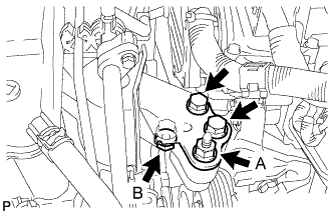
Connect the engine mounting insulator RH with the 2 bolts and 2 nuts.
- Torque:
- for bolt, nut A
- 95 N*m { 969 kgf*cm, 70 ft.*lbf }
- for nut B
- 52 N*m { 530 kgf*cm, 38 ft.*lbf }
-
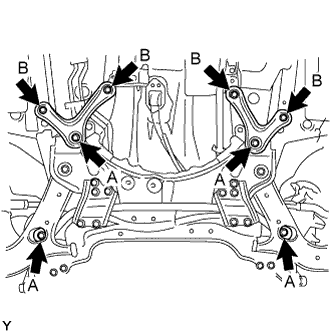
Tighten the 8 front suspension crossmember sub-assembly and rear brace bolts.
- Torque:
- for bolt A
- 137 N*m { 1397 kgf*cm, 101 ft.*lbf }
- for bolt B
- 93 N*m { 948 kgf*cm, 69 ft.*lbf }
-
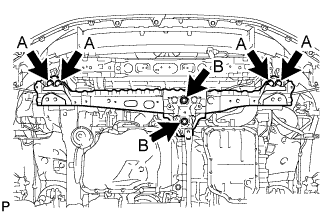
Install the front crossmember sub-assembly with the 6 bolts.
- Torque:
- for bolt A
- 99 N*m { 1010 kgf*cm, 73 ft.*lbf }
- for bolt B
- 95 N*m { 969 kgf*cm, 70 ft.*lbf }
-
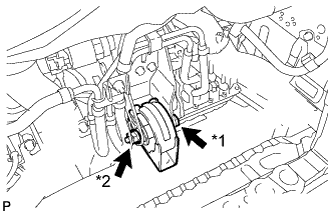
Text in Illustration *1 Through Bolt *2 Nut Install the front engine mounting insulator with the through bolt and nut.
- Torque:
- 145 N*m { 1479 kgf*cm, 107 ft.*lbf }
-
Remove the 2 bolts and No. 1 engine hanger and No. 2 engine hanger.
-
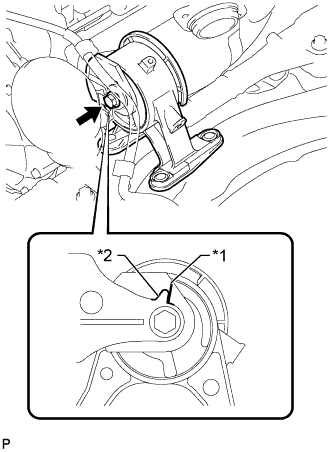
Text in Illustration *1 Alignment Mark *2 Protrusion Connect the rear engine mounting insulator to the engine mounting bracket with the through bolt.
- Torque:
- 95 N*m { 969 kgf*cm, 70 ft.*lbf }
Tech Tips
When connecting the rear engine mounting insulator, align the protrusion of the rear engine mounting bracket with the alignment mark of the rear engine mounting insulator.
-
Attach the 3 clamps and connect the wire harness.
-
Connect the cable bracket with the bolt.
- Torque:
- 5.0 N*m { 51 kgf*cm, 44 in.*lbf }
-
-
INSTALL FUEL HOSE PROTECTOR
-
Install the fuel hose protector to the cylinder head sub-assembly.
- Torque:
- 40 N*m { 408 kgf*cm, 30 ft.*lbf }
-
-
INSTALL FRONT SUSPENSION MEMBER REINFORCEMENT RH
-
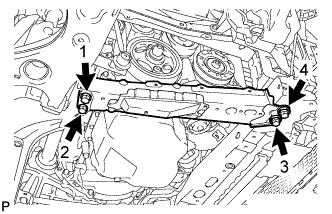
Install the front suspension member reinforcement RH with the 4 bolts.
- Torque:
- 99 N*m { 1010 kgf*cm, 73 ft.*lbf }
Note
Tighten the bolts in the order shown in the illustration.
-
-
INSTALL FRONT SUSPENSION MEMBER REINFORCEMENT LH
-
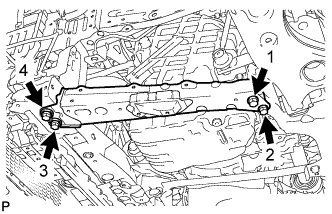
Install the front suspension member reinforcement LH with the 4 bolts.
- Torque:
- 99 N*m { 1010 kgf*cm, 73 ft.*lbf }
Note
Tighten the bolts in the order shown in the illustration.
-
-
INSTALL FRONT DRIVE SHAFT ASSEMBLY LH
-
Coat the spline of the inboard joint shaft with oil.
Tech Tips
Be sure to use the same type of oil that is used for the transaxle.
-
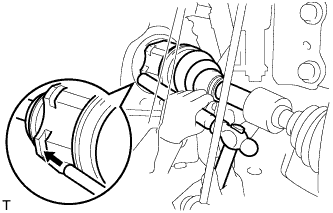
Align the shaft splines and tap in the drive shaft with a brass bar and hammer.
Note
-
Make sure that the snap ring opening is facing downwards when installing the drive shaft.
-
Be careful not to damage the oil seal, boot or dust cover.
-
-
-
INSTALL FRONT DRIVE SHAFT ASSEMBLY RH
-
Coat the spline of the inboard joint shaft with gear oil.
-
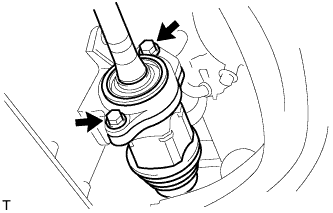
Align the shaft splines and securely insert the drive shaft.
-
Install the 2 bearing bracket bolts.
- Torque:
- 64 N*m { 650 kgf*cm, 47 ft.*lbf }
Note
Do not damage the oil seal, boot or dust cover.
-
-
INSTALL FRONT AXLE ASSEMBLY LH
-
INSTALL FRONT AXLE ASSEMBLY RH
Tech Tips
Perform the same procedure as for the LH side.
-
CONNECT FRONT STABILIZER LINK ASSEMBLY LH
-
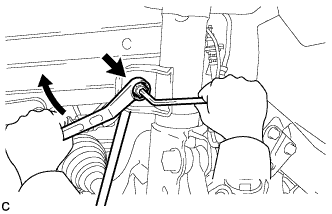
Connect the front stabilizer link assembly to the front shock absorber with coil spring with the nut.
- Torque:
- 74 N*m { 755 kgf*cm, 55 ft.*lbf }
Tech Tips
If the ball joint turns together with the nut, use a 6 mm hexagon wrench to hold the stud bolt.
-
-
CONNECT FRONT STABILIZER LINK ASSEMBLY RH
Tech Tips
Perform the same procedure as for the LH side.
-
INSTALL FRONT AXLE SHAFT NUT LH
-
Clean the threaded parts on the drive shaft and a new axle shaft nut using a non-residue solvent.
Note
-
Be sure to perform this work for a new drive shaft.
-
Keep the threaded parts free of oil and foreign objects.
-
-
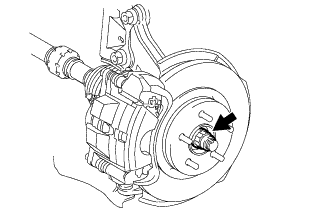
Using a 30 mm socket wrench, temporarily install the axle shaft nut.
- Torque:
- for Gasoline Engine
- 216 N*m { 2203 kgf*cm, 159 ft.*lbf }
- for Diesel Engine
- 292 N*m { 2978 kgf*cm, 215 ft.*lbf }
Tech Tips
Stake the nut after inspecting for looseness and runout in the following steps.
-
-
INSTALL FRONT AXLE SHAFT NUT RH
Tech Tips
Perform the same procedure as for the LH side.
-
STAKE FRONT AXLE SHAFT NUT LH
-
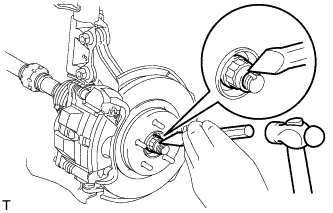
Using a chisel and a hammer, stake the front axle shaft nut.
-
-
STAKE FRONT AXLE SHAFT NUT RH
Tech Tips
Perform the same procedure as for the LH side.
-
INSTALL NO. 1 STEERING COLUMN HOLE COVER SUB-ASSEMBLY
-
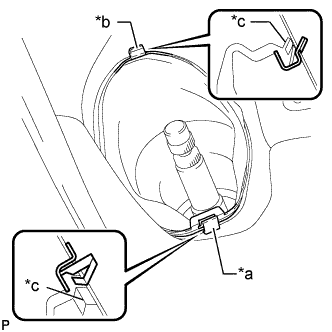
Text in Illustration *a Clip A *b Clip B *c Lip Attach clip B to the body and install the No. 1 steering column hole cover to the body with clip A.
Note
Make sure that the lip of the No. 1 steering column hole cover is not damaged.
-
-
CONNECT NO. 2 STEERING INTERMEDIATE SHAFT ASSEMBLY
-
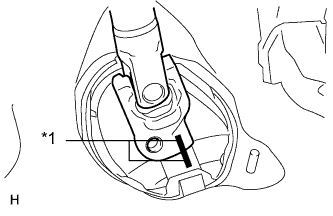
Text in Illustration *1 Matchmark Align the matchmarks on the No. 2 steering intermediate shaft assembly and steering intermediate shaft assembly.
-
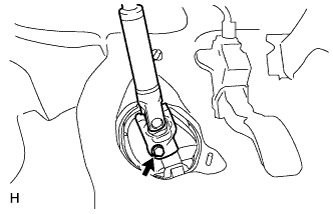
Install the bolt.
- Torque:
- 35 N*m { 360 kgf*cm, 26 ft.*lbf }
-
-
INSTALL COLUMN HOLE COVER SILENCER SHEET
-
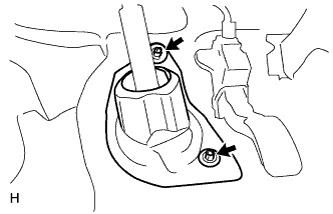
Install the column hole cover silencer sheet with the 2 clips.
-
Install the floor carpet.
-
-
CONNECT CLUTCH RELEASE CYLINDER ASSEMBLY (for Manual Transaxle)
-
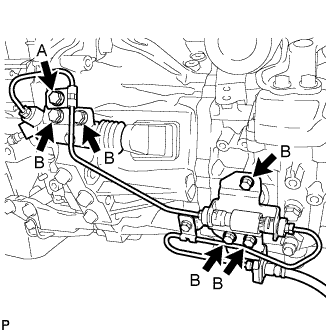
Connect the clutch release cylinder assembly and clutch flexible hose bracket with the 6 bolts.
- Torque:
- for bolt A
- 8.0 N*m { 82 kgf*cm, 71 in.*lbf }
- for bolt B
- 12 N*m { 122 kgf*cm, 9 ft.*lbf }
-
-
CONNECT TRANSMISSION CONTROL CABLE ASSEMBLY (for Manual Transaxle)
-
Connect the 2 transmission control cable assemblies to the transmission control cable bracket with 2 new clips.
-
Connect the 2 transmission control cable assemblies to the transaxle with the 2 pins.
-
-
CONNECT TRANSMISSION CONTROL CABLE ASSEMBLY (for Automatic Transaxle)
-
Connect the transmission control cable assembly with the nut and install a new clip.
- Torque:
- 12 N*m { 122 kgf*cm, 9 ft.*lbf }
-
-
CONNECT NO. 1 WATER BY-PASS HOSE
-
Connect the No. 1 water by-pass hose to the No. 4 water by-pass pipe, and slide the clamp secure it.
-
-
INSTALL INTERCOOLER AIR HOSE (for Manual Transaxle)
Note
-
Check that the retainer is closed when the connector is inserted.
-
If replacing the hose, check for deposits in the intercooler and intercooler air hose. If necessary, wipe up deposits.
-
If replacing the hose, apply fresh oil to the O-ring.
-
Push on the connector until it makes a click sound which indicates that the connection is complete. After connecting the connector, check that the connector cannot be disconnected by pulling the connector.
-
Do not use a quick connector that has been dropped.
-
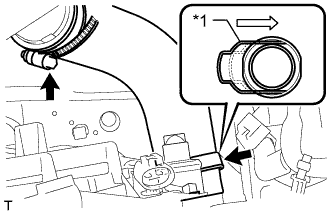
Text in Illustration *1 Retainer Install the intercooler air hose to the intercooler and No. 1 air tube and push in the retainer.
-
Tighten the hose clamp.
- Torque:
- 6.5 N*m { 66 kgf*cm, 58 in.*lbf }
-
-
INSTALL INTERCOOLER AIR HOSE (for Automatic Transaxle)
Note
Before installation, remove any oil residue from the inside of the tube.
-
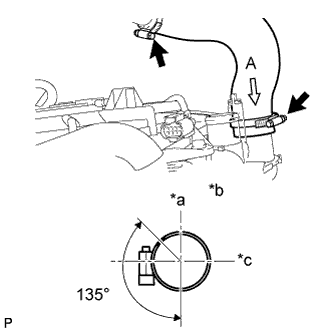
Text in Illustration *a Top *b View A *c RH Side Install the intercooler air hose to the No. 1 air tube and intercooler and tighten the 2 hose clamps.
- Torque:
- 6.5 N*m { 66 kgf*cm, 58 in.*lbf }
-
Install the wire harness clamp with the bolt.
- Torque:
- 8.4 N*m { 85 kgf*cm, 74 in.*lbf }
-
Attach the clamp.
-
-
CONNECT INLET HEATER WATER HOSE
-
Connect the inlet heater water hose to the cylinder head sub-assembly, and slide the clamp secure it.
-
-
CONNECT OUTLET HEATER WATER HOSE
-
Connect the outlet heater water hose to the No. 3 water by-pass pipe, and slide the clamp secure it.
-
-
CONNECT HOSES AND CONNECTORS
-
Connect the vacuum pump hose to the vacuum pump assembly, and slide the clamp secure it.
-
Connect the No. 2 fuel hose to the No. 2 nozzle leakage pipe, and the clamp secure it.
-
Connect the No. 1 fuel hose to the supply pump assembly, and the clamp secure it.
-
for Manual Transaxle:
Attach the 4 clamps and connect the wire harness.
-
for Automatic Transaxle:
Connect the TCM connector.
-
for Manual Transaxle:
Connect the ground cable with the bolt.
- Torque:
- 13 N*m { 127 kgf*cm, 9 ft.*lbf }
-
for Automatic Transaxle:
Connect the ground cable with the bolt and attach the clamp.
- Torque:
- 13 N*m { 131 kgf*cm, 9 ft.*lbf }
-
Connect the 4 connectors, attach the 2 claws to install the engine room No. 1 relay block and install the 2 nuts.
- Torque:
- 8.4 N*m { 86 kgf*cm, 74 in.*lbf }
-
Connect the current sensor connector.
-
Install the engine room No. 1 relay block cover.
-
-
INSTALL AIR CLEANER BRACKET
-
Install the air cleaner bracket with the 3 bolts.
- Torque:
- 7.0 N*m { 71 kgf*cm, 62 in.*lbf }
-
-
INSTALL FUEL FILTER SUPPORT
-
Install the fuel filter support with the 3 bolts.
- Torque:
- 18 N*m { 178 kgf*cm, 13 ft.*lbf }
-
Attach the 2 clamps and connect the wire harness.
-
Connect the glow relay with the bolt.
- Torque:
- 18 N*m { 178 kgf*cm, 13 ft.*lbf }
-
Attach the 2 clamps and connect the engine wire.
-
Connect the connector.
-
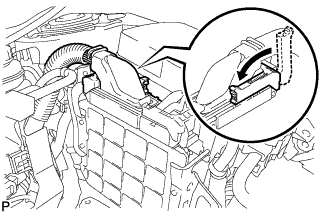
Connect the ECM connector and lower the lever.
Note
-
When connecting the connector, make sure that dirt, water and other foreign matter is not stuck between the connector and ECM.
-
Make sure that the lever is securely lowered.
-
-
-
INSTALL FUEL FILTER ASSEMBLY (w/o Combustion Type Power Heater)
-
Install the fuel filter assembly with the 2 nuts.
- Torque:
- 18 N*m { 178 kgf*cm, 13 ft.*lbf }
-
Connect the level warning switch connector.
-
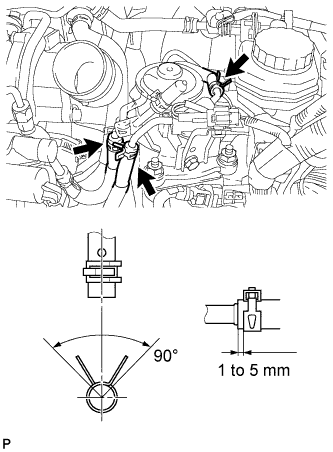
Connect the No. 1 fuel hose, No. 2 fuel hose and No. 3 fuel hose.
Tech Tips
-
Align the alignment marks and connect the hose.
-
Align the claws of the clamp with the hose alignment mark as shown in the illustration.
-
Position the clamp so that the distance from the end of the hose is 1 to 5 mm (0.0394 to 0.197 in.).
-
-
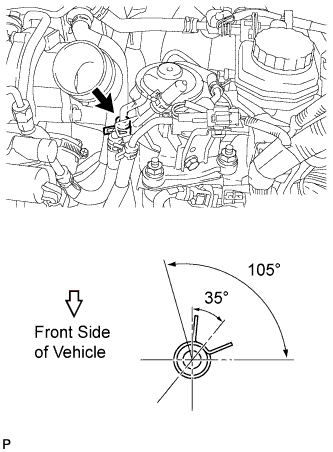
Connect the No. 4 fuel hose.
Tech Tips
Make sure the direction of the hose clamp is as shown in the illustration.
-
-
INSTALL FUEL FILTER ASSEMBLY (w/ Combustion Type Power Heater)
-
Install the fuel filter assembly with the 2 nuts.
- Torque:
- 18 N*m { 178 kgf*cm, 13 ft.*lbf }
-
Connect the level warning switch connector.
-
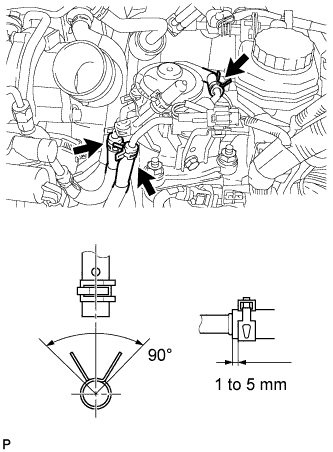
Connect the No. 1 fuel hose, No. 2 fuel hose and No. 3 fuel hose.
Tech Tips
-
Align the alignment marks and connect the hose.
-
Align the claws of the clamp with the hose alignment mark as shown in the illustration.
-
Position the clamp so that the distance from the end of the hose is 1 to 5 mm (0.0394 to 0.197 in.).
-
-
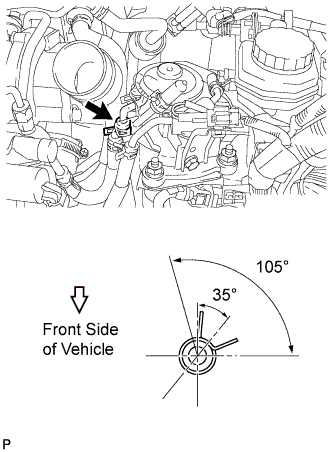
Connect the No. 4 fuel hose.
Tech Tips
Make sure the direction of the hose clamp is as shown in the illustration.
-
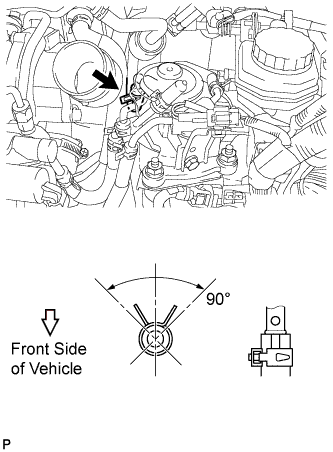
Connect the heater fuel hose.
Tech Tips
-
Align the alignment marks and connect the hose.
-
Make sure the direction of the hose clamp is as shown in the illustration.
-
-
-
INSTALL AIR CLEANER CASE
-
Install the air cleaner case with the 3 bolts.
- Torque:
- 7.0 N*m { 71 kgf*cm, 62 in.*lbf }
-
-
INSTALL AIR CLEANER FILTER ELEMENT SUB-ASSEMBLY
-
INSTALL AIR CLEANER CAP SUB-ASSEMBLY
-
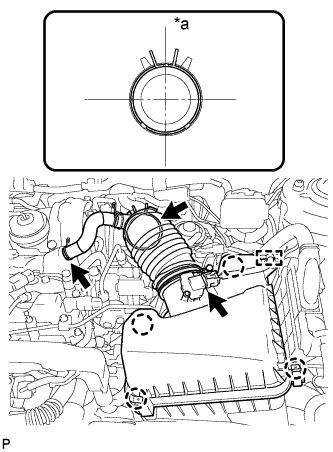
Text in Illustration *a Upper Connect the air cleaner hose assembly to the turbocharger, and slide the clamp secure it.
Tech Tips
The direction of the hose clamp is indicated in the illustration.
-
Attach the 4 clamps to install the air cleaner cap sub-assembly.
-
Connect the PCV hose to the cylinder head cover sub-assembly, and slide the clamp secure it.
-
Attach the clamp and connect the mass air flow meter connector.
-
-
INSTALL NO. 3 AIR HOSE
Note
Before installation, remove any oil residue from the inside of pipe and hose.
-
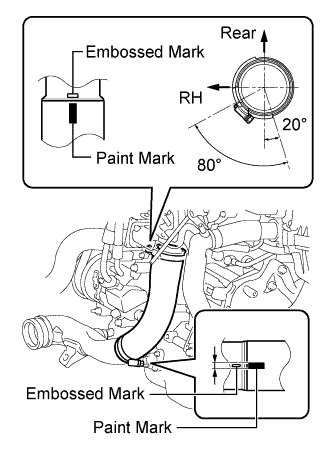
Align the paint mark of the No. 3 air hose with the embossed mark of the diesel throttle body assembly.
-
Align the paint mark of the No. 3 air hose with the embossed mark of the No. 2 air tube.
-
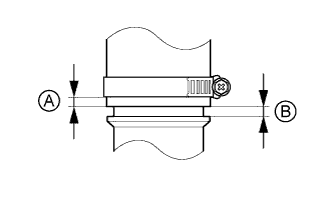
Tighten the clamp of the No. 3 air hose on the diesel throttle body assembly side.
- Torque:
- 6.5 N*m { 66 kgf*cm, 58 in.*lbf }
Tech Tips
-
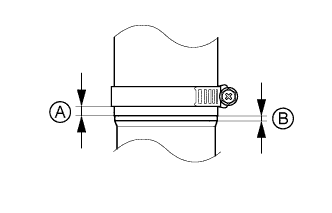
Align the paint mark of the air hose with the embossed mark and push in the air hose so that distance B is 0 to 2 mm (0 to 0.0787 in.).
-
Position the clamp so that distance A is 4 to 9 mm (0.157 to 0.354 in.).
-
Tighten the clamp of the No. 3 air hose on the No. 2 air tube side.
- Torque:
- 6.5 N*m { 66 kgf*cm, 58 in.*lbf }
Tech Tips
-
Align the paint mark of the air hose with the embossed mark and push in the air hose so that distance B is 0 to 2 mm (0 to 0.0787 in.).
-
Position the clamp so that distance A is 9 to 15 mm (0.354 to 0.591 in.).
-
-
CONNECT NO. 2 VACUUM TRANSMITTING HOSE ASSEMBLY
-
Connect the No. 2 vacuum transmitting hose assembly to the intake manifold, and slide the clamp secure it.
-
-
INSTALL OIL COOLER TUBE SUB-ASSEMBLY (for Automatic Transaxle)
-
Install the oil cooler tube sub-assembly with the bolt.
- Torque:
- 12 N*m { 122 kgf*cm, 8 ft.*lbf }
-
Connect the outlet No. 1 oil cooler hose to the automatic transaxle, and slide the clamp secure it.
-
Connect the inlet No. 1 oil cooler hose to the automatic transaxle, and slide the clamp secure it.
-
-
CONNECT SUCTION HOSE SUB-ASSEMBLY (w/ Air Conditioning System)
-
Remove the attached vinyl tape from the hose and compressor.
-
Apply sufficient compressor oil to a new O-ring and the fitting surface of the compressor assembly with pulley.
Compressor oil ND-OIL 8 or equivalent -
Install the O-ring to the suction hose sub-assembly.
-
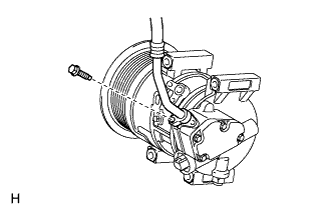
Connect the suction hose sub-assembly to the compressor assembly with pulley with the bolt.
- Torque:
- 9.8 N*m { 100 kgf*cm, 87 in.*lbf }
-
-
CONNECT DISCHARGE HOSE SUB-ASSEMBLY (w/ Air Conditioning System)
-
Remove the attached vinyl tape from the hose and compressor.
-
Apply sufficient compressor oil to a new O-ring and the fitting surface of the compressor assembly with pulley.
Compressor oil ND-OIL 8 or equivalent -
Install the O-ring to the discharge hose sub-assembly.
-
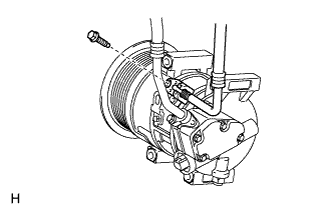
Connect the discharge hose sub-assembly to the compressor assembly with pulley with the bolt.
- Torque:
- 9.8 N*m { 100 kgf*cm, 87 in.*lbf }
-
-
INSTALL RADIATOR ASSEMBLY
-
INSTALL BATTERY CARRIER
-
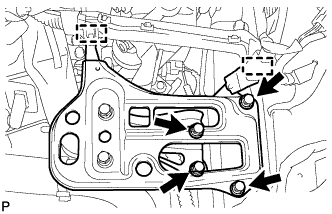
Install the battery carrier with the 4 bolts.
- Torque:
- 19 N*m { 189 kgf*cm, 14 ft.*lbf }
-
Attach the 2 clamps to connect the wire harness.
-
-
INSTALL BATTERY TRAY
-
INSTALL BATTERY
-
INSTALL BATTERY INSULATOR
-
INSTALL BATTERY CLAMP SUB-ASSEMBLY
-
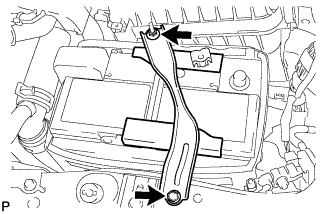
Attach the hook of the battery clamp sub-assembly to the battery carrier.
-
Partially tighten the nut and temporarily install the bolt.
-
Adjust the battery clamp sub-assembly position.
-
Tighten the nut and bolt.
- Torque:
- for bolt
- 17 N*m { 168 kgf*cm, 12 ft.*lbf }
- for nut
- 3.5 N*m { 36 kgf*cm, 31 in.*lbf }
-
-
INSTALL FRONT EXHAUST PIPE ASSEMBLY
-
ADD MANUAL TRANSAXLE OIL (for Manual Transaxle)
-
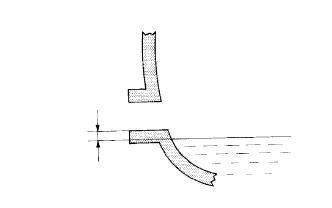
Add oil until the oil level is within 5 mm (0.197 in.) from the bottom of the transmission filler plug opening.
Manual Transaxle Oil: "Toyota Genuine Manual Transmission Gear Oil LV" or "API GL-4 and SAE 75W" Standard Capacity: 2.3 liters (2.4 US qts, 2.0 Imp. qts) -
Install a new gasket and the transmission filler plug.
- Torque:
- 39 N*m { 400 kgf*cm, 29 ft.*lbf }
Note
-
When adding transaxle oil, make sure the vehicle is level.
-
An excessively large or small amount of oil may cause problems.
-
After adding oil, drive the vehicle and recheck the oil level.
-
-
ADD ENGINE OIL
-
Add new engine oil.
Standard Oil Grade Oil Grade Oil Viscosity (SAE) ACEA C2 - 0W-30
- 5W-30
Standard Capacity Item Specified Condition Drain and refill without oil filter change 5.5 liters (5.8 US qts, 4.8 Imp. qts) Drain and refill with oil filter change 5.9 liters (6.2 US qts, 5.2 Imp. qts) Dry fill 6.3 liters (6.7 US qts, 5.5 Imp. qts)
-
-
ADD ENGINE COOLANT
-
Tighten the radiator drain cock plug by hand.
-
Add TOYOTA Super Long Life Coolant (SLLC) to the radiator reservoir filler opening.
Standard Capacity Item Specified Condition w/o Power Heater 7.4 liters (7.8 US qts, 6.5 Imp. qts) w/ Power Heater 7.8 liters (8.2 US qts, 6.9 Imp. qts) Tech Tips
TOYOTA vehicles are filled with TOYOTA SLLC at the factory. In order to avoid damage to the engine cooling system and other technical problems, only use TOYOTA SLLC or similar high quality ethylene glycol based non-silicate, non-amine, non-nitrite, non-borate coolant with long-life hybrid organic acid technology (coolant with long-life hybrid organic acid technology is a combination of low phosphates and organic acids).
Note
Never use water as a substitute for engine coolant.
-
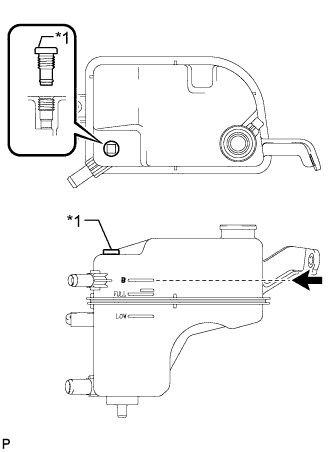
Text in Illustration *1 Air Release Plug 
B Line Remove the radiator cap and air release plug and add coolant to the B line of the reservoir tank.
-
Squeeze the inlet and outlet radiator hoses several times by hand, and then check the level of the coolant.
If the coolant level is low, add coolant.
-
Install the cap and air release plug, and warm up the engine sufficiently.
- Torque:
- 2.0 N*m { 20 kgf*cm, 18 in.*lbf }
-
Bleed air from the cooling system.
Note
-
Before starting the engine, turn the A/C switch off.
-
Adjust the air conditioning temperature setting to MAX (HOT).
-
Adjust the air conditioning blower setting to Lo.
-
Warm up the engine until the thermostat opens. While the thermostat is open, allow the coolant to circulate for several minutes.
CAUTION:
When squeezing the radiator hoses:
-
Wear protective gloves.
-
Be careful as the radiator hoses are hot.
-
Keep your hands away from the radiator fan.
Tech Tips
The thermostat opening timing can be confirmed by squeezing the inlet radiator hose by hand and sensing vibrations when the engine coolant starts to flow inside the hose.
-
-
After the engine has warmed up, run the engine according to the following pattern for at least 7 minutes: 3000 rpm for 5 seconds, and then idle speed for 45 seconds (repeat this pattern at least 8 times).
-
Squeeze the inlet and outlet radiator hoses several times by hand to bleed air from the system.
CAUTION:
When squeezing the radiator hoses:
-
Wear protective gloves.
-
Be careful as the radiator hoses are hot.
-
Keep your hands away from the radiator fan.
-
-
-
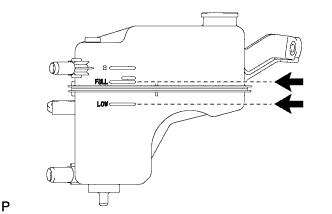
After the engine has cooled down, check that the coolant level is between FULL and LOW.
If the coolant level is low, add coolant until the coolant level reaches the reservoir tank FULL line.
-
-
INSTALL FRONT BUMPER COVER
-
INSTALL OUTER COWL TOP PANEL
-
Install the outer cowl top panel with the 9 bolts.
- Torque:
- 12 N*m { 122 kgf*cm, 9 ft.*lbf }
-
-
INSTALL DIFFERENTIAL PRESSURE SENSOR ASSEMBLY
-
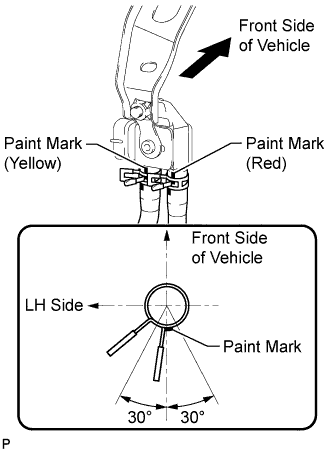
Connect the 2 vacuum hoses.
Note
Connect the vacuum hoses so that the painted marks of the 2 vacuum hoses are as shown in the illustration.
-
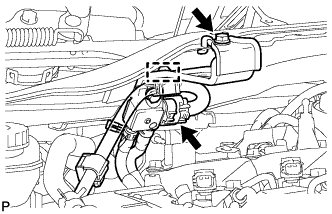
Install the sensor with the bolt.
- Torque:
- 8.0 N*m { 82 kgf*cm, 71 in.*lbf }
-
Connect the sensor connector and attach the wire harness clamp.
-
-
INSTALL FRONT WIPER MOTOR AND LINK ASSEMBLY
-
CONNECT CABLE TO POSITIVE BATTERY TERMINAL
-
CONNECT CABLE TO NEGATIVE BATTERY TERMINAL
Note
When disconnecting the cable, some systems need to be initialized after the cable is reconnected Click here.
-
BLEED FUEL SYSTEM
-
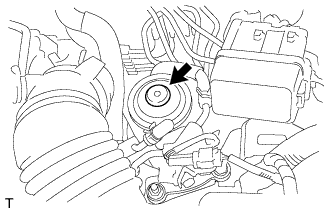
Using the hand pump mounted on the fuel filter cap, bleed the air from the fuel system. Continue pumping until the pump resistance increases.
Note
-
Hand pump pumping speed: Max. 2 strokes/ sec.
-
The hand pump must be pushed with a full stroke during pumping.
-
When the fuel pressure at the supply pump inlet port reaches a saturated pressure, the hand pump resistance increases.
-
If pumping is interrupted during the air bleeding process, fuel in the fuel line may return to the fuel tank. Continue pumping until the hand pump resistance increases.
-
If the hand pump resistance does not increase despite consecutively pumping 200 times or more, there may be a fuel leak between the fuel tank and fuel filter, the hand pump may be malfunctioning, or the vehicle may have run out of fuel.
-
If air bleeding using the hand pump is incomplete, the common rail pressure does not rise to the pressure range necessary for normal use, and the engine cannot be started.
-
-
Start the engine.
Note
-
Even if air bleeding using the hand pump has been completed, the starter may need to be cranked for 10 seconds or more to start the engine.
-
Do not crank the engine continuously for more than 20 seconds. The battery may be discharged.
-
Use a fully-charged battery.
-
When the engine can be started, proceed to the next step.
-
If the engine cannot be started, bleed the air again using the hand pump until the hand pump resistance increases (refer to the procedures above). Then start the engine.
-
-
Turn the ignition switch off.
-
Connect the intelligent tester to the DLC3.
-
Turn the ignition switch to ON and turn the intelligent tester on.
-
Clear the DTCs Click here.
-
Start the engine.*1
-
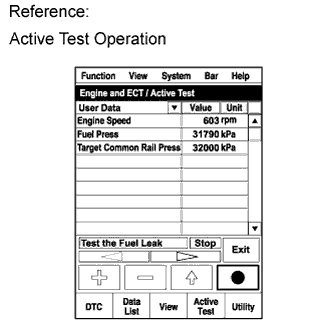
Enter the following menus: Powertrain / Engine and ECT / Active Test / Test the Fuel Leak.*2
-
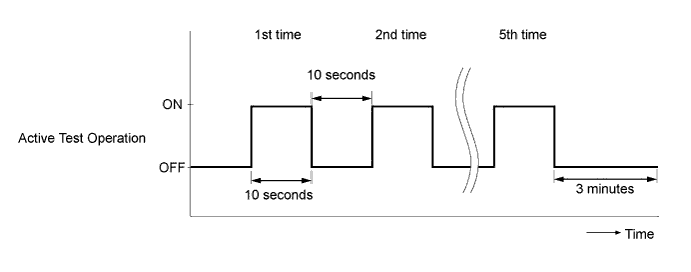
Perform the following test 5 times with on/off intervals of 10 seconds: Active Test / Test the Fuel Leak.*3
-
Allow the engine to idle for 3 minutes or more after performing the Active Test for the fifth time.
Tech Tips
When the Active Test "Test the Fuel Leak" is used to change the pump control mode, the actual fuel pressure inside the common rail drops below the target fuel pressure when the Active Test is off, but this is normal and does not indicate a pump malfunction.
-
Enter the following menus: Powertrain / Engine and ECT / DTC.
-
Read Current DTCs.
-
When no DTCs are output, the air bleeding is completed.
-
If any DTCs are output, proceed to the next step.
-
-
Clear the DTCs Click here.
-
Repeat steps *1 to *3.
-
Enter the following menus: Powertrain / Engine and ECT / DTC.
-
Read Current DTCs.
OK No DTCs are output.
-
-
CHARGE REFRIGERANT (w/ Air Conditioning System)
- SST
- 09985-20010 ( 09985-02130, 09985-02150, 09985-02090, 09985-02110, 09985-02010, 09985-02050, 09985-02060, 09985-02070 )
-
Perform vacuum purging using a vacuum pump.
-
Charge refrigerant HFC-134a (R134a).
Standard 440 +/-30 g (15.5 +/-1.1 oz) 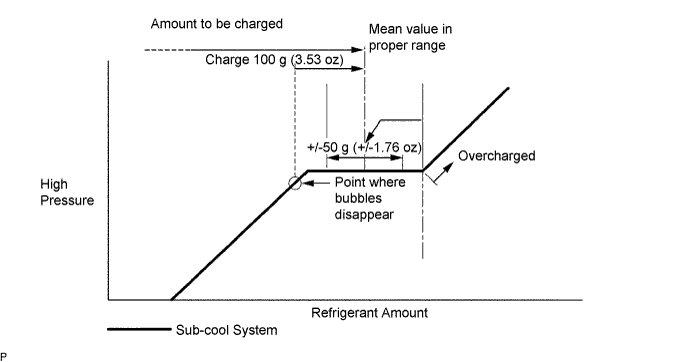
Note
-
Do not operate the cooler compressor before charging refrigerant as the cooler compressor will not work properly without any refrigerant, and will overheat.
-
Approximately 100 g (3.53 oz) of refrigerant may need to be charged after bubbles disappear. The refrigerant amount should be checked by measuring its quantity, and not with the sight glass.
-
-
ADD AUTOMATIC TRANSAXLE FLUID (for Automatic Transaxle)
-
PERFORM REGISTRATION
-
Perform registration of the injector compensation codes Click here.
-
Perform registration of the pilot quantity learning Click here.
-
-
PERFORM INITIALIZATION
-
Perform initialization of the crank time compensation reset function Click here.
-
-
PERFORM THROTTLE VALVE FULLY CLOSED POSITION LEARNING
Tech Tips
Be sure to turn off the ignition switch before performing this inspection.
-
Turn the ignition switch to ON.
-
Turn the ignition switch off and wait 10 seconds.
Tech Tips
The fully closed position of the diesel throttle valve is learned when the ignition switch is turned off.
-
-
INSPECT FOR REFRIGERANT LEAK (w/ Air Conditioning System)
-
After recharging the refrigerant gas, check for refrigerant gas leakage using a halogen leak detector.
-
Perform the operation observing the following instructions:
-
Stop the engine.
-
Secure good ventilation (the halogen leak detector may react to volatile gases other than refrigerant, such as evaporated gasoline or exhaust gas).
-
Repeat the test 2 or 3 times.
-
Make sure that some refrigerant remains in the refrigeration system.
Tech Tips
When the compressor is off: approximately 392 to 588 kPa (4.0 to 6.0 kgf/cm2, 57 to 85 psi).
-
-
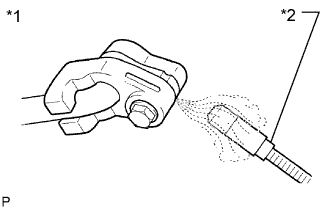
Text in Illustration *1 Check for Leakage *2 Halogen Leak Detector Using a halogen leak detector, check the refrigerant line for leakage.
-
If a gas leak is not detected from the drain hose, remove the blower motor control (blower resistor) from the cooling unit. Insert the halogen leak detector sensor into the unit and check for gas leakage.
-
Disconnect the pressure switch connector and wait for approximately 20 minutes. Bring the halogen leak detector close to the pressure switch and check for gas leakage.
-
-
INSPECT FOR OIL LEAK
-
Warm up the engine and check for an engine oil leak.
-
-
INSPECT FOR COOLANT LEAK
-
Remove the radiator reservoir cap.
CAUTION:
To avoid the danger of being burned, do not remove the radiator reservoir cap while the engine and radiator are still hot. Thermal expansion will cause hot engine coolant and steam to blow out from the radiator.
-
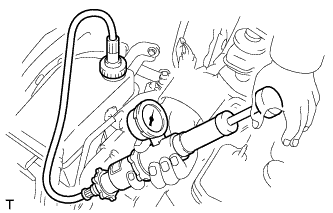
Fill the radiator with coolant, and then attach a radiator cap tester.
-
Warm up the engine.
-
Pump the radiator cap tester to 118 kPa (1.2 kgf/cm2, 17 psi), and then check that the pressure does not drop.
If the pressure drops, check the hoses, radiator and water pump for leakage.
If there are no signs of external coolant leaks, check the heater core, cylinder block and head.
-
Reinstall the radiator reservoir cap.
-
-
INSPECT FOR FUEL LEAK
Tech Tips
Using the intelligent tester to perform Active Tests allow relays, VSVs, actuators and other items to be operated without removing any parts. This non-intrusive functional inspection can be very useful because intermittent operation may be discovered before parts or wiring is disturbed. Performing Active Tests early in troubleshooting is one way to save diagnostic time. Data List information can be displayed while performing Active Tests.
-
Perform Active Test.
-
Connect the intelligent tester to the DLC3.
-
Turn the ignition switch to ON.
-
Start the engine.
-
Turn the intelligent tester on.
-
Enter the following menus: Powertrain / Engine and ECT/ Active Test.
-
Perform the Active Test.
Tester Display Test Part Control Range Diagnostic Notes Test the Fuel Leak Pressurizes common rail internal fuel pressure, and checks for fuel leaks Stop/Start Performs inspection of the high pressure fuel system.
-
Engine Speed: 2050 rpm
-
Fuel Pressure: 172000 kPa
-
Target Common Rail Pressure: 176000 kPa
-
Target Pump SCV Current: 1.4 A
-
MAP: 176 kPa
-
MAF: 39 g/sec.
-
-
-
-
INSPECT FOR EXHAUST GAS LEAK
-
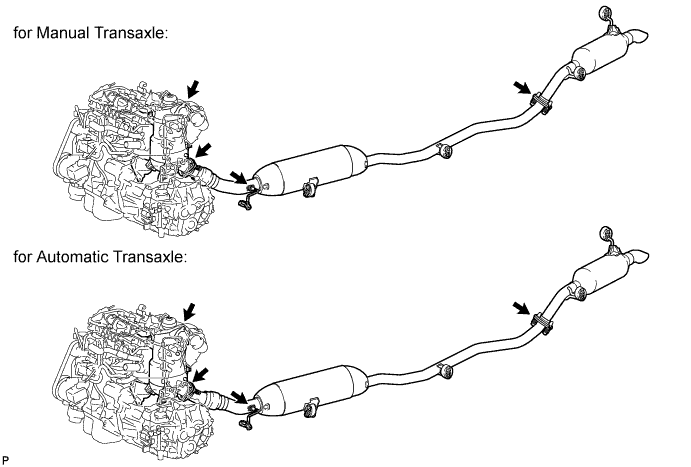
Check that there are no exhaust gas leaks from the points (connection areas of the exhaust pipes and installation areas of each sensor) shown in the illustration.
-
-
INSTALL REAR ENGINE UNDER COVER RH
-
Install the under cover with the 5 clips.
-
-
INSTALL REAR ENGINE UNDER COVER LH
-
Install the under cover with the 5 clips.
-
-
INSTALL NO. 2 ENGINE UNDER COVER
-
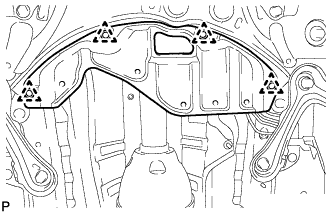
Install the No. 2 engine under cover with the 4 clips.
-
-
INSTALL NO. 1 ENGINE UNDER COVER
-
Install the No. 1 engine under cover with the 10 clips and 6 bolts.
-
-
INSTALL FRONT LOWER BUMPER ABSORBER
-
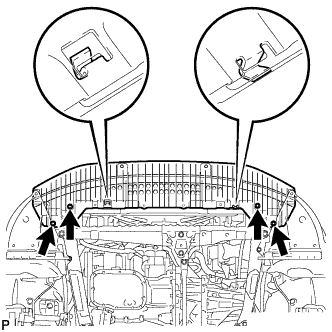
Insert the 2 hooks of the front lower bumper absorber into the installation holes in the body to install the front lower bumper absorber.
-
Install the 4 bolts.
-
Install the 2 clips.
-
-
INSTALL NO. 1 ENGINE COVER
-
Attach the 4 clips to install the No. 1 engine cover.
-
-
CHECK IDLE SPEED
Note
-
Turn all the electrical systems and A/C off.
-
Inspect the engine idle speed with the cooling fan off.
-
When checking the idle speed, move the shift lever to neutral.
Tech Tips
-
For more information about the intelligent tester, refer to its operator's manual.
-
If an intelligent tester is not available, use a tachometer as a substitute.
-
Warm up and stop the engine.
-
When using the intelligent tester:
-
Connect the intelligent tester to the DLC3.
-
Start the engine and idle it.
-
Enter the following menus: Powertrain / Engine / Data List / Engine SPD.
-
-
When not using the intelligent tester:
-
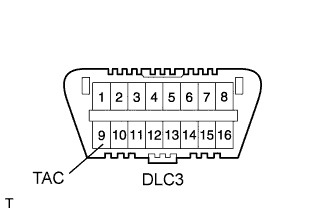
Connect a tester probe of a tachometer to terminal 9 (TAC) of the DLC3 with SST.
- SST
- 09843-18040
-
Start the engine and idle it.
-
-
Inspect the engine idle speed.
Standard idle speed 720 to 820 rpm -
Turn the ignition switch off.
-
Disconnect the intelligent tester or tachometer tester probe from the DLC3.
-
-
CHECK MAXIMUM ENGINE SPEED
-
Start the engine.
-
Fully depress the accelerator pedal.
-
Check the maximum engine speed.
Maximum engine speed 5100 to 5250 rpm
-
-
INSTALL RADIATOR SUPPORT OPENING COVER
-
Attach the 4 hooks to install the radiator support opening cover.
-
Install the 3 clips.
-
-
ADJUST FRONT WHEEL ALIGNMENT
-
CHECK ABS SPEED SENSOR SIGNAL
-
Check the speed sensor signal Click here.
-