SFI SYSTEM, Diagnostic DTC:P1604
| DTC Code | DTC Name |
|---|---|
| P1604 | Startability Malfunction |
DESCRIPTION
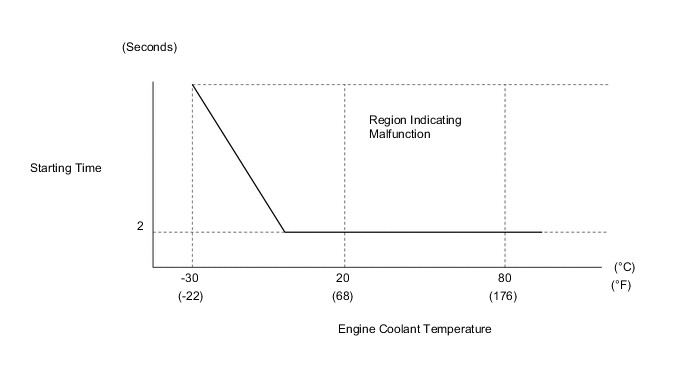
This DTC is stored when the engine does not start even though the STA signal is input or when the engine takes a long time to start, and when the engine speed is low or the engine stalls just after the engine starts.
Using the intelligent tester, the conditions present when the DTC was stored can be confirmed by referring to the freeze frame data. Freeze frame data records engine conditions when a malfunction occurs. This information can be useful when troubleshooting.
It is necessary to check if the vehicle ran out of fuel before performing troubleshooting, as this DTC is also stored when there is engine starting trouble due to running out of fuel.
| DTC No. | DTC Detection Condition | Trouble Area |
|---|---|---|
| P1604 | Either condition is met:
|
|
CAUTION / NOTICE / HINT
Tech Tips
-
In contrast to normal malfunction diagnosis for components, circuits and systems, DTC P1604 is used to determine the malfunctioning area from the problem symptoms and freeze frame data when the user mentions problems such as starting difficulty.
As these DTCs can be stored as a result of certain user actions, even if these DTCs are output, if the customer makes no mention of problems, clear these DTCs without performing any troubleshooting and return the vehicle to the customer.
-
If any other DTCs are output, perform troubleshooting for those DTCs first.
-
When the Data List item "Immobiliser Fuel Cut" is ON, the engine cannot be started.
-
Read freeze frame data using the intelligent tester. Freeze frame data records engine conditions when a malfunction occurs. This information can be useful when troubleshooting.
-
When confirming the freeze frame data, be sure to check all 5 sets of freeze frame data Click here.
-
When confirming freeze frame data, if there are multiple items related to the cause of the malfunction, perform troubleshooting for all related items.
-
Try to start the vehicle under the conditions recorded in the freeze frame data which were present when the malfunction occurred. Confirm the data at this time and compare it with the freeze frame data.
-
If the malfunction does not reoccur, carefully check the vehicle conditions from when the malfunction occurred using freeze frame data.
-
When performing inspections, jiggle the relevant wire harnesses and connectors in an attempt to reproduce malfunctions that do not always occur.
-
If the same inspection or replacement procedure appears 2 times when performing an inspection procedure, it is not necessary to repeat the procedure the second time.
-
Malfunction Recurrence and Inspection Areas
-
Freeze frame data exists, but the malfunction (starting difficulty) has not reoccurred and the malfunction conditions are unknown.
-
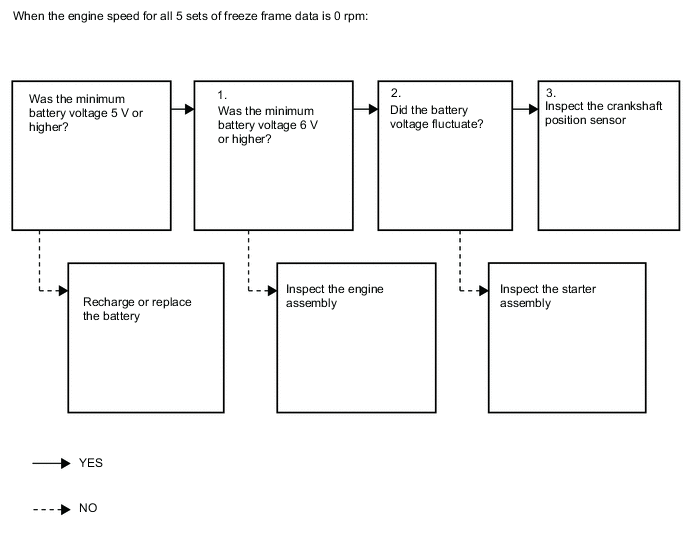
The engine speed recorded in the freeze frame data is 0 rpm (the engine does not crank).
Tech Tips
One of the following problems may be present: battery depletion, excess engine friction, a starter malfunction or a crankshaft position sensor malfunction.
-
If the battery voltage is below 6 V during cranking, there is a high probability that engine friction is abnormal.
-
If the battery voltage drops to 5 V or less when starting the engine, the battery may be malfunctioning.
-
If the battery voltage fluctuates while cranking the engine, it can be concluded that cranking is being performed. When the engine speed is 0 rpm, the crankshaft position sensor and/or an ECM may be malfunctioning.
-
-
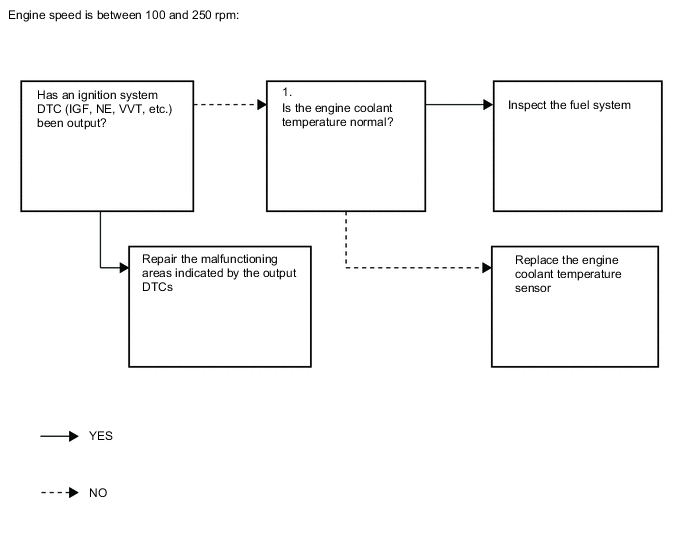
All engine speeds recorded in the freeze frame data are between 100 and 250 rpm (the engine cranks but there is no combustion).
Tech Tips
If the engine speed is between 100 and 250 rpm (no initial combustion), there may be a wiring problem or a complete failure of an ignition or fuel system part.
-
Due to an engine coolant temperature sensor malfunction, the fuel injection volume is extremely high or low and the engine may not be able to be started.
-
-
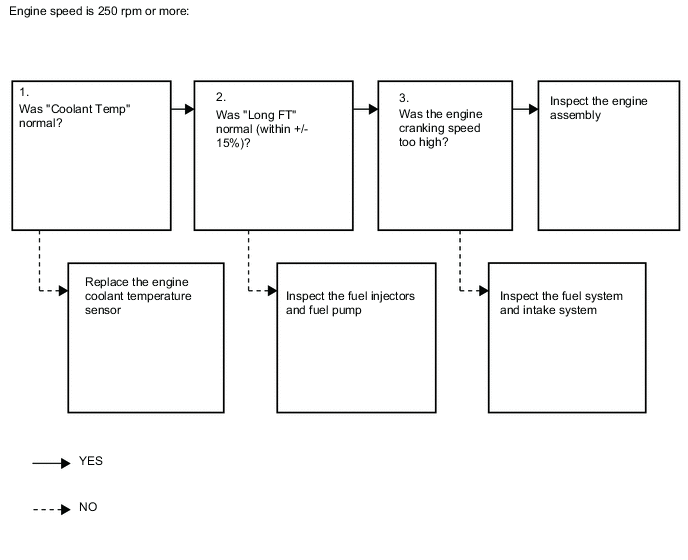
The engine speed recorded in the freeze frame data is 250 rpm or more (the initial combustion and starter turnoff timing is too late).
Tech Tips
If the engine speed is 250 rpm or more (combustion occurs but the initial combustion and starter turnoff timing is too late), the fuel injection volume is often incorrect (too low or too high) and determining the cause of the malfunction is often difficult.
-
Due to an engine coolant temperature sensor malfunction, the fuel injection volume is extremely high or low and engine starting trouble may occur.
-
If Long FT is incorrect, there may be a fuel supply problem due to the injectors or fuel pump being clogged, etc.
-
If the engine cranking speed is too high, compression loss may have occurred due to carbon interfering with the valve operation.
-
-
-
When the malfunction (starting difficulty) can be reproduced, or malfunction conditions are known, perform the following inspections ("Problem symptoms" and "Systems to inspect")
-
Problem symptoms
-
The engine does not crank.
Tech Tips
The starter is normal if a noise that indicates the starter pinion gear is extending is heard. The battery may be fully depleted or there may be excess engine friction.
-
The engine cranking speed is abnormal.
Tech Tips
If the engine cranking speed is too high (for example, 300 rpm or more with no combustion), compression loss may have occurred because carbon interfered with valve operation, etc.
-
There is no initial combustion.
Tech Tips
If there is no initial combustion, there is probably a wiring problem or an ignition or fuel system part malfunction.
-
The engine stalls after starter turnoff.
Tech Tips
If the engine stalls after starter turnoff, the air-fuel ratio may be incorrect or the VVT may have a problem returning.
-
The initial combustion and starter turnoff occur late.
Tech Tips
If the initial combustion and starter turnoff occur late, the fuel injection volume is probably incorrect (too low or too high).
Tech Tips
Causes of fuel system malfunctions according to conditions present at the time of the malfunction.
-
When 2 to 3 minutes have elapsed after stopping the engine: Fuel pressure loss due to the fuel pressure regulator failing to maintain the fuel pressure.
-
When 15 to 120 minutes have elapsed after stopping the engine: Problem with injector fuel seal.
-
When a long time has elapsed after stopping the engine: Fuel pressure regulator is stuck open.
-
-
-
Systems to inspect.
-
Intake system
-
Ignition system
-
Fuel system
-
-
-
-
INSPECTION FLOW
-
Freeze frame data exists, but the malfunction (starting difficulty) has not reoccurred and the malfunction conditions are unknown.
Freeze Frame Data Item Result Suspected Area Procedure Engine Speed 0 rpm (no engine cranking at all)
-
Battery fully depleted
-
Engine assembly (excess friction)
-
Starter assembly
-
Immobiliser system
-
Crankshaft position sensor
-
ECM
4 to 9 100 to 250 rpm (engine cranks but no initial combustion*1)
-
Fuel pump control system
-
Ignition system
-
Engine coolant temperature sensor
-
Fuel injection system
10 to 14 250 rpm or more (combustion occurs but initial combustion and starter turnoff*2 occur late)
-
Engine assembly (compression loss)
-
Fuel injection system
-
Fuel pump control system
16 to 24 Tech Tips
-
*1: First combustion after cranking begins.
-
*2: Condition when engine speed increases and starter can be turned off.
-
-
When the malfunction (starting difficulty) can be reproduced, or when malfunction conditions are known.
-
Problem symptoms
Problem Symptom Suspected Area Suspected Component Procedure The engine does not crank Battery malfunction Battery fully depleted 27 to 32 Starting system
-
Starter (includes pinion gear wear or tooth damage)
-
Starting system
Immobiliser system Immobiliser system Engine assembly
-
Engine assembly (excess friction)
-
Drive plate wear or tooth damage (for CVT)
-
Flywheel wear or tooth damage (for M/T)
Cranking speed too low Battery malfunction Battery fully depleted 33 to 35 Starting system Starter assembly Engine assembly Engine assembly (excess friction) Cranking speed too high Engine assembly Engine assembly (compression loss) There is no initial combustion Fuel supply problem
-
Maintenance of fuel pressure by fuel pressure regulator
-
Fuel injector leak
-
Fuel leak from fuel line
-
Fuel pump control system
-
Fuel pump
36 to 51 Ignition system malfunction
-
Spark plug
-
Crankshaft position sensor
-
Ignition coil
Engine stalls after starter turnoff Air suction Intake system connections 52 to 58 Deposits in throttle body assembly Throttle body assembly VVT valve does not return properly
-
Camshaft timing oil control valve assembly
-
VVT system
Mass air flow meter malfunction Mass air flow meter The initial combustion and starter turnoff occur late Engine coolant temperature sensor malfunction Engine coolant temperature sensor 59 to 73 Mass air flow meter malfunction Mass air flow meter Abnormal air fuel ratio learning value Air fuel ratio sensor Deviation from fuel injection characteristics Fuel injector Wet-fouled or dry-fouled spark plug Spark plug Lack of fuel pressure
-
Fuel pressure regulator
-
Fuel pump
-
Fuel pump control system
-
-
Systems to inspect
Troubleshooting by System Suspected Area Suspected Component Procedure Fuel system troubleshooting A Abnormal air fuel ratio learning value Fuel injector 90 to 97
98 to 105
Rough idling Crankshaft position sensor Abnormal fuel pressure
-
Fuel
-
Fuel leak from fuel line
-
Fuel pump
-
Fuel pressure regulator
Fuel system troubleshooting B Abnormal concentration of HC in surge tank
-
Purge VSV system
-
Fuel injector
106 to 108 Fuel system troubleshooting C Injection signal system malfunction
-
Fuel injector
-
Crankshaft position sensor
-
Camshaft position sensor
-
ECM
75 to 79 Intake system troubleshooting Difference between ISC target value and opening angle when idling
-
Engine assembly (compression loss)
-
Valve timing
-
Engine coolant temperature sensor
-
ECM
87 to 89
109 to 111
Ignition system troubleshooting Camshaft and/or crankshaft position sensor signal malfunction
-
Crankshaft position sensor system (including sensor installation)
-
Camshaft position sensor system (including sensor installation)
-
ECM
80 to 86
112 to 118
-
-
Note
Inspect the fuses for circuits related to this system before performing the following inspection procedure.
-
PROCEDURE
-
CHECK ANY OTHER DTCS OUTPUT AND RECORD FREEZE FRAME DATA (IN ADDITION TO DTC P1604)
-
Connect the intelligent tester to the DLC3.
-
Turn the ignition switch to ON.
-
Turn the tester on.
-
Enter the following menus: Powertrain / Engine and ECT / DTC.
-
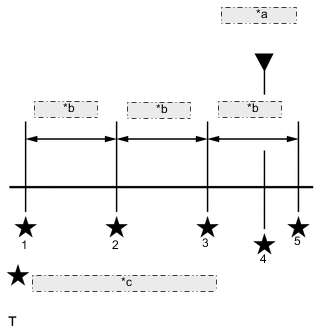
*a DTC is stored *b 0.5 seconds *c Freeze frame data recorded point Read the DTCs and record the Freeze Frame Data.
Tech Tips
-
This freeze frame data shows the actual engine conditions when engine starting trouble occurred.
-
When confirming the freeze frame data, be sure to check all 5 data sets of freeze frame data.
-
The fourth set of freeze frame data is the data recorded when the DTC is stored.
Result Result Proceed to Only DTC P1604 is output A DTCs other than P1604 are output B -
B 
GO TO DTC CHART Click here
A 
-
-
CHECK ENGINE IMMOBILISER SYSTEM
-
Connect the intelligent tester to the DLC3.
-
Turn the ignition switch to ON.
-
Turn the tester on.
-
Enter the following menus: Powertrain / Engine and ECT / Data List / All Data / Immobiliser Fuel Cut.
-
Read the value displayed on the tester.
OK Immobiliser Fuel Cut is OFF Result Result Proceed to OK A NG (w/ Entry and Start System) B NG (w/o Entry and Start System) C Tech Tips
If the engine is cranked immediately after reconnecting the battery cable (key verification for immobiliser system not completed), the engine cannot be started. Key verification needs to wait for several seconds after turning the ignition switch to ON.
B
REPAIR ENGINE IMMOBILISER SYSTEM Click here
C
REPAIR ENGINE IMMOBILISER SYSTEM Click here
A
-
-
CHECK MALFUNCTION CONDITION
-
Confirm the problem symptoms.
Result Result Proceed to Freeze frame data exists, but the problem symptoms cannot be reproduced and the malfunction conditions are unknown A The problem symptoms can be reproduced, or the malfunction conditions are known B
B 
CHECK MALFUNCTION CONDITION Click here
A
-
-
READ FREEZE FRAME DATA
-
Connect the intelligent tester to the DLC3.
-
Turn the ignition switch to ON.
-
Using the tester, confirm the vehicle conditions recorded in the freeze frame data which were present when the DTC was stored Click here.
Result Freeze Frame Data Item for DTC P1604 Suspected Area Proceed to Engine Speed Battery Voltage All 0 rpm (no engine cranking at all) Minimum voltage is below 5 V Battery fully depleted A Minimum voltage is 5 V or higher
-
Starter malfunction
-
Crankshaft position sensor system
-
Excess engine friction
-
Immobiliser system
-
ECM
B 100 to 250 rpm (engine cranks but no initial combustion) -
-
Fuel pump control system
-
Ignition system
-
Engine coolant temperature sensor
-
Immobiliser system
-
Fuel injection system
C 250 rpm or more (combustion occurs but initial combustion and starter turnoff occur late) -
-
Engine assembly
-
Fuel injection system
-
Fuel pump control system
D Tech Tips
When DTC P1604 is stored, either "Engine Start Hesitation"*1 or "Low Rev for Eng Start"*2 in the Freeze Frame Data will be ON. If "Low Rev for Eng Start" is ON, proceed to E.
*1: This value turns ON when the engine speed does not reach a certain value for a certain period of time when starting the engine.
*2: This value turns ON when the engine stalls immediately after starting the engine. If "Low Rev for Eng Start" is ON, as there is a possibility that the low engine speed or engine stall was caused by the user, confirm the following freeze frame data items.
-
Immobiliser Fuel Cut
-
Engine Speed (Starter off)
-
Shift SW Status (R, D Range) (for CVT)
-
A
CHARGE OR REPLACE BATTERY
C
READ FREEZE FRAME DATA Click here
D
READ FREEZE FRAME DATA Click here
E
INSPECT MASS AIR FLOW METER Click here
B
-
-
READ FREEZE FRAME DATA
-
Connect the intelligent tester to the DLC3.
-
Turn the ignition switch to ON.
-
Using the tester, confirm the vehicle conditions recorded in the freeze frame data which were present when the DTC was stored Click here.
Result Freeze Frame Data Item for DTC P1604 Result Suspected Area Proceed to Battery Voltage Minimum voltage is 6 V or higher and voltage does not fluctuate*1 Starter system A Minimum voltage is 6 V or higher and voltage fluctuates*2, *3
-
Crankshaft position sensor system
-
ECM
B Minimum voltage is 5 to 6 V*4
-
Excess engine friction
-
Battery fully depleted
C Tech Tips
-
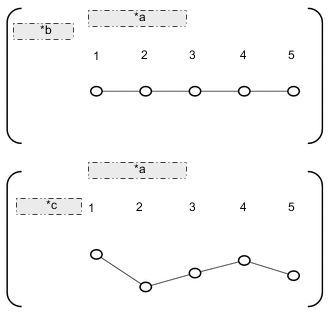
*a Freeze Frame Data *b Voltage does not Fluctuate *c Voltage Fluctuates *1: The 5 sets of freeze frame data show approximately the same battery voltage.
-
*2: The 5 sets of freeze frame data show different battery voltages.
-
*3: If the voltage fluctuates, it can be determined that cranking is being performed normally. When the engine speed is 0 rpm, the crankshaft position sensor system and/or the ECM may be malfunctioning.
-
*4: There may be excess engine friction. Make sure that the crankshaft rotates smoothly when turning it by hand. Excess engine friction may have occurred temporarily. Remove the cylinder head cover and oil pan, and check for foreign matter such as iron fragments. If there is a malfunction or signs of a malfunction present, perform a detailed inspection by disassembling all the parts.
-
A
CHECK STARTER SIGNAL CIRCUIT Click here
C
CHECK AND REPAIR ENGINE OR BATTERY
B
-
-
CHECK CRANKSHAFT POSITION SENSOR INSTALLATION
-
Check the tightening and installation condition of the crankshaft position sensor bolt.
-
Check the connection of the crankshaft position sensor connector.
NG
SECURELY REINSTALL CRANKSHAFT POSITION SENSOR Click here
OK
-
-
CHECK CRANKSHAFT POSITION SENSOR
-
Disconnect the crankshaft position sensor connector.
-
Check for oil on the connector terminals.
OK No oil on the terminals.
NG
REPLACE CRANKSHAFT POSITION SENSOR Click here
OK
-
-
CHECK HARNESS AND CONNECTOR (CRANKSHAFT POSITION SENSOR - ECM)
-
Disconnect the crankshaft position sensor connector.
-
Disconnect the ECM connector.
-
Measure the resistance according to the value(s) in the table below.
Standard Resistance (Check for Open) Tester Connection Condition Specified Condition B15-1 - B39-93 (NE+) Always Below 1 Ω B15-2 - B39-117 (NE-) Always Below 1 Ω Standard Resistance (Check for Short) Tester Connection Condition Specified Condition B15-1 or B39-93 (NE+) - Body ground Always 10 kΩ or higher B15-2 or B39-117 (NE-) - Body ground Always 10 kΩ or higher Tech Tips
-
Jiggle the wire harness and connector to increase the likelihood of detecting malfunctions that do not always occur.
-
Make sure there is not an excessive amount of force applied to the wire harness.
-
-
Reconnect the ECM connector.
-
Reconnect the crankshaft position sensor connector.
NG
REPAIR OR REPLACE HARNESS OR CONNECTOR
OK
-
-
CHECK CRANKSHAFT POSITION SENSOR
-
Replace the crankshaft position sensor Click here.
-
Check the engine start operation.
OK Malfunction has been repaired successfully.
OK
END (CRANKSHAFT POSITION SENSOR IS DEFECTIVE)
NG
REPLACE ECM Click here
-
-
READ FREEZE FRAME DATA
-
Connect the intelligent tester to the DLC3.
-
Turn the ignition switch to ON.
-
Using the tester, confirm the vehicle conditions recorded in the freeze frame data which were present when the DTC was stored Click here.
Result Freeze Frame Data Item for DTC P1604 Suspected Area Proceed to Coolant Temp, Ambient Temp for A/C, Intake Air Coolant Temp, Ambient Temp for A/C Fuel Pump/Speed Status Difference between Coolant Temp, Ambient Temp for A/C and Intake Air is 10°C (18°F) or more*1 Coolant Temp is 125°C (257°F) or higher, or lower than Ambient Temp for A/C by 15°C (27°F) or more - Engine coolant temperature sensor A Other than above All 5 sets of freeze frame data are ON - B At least 1 of the 5 sets of freeze frame data is OFF Fuel pump control system C Difference between Coolant Temp, Ambient Temp for A/C and Intake Air is less than 10°C (18°F)*2 - At least 1 of the 5 sets of freeze frame data is OFF Fuel pump control system C All 5 sets of freeze frame data are ON - B Tech Tips
-
*1: A long time had not elapsed after stopping the engine.
-
*2: A long time had elapsed after stopping the engine.
-
A
REPLACE ENGINE COOLANT TEMPERATURE SENSOR Click here
C
CHECK FUEL PUMP CONTROL CIRCUIT Click here
B
-
-
PERFORM ACTIVE TEST USING INTELLIGENT TESTER (CONTROL THE FUEL PUMP / SPEED)
-
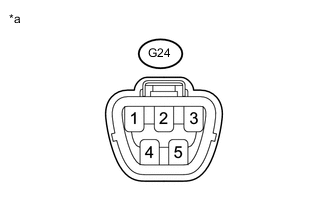
Text in Illustration *a Front view of wire harness connector
(to Fuel Pump)
Connect the intelligent tester to the DLC3.
-
Disconnect the fuel pump connector.
-
Turn the ignition switch to ON.
-
Turn the tester on.
-
Enter the following menus: Powertrain / Engine and ECT / Active Test / Control the Fuel Pump / Speed.
-
Measure the voltage according to the value(s) in the table below.
Standard Voltage Tester Connection Condition Specified Condition G24-4 - Body ground Active Test is being performed 11 to 14 V Tech Tips
-
Jiggle the wire harness and connector to increase the likelihood of detecting malfunctions that do not always occur.
-
Make sure there is not an excessive amount of force applied to the wire harness.
-
-
Reconnect the fuel pump connector.
NG
CHECK FUEL PUMP CONTROL CIRCUIT Click here
OK
-
-
CHECK HARNESS AND CONNECTOR (FUEL INJECTOR POWER SOURCE)
-
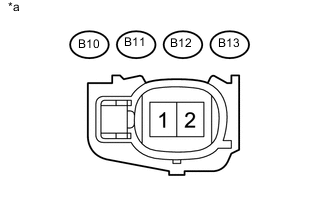
Text in Illustration *a Front view of wire harness connector
(to Fuel Injector)
Disconnect the fuel injector connector.
-
Turn the ignition switch to ON.
-
Measure the voltage according to the value(s) in the table below.
Standard Voltage Tester Connection Switch Condition Specified Condition B10-1 - Body ground Ignition switch ON 11 to 14 V B11-1 - Body ground Ignition switch ON 11 to 14 V B12-1 - Body ground Ignition switch ON 11 to 14 V B13-1 - Body ground Ignition switch ON 11 to 14 V Tech Tips
-
Jiggle the wire harness and connector to increase the likelihood of detecting malfunctions that do not always occur.
-
Make sure there is not an excessive amount of force applied to the wire harness.
-
-
Reconnect the fuel injector connector.
NG
CHECK FUEL INJECTOR POWER SOURCE CIRCUIT Click here
OK
-
-
PERFORM ACTIVE TEST USING INTELLIGENT TESTER (CONTROL THE FUEL PUMP / SPEED)
-
Connect the intelligent tester to the DLC3.
-
Turn the ignition switch to ON.
-
Turn the tester on.
-
Enter the following menus: Powertrain / Engine and ECT / Active Test / Control the Fuel Pump / Speed.
-
When performing the Active Test, check for fuel leakage from the fuel pipes.
Result Result Proceed to Fuel leakage or signs of fuel leakage are present A No fuel leakage or signs of fuel leakage B Tech Tips
-
Jiggle the wire harness and connector to increase the likelihood of detecting malfunctions that do not always occur.
-
When performing the Active Test, if there is no operating noise from the fuel pump, the fuel pump system may be malfunctioning.
-
Check if the vehicle ran out of fuel, as engine starting trouble due to running out of fuel is also detected.
-
A
REPAIR OR REPLACE FUEL LINE
B
-
-
CHECK FUEL SYSTEM
-
Check for foreign matter such as iron particles around the fuel pump (fuel pump, fuel pump filter, and inside the fuel tank), and for signs that the fuel pump was stuck.
Result Result Proceed to There is foreign matter or signs that fuel pump was stuck A There is no foreign matter and no signs that fuel pump was stuck B
A
REPAIR OR REPLACE FUEL SYSTEM
B
-
-
READ FREEZE FRAME DATA
-
Connect the intelligent tester to the DLC3.
-
Turn the ignition switch to ON.
-
Using the tester, confirm the vehicle conditions recorded in the freeze frame data which were present when the DTC was stored Click here.
Result Freeze Frame Data Item for DTC P1604 Suspected Area Proceed to Coolant Temp VALVEMATIC Current Angle Engine coolant temperature is -10°C (14°F) or less Current angle is less than 170 deg(CA) Continuously variable valve lift controller assembly A Current angle is more than 170 deg(CA) - B Engine coolant temperature is -10°C (14°F) or higher - - B Tech Tips
There is a possibility that the engine may not start at extremely low temperatures due to the insufficient intake airflow that results from reduced intake valve duration when the valvematic system is malfunctioning.
A
CHECK CONTINUOUSLY VARIABLE VALVE LIFT CONTROLLER ASSEMBLY
B
CHECK MALFUNCTION CONDITION Click here
-
-
READ FREEZE FRAME DATA
-
Connect the intelligent tester to the DLC3.
-
Turn the ignition switch to ON.
-
Using the tester, confirm the vehicle conditions recorded in the freeze frame data which were present when the DTC was stored Click here.
Result Freeze Frame Data Item for DTC P1604 Suspected Area Proceed to Coolant Temp, Ambient Temp for A/C, Intake Air Coolant Temp, Ambient Temp for A/C Long FT Engine Speed Difference between Coolant Temp, Ambient Temp for A/C and Intake Air is 10°C (18°F) or more Coolant Temp is 125°C (257°F) or higher, or lower than Ambient Temp for A/C by 15°C (27°F) or more - - Engine coolant temperature sensor A Other than above -15% or less, or +15% or more -
-
Fuel pump control system
-
Fuel injector assembly
B -15 to +15% Minimum speed is 300 rpm or more* Engine assembly C Minimum speed is less than 300 rpm
-
Fuel system
-
Intake air system
D Difference between Coolant Temp, Ambient Temp for A/C and Intake Air is less than 10°C (18°F) - -15% or less, or +15% or more -
-
Fuel pump control system
-
Fuel injector assembly
B -15 to +15% Minimum speed is 300 rpm or more* Engine assembly C Minimum speed is less than 300 rpm
-
Fuel system
-
Intake air system
D Tech Tips
*: Compression loss may have occurred in the engine assembly.
-
A
REPLACE ENGINE COOLANT TEMPERATURE SENSOR Click here
C
CHECK AND REPAIR ENGINE ASSEMBLY
D
READ FREEZE FRAME DATA Click here
B
-
-
INSPECT FUEL INJECTOR ASSEMBLY
-
Check that no carbon is stuck to the fuel injector assembly.
OK No carbon present.
NG
REPLACE FUEL INJECTOR ASSEMBLY Click here
OK
-
-
CHECK FUEL SYSTEM
-
Check for foreign matter such as iron particles around the fuel pump (fuel pump, fuel pump filter, and inside the fuel tank), and for signs that the fuel pump was stuck.
Result Result Proceed to There is foreign matter or signs that fuel pump was stuck A There is no foreign matter and no signs that fuel pump was stuck B
A
REPAIR OR REPLACE FUEL SYSTEM
B
PERFORM SIMULATION TEST Click here
-
-
READ FREEZE FRAME DATA
-
Connect the intelligent tester to the DLC3.
-
Turn the ignition switch to ON.
-
Using the tester, confirm the vehicle conditions recorded in the freeze frame data which were present when the DTC was stored Click here.
Result Freeze Frame Data Item for DTC P1604 Result Suspected Area Proceed to Coolant Temp Engine coolant temperature is 40°C (104°F) or less*1 Fuel pressure regulator A Engine coolant temperature is 40 to 90°C (104 to 194°F)*2 Fuel injector assembly B Engine coolant temperature is 90°C (194°F) or higher*3 Fuel pressure regulator A Tech Tips
*1: If the engine coolant temperature is 40°C (104°F) or less (after stopping the engine and the vehicle is not driven for a long period of time), the fuel pressure regulator may be stuck open. Attach a fuel pressure gauge and check the ability to maintain fuel pressure after stopping the engine.
*2: If the engine coolant temperature is 40 to 90°C (104 to 194°F) (15 to 120 minutes have passed after stopping the engine), there may be fuel leaking from a fuel injector.
*3: If the engine coolant temperature is 90°C (194°F) or higher (2 to 5 minutes have passed after stopping the engine), there may be a problem with the fuel pressure regulator failing to maintain the fuel pressure. Attach a fuel pressure gauge and check the ability to maintain fuel pressure after stopping the engine.
B
CHECK FUEL INJECTOR ASSEMBLY Click here
A
-
-
CHECK FUEL PRESSURE
Tech Tips
For the fuel pressure inspection, refer to the following procedures Click here.
-
Attach a fuel pressure gauge and check the fuel pressure after stopping the engine.
Standard 147 kPa (1.5 kgf/cm2, 21 psi) or higher (5 minutes after stopping the engine) Tech Tips
If the engine cannot be started, read the values after cranking the engine.
Result Result Proceed to NG A OK B
A
REPLACE FUEL PRESSURE REGULATOR Click here
B
CHECK THROTTLE BODY ASSEMBLY Click here
-
-
CHECK FUEL INJECTOR ASSEMBLY
-
Clean the inside of the surge tank with compressed air.
-
After stopping the engine, measure the HC concentration inside the surge tank for 15 minutes.
Result Result Proceed to 4000 ppm or more A Less than 4000 ppm B Tech Tips
If the concentration is 4000 ppm or more, a fuel injector may have a sealing problem.
B
CHECK THROTTLE BODY ASSEMBLY Click here
A
-
-
CHECK FUEL INJECTOR ASSEMBLY
-
Inspect the fuel injectors Click here.
Result Result Proceed to NG A OK B
A
REPLACE FUEL INJECTOR ASSEMBLY Click here
B
-
-
CHECK THROTTLE BODY ASSEMBLY
-
Check if carbon is in the air flow passage.
Result Result Proceed to Carbon in passage A No carbon present B
A
CLEAN OR REPLACE THROTTLE BODY ASSEMBLY Click here
B
-
-
READ FREEZE FRAME DATA
-
Connect the intelligent tester to the DLC3.
-
Turn the ignition switch to ON.
-
Using the tester, confirm the vehicle conditions recorded in the freeze frame data which were present when the DTC was stored Click here.
Result Freeze Frame Data Item for DTC P1604 Suspected Area Proceed to Coolant Temp VALVEMATIC Current Angle Engine coolant temperature is -10°C (14°F) or less Current angle is less than 170 deg(CA) Continuously variable valve lift controller assembly A Current angle is more than 170 deg(CA) - B Engine coolant temperature is -10°C (14°F) or higher - - B Tech Tips
There is a possibility that the engine may not start at extremely low temperatures due to the insufficient intake airflow that results from reduced intake valve duration when the valvematic system is malfunctioning.
A
CHECK CONTINUOUSLY VARIABLE VALVE LIFT CONTROLLER ASSEMBLY
B
-
-
PERFORM SIMULATION TEST
-
Check if the engine can be started.
Result Result Proceed to Engine can be started A Engine cannot be started B
A
END
B
-
-
CHECK MALFUNCTION CONDITION
-
Confirm the problem symptoms.
Tech Tips
The problem symptoms below can be determined by reading the freeze frame data.
Result Problem Symptom Suspected Area Proceed to The engine does not crank
-
Battery fully depleted
-
Starter (includes pinion gear wear or tooth damage)
-
Starter system
-
Engine assembly (excess friction)
-
Drive plate wear or tooth damage (for CVT)
-
Flywheel wear or tooth damage (for M/T)
A Abnormal cranking speed
-
Battery fully depleted
-
Starter
-
Engine assembly (excess friction, compression loss)
B There is no initial combustion (combustion does not occur even once)*1
-
Fuel pressure of fuel pressure regulator maintained
-
Fuel injector leak
-
Fuel leak from fuel line
-
Fuel pump control system
-
Fuel pump
-
Spark plug
-
Crankshaft position sensor system
-
Ignition coil system
C The engine stalls after starter turnoff (engine stalls immediately after the first time the engine speed increases)*2
-
Intake system connections
-
Throttle body assembly
-
Camshaft timing oil control valve
-
Mass air flow meter system
D The initial combustion and starter turnoff occur late*3
-
Engine coolant temperature sensor
-
Mass air flow meter
-
Air fuel ratio sensor
-
Heated oxygen sensor
-
Fuel injector
-
Spark plug
-
Fuel pressure regulator
-
Fuel pump
-
Fuel pump control system
E Tech Tips
-
If there is hesitation (cranking speed is slow and combustion occurs before passing TDC) during the initial cranking period, the battery charge may be insufficient or the starter may be malfunctioning.
-
*1: If there is no initial combustion, a wire harness may be malfunctioning, or the ignition or fuel system may be malfunctioning.
-
*2: If the engine stalls after starter turnoff, the air-fuel ratio may be incorrect or the camshaft timing oil control valve may have a problem returning.
-
*3: If the initial combustion and starter turnoff occur late, the fuel injection volume may be incorrect (too low or too high).
-
B
PERFORM SIMULATION TEST Click here
C
CHECK FUEL INJECTOR ASSEMBLY Click here
D
INSPECT MASS AIR FLOW METER Click here
E
INSPECT ENGINE COOLANT TEMPERATURE SENSOR Click here
A
-
-
PERFORM SIMULATION TEST
-
When cranking the engine, check for a noise indicating that the starter pinion gear is extending, and check that the starter pinion gear is not spinning freely.
Result Problem Symptom Suspected Area Proceed to A noise indicating that the starter pinion gear is extending is heard and the starter pinion gear is not spinning freely*
-
Battery
-
Excess engine friction
-
Starter
A A noise indicating that the starter pinion gear is extending is heard but the starter pinion gear is spinning freely
-
Drive plate (for CVT)
-
Flywheel (for M/T)
-
Starter
B A noise indicating that the starter pinion gear is extending is not heard
-
Battery
-
Starter
-
Starter system
C Tech Tips
*: The battery may be fully depleted or there may be excess engine friction.
-
B
CHECK STARTER ASSEMBLY Click here
C
INSPECT BATTERY Click here
A
-
-
INSPECT BATTERY
-
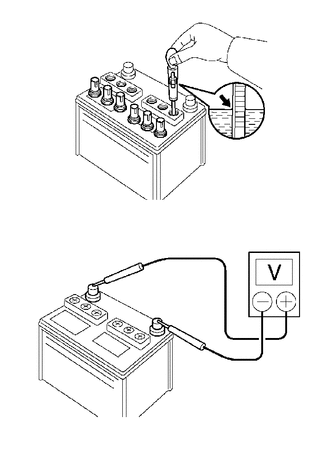
Check the electrolyte quantity.
Standard Electrolyte quantity is within the specified range. -
Inspect the specific gravity.
-
Inspect the specific gravity of each cell.
Standard specific gravity 1.25 to 1.29 (electrolyte is at 20°C (68°F)) Tech Tips
-
If the result is not as specified, recharge or replace the battery.
-
It is not necessary to inspect a maintenance-free battery.
-
-
-
Inspect the battery voltage.
-
Turn the ignition switch off and turn ON the headlights for 20 to 30 seconds. This will remove the surface charge from the battery.
-
Measure the battery voltage.
Standard voltage 12.5 to 12.9 V (electrolyte is at 20°C (68°F)) Tech Tips
If the result is not as specified, recharge or replace the battery.
-
Measure the battery voltage when cranking the engine.
Standard Approximately 6 V or higher (0°C (32°F) or higher) Tech Tips
When the battery is depleted, the horn becomes quieter.
-
NG
CHARGE OR REPLACE BATTERY
OK
-
-
CHECK ENGINE ASSEMBLY
-
Check that the crankshaft rotates smoothly when rotating it by hand.
OK Crankshaft rotates smoothly. Tech Tips
Excess engine friction may have occurred temporarily. Remove the cylinder head cover and oil pan, and check for foreign matter such as iron fragments. If there is a malfunction or signs of a malfunction present, perform a detailed inspection by disassembling all the parts.
OK
INSPECT STARTER ASSEMBLY Click here
NG
REPAIR OR REPLACE ENGINE ASSEMBLY
-
-
CHECK STARTER ASSEMBLY
-
Remove the starter assembly Click here.
-
Check for starter pinion gear wear and damage.
Standard There is no wear or damage. Result Result Proceed to NG A OK (for CVT) B OK (for M/T) C -
Install the starter assembly.
A
REPLACE STARTER ASSEMBLY
B
REPAIR DRIVE PLATE AND RING GEAR SUB-ASSEMBLY Click here
C
REPLACE FLYWHEEL SUB-ASSEMBLY Click here
-
-
INSPECT BATTERY
-
Check the electrolyte quantity.
Standard Electrolyte quantity is within the specified range. -
Inspect the specific gravity.
-
Inspect the specific gravity of each cell.
Standard specific gravity 1.25 to 1.29 (electrolyte is at 20°C (68°F)) Tech Tips
-
If the result is not as specified, recharge or replace the battery.
-
It is not necessary to inspect a maintenance-free battery.
-
-
-
Inspect the battery voltage.
-
Turn the ignition switch off and turn ON the headlights for 20 to 30 seconds. This will remove the surface charge from the battery.
-
Measure the battery voltage.
Standard voltage 12.5 to 12.9 V (electrolyte is at 20°C (68°F)) Tech Tips
If the result is not as specified, recharge or replace the battery.
-
Measure the battery voltage when cranking the engine.
Standard Approximately 6 V or higher (0°C (32°F) or higher) Tech Tips
When the battery is depleted, the horn becomes quieter.
-
NG
CHARGE OR REPLACE BATTERY
OK
-
-
INSPECT STARTER ASSEMBLY
-
Inspect the starter assembly Click here.
OK
CHECK STARTER SIGNAL CIRCUIT Click here
NG
REPLACE STARTER ASSEMBLY
-
-
PERFORM SIMULATION TEST
-
Check the cranking speed.
Result Problem Symptom Suspected Area Proceed to Cranking speed is slow (100 rpm or less)
-
Battery
-
Starter assembly
-
Excess engine friction
A Cranking speed is fast (300 rpm or more)* Engine compression loss B Tech Tips
*: If the cranking speed is fast, there may be compression loss.
-
B
CHECK AND REPAIR ENGINE ASSEMBLY
A
-
-
INSPECT BATTERY
-
Check the electrolyte quantity.
Standard Electrolyte quantity is within the specified range. -
Inspect the specific gravity.
-
Inspect the specific gravity of each cell.
Standard specific gravity 1.25 to 1.29 (electrolyte is at 20°C (68°F)) Tech Tips
-
If the result is not as specified, recharge or replace the battery.
-
It is not necessary to inspect a maintenance-free battery.
-
-
-
Inspect the battery voltage.
-
Turn the ignition switch off and turn ON the headlights for 20 to 30 seconds. This will remove the surface charge from the battery.
-
Measure the battery voltage.
Standard voltage 12.5 to 12.9 V (electrolyte is at 20°C (68°F)) Tech Tips
If the result is not as specified, recharge or replace the battery.
-
Measure the battery voltage when cranking the engine.
Standard Approximately 6 V or higher (0°C (32°F) or higher) Tech Tips
When the battery is depleted, the horn becomes quieter.
-
NG
CHARGE OR REPLACE BATTERY
OK
-
-
CHECK ENGINE ASSEMBLY
-
Check that the crankshaft rotates smoothly when rotating it by hand.
OK Crankshaft rotates smoothly. Tech Tips
Excess engine friction may have occurred temporarily. Remove the cylinder head cover and oil pan, and check for foreign matter such as iron fragments. If there is a malfunction or signs of a malfunction present, perform a detailed inspection by disassembling all the parts.
OK
INSPECT STARTER ASSEMBLY Click here
NG
REPAIR OR REPLACE ENGINE ASSEMBLY
-
-
CHECK FUEL INJECTOR ASSEMBLY
-
Using a sound scope or screwdriver, check for a fuel injector assembly operating noise while cranking the engine.
OK Fuel injector assembly operating noise is heard.
NG
READ VALUE USING INTELLIGENT TESTER (ENGINE SPEED) Click here
OK
-
-
CHECK FUEL PRESSURE
-
Inspect the fuel pressure Click here.
NG
PERFORM ACTIVE TEST USING INTELLIGENT TESTER (CONTROL THE FUEL PUMP / SPEED) Click here
OK
-
-
CHECK SPARK PLUG AND SPARK
-
Check for sparks Click here.
NG
CHECK SPARK PLUG Click here
OK
-
-
CONFIRM VEHICLE CONDITION
-
Confirm the conditions present when the malfunction occurred based on the customer problem analysis.
Result Problem Symptom Suspected Area Proceed to When the engine is stopped and a long time has passed, engine starting trouble occurs*1 Fuel pressure regulator is stuck open A When the engine is stopped and approximately 15 to 120 minutes have passed, engine starting trouble occurs*2 Fuel injector leak B When the engine is stopped and approximately 2 to 3 minutes have passed, engine starting trouble occurs*3 Failure to maintain fuel pressure by fuel pressure regulator A Condition other than above, or there is an inconsistency in the conditions present when engine starting trouble occurs - C*4 Tech Tips
*1: The fuel pressure regulator may be stuck open. Attach a fuel pressure gauge and check the ability to maintain fuel pressure after stopping the engine.
*2: Fuel may be leaking from a fuel injector assembly.
*3: The fuel pressure regulator may not be able to maintain the fuel pressure. Attach a fuel pressure gauge and check the ability to maintain fuel pressure after stopping the engine.
*4: From step 74, perform fuel system troubleshooting C (steps 75 to 79).
B
CHECK FUEL INJECTOR ASSEMBLY Click here
C
CHECK MALFUNCTION CONDITION Click here
A
-
-
CHECK FUEL PRESSURE
Tech Tips
For the fuel pressure inspection, refer to the following procedures Click here.
-
Attach a fuel pressure gauge and check the fuel pressure after stopping the engine.
Result Result Proceed to Below 147 kPa (1.5 kgf/cm2) (5 minutes after stopping the engine)
A 147 kPa (1.5 kgf/cm2) or higher (5 minutes after stopping the engine)
B* Tech Tips
-
If the engine cannot be started, check the fuel pressure after cranking the engine.
-
*: From step 74, perform fuel system troubleshooting C (steps 75 to 79).
-
A
REPLACE FUEL PRESSURE REGULATOR Click here
B
CHECK MALFUNCTION CONDITION Click here
-
-
CHECK FUEL INJECTOR ASSEMBLY
-
After stopping the engine, measure the HC concentration inside the surge tank for 15 minutes.
Result Result Proceed to 4000 ppm or more A Less than 4000 ppm B* Tech Tips
-
If the concentration is 4000 ppm or more, a fuel injector may have a sealing problem.
-
*: From step 74, perform fuel system troubleshooting C (steps 75 to 79).
-
A
REPLACE FUEL INJECTOR ASSEMBLY Click here
B
CHECK MALFUNCTION CONDITION Click here
-
-
CHECK SPARK PLUG
-
Inspect the spark plugs Click here.
Tech Tips
Even if the spark plug of only one cylinder is malfunctioning, replace the spark plugs of all cylinders.
NG
REPLACE SPARK PLUG Click here
OK
-
-
READ VALUE USING INTELLIGENT TESTER (ENGINE SPEED)
-
Connect the intelligent tester to the DLC3.
-
Turn the ignition switch to ON.
-
Turn the tester on.
-
Enter the following menus: Powertrain / Engine and ECT / Data List / Engine Speed.
-
Start the engine.
-
While running the engine, read the Engine Speed value.
Standard A value that matches the actual engine speed is constantly output. Tech Tips
-
Check the engine speed using a line graph.
-
If the engine cannot be started, check the engine speed while cranking the engine.
-
If the engine speed is 0 rpm, the crankshaft position sensor may have an open or short circuit.
-
NG
CHECK CRANKSHAFT POSITION SENSOR CIRCUIT Click here
OK
-
-
CHECK HARNESS AND CONNECTOR (IGNITION COIL POWER SOURCE)
-
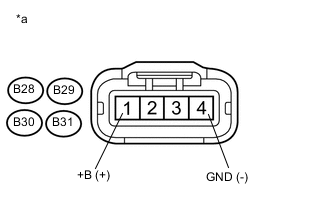
Text in Illustration *a Front view of wire harness connector
(to Ignition Coil)
Disconnect the ignition coil connector.
-
Turn the ignition switch to ON.
-
Measure the voltage according to the value(s) in the table below.
Standard Voltage Tester Connection Switch Condition Specified Condition B28-1 (+B) - B28-4 (GND) Ignition switch ON 11 to 14 V B29-1 (+B) - B29-4 (GND) Ignition switch ON 11 to 14 V B30-1 (+B) - B30-4 (GND) Ignition switch ON 11 to 14 V B31-1 (+B) - B31-4 (GND) Ignition switch ON 11 to 14 V Tech Tips
-
Jiggle the wire harness and connector to increase the likelihood of detecting malfunctions that do not always occur.
-
Make sure there is not an excessive amount of force applied to the wire harness.
-
-
Reconnect the ignition coil connector.
NG
CHECK IGNITION COIL POWER SOURCE CIRCUIT Click here
OK
-
-
CHECK HARNESS AND CONNECTOR (IGNITION COIL - ECM)
-
Disconnect the ignition coil connector.
-
Disconnect the ECM connector.
-
Measure the resistance according to the value(s) in the table below.
Standard Resistance (Check for Open) Tester Connection Condition Specified Condition B28-2 (IGF) - B39-82 (IGF1) Always Below 1 Ω B29-2 (IGF) - B39-82 (IGF1) Always Below 1 Ω B30-2 (IGF) - B39-82 (IGF1) Always Below 1 Ω B31-2 (IGF) - B39-82 (IGF1) Always Below 1 Ω Standard Resistance (Check for Short) Tester Connection Condition Specified Condition B28-2 (IGF) or B39-82 (IGF1) - Body ground Always 10 kΩ or higher B29-2 (IGF) or B39-82 (IGF1) - Body ground Always 10 kΩ or higher B30-2 (IGF) or B39-82 (IGF1) - Body ground Always 10 kΩ or higher B31-2 (IGF) or B39-82 (IGF1) - Body ground Always 10 kΩ or higher Tech Tips
-
Jiggle the wire harness and connector to increase the likelihood of detecting malfunctions that do not always occur.
-
Make sure there is not an excessive amount of force applied to the wire harness.
-
-
Reconnect the ECM connector.
-
Reconnect the ignition coil connector.
NG
REPAIR OR REPLACE HARNESS OR CONNECTOR
OK
-
-
CHECK HARNESS AND CONNECTOR (IGNITION COIL - ECM)
-
Disconnect the ignition coil connector.
-
Disconnect the ECM connector.
-
Measure the resistance according to the value(s) in the table below.
Standard Resistance (Check for Open) Tester Connection Condition Specified Condition B28-3 (IGT1) - B39-109 (IGT1) Always Below 1 Ω B29-3 (IGT2) - B39-108 (IGT2) Always Below 1 Ω B30-3 (IGT3) - B39-107 (IGT3) Always Below 1 Ω B31-3 (IGT4) - B39-106 (IGT4) Always Below 1 Ω Standard Resistance (Check for Short) Tester Connection Condition Specified Condition B28-3 (IGT1) or B39-109 (IGT1) - Body ground Always 10 kΩ or higher B29-3 (IGT2) or B39-108 (IGT2) - Body ground Always 10 kΩ or higher B30-3 (IGT3) or B39-107 (IGT3) - Body ground Always 10 kΩ or higher B31-3 (IGT4) or B39-106 (IGT4) - Body ground Always 10 kΩ or higher Tech Tips
-
Jiggle the wire harness and connector to increase the likelihood of detecting malfunctions that do not always occur.
-
Make sure there is not an excessive amount of force applied to the wire harness.
-
If the wire harness is normal, after replacing the ignition coil, check if engine starting trouble occurs again. If engine starting trouble occurs again, proceed to step 74 and perform troubleshooting for the ignition system (steps 80 to 86).
-
-
Reconnect the ECM connector.
-
Reconnect the ignition coil connector.
OK
REPLACE IGNITION COIL Click here
NG
REPAIR OR REPLACE HARNESS OR CONNECTOR
-
-
PERFORM ACTIVE TEST USING INTELLIGENT TESTER (CONTROL THE FUEL PUMP / SPEED)
-
Connect the intelligent tester to the DLC3.
-
Turn the ignition switch to ON.
-
Turn the tester on.
-
Enter the following menus: Powertrain / Engine and ECT / Active Test / Control the Fuel Pump / Speed.
-
When performing the Active Test, check for an operating sound from the fuel pump.
Standard Tester Operation Specified Condition ON Operating sound heard OFF Operating sound not heard Tech Tips
Jiggle the wire harness and connector to increase the likelihood of detecting malfunctions that do not always occur.
NG
CHECK FUEL PUMP CONTROL CIRCUIT Click here
OK
-
-
PERFORM ACTIVE TEST USING INTELLIGENT TESTER (CONTROL THE FUEL PUMP / SPEED)
-
Connect the intelligent tester to the DLC3.
-
Turn the ignition switch to ON.
-
Turn the tester on.
-
Enter the following menus: Powertrain / Engine and ECT / Active Test / Control the Fuel Pump / Speed.
-
When performing the Active Test, check for fuel leakage from the fuel pipes.
Result Result Proceed to Fuel leakage or signs of fuel leakage are present A No fuel leakage or signs of fuel leakage B Tech Tips
-
Jiggle the wire harness and connector to increase the likelihood of detecting malfunctions that do not always occur.
-
Check if the vehicle ran out of fuel, as engine starting trouble due to running out of fuel is also detected.
-
If there are no fuel leaks, after inspecting the fuel pump control system, check if engine starting trouble occurs again. If engine starting trouble occurs again, proceed to step 74 and perform fuel system troubleshooting (steps 75 to 79).
-
A
REPAIR OR REPLACE FUEL LINE
B
CHECK FUEL PUMP CONTROL CIRCUIT Click here
-
-
READ VALUE USING INTELLIGENT TESTER (ENGINE SPEED)
-
Connect the intelligent tester to the DLC3.
-
Turn the ignition switch to ON.
-
Turn the tester on.
-
Enter the following menus: Powertrain / Engine and ECT / Data List / Engine Speed.
-
Start the engine.
-
While running the engine, read the Engine Speed value.
Standard A value that matches the actual engine speed is constantly output. Tech Tips
-
Check the engine speed using a line graph.
-
If the engine cannot be started, check the engine speed while cranking the engine.
-
If the engine speed is 0 rpm, the crankshaft position sensor may have an open or short circuit.
-
NG
REPLACE CRANKSHAFT POSITION SENSOR Click here
OK
-
-
CHECK HARNESS AND CONNECTOR (FUEL INJECTOR ASSEMBLY POWER SOURCE)
-
Text in Illustration *a Front view of wire harness connector
(to Fuel Injector)
Disconnect the fuel injector assembly connector.
-
Turn the ignition switch to ON.
-
Measure the voltage according to the value(s) in the table below.
Standard Voltage Tester Connection Switch Condition Specified Condition B10-1 - Body ground Ignition switch ON 11 to 14 V B11-1 - Body ground Ignition switch ON 11 to 14 V B12-1 - Body ground Ignition switch ON 11 to 14 V B13-1 - Body ground Ignition switch ON 11 to 14 V Tech Tips
-
Jiggle the wire harness and connector to increase the likelihood of detecting malfunctions that do not always occur.
-
Make sure there is not an excessive amount of force applied to the wire harness.
-
-
Reconnect the fuel injector assembly connector.
NG
CHECK FUEL INJECTOR POWER SOURCE CIRCUIT Click here
OK
-
-
CHECK HARNESS AND CONNECTOR (FUEL INJECTOR ASSEMBLY - ECM)
-
Disconnect the fuel injector assembly connector.
-
Disconnect the ECM connector.
-
Measure the resistance according to the value(s) in the table below.
Standard Resistance (Check for Open) Tester Connection Condition Specified Condition B10-2 - B39-86 (#10) Always Below 1 Ω B11-2 - B39-85 (#20) Always Below 1 Ω B12-2 - B39-84 (#30) Always Below 1 Ω B13-2 - B39-83 (#40) Always Below 1 Ω Standard Resistance (Check for Short) Tester Connection Condition Specified Condition B10-2 or B39-86 (#10) - Body ground Always 10 kΩ or higher B11-2 or B39-85 (#20) - Body ground Always 10 kΩ or higher B12-2 or B39-84 (#30) - Body ground Always 10 kΩ or higher B13-2 or B39-83 (#40) - Body ground Always 10 kΩ or higher Tech Tips
-
Jiggle the wire harness and connector to increase the likelihood of detecting malfunctions that do not always occur.
-
Make sure there is not an excessive amount of force applied to the wire harness.
-
-
Reconnect the ECM connector.
-
Reconnect the fuel injector assembly connector.
OK
REPLACE ECM Click here
NG
REPAIR OR REPLACE HARNESS OR CONNECTOR
-
-
INSPECT MASS AIR FLOW METER
-
Inspect the mass air flow meter Click here.
NG
CHECK HARNESS AND CONNECTOR (MASS AIR FLOW METER - ECM) Click here
OK
-
-
CHECK INTAKE SYSTEM
-
Check for air suction in the intake system [vacuum hose disconnection, cracks, damaged gaskets, etc.] Click here.
Tech Tips
-
If the accelerator pedal is released after racing the engine, the inspection is easier to perform because the vacuum inside the intake manifold increases and the air suction noise becomes louder.
-
If Short FT and Long FT are largely different from the normal values when idling (intake air volume is small) and almost the same as the normal values when racing the engine (intake air volume is high), air leakage may be present.
Standard There is no air suction. -
NG
REPAIR OR REPLACE INTAKE SYSTEM
OK
-
-
CHECK THROTTLE BODY ASSEMBLY
-
Disconnect the throttle body assembly connector.
Tech Tips
When the connector is disconnected, the vehicle enters fail-safe mode and the throttle valve opening angle is 4 to 5.5°.
-
Crank the engine and check that it starts.
Result Result Proceed to Engine starts A Engine does not start B -
Connect the throttle body assembly connector.
Tech Tips
When this inspection is performed, the MIL may illuminate. After finishing the inspection, check and clear DTCs Click here.
B
PERFORM ACTIVE TEST USING INTELLIGENT TESTER (CONTROL THE VVT SYSTEM) Click here
A
-
-
CHECK THROTTLE BODY ASSEMBLY
-
Check if carbon is in the air flow passage.
Standard No carbon present.
NG
REMOVE FOREIGN OBJECT AND CLEAN THROTTLE BODY ASSEMBLY
OK
-
-
PERFORM ACTIVE TEST USING INTELLIGENT TESTER (CONTROL THE VVT SYSTEM)
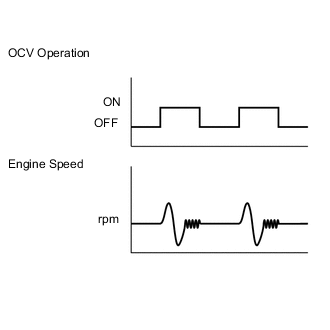
-
Connect the intelligent tester to the DLC3.
-
Turn the ignition switch to ON.
-
Turn the tester on.
-
Warm up the engine.
-
Enter the following menus: Powertrain / Engine and ECT / Active Test / Control the VVT System (Bank 1).
Tech Tips
When performing the Active Test, make sure the A/C is on and the shift lever is in neutral.
-
Check the engine speed while operating the Oil Control Valve (OCV) using the tester.
OK Tester Operation Specified Condition OFF Normal engine speed ON Soon after OCV switched from OFF to ON, engine idles roughly or stalls Tech Tips
-
Jiggle the wire harness and connector to increase the likelihood of detecting malfunctions that do not always occur.
-
When the results of the inspection using the Active Test are normal but the valve operating noise is abnormal, check the valve for any signs of problems.
-
If the camshaft timing oil control valve is stuck on, the valve overlap increases and combustion worsens due to the internal EGR which may cause rough idle or cause the engine to stall.
-
NG
REPLACE CAMSHAFT TIMING OIL CONTROL VALVE Click here
OK
-
-
PERFORM ACTIVE TEST USING INTELLIGENT TESTER (CONTROL THE VVT EXHAUST LINEAR)
-
Connect the intelligent tester to the DLC3.
-
Turn the ignition switch to ON.
-
Turn the tester on.
-
Start the engine and warm it up.
-
Enter the following menus: Powertrain / Engine and ECT / Active Test / Control the VVT Exhaust Linear (Bank 1).
-
Check the engine speed while operating the oil control valve using the tester.
OK* Tester Operation Specified Condition 0% Normal engine speed 100% Engine idles roughly or stalls Result Result Proceed to NG A OK B Tech Tips
-
*: From step 74, perform intake system troubleshooting (steps 87 to 89). If engine starting trouble still occurs, perform fuel system troubleshooting A (steps 90 to 97).
-
Jiggle the wire harness and connector to increase the likelihood of detecting malfunctions that do not always occur.
-
When the results of the inspection using the Active Test are normal but the valve operating noise is abnormal, check the valve for any signs of problems.
-
If the camshaft timing oil control valve is stuck on, the valve overlap increases and combustion worsens due to the internal EGR which may cause rough idle or cause the engine to stall.
-
A
REPLACE CAMSHAFT TIMING OIL CONTROL VALVE Click here
B
CHECK MALFUNCTION CONDITION Click here
-
-
CHECK HARNESS AND CONNECTOR (MASS AIR FLOW METER - ECM)
-
Disconnect the mass air flow meter connector.
-
Disconnect the ECM connector.
-
Measure the resistance according to the value(s) in the table below.
Standard Resistance (Check for Open) Tester Connection Condition Specified Condition B2-5 (VG) - B39-69 (VG) Always Below 1 Ω B2-4 (E2G) - B39-92 (E2G) Always Below 1 Ω Standard Resistance (Check for Short) Tester Connection Condition Specified Condition B2-5 (VG) or B39-69 (VG) - Body ground Always 10 kΩ or higher Tech Tips
-
Jiggle the wire harness and connector to increase the likelihood of detecting malfunctions that do not always occur.
-
Make sure there is not an excessive amount of force applied to the wire harness.
-
If the wire harness is normal, after replacing the mass air flow meter, check if engine starting trouble occurs again. If engine starting trouble occurs again, proceed to step 74 and perform intake system troubleshooting (steps 87 to 89). If engine starting trouble still occurs, perform fuel system troubleshooting A (steps 90 to 97).
-
-
Reconnect the ECM connector.
-
Reconnect the mass air flow meter connector.
OK
REPLACE MASS AIR FLOW METER Click here
NG
REPAIR OR REPLACE HARNESS OR CONNECTOR
-
-
INSPECT ENGINE COOLANT TEMPERATURE SENSOR
-
Inspect the engine coolant temperature sensor Click here.
Tech Tips
If the engine coolant temperature sensor is malfunctioning, after replacing it, check if engine starting trouble occurs again. If engine starting trouble occurs, replace the ECM. If engine starting trouble still occurs, proceed to step 74 and perform fuel system troubleshooting A (steps 98 to 105), fuel system troubleshooting B (steps 106 to 108), intake system troubleshooting (steps 109 to 111), and ignition system troubleshooting (steps 112 to 118), in that order.
NG
REPLACE ENGINE COOLANT TEMPERATURE SENSOR Click here
OK
-
-
CHECK HARNESS AND CONNECTOR (ENGINE COOLANT TEMPERATURE SENSOR - ECM)
-
Disconnect the engine coolant temperature sensor connector.
-
Disconnect the ECM connector.
-
Measure the resistance according to the value(s) in the table below.
Standard Resistance (Check for Open) Tester Connection Condition Specified Condition B3-2 - B39-64 (THW) Always Below 1 Ω B3-1 - B39-65 (ETHW) Always Below 1 Ω Standard Resistance (Check for Short) Tester Connection Condition Specified Condition B3-2 or B39-64 (THW) - Body ground Always 10 kΩ or higher B3-1 or B39-65 (ETHW) - Body ground Always 10 kΩ or higher Tech Tips
-
Jiggle the wire harness and connector to increase the likelihood of detecting malfunctions that do not always occur.
-
Make sure there is not an excessive amount of force applied to the wire harness.
-
If the wire harness or connector is malfunctioning, after replacing or repairing it, check if engine starting trouble occurs again. If engine starting trouble occurs, replace the ECM. If engine starting trouble still occurs, proceed to step 74 and perform fuel system troubleshooting A (steps 98 to 105), fuel system troubleshooting B (steps 106 to 108), intake system troubleshooting (steps 109 to 111), and ignition system troubleshooting (steps 112 to 118), in that order.
-
-
Reconnect the ECM connector.
-
Reconnect the engine coolant temperature sensor connector.
NG
REPAIR OR REPLACE HARNESS OR CONNECTOR
OK
-
-
INSPECT MASS AIR FLOW METER
-
Inspect the mass air flow meter Click here.
Tech Tips
If the mass air flow meter is malfunctioning, after replacing it, check if engine starting trouble occurs again. If engine starting trouble occurs, replace the ECM. If engine starting trouble still occurs, proceed to step 74 and perform fuel system troubleshooting A (steps 98 to 105), fuel system troubleshooting B (steps 106 to 108), intake system troubleshooting (steps 109 to 111), and ignition system troubleshooting (steps 112 to 118), in that order.
NG
REPLACE MASS AIR FLOW METER Click here
OK
-
-
CHECK HARNESS AND CONNECTOR (MASS AIR FLOW METER - ECM)
-
Disconnect the mass air flow meter connector.
-
Disconnect the ECM connector.
-
Measure the resistance according to the value(s) in the table below.
Standard Resistance (Check for Open) Tester Connection Condition Specified Condition B2-5 (VG) - B39-69 (VG) Always Below 1 Ω B2-4 (E2G) - B39-92 (E2G) Always Below 1 Ω Standard Resistance (Check for Short) Tester Connection Condition Specified Condition B2-5 (VG) or B39-69 (VG) - Body ground Always 10 kΩ or higher Tech Tips
-
Jiggle the wire harness and connector to increase the likelihood of detecting malfunctions that do not always occur.
-
Make sure there is not an excessive amount of force applied to the wire harness.
-
If the wire harness or connector is malfunctioning, after replacing or repairing it, check if engine starting trouble occurs again. If engine starting trouble occurs, replace the ECM. If engine starting trouble still occurs, proceed to step 74 and perform fuel system troubleshooting A (steps 98 to 105), fuel system troubleshooting B (steps 106 to 108), intake system troubleshooting (steps 109 to 111), and ignition system troubleshooting (steps 112 to 118), in that order.
-
-
Reconnect the ECM connector.
-
Reconnect the mass air flow meter connector.
NG
REPAIR OR REPLACE HARNESS OR CONNECTOR
OK
-
-
READ VALUE USING INTELLIGENT TESTER
-
Connect the intelligent tester to the DLC3.
-
Turn the ignition switch to ON.
-
Turn the tester on.
-
Enter the following menus: Powertrain / Engine and ECT / Data List / Atmosphere Pressure and Long FT #1.
-
Read the value.
Result Data List Item Result Suspected Area Proceed to Long FT #1 +25% or more or less than -25%
-
Air fuel ratio sensor
-
Heated oxygen sensor
-
Mass air flow meter
-
Fuel injector assembly
-
ECM
A Atmosphere Pressure 80 kPa (600 mmHg) or less (when altitude is 0 m) Both Data List items listed above Values are other than above - B -
B
CHECK FUEL PRESSURE Click here
A
-
-
PERFORM SIMULATION TEST
-
Remove the EFI No. 1 and ETCS fuses from the engine room relay block.
-
After 60 seconds or more elapse, install the EFI No. 1 and ETCS fuses.
-
Check if the engine can be started.
Result Result Proceed to Engine can be started A Engine cannot be started B
B
CHECK FUEL PRESSURE Click here
A
-
-
INSPECT AIR FUEL RATIO SENSOR
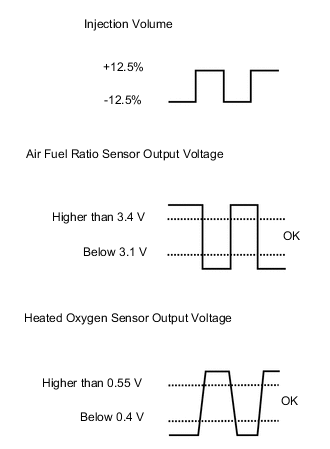
-
Connect the intelligent tester to the DLC3.
-
Start the engine.
-
Turn the tester on.
-
Enter the following menus: Powertrain / Engine and ECT / Data List / Fuel System Status #1.
-
Confirm that Fuel System Status #1 is CL.
-
Enter the following menus: Powertrain / Engine and ECT / Data List / AF Lambda B1S1.
-
Confirm that AF Lambda B1S1 is within the range of 0.95 to 1.05 when idling.
-
Enter the following menus: Powertrain / Engine and ECT / Active Test / Control the Injection Volume for A/F Sensor.
-
Read the output voltage from the air fuel ratio sensor when increasing and decreasing the fuel injection volume.
Standard Tester Display Injection Volume Specified Condition AFS Voltage B1S1 +12.5% Air fuel ratio sensor output voltage is below 3.1 V -12.5% Air fuel ratio sensor output voltage is higher than 3.4 V Tech Tips
-
The air fuel ratio sensor has an output delay of a few seconds and the heated oxygen sensor has a maximum output delay of approximately 20 seconds.
-
If the air fuel ratio sensor is malfunctioning, after replacing it, check if engine starting trouble occurs again. If engine starting trouble occurs, replace the ECM. If engine starting trouble still occurs, proceed to step 74 and perform fuel system troubleshooting A (steps 98 to 105), fuel system troubleshooting B (steps 106 to 108), intake system troubleshooting (steps 109 to 111), and ignition system troubleshooting (steps 112 to 118), in that order.
-
NG
REPLACE AIR FUEL RATIO SENSOR Click here
OK
-
-
INSPECT HEATED OXYGEN SENSOR
-
Inspect the heated oxygen sensor Click here.
Tech Tips
If the heated oxygen sensor is malfunctioning, after replacing it, check if engine starting trouble occurs again. If engine starting trouble occurs, replace the ECM. If engine starting trouble still occurs, proceed to step 74 and perform fuel system troubleshooting A (steps 98 to 105), fuel system troubleshooting B (steps 106 to 108), intake system troubleshooting (steps 109 to 111), and ignition system troubleshooting (steps 112 to 118), in that order.
NG
REPLACE HEATED OXYGEN SENSOR Click here
OK
-
-
PERFORM SIMULATION TEST
-
Check if the idling speed is stable after starting the engine.
OK Idling speed is stable. Tech Tips
After replacing the fuel injector assembly or mass air flow meter, check if engine starting trouble occurs again. If engine starting trouble occurs, replace the ECM. If engine starting trouble still occurs, proceed to step 74 and perform fuel system troubleshooting A (steps 98 to 105), fuel system troubleshooting B (steps 106 to 108), intake system troubleshooting (steps 109 to 111), and ignition system troubleshooting (steps 112 to 118), in that order.
OK
REPLACE MASS AIR FLOW METER Click here
NG
REPLACE FUEL INJECTOR ASSEMBLY Click here
-
-
CHECK FUEL PRESSURE
-
Inspect the fuel pressure Click here.
NG
PERFORM ACTIVE TEST USING INTELLIGENT TESTER (CONTROL THE FUEL PUMP / SPEED) Click here
OK
-
-
CHECK SPARK PLUG
-
Inspect the spark plugs Click here.
Result Result Proceed to All cylinders are normal A One cylinder is abnormal*1 B All cylinders are abnormal*2, *3 C Tech Tips
-
*1: If one cylinder is abnormal, replace the spark plug of that cylinder and inspect the ignition and fuel system for that cylinder. After performing repairs, check if engine starting trouble occurs again. If engine starting trouble still occurs, proceed to step 74 and perform fuel system troubleshooting A (steps 98 to 105), fuel system troubleshooting B (steps 106 to 108), intake system troubleshooting (steps 109 to 111), and ignition system troubleshooting (steps 112 to 118), in that order.
-
*2: If all cylinders are abnormal, replace the spark plugs of all cylinders and check if engine starting trouble occurs again. If engine starting trouble still occurs, proceed to step 74 and perform fuel system troubleshooting A (steps 98 to 105), fuel system troubleshooting B (steps 106 to 108), intake system troubleshooting (steps 109 to 111), and ignition system troubleshooting (steps 112 to 118), in that order.
-
*3: Engine starting trouble may occur if the vehicle is driven extremely short distances repeatedly.
-
B
REPLACE SPARK PLUG (ABNORMAL CYLINDER) Click here
C
REPLACE SPARK PLUG (ALL CYLINDER) Click here
A
-
-
CONFIRM VEHICLE CONDITION
-
Confirm the conditions present when the malfunction occurred based on the customer problem analysis.
Result Problem Symptom Suspected Area Proceed to When the engine is stopped and a long time has passed, engine starting trouble occurs*1 Fuel pressure regulator is stuck open A When the engine is stopped and approximately 15 to 120 minutes have passed, engine starting trouble occurs*2 Fuel injector leak B When the engine is stopped and approximately 2 to 3 minutes have passed, engine starting trouble occurs*3 Failure to maintain fuel pressure by fuel pressure regulator A Condition other than above, or there is an inconsistency in the conditions present when engine starting trouble occurs - C*4 Tech Tips
*1: The fuel pressure regulator may be stuck open. Attach a fuel pressure gauge and check the ability to maintain fuel pressure after stopping the engine.
*2: Fuel may be leaking from a fuel injector assembly.
*3: The fuel pressure regulator may not be able to maintain the fuel pressure. Attach a fuel pressure gauge and check the ability to maintain fuel pressure after stopping the engine.
*4: From step 74, perform fuel system troubleshooting A (steps 98 to 105), fuel system troubleshooting B (steps 106 to 108), intake system troubleshooting (steps 109 to 111), and ignition system troubleshooting (steps 112 to 118), in that order.
B
CHECK FUEL INJECTOR ASSEMBLY Click here
C
CHECK MALFUNCTION CONDITION Click here
A
-
-
CHECK FUEL PRESSURE
Tech Tips
For the fuel pressure inspection, refer to the following procedures Click here.
-
Attach a fuel pressure gauge and check the fuel pressure after stopping the engine.
Result Result Proceed to Below 147 kPa (1.5 kgf/cm2) (5 minutes after stopping the engine)
A 147 kPa (1.5 kgf/cm2) or higher (5 minutes after stopping the engine)
B* Tech Tips
-
If the engine cannot be started, check the fuel pressure after cranking the engine.
-
*: From step 74, perform fuel system troubleshooting A (steps 98 to 105), fuel system troubleshooting B (steps 106 to 108), intake system troubleshooting (steps 109 to 111), and ignition system troubleshooting (steps 112 to 118), in that order.
-
A
REPLACE FUEL PRESSURE REGULATOR Click here
B
CHECK MALFUNCTION CONDITION Click here
-
-
CHECK FUEL INJECTOR ASSEMBLY
-
Clean the inside of the surge tank with compressed air.
-
After stopping the engine, measure the HC concentration inside the surge tank for 15 minutes.
Result Result Proceed to 4000 ppm or more A Less than 4000 ppm B* Tech Tips
-
If the concentration is 4000 ppm or more, a fuel injector may have a sealing problem.
-
*: From step 74, perform fuel system troubleshooting A (steps 98 to 105), fuel system troubleshooting B (steps 106 to 108), intake system troubleshooting (steps 109 to 111), and ignition system troubleshooting (steps 112 to 118), in that order.
-
A
REPLACE FUEL INJECTOR ASSEMBLY Click here
B
CHECK MALFUNCTION CONDITION Click here
-
-
PERFORM ACTIVE TEST USING INTELLIGENT TESTER (CONTROL THE FUEL PUMP / SPEED)
-
Connect the intelligent tester to the DLC3.
-
Turn the ignition switch to ON.
-
Turn the tester on.
-
Enter the following menus: Powertrain / Engine and ECT / Active Test / Control the Fuel Pump / Speed.
-
When performing the Active Test, check for fuel leakage from the fuel pipes.
Result Result Proceed to Fuel leakage or signs of fuel leakage are present A No fuel leakage or signs of fuel leakage B Tech Tips
-
Jiggle the wire harness and connector to increase the likelihood of detecting malfunctions that do not always occur.
-
Check if the vehicle ran out of fuel, as engine starting trouble due to running out of fuel is also detected.
-
If there are no fuel leaks, after inspecting the fuel pump control system, check if engine starting trouble occurs again. If engine starting trouble still occurs, proceed to step 74 and perform fuel system troubleshooting A (steps 98 to 105), fuel system troubleshooting B (steps 106 to 108), intake system troubleshooting (steps 109 to 111), and ignition system troubleshooting (steps 112 to 118), in that order.
-
A
REPAIR OR REPLACE FUEL LINE
B
CHECK FUEL PUMP CONTROL CIRCUIT Click here
-
-
CHECK MALFUNCTION CONDITION
-
If the malfunction could not be identified during the inspection in steps 39, 40, 41 and 48, perform fuel system troubleshooting C (steps 75 to 79).
Result Performed Step Troubleshooting by System Procedure Proceed to Steps 39, 40, 41 and 48 Fuel system troubleshooting C 75 to 79 A -
If the malfunction could not be identified during the inspection in step 46, perform ignition system troubleshooting (steps 80 to 86).
Result Performed Step Troubleshooting by System Procedure Proceed to Step 46 Ignition system troubleshooting 80 to 86 B -
If the malfunction could not be identified during the inspection in steps 56, 57 and 58, perform intake air system troubleshooting (steps 87 to 89). If engine starting trouble still occurs, perform fuel system troubleshooting A (steps 90 to 97).
Result Performed Step Troubleshooting by System Procedure Proceed to Step 56, 57, 58 Intake air system troubleshooting 87 to 89 C Fuel system troubleshooting A 90 to 97 -
If the malfunction could not be identified during the inspection in steps 59, 60, 61, 62, 65, 66, 67, 69, 70, 71, 72, 73, perform fuel system troubleshooting A (steps 98 to 105), fuel system troubleshooting B (steps 106 to 108), intake air system troubleshooting (steps 109 to 111), and ignition system troubleshooting (steps 112 to 118), in that order.
Result Performed Step Troubleshooting by System Procedure Proceed to Steps 59, 60, 61, 62, 65, 66, 67, 69, 70, 71, 72, 73 Fuel system troubleshooting A 98 to 105 D Fuel system troubleshooting B 106 to 108 Intake air system troubleshooting 109 to 111 Ignition system troubleshooting 112 to 118
B
CHECK CRANKSHAFT POSITION SENSOR Click here
C
READ VALUE USING INTELLIGENT TESTER (ISC LEARNING VALUE) Click here
D
CHECK FUEL PRESSURE Click here
A
-
-
INSPECT FUEL INJECTOR ASSEMBLY
-
Inspect the fuel injector assemblies Click here.
NG
REPLACE FUEL INJECTOR ASSEMBLY Click here
OK
-
-
CHECK HARNESS AND CONNECTOR (FUEL INJECTOR ASSEMBLY POWER SOURCE)
-
Text in Illustration *a Front view of wire harness connector
(to Fuel Injector)
Disconnect the fuel injector assembly connector.
-
Turn the ignition switch to ON.
-
Measure the voltage according to the value(s) in the table below.
Standard Voltage Tester Connection Switch Condition Specified Condition B10-1 - Body ground Ignition switch ON 11 to 14 V B11-1 - Body ground Ignition switch ON 11 to 14 V B12-1 - Body ground Ignition switch ON 11 to 14 V B13-1 -Body ground Ignition switch ON 11 to 14 V Tech Tips
-
Jiggle the wire harness and connector to increase the likelihood of detecting malfunctions that do not always occur.
-
Make sure there is not an excessive amount of force applied to the wire harness.
-
-
Reconnect the fuel injector assembly connector.
NG
CHECK FUEL INJECTOR POWER SOURCE CIRCUIT Click here
OK
-
-
CHECK HARNESS AND CONNECTOR (FUEL INJECTOR ASSEMBLY - ECM)
-
Disconnect the fuel injector assembly connector.
-
Disconnect the ECM connector.
-
Measure the resistance according to the value(s) in the table below.
Standard Resistance (Check for Open) Tester Connection Condition Specified Condition B10-2 - B39-86 (#10) Always Below 1 Ω B11-2 - B39-85 (#20) Always Below 1 Ω B12-2 - B39-84 (#30) Always Below 1 Ω B13-2 - B39-83 (#40) Always Below 1 Ω Standard Resistance (Check for Short) Tester Connection Condition Specified Condition B10-2 or B39-86 (#10) - Body ground Always 10 kΩ or higher B11-2 or B39-85 (#20) - Body ground Always 10 kΩ or higher B12-2 or B39-84 (#30) - Body ground Always 10 kΩ or higher B13-2 or B39-83 (#40) - Body ground Always 10 kΩ or higher Tech Tips
-
Jiggle the wire harness and connector to increase the likelihood of detecting malfunctions that do not always occur.
-
Make sure there is not an excessive amount of force applied to the wire harness.
-
-
Reconnect the ECM connector.
-
Reconnect the fuel injector assembly connector.
NG
REPAIR OR REPLACE HARNESS OR CONNECTOR
OK
-
-
CHECK CRANKSHAFT POSITION SENSOR
-
Replace the crankshaft position sensor Click here.
-
Check the engine start operation.
OK Malfunction has been repaired successfully.
OK
END (CRANKSHAFT POSITION SENSOR IS DEFECTIVE)
NG
-
-
CHECK CAMSHAFT POSITION SENSOR
-
Replace the camshaft position sensor Click here.
-
Check the engine start operation.
OK Malfunction has been repaired successfully.
OK
END (CAMSHAFT POSITION SENSOR IS DEFECTIVE)
NG
REPLACE ECM Click here
-
-
CHECK CRANKSHAFT POSITION SENSOR
-
Check the tightening and installation condition of the crankshaft position sensor bolt.
-
Check the connection of the crankshaft position sensor connector.
OK Sensor is installed correctly.
NG
SECURELY REINSTALL CRANKSHAFT POSITION SENSOR Click here
OK
-
-
CHECK CAMSHAFT POSITION SENSOR
-
Check the tightening and installation condition of the camshaft position sensor bolt.
-
Check the connection of the camshaft position sensor connector.
OK Sensor is installed correctly.
NG
SECURELY REINSTALL CAMSHAFT POSITION SENSOR Click here
OK
-
-
CHECK HARNESS AND CONNECTOR (CRANKSHAFT POSITION SENSOR - ECM)
-
Disconnect the crankshaft position sensor connector.
-
Disconnect the ECM connector.
-
Measure the resistance according to the value(s) in the table below.
Standard Resistance (Check for Open) Tester Connection Condition Specified Condition B15-1 - B39-93 (NE+) Always Below 1 Ω B15-2 - B39-117 (NE-) Always Below 1 Ω Standard Resistance (Check for Short) Tester Connection Condition Specified Condition B15-1 or B39-93 (NE+) - Body ground Always 10 kΩ or higher B15-2 or B39-117 (NE-) - Body ground Always 10 kΩ or higher Tech Tips
-
Jiggle the wire harness and connector to increase the likelihood of detecting malfunctions that do not always occur.
-
Make sure there is not an excessive amount of force applied to the wire harness.
-
-
Reconnect the ECM connector.
-
Reconnect the crankshaft position sensor connector.
NG
REPAIR OR REPLACE HARNESS OR CONNECTOR
OK
-
-
CHECK HARNESS AND CONNECTOR (CAMSHAFT POSITION SENSOR FOR INTAKE SIDE - ECM)
-
Disconnect the camshaft position sensor for intake side connector.
-
Disconnect the ECM connector.
-
Measure the resistance according to the value(s) in the table below.
Standard Resistance (Check for Open) Tester Connection Condition Specified Condition B22-1 (VV1+) - B39-94 (G2+) Always Below 1 Ω B22-2 (VV1-) - B39-118 (G2-) Always Below 1 Ω B22-3 (VC) - B39-119 (VCV1) Always Below 1 Ω Standard Resistance (Check for Short) Tester Connection Condition Specified Condition B22-1 (VV1+) or B39-94 (G2+) - Body ground Always 10 kΩ or higher B22-2 (VV1-) or B39-118 (G2-) - Body ground Always 10 kΩ or higher B22-3 (VC) or B39-119 (VCV1) - Body ground Always 10 kΩ or higher Tech Tips
-
Jiggle the wire harness and connector to increase the likelihood of detecting malfunctions that do not always occur.
-
Make sure there is not an excessive amount of force applied to the wire harness.
-
-
Reconnect the ECM connector.
-
Reconnect the camshaft position sensor for intake side connector.
NG
REPAIR OR REPLACE HARNESS OR CONNECTOR
OK
-
-
CHECK HARNESS AND CONNECTOR (CAMSHAFT POSITION SENSOR FOR EXHAUST SIDE - ECM)
-
Disconnect the camshaft position sensor for exhaust side connector.
-
Disconnect the ECM connector.
-
Measure the resistance according to the value(s) in the table below.
Standard Resistance (Check for Open) Tester Connection Condition Specified Condition B21-1 (VVE+) - B39-98 (EV1+) Always Below 1 Ω B21-2 (VVE-) - B39-120 (EV1-) Always Below 1 Ω B21-3 (VC2) - B39-121 (VCE1) Always Below 1 Ω Standard Resistance (Check for Short) Tester Connection Condition Specified Condition B21-1 (VVE+) or B39-98 (EV1+) - Body ground Always 10 kΩ or higher B21-2 (VVE-) or B39-120 (EV1-) - Body ground Always 10 kΩ or higher B21-3 (VC2) or B39-121 (VCE1) - Body ground Always 10 kΩ or higher Tech Tips
-
Jiggle the wire harness and connector to increase the likelihood of detecting malfunctions that do not always occur.
-
Make sure there is not an excessive amount of force applied to the wire harness.
-
-
Reconnect the ECM connector.
-
Reconnect the camshaft position sensor for exhaust side connector.
NG
REPAIR OR REPLACE HARNESS OR CONNECTOR
OK
-
-
CHECK CRANKSHAFT POSITION SENSOR
-
Replace the crankshaft position sensor Click here.
-
Check the engine start operation.
OK Malfunction has been repaired successfully.
OK
END (CRANKSHAFT POSITION SENSOR IS DEFECTIVE)
NG
-
-
CHECK CAMSHAFT POSITION SENSOR
-
Replace the camshaft position sensor Click here.
-
Check the engine start operation.
OK Malfunction has been repaired successfully.
OK
END (CAMSHAFT POSITION SENSOR IS DEFECTIVE)
NG
REPLACE ECM Click here
-
-
READ VALUE USING INTELLIGENT TESTER (ISC LEARNING VALUE)
-
Connect the intelligent tester to the DLC3.
-
Turn the ignition switch to ON.
-
Turn the tester on.
-
Enter the following menus: Powertrain / Engine and ECT / Data List / ISC Learning Value.
-
Start the engine and warm it up until the engine coolant temperature stabilizes with the A/C switch and all the accessory switches off.
Result Data List Item Result Suspected Area Proceed to ISC Learning Value (Engine displacement (liters) x 0.9) or more
-
Valve timing
-
Compression
A Less than (engine displacement (liters) x 0.9) - B -
B
INSPECT ENGINE COOLANT TEMPERATURE SENSOR Click here
A
-
-
CHECK CYLINDER COMPRESSION PRESSURE
-
Inspect the compression Click here.
OK
CHECK VALVE TIMING
NG
REPAIR OR REPLACE ENGINE ASSEMBLY
-
-
INSPECT ENGINE COOLANT TEMPERATURE SENSOR
-
Inspect the engine coolant temperature sensor Click here.
NG
REPLACE ENGINE COOLANT TEMPERATURE SENSOR Click here
OK
-
-
CHECK FUEL PRESSURE
Tech Tips
For the fuel pressure inspection, refer to the following procedures Click here.
-
Attach a fuel pressure gauge and check the fuel pressure when cranking the engine and after stopping the engine.
Result Vehicle State Specified Condition Cranking engine 304 to 343 kPa (3.1 to 3.5 kgf/cm2)
5 minutes after stopping engine 147 kPa (1.5 kgf/cm2) or higher
NG
PERFORM ACTIVE TEST USING INTELLIGENT TESTER (CONTROL THE FUEL PUMP / SPEED) Click here
OK
-
-
READ VALUE USING INTELLIGENT TESTER (LONG FT #1)
-
Connect the intelligent tester to the DLC3.
-
Turn the ignition switch to ON.
-
Turn the tester on.
-
Enter the following menus: Powertrain / Engine and ECT / Data List / Long FT #1.
Result Data List Item Result Suspected Area Proceed to Long FT #1 -15 to +15%
-
Wire harness or connector
-
Fuel
A +15% or more, or less than -15% Fuel injector B -
B
REPLACE FUEL INJECTOR ASSEMBLY Click here
A
-
-
PERFORM SIMULATION TEST
-
Check if the idling speed after starting the engine is currently stable and has always been stable in the past.
Result Problem Symptom Suspected Area Proceed to Current unstable idling speed or history of unstable idling speed Crankshaft position sensor system A All current and past idling speeds are stable Fuel B Tech Tips
Through the customer problem analysis, confirm the fuel being used and the location at which the fuel was added to check if the malfunction is caused by the fuel in the vehicle.
B
REPLACE FUEL
A
-
-
CHECK CRANKSHAFT POSITION SENSOR
-
Check the tightening and installation condition of the crankshaft position sensor bolt.
-
Check the connection of the crankshaft position sensor connector.
OK Sensor is installed correctly.
NG
SECURELY REINSTALL CRANKSHAFT POSITION SENSOR Click here
OK
-
-
CHECK HARNESS AND CONNECTOR (CRANKSHAFT POSITION SENSOR - ECM)
-
Disconnect the crankshaft position sensor connector.
-
Disconnect the ECM connector.
-
Measure the resistance according to the value(s) in the table below.
Standard Resistance (Check for Open) Tester Connection Condition Specified Condition B15-1 - B39-93 (NE+) Always Below 1 Ω B15-2 - B39-117 (NE-) Always Below 1 Ω Standard Resistance (Check for Short) Tester Connection Condition Specified Condition B15-1 or B39-93 (NE+) - Body ground Always 10 kΩ or higher B15-2 or B39-117 (NE-) - Body ground Always 10 kΩ or higher Tech Tips
-
Jiggle the wire harness and connector to increase the likelihood of detecting malfunctions that do not always occur.
-
Make sure there is not an excessive amount of force applied to the wire harness.
-
-
Reconnect the ECM connector.
-
Reconnect the crankshaft position sensor connector.
NG
REPAIR OR REPLACE HARNESS OR CONNECTOR
OK
-
-
CHECK CRANKSHAFT POSITION SENSOR
-
Replace the crankshaft position sensor Click here.
-
Check the engine start operation.
OK Malfunction has been repaired successfully.
OK
END (CRANKSHAFT POSITION SENSOR IS DEFECTIVE)
NG
REPLACE ECM Click here
-
-
PERFORM ACTIVE TEST USING INTELLIGENT TESTER (CONTROL THE FUEL PUMP / SPEED)
-
Connect the intelligent tester to the DLC3.
-
Turn the ignition switch to ON.
-
Enter the following menus: Powertrain / Engine and ECT / Active Test / Control the Fuel Pump / Speed.
-
When performing the Active Test, check for fuel leakage from the fuel pipes.
Result Result Proceed to Fuel leakage or signs of fuel leakage are present A No fuel leakage or signs of fuel leakage B Tech Tips
-
Jiggle the wire harness and connector to increase the likelihood of detecting malfunctions that do not always occur.
-
When performing the Active Test, if there is no operating noise from the fuel pump, the fuel pump system may be malfunctioning.
-
Check if the vehicle ran out of fuel, as engine starting trouble due to running out of fuel is also detected.
-
A
REPAIR OR REPLACE FUEL LINE
B
-
-
INSPECT FUEL PUMP
-
Inspect fuel pump Click here.
Tech Tips
-
Make sure there is no foreign matter such as iron particles on the fuel pump and no signs that the fuel pump was stuck.
-
Make sure the internal connector is securely connected.
-
Make sure the fuel pump filter is not clogged.
-
OK
REPLACE FUEL PRESSURE REGULATOR Click here
NG
REPLACE FUEL PUMP Click here
-
-
CHECK FUEL PRESSURE
Tech Tips
For the fuel pressure inspection, refer to the following procedures Click here.
-
Attach a fuel pressure gauge and check the fuel pressure after stopping the engine.
Result Result Proceed to 147 kPa (1.5 kgf/cm2) or higher (5 minutes after stopping the engine)
A Below 147 kPa (1.5 kgf/cm2) (5 minutes after stopping the engine)
B
B
PERFORM ACTIVE TEST USING INTELLIGENT TESTER (CONTROL THE FUEL PUMP / SPEED) Click here
A
-
-
READ VALUE USING INTELLIGENT TESTER (LONG FT #1)
-
Connect the intelligent tester to the DLC3.
-
Turn the ignition switch to ON.
-
Turn the tester on.
-
Enter the following menus: Powertrain / Engine and ECT / Data List / Long FT #1.
Result Data List Item Result Suspected Area Proceed to Long FT #1 -15 to +15%
-
Wire harness or connector
-
Fuel
A +15% or more, or less than -15% Fuel injector assembly B -
B
REPLACE FUEL INJECTOR ASSEMBLY Click here
A
-
-
PERFORM SIMULATION TEST
-
Check if the idling speed after starting the engine is currently stable and has always been stable in the past.
Result Problem Symptom Suspected Area Proceed to Current unstable idling speed or history of unstable idling speed Crankshaft position sensor system A All current and past idling speeds are stable Fuel B Tech Tips
Through the customer problem analysis, confirm the fuel being used and the location at which the fuel was added to check if the malfunction is caused by the fuel in the vehicle.
B
REPLACE FUEL
A
-
-
CHECK CRANKSHAFT POSITION SENSOR
-
Check the tightening and installation condition of the crankshaft position sensor bolt.
-
Check the connection of the crankshaft position sensor connector.
OK Sensor is installed correctly.
NG
SECURELY REINSTALL CRANKSHAFT POSITION SENSOR Click here
OK
-
-
CHECK HARNESS AND CONNECTOR (CRANKSHAFT POSITION SENSOR - ECM)
-
Disconnect the crankshaft position sensor connector.
-
Disconnect the ECM connector.
-
Measure the resistance according to the value(s) in the table below.
Standard Resistance (Check for Open) Tester Connection Condition Specified Condition B15-1 - B39-93 (NE+) Always Below 1 Ω B15-2 - B39-117 (NE-) Always Below 1 Ω Standard Resistance (Check for Short) Tester Connection Condition Specified Condition B15-1 or B39-93 (NE+) - Body ground Always 10 kΩ or higher B15-2 or B39-117 (NE-) - Body ground Always 10 kΩ or higher Tech Tips
-
Jiggle the wire harness and connector to increase the likelihood of detecting malfunctions that do not always occur.
-
Make sure there is not an excessive amount of force applied to the wire harness.
-
-
Reconnect the ECM connector.
-
Reconnect the crankshaft position sensor connector.
NG
REPAIR OR REPLACE HARNESS OR CONNECTOR
OK
-
-
CHECK CRANKSHAFT POSITION SENSOR
-
Replace the crankshaft position sensor Click here.
-
Check the engine start operation.
OK Malfunction has been repaired successfully.
OK
END (CRANKSHAFT POSITION SENSOR IS DEFECTIVE)
NG
REPLACE ECM Click here
-
-
PERFORM ACTIVE TEST USING INTELLIGENT TESTER (CONTROL THE FUEL PUMP / SPEED)
-
Connect the intelligent tester to the DLC3.
-
Turn the ignition switch to ON.
-
Turn the tester on.
-
Enter the following menus: Powertrain / Engine and ECT / Active Test / Control the Fuel Pump / Speed.
-
When performing the Active Test, check for fuel leakage from the fuel pipes.
Result Result Proceed to Fuel leakage or signs of fuel leakage are present A No fuel leakage or signs of fuel leakage B Tech Tips
-
Jiggle the wire harness and connector to increase the likelihood of detecting malfunctions that do not always occur.
-
When performing the Active Test, if there is no operating noise from the fuel pump, the fuel pump system may be malfunctioning.
-
Check if the vehicle ran out of fuel, as engine starting trouble due to running out of fuel is also detected.
-
A
REPAIR OR REPLACE FUEL LINE
B
-
-
INSPECT FUEL PUMP
-
Inspect fuel pump Click here.
Tech Tips
-
Make sure there is no foreign matter such as iron particles on the fuel pump and no signs that the fuel pump was stuck.
-
Make sure the internal connector is securely connected.
-
Make sure the fuel pump filter is not clogged.
-
NG
REPLACE FUEL PUMP Click here
OK
-
-
CHECK PURGE VSV
-
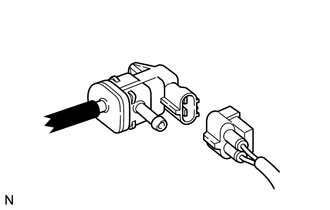
Disconnect the vacuum hose (on the canister side) of the purge VSV.
-
Start the engine.
-
Idle the engine.
-
Disconnect the purge VSV connector.
-
Check if air flows through the purge VSV.
Standard Air does not flow -
Reconnect the purge VSV connector.
-
Reconnect the vacuum hose.
Tech Tips
When this inspection is performed, the MIL may illuminate. After finishing the inspection, check and clear DTCs Click here.
NG
INSPECT PURGE VSV Click here
OK
-
-
CHECK FUEL INJECTOR ASSEMBLY
-
Clean the inside of the surge tank with compressed air.
-
After stopping the engine, measure the HC concentration inside the surge tank for 15 minutes.
Result Result Proceed to 4000 ppm or more A Less than 4000 ppm B Tech Tips
If the concentration is 4000 ppm or more, a fuel injector may have a sealing problem.
A
REPLACE FUEL INJECTOR ASSEMBLY Click here
B
-
-
CHECK INTAKE VALVE
-
Check if carbon is on the intake valves.
Result Result Proceed to Carbon present A No carbon present B
A
CLEAN INTAKE VALVE
B
-
-
READ VALUE USING INTELLIGENT TESTER (ISC LEARNING VALUE)
-
Connect the intelligent tester to the DLC3.
-
Turn the ignition switch to ON.
-
Turn the tester on.
-
Enter the following menus: Powertrain / Engine and ECT / Data List / ISC Learning Value.
-
Start the engine, turn off all accessory switches and warm up the engine until the engine coolant temperature stabilizes.
Result Data List Item Result Suspected Area Proceed to ISC Learning Value (engine displacement (liters) x 0.9) or more
-
Valve timing
-
Compression
A Less than (engine displacement (liters) x 0.9) - B -
B
INSPECT ENGINE COOLANT TEMPERATURE SENSOR Click here
A
-
-
CHECK CYLINDER COMPRESSION PRESSURE
-
Inspect the compression Click here.
OK
ADJUST VALVE TIMING Click here
NG
REPAIR OR REPLACE ENGINE ASSEMBLY
-
-
INSPECT ENGINE COOLANT TEMPERATURE SENSOR
-
Inspect the engine coolant temperature sensor Click here.
NG
REPLACE ENGINE COOLANT TEMPERATURE SENSOR Click here
OK
-
-
CHECK CRANKSHAFT POSITION SENSOR
-
Check the tightening and installation condition of the crankshaft position sensor bolt.
-
Check the connection of the crankshaft position sensor connector.
OK Sensor is installed correctly.
NG
SECURELY REINSTALL CRANKSHAFT POSITION SENSOR Click here
OK
-
-
CHECK CAMSHAFT POSITION SENSOR
-
Check the tightening and installation condition of the camshaft position sensor bolt.
-
Check the connection of the camshaft position sensor connector.
OK Sensor is installed correctly.
NG
SECURELY REINSTALL CAMSHAFT POSITION SENSOR Click here
OK
-
-
CHECK HARNESS AND CONNECTOR (CRANKSHAFT POSITION SENSOR - ECM)
-
Disconnect the crankshaft position sensor connector.
-
Disconnect the ECM connector.
-
Measure the resistance according to the value(s) in the table below.
Standard Resistance (Check for Open) Tester Connection Condition Specified Condition B15-1 - B39-93 (NE+) Always Below 1 Ω B15-2 - B39-117 (NE-) Always Below 1 Ω Standard Resistance (Check for Short) Tester Connection Condition Specified Condition B15-1 or B39-93 (NE+) - Body ground Always 10 kΩ or higher B15-2 or B39-117 (NE-) - Body ground Always 10 kΩ or higher Tech Tips
-
Jiggle the wire harness and connector to increase the likelihood of detecting malfunctions that do not always occur.
-
Make sure there is not an excessive amount of force applied to the wire harness.
-
-
Reconnect the ECM connector.
-
Reconnect the crankshaft position sensor connector.
NG
REPAIR OR REPLACE HARNESS OR CONNECTOR
OK
-
-
CHECK HARNESS AND CONNECTOR (CAMSHAFT POSITION SENSOR FOR INTAKE SIDE - ECM)
-
Disconnect the camshaft position sensor for intake side connector.
-
Disconnect the ECM connector.
-
Measure the resistance according to the value(s) in the table below.
Standard Resistance (Check for Open) Tester Connection Condition Specified Condition B22-1 (VV1+) - B39-94 (G2+) Always Below 1 Ω B22-2 (VV1-) - B39-118 (G2-) Always Below 1 Ω B22-3 (VC) - B39-119 (VCV1) Always Below 1 Ω Standard Resistance (Check for Short) Tester Connection Condition Specified Condition B22-1 (VV1+) or B39-94 (G2+) - Body ground Always 10 kΩ or higher B22-2 (VV1-) or B39-118 (G2-) - Body ground Always 10 kΩ or higher B22-3 (VC) or B39-119 (VCV1) - Body ground Always 10 kΩ or higher Tech Tips
-
Jiggle the wire harness and connector to increase the likelihood of detecting malfunctions that do not always occur.
-
Make sure there is not an excessive amount of force applied to the wire harness.
-
-
Reconnect the ECM connector.
-
Reconnect the camshaft position sensor for intake side connector.
NG
REPAIR OR REPLACE HARNESS OR CONNECTOR
OK
-
-
CHECK HARNESS AND CONNECTOR (CAMSHAFT POSITION SENSOR FOR EXHAUST SIDE - ECM)
-
Disconnect the camshaft position sensor for exhaust side connector.
-
Disconnect the ECM connector.
-
Measure the resistance according to the value(s) in the table below.
Standard Resistance (Check for Open) Tester Connection Condition Specified Condition B21-1 (VVE+) - B39-98 (EV1+) Always Below 1 Ω B21-2 (VVE-) - B39-120 (EV1-) Always Below 1 Ω B21-3 (VC2) - B39-121 (VCE1) Always Below 1 Ω Standard Resistance (Check for Short) Tester Connection Condition Specified Condition B21-1 (VVE+) or B39-98 (EV1+) - Body ground Always 10 kΩ or higher B21-2 (VVE-) or B39-120 (EV1-) - Body ground Always 10 kΩ or higher B21-3 (VC2) or B39-121 (VCE1) - Body ground Always 10 kΩ or higher Tech Tips
-
Jiggle the wire harness and connector to increase the likelihood of detecting malfunctions that do not always occur.
-
Make sure there is not an excessive amount of force applied to the wire harness.
-
-
Reconnect the ECM connector.
-
Reconnect the camshaft position sensor for exhaust side connector.
NG
REPAIR OR REPLACE HARNESS OR CONNECTOR
OK
-
-
CHECK CRANKSHAFT POSITION SENSOR
-
Replace the crankshaft position sensor Click here.
-
Check the engine start operation.
OK Malfunction has been repaired successfully.
OK
END (CRANKSHAFT POSITION SENSOR IS DEFECTIVE)
NG
-
-
CHECK CAMSHAFT POSITION SENSOR
-
Replace the camshaft position sensor Click here.
-
Check the engine start operation.
OK Malfunction has been repaired successfully.
OK
END (CAMSHAFT POSITION SENSOR IS DEFECTIVE)
NG
REPLACE ECM Click here
-