BRAKE ACTUATOR INSTALLATION

-
INSTALL BRAKE ACTUATOR BOLT CUSHION
-
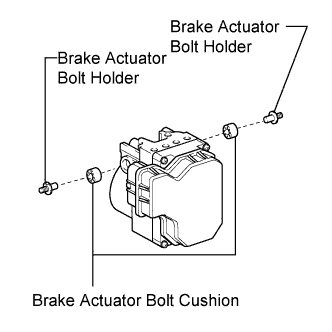
Install the 2 brake actuator bolt cushions and 2 brake actuator bolt holders to the brake actuator.
Note
-
Do not hold with the actuator by the connector.
-
Do not remove the hole plugs of a new brake actuator before connecting the 6 brake lines because the brake actuator is filled with brake fluid.
-
-
-
INSTALL BRAKE ACTUATOR (for LHD)
-
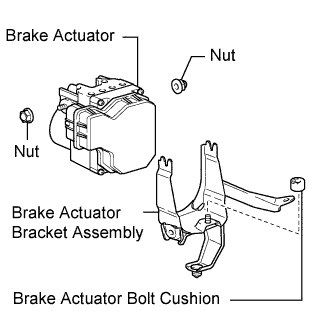
Install the brake actuator bolt cushion to the brake actuator bracket assembly.
-
Install the brake actuator to the brake actuator bracket assembly with the 2 nuts.
- Torque:
- 5.4 N*m { 55 kgf*cm, 48 in.*lbf }
-
-
INSTALL BRAKE ACTUATOR (for RHD)
-
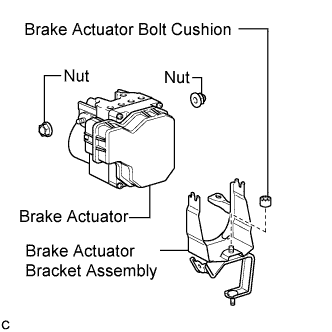
Install the brake actuator bolt cushion to the brake actuator bracket assembly.
-
Install the brake actuator to the brake actuator bracket assembly with the 2 nuts.
- Torque:
- 5.4 N*m { 55 kgf*cm, 48 in.*lbf }
-
-
TEMPORARILY INSTALL BRAKE ACTUATOR WITH BRACKET (for LHD)
-
Temporarily install the brake actuator with bracket.
-
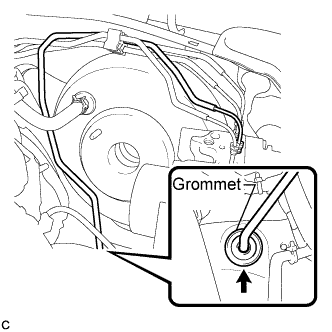
Install the No. 3 front brake tube and grommet.
-
-
TEMPORARILY INSTALL BRAKE ACTUATOR WITH BRACKET (for RHD)
-
Temporarily install the brake actuator with bracket.
-
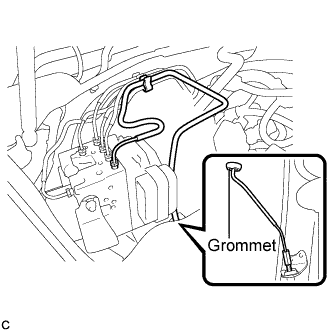
Install the No. 2 front brake tube and grommet.
-
-
INSTALL BRAKE MASTER CYLINDER SUB-ASSEMBLY (for LHD)
-
Install a new O-ring to the brake master cylinder sub-assembly.
-
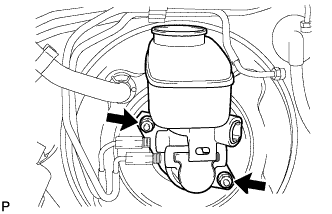
Install the brake master cylinder sub-assembly to the brake booster assembly with the 2 nuts.
- Torque:
- 13 N*m { 133 kgf*cm, 10 ft.*lbf }
-
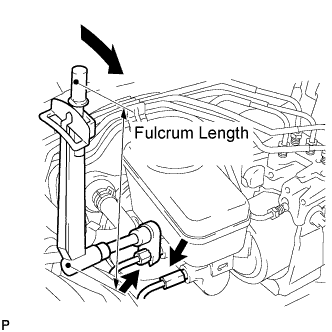
Using a union nut wrench (10 mm), connect the 2 brake lines to the brake master cylinder sub-assembly.
- Torque:
- without a union nut wrench
- 15 N*m { 153 kgf*cm, 11 ft.*lbf }
- with a union nut wrench
- 14 N*m { 143 kgf*cm, 10 ft.*lbf }
Note
-
Use a torque wrench with a fulcrum length of 250 mm (9.84 in.)
-
This torque value is effective when the union nut wrench is parallel to the torque wrench.
-
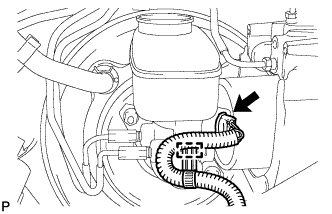
Engage the clamp and connect the connector.
-
-
INSTALL BRAKE MASTER CYLINDER SUB-ASSEMBLY (for RHD)
-
Install a new O-ring to the brake master cylinder sub-assembly.
-
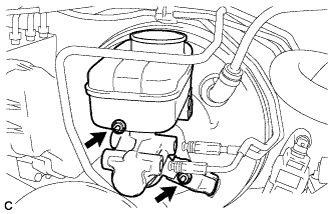
Install the brake master cylinder sub-assembly and wire harness clamp bracket to the booster assembly with the 2 nuts.
- Torque:
- 13 N*m { 133 kgf*cm, 10 ft.*lbf }
-
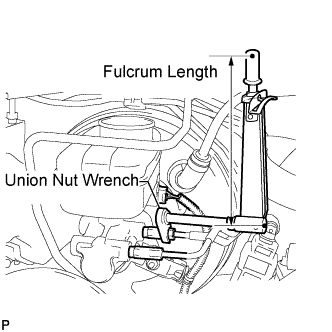
Using a union nut wrench (10 mm), connect the 2 brake lines to the brake master cylinder sub-assembly.
- Torque:
- without a union nut wrench
- 15 N*m { 153 kgf*cm, 11 ft.*lbf }
- with a union nut wrench
- 14 N*m { 143 kgf*cm, 10 ft.*lbf }
Note
-
Use a torque wrench with a fulcrum length of 250 mm (9.84 in.)
-
This torque value is effective when the union nut wrench is parallel to the torque wrench.
-
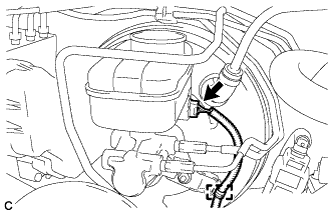
Engage the clamp and connect the connector.
-
-
INSTALL BRAKE ACTUATOR WITH BRACKET (for LHD)
-
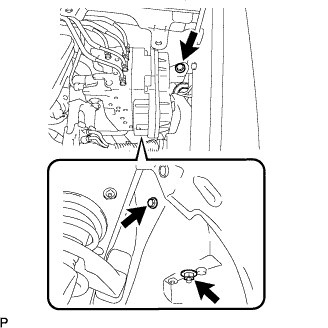
Install the brake actuator with bracket to the body with the 2 bolts and nut.
- Torque:
- 19 N*m { 194 kgf*cm, 14 ft.*lbf }
Note
Do not damage the brake lines or wire harness.
-
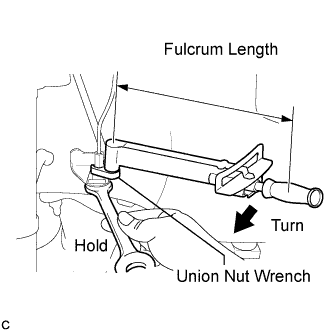
Using a union nut wrench, connect the No. 3 front brake line to the brake flexible hose.
- Torque:
- without a union nut wrench
- 15 N*m { 153 kgf*cm, 11 ft.*lbf }
- with a union nut wrench
- 14 N*m { 143 kgf*cm, 10 ft.*lbf }
Note
-
Use a torque wrench with a fulcrum length of 250 mm (9.84 in.).
-
This torque value is effective when the union nut wrench is parallel to the torque wrench.
-
Install the grommet to the body.
Note
Make sure that the grommet is installed correctly.
-
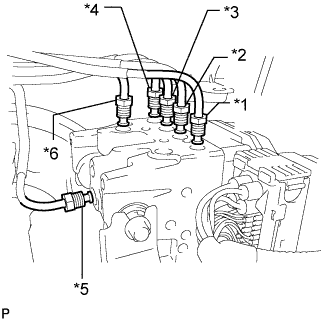
Temporarily tighten each brake tube to the correct positions of the brake actuator with bracket as shown in the illustration.
Tech Tips
-
*1: To front wheel cylinder RH
-
*2: To front wheel cylinder LH
-
*3: To rear wheel cylinder RH
-
*4: To rear wheel cylinder LH
-
*5: From front of master cylinder
-
*6: From rear of master cylinder
-
-
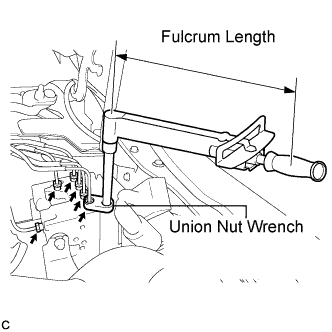
Using a union nut wrench, fully tighten each brake line.
- Torque:
- without a union nut wrench
- 15 N*m { 153 kgf*cm, 11 ft.*lbf }
- with a union nut wrench
- 14 N*m { 143 kgf*cm, 10 ft.*lbf }
Note
-
Use a torque wrench with a fulcrum length of 250 mm (9.84 in.).
-
This torque value is effective when the union nut wrench is parallel to the torque wrench.
-
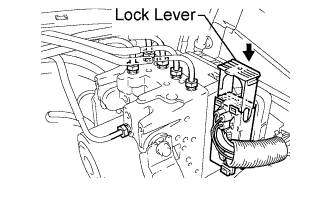
Connect the brake actuator connector.
Note
-
Make sure that the actuator connector can be connected smoothly. Do not allow water, oil or dirt to enter.
-
Make sure that the connector is locked securely.
-
-
-
INSTALL BRAKE ACTUATOR WITH BRACKET (for RHD)
-
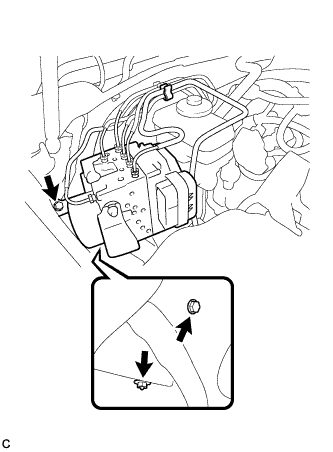
Install the brake actuator with bracket to the body with the 2 bolts and nut.
- Torque:
- 19 N*m { 194 kgf*cm, 14 ft.*lbf }
Note
Do not damage the brake lines or wire harness.
-
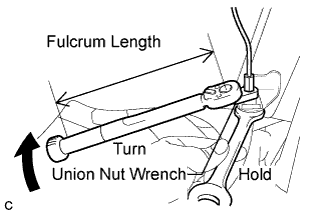
Using a union nut wrench, connect the No. 2 front brake tube to the brake flexible hose.
- Torque:
- without a union nut wrench
- 15 N*m { 153 kgf*cm, 11 ft.*lbf }
- with a union nut wrench
- 14 N*m { 143 kgf*cm, 10 ft.*lbf }
Note
-
Use a torque wrench with a fulcrum length of 250 mm (9.84 in.).
-
This torque value is effective when the union nut wrench is parallel to the torque wrench.
-
Install the grommet to the body.
Note
Make sure that the grommet is installed correctly.
-
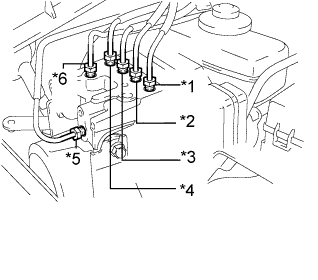
Temporarily tighten each brake line to the correct positions of the brake actuator with bracket as shown in the illustration.
Tech Tips
-
*1: To front wheel cylinder RH
-
*2: To front wheel cylinder LH
-
*3: To rear wheel cylinder RH
-
*4: To rear wheel cylinder LH
-
*5: From front of master cylinder
-
*6: From rear of master cylinder
-
-
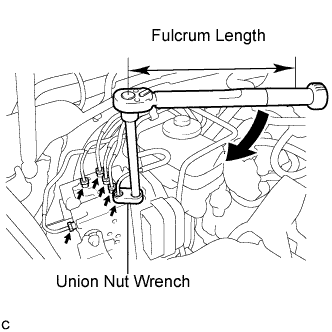
Using a union nut wrench, fully tighten each brake line.
- Torque:
- without a union nut wrench
- 15 N*m { 153 kgf*cm, 11 ft.*lbf }
- with a union nut wrench
- 14 N*m { 143 kgf*cm, 10 ft.*lbf }
Note
-
Use a torque wrench with a fulcrum length of 250 mm (9.84 in.).
-
This torque value is effective when the union nut wrench is parallel to the torque wrench.
-
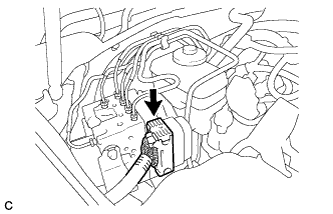
Connect the brake actuator connector.
Note
-
Make sure that the actuator connector can be connected smoothly. Do not allow water, oil or dirt to enter.
-
Make sure that the connector is locked securely.
-
-
-
INSTALL NO. 3 ENGINE ROOM RELAY BLOCK
-
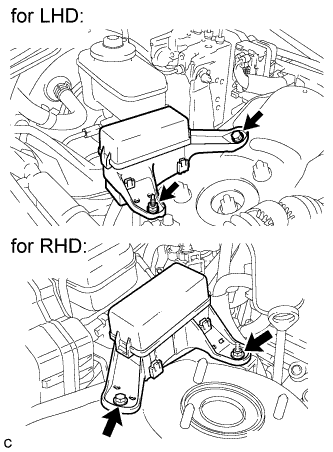
Install the No. 3 engine room relay block with the bolt and nut.
- Torque:
- 8.0 N*m { 82 kgf*cm, 71 in.*lbf }
-
-
CONNECT CABLE TO NEGATIVE BATTERY TERMINAL
Note
When disconnecting the cable, some systems need to be initialized after the cable is reconnected Click here.
-
FILL RESERVOIR WITH BRAKE FLUID
-
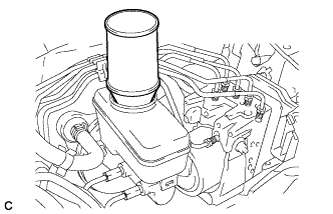
Fill the reservoir with brake fluid.
Brake Fluid SAE J1703 or FMVSS No. 116 DOT 3 Note
Make sure that there is sufficient brake fluid in the reservoir.
-
-
BLEED BRAKE MASTER CYLINDER
Note
-
If the master cylinder is reinstalled or runs out of brake fluid, bleed the master cylinder.
-
To prevent brake fluid from damaging painted surfaces, cover any surrounding parts with a piece of cloth.
-
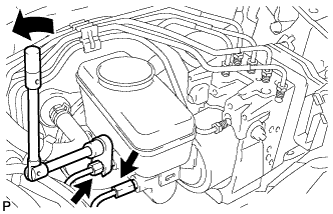
Using a union nut wrench (10 mm), disconnect the 2 brake lines from the master cylinder.
-
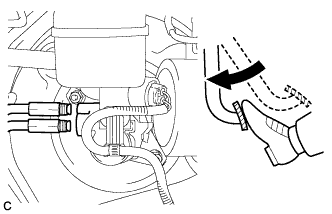
Slowly depress the brake pedal and hold it *1.
-
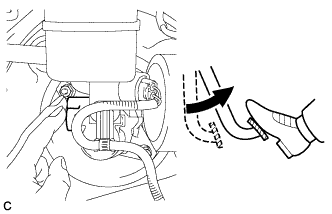
Cover the 2 outer holes with fingers, and release the brake pedal *2.
-
Repeat *1 and *2 steps 3 or 4 times.
-
Using a union nut wrench (10 mm), connect the 2 brake lines to the master cylinder.
- Torque:
- without a union nut wrench
- 15 N*m { 153 kgf*cm, 11 ft.*lbf }
- with a union nut wrench
- 14 N*m { 143 kgf*cm, 10 ft.*lbf }
Note
-
Use a torque wrench with a fulcrum length of 250 mm (9.84 in.).
-
This torque value is effective when the union nut wrench is parallel to the torque wrench.
-
-
BLEED BRAKE LINE
Note
-
Bleed the brake line of the wheel farthest from the master cylinder first.
-
Add brake fluid to keep the level between the MIN and MAX lines of the reservoir while bleeding the brakes.
-
Depress the brake pedal several times, and then loosen the bleeder plug with the pedal depressed *1.
-
When fluid stops coming out, tighten the bleeder plug, and then release the brake pedal *2.
-
Repeat *1 and *2 until all the air in the fluid is completely bled out.
-
Tighten the bleeder plug completely.
- Torque:
- 19 N*m { 194 kgf*cm, 14 ft.*lbf }
-
Repeat the above procedure for each wheel to bleed the brake line.
-
-
BLEED BRAKE ACTUATOR
Note
After bleeding the air from the brake system, if the correct height or feel of the brake pedal cannot be obtained, bleed the air from the brake actuator assembly with the intelligent tester by following the procedures below.
-
Depress the brake pedal more than 20 times with the engine switch off.
-
Connect the intelligent tester to the DLC3, then turn the engine switch on (IG).
Note
Do not start the engine.
-
Turn the intelligent tester on and select "Air Bleeding" on the screen.
Note
-
Refer to the intelligent tester operator's manual for further details.
-
Bleed the brake actuator assembly by following the steps displayed on the intelligent tester.
-
-
Bleed the air from the actuator according to "Step 1: Increase" on the intelligent tester display.
Note
Make sure that the master cylinder reservoir tank does not run out of brake fluid.
-
Connect a vinyl tube to either one of the bleeder plugs.
-
Depress the brake pedal several times, then loosen the bleeder plug connected to the vinyl tube with the pedal depressed *3.
-
When fluid no longer comes out, tighten the bleeder plug, then release the brake pedal *4.
-
Repeat *3 and *4 until all the air in the fluid is completely bled.
-
Tighten the bleeder plug completely.
- Torque:
- 19 N*m { 194 kgf*cm, 14 ft.*lbf }
-
Repeat the above procedure for the rest of the wheels to bleed the air from the brake lines.
-
-
Bleed the air from the suction line according to "Step 2: Inhalation" on the intelligent tester display.
Note
-
Bleed the suction line by following the steps displayed on the intelligent tester.
-
Make sure that the master cylinder reservoir tank does not run out of brake fluid.
-
Connect a vinyl tube to the bleeder plug at the right front wheel or the right rear wheel and loosen the bleeder plug.
-
Operate the brake actuator assembly to bleed the air using the intelligent tester *5.
Note
-
The operation stops automatically in 4 seconds.
-
At this time, be sure to release the brake pedal.
-
-
Check that the operation has stopped by referring to the intelligent tester display and tighten the bleeder plug *6.
-
Repeat *5 and *6 until all the air in the fluid is completely bled out.
-
Tighten the bleeder plug completely.
- Torque:
- 19 N*m { 194 kgf*cm, 14 ft.*lbf }
-
For the rest of the wheels, bleed the air in the same way as stated in the above procedure.
-
-
Bleed the air from the pressure reduction line according to "Step 3: Decrease" on the intelligent tester display.
Note
-
Bleed the pressure reduction line by following the steps displayed on the intelligent tester.
-
Make sure that the master cylinder reservoir tank does not run out of brake fluid.
-
Connect a vinyl tube to either one of the bleeder plugs.
-
Loosen the bleeder plug *7.
-
Using the intelligent tester, operate the brake actuator assembly while completely depressing and holding the brake pedal.
Note
-
The operation stops automatically after 4 seconds. When this operation will be repeated continuously, allow an interval of at least 20 seconds between each bleeding operation.
-
When the operation is completed, the brake pedal will go down slightly. This is a normal phenomenon due to the opening of the solenoid.
-
During this procedure, the brake pedal will seem heavy. It is necessary to completely depress it so that brake fluid will come out of the bleeder plug.
-
Be sure to keep the brake pedal depressed. Never depress and release the pedal repeatedly.
-
-
Tighten the bleeder plug, then release the brake pedal *8.
-
Repeat steps from *7 to *8 until all the air in the fluid is completely bled out.
-
Tighten the bleeder plug completely.
- Torque:
- 19 N*m { 194 kgf*cm, 14 ft.*lbf }
-
Repeat the above procedure for the rest of the brakes to bleed the air from the brake line.
-
-
Bleed the air from the brake line again according to "Step 4: Increase" on the intelligent tester display.
Note
-
Bleed the brake line by following the steps displayed on the intelligent tester.
-
Make sure that the master cylinder reservoir tank does not run out of brake fluid.
-
Connect a vinyl tube to either one of the bleeder plugs.
-
Depress the brake pedal several times, then loosen the bleeder plug connected to the vinyl tube with the pedal depressed *9.
-
When fluid no longer comes out, tighten the bleeder plug, then release the brake pedal *10.
-
Repeat *9 and *10 until all the air in the fluid is completely bled out.
-
Tighten the bleeder plug completely.
- Torque:
- 19 N*m { 194 kgf*cm, 14 ft.*lbf }
-
Repeat the above procedure for each brake to bleed the air from the brake line.
-
-
Finish "Air Bleeding" on the intelligent tester and turn the intelligent tester off.
-
Disconnect the intelligent tester from the DLC3.
-
Turn the engine switch off.
-
-
CHECK FOR DTC
Tech Tips
-
INSPECT FOR BRAKE FLUID LEAK
-
INSPECT FLUID LEVEL IN RESERVOIR
-
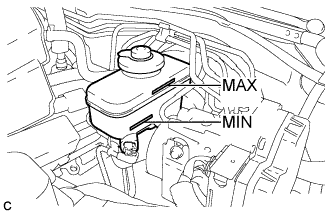
Check the fluid level.
If the brake fluid level is lower than the MIN line, check for leaks and inspect the disc brake pads. If necessary, refill the reservoir with brake fluid after repair or replacement.
Brake Fluid SAE J1703 or FMVSS No. 116 DOT 3
-
-
INSTALL FRONT WHEEL
- Torque:
- 103 N*m { 1050 kgf*cm, 76 ft.*lbf }
-
INSTALL COWL TOP VENTILATOR LOUVER SUB-ASSEMBLY
-
Engage the 11 claws.
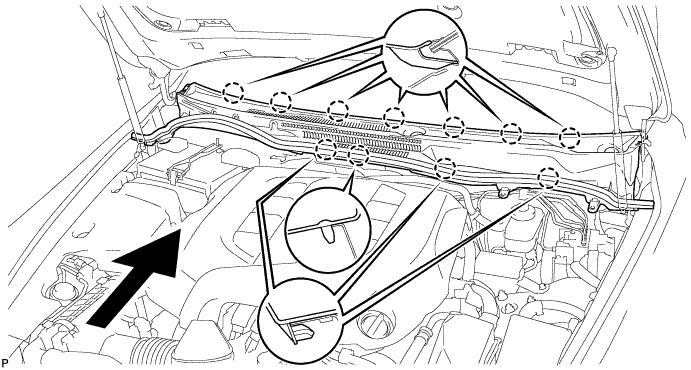
-
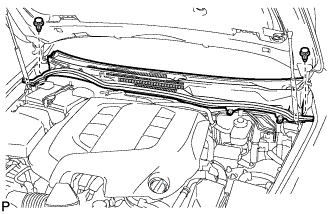
Install the cowl top ventilator louver sub-assembly with the 2 clips.
-
-
INSTALL FRONT WIPER ARM AND BLADE ASSEMBLY LH
-
Operate the wiper and stop the windshield wiper motor at the automatic stop position.
-
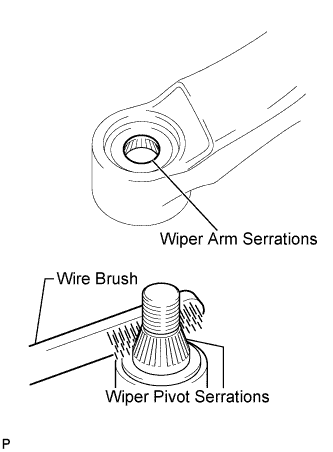
Clean the wiper arm serrations.
-
Clean the wiper pivot serrations with a wire brush (when reinstalling).
-
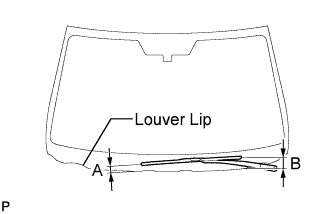
Install the front wiper arm and blade assembly LH with the nut to the position shown in the illustration.
- Torque:
- 22 N*m { 224 kgf*cm, 16 ft.*lbf }
Tech Tips
Hold the arm hinge by hand to fasten the nut.
Area Measurement A 15 to 30 mm (0.591 to 1.18 in.) B Approx. 40 mm (1.57 in.)
-
-
INSTALL FRONT WIPER ARM AND BLADE ASSEMBLY RH
-
Operate the wiper and stop the windshield wiper motor at the automatic stop position.
-
Clean the wiper arm serrations.
-
Clean the wiper pivot serrations with a wire brush (when reinstalling).
-
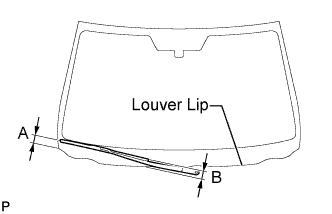
Install the front wiper arm and blade assembly RH with the nut to the position shown in the illustration.
- Torque:
- 22 N*m { 224 kgf*cm, 16 ft.*lbf }
Tech Tips
Hold the arm hinge by hand to fasten the nut.
Area Measurement A 16 to 31 mm (0.630 to 1.22 in.) B Approx. 20 mm (0.787 in.) -
Operate the front wipers while spraying washer fluid on the windshield glass. Make sure that the front wipers function properly and there is no interference with the vehicle body.
-
-
INSTALL FRONT WIPER ARM HEAD CAP
-
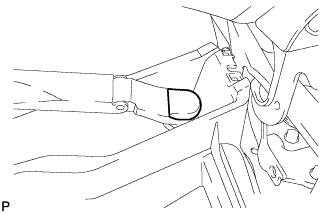
Install the front wiper arm head cap.
Tech Tips
Use the same procedure for the RH side and LH side.
-
-
INSTALL ROOF DRIP SIDE FINISH MOULDING LH
-
Engage the 2 clips and install the center roof drip side finish moulding.
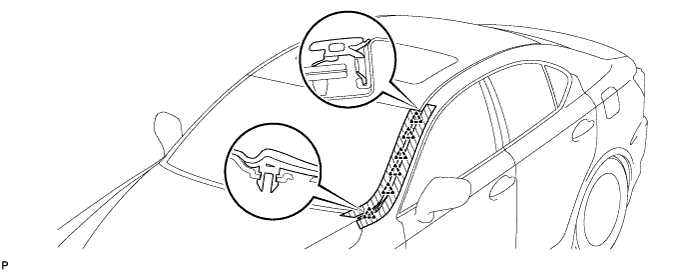
-
-
INSTALL ROOF DRIP SIDE FINISH MOULDING RH
Tech Tips
Use the same procedure for the RH side and LH side.
-
INSTALL FRONT UPPER FENDER PROTECTOR LH
-
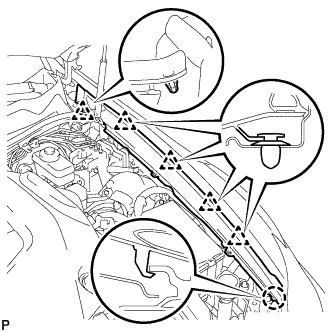
Engage the claw and the 4 clips and install the front upper fender protector LH.
-
Engage the clip on the rubber portion of the cowl top ventilator louver sub-assembly with the front upper fender protector LH.
-
-
INSTALL FRONT UPPER FENDER PROTECTOR RH
Tech Tips
Use the same procedure for the RH side and LH side.
-
INSTALL ENGINE ROOM SIDE COVER RH (for LHD)
-
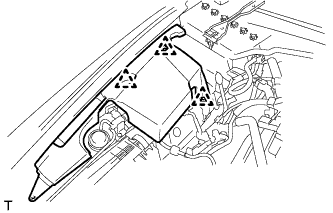
Install the engine room side cover RH with the 3 clips.
-
-
INSTALL ENGINE ROOM SIDE COVER RH (for RHD)
-
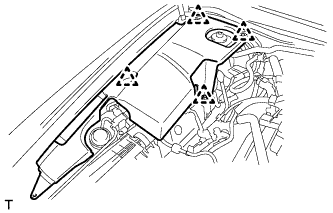
Install the engine room side cover RH with the 4 clips.
-
-
INSTALL ENGINE ROOM SIDE COVER LH (for LHD)
-
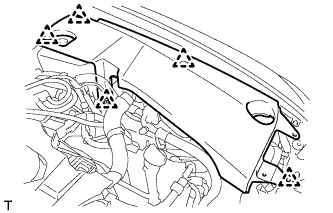
Install the engine room side cover LH with the 5 clips.
-
-
INSTALL ENGINE ROOM SIDE COVER LH (for RHD)
-
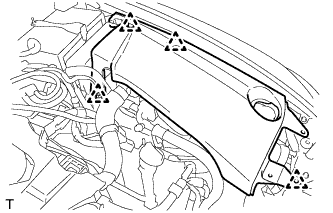
Install the engine room side cover LH with the 4 clips.
-
-
INSTALL COOL AIR INTAKE DUCT SEAL
-
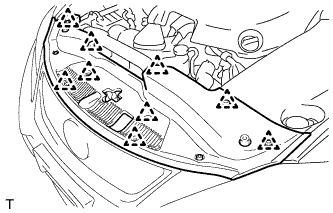
Install the cool air intake duct seal with the 9 clips.
-
-
CHECK FOR SENSOR SIGNAL
Tech Tips
-
INSPECT ACTUATOR WITH INTELLIGENT TESTER
Tech Tips