FUEL INJECTOR (w/o DPF) INSTALLATION

-
INSTALL INJECTOR ASSEMBLY
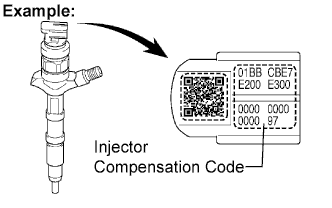
Note
When replacing the injector assembly with a new one, register the injector compensation code manually in the ECM using the intelligent tester, as each injector assembly has a different injection characteristic.
-
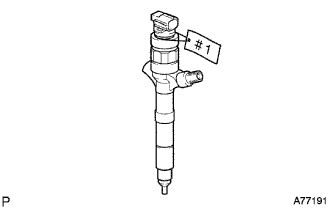
While registering the injector compensation codes, put tags with cylinder numbers (#1 to #4) on the new injectors in order to match them into the correct cylinders.
-
Register the injector compensation code manually Click here.
-
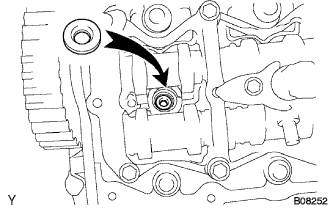
Install a new injection nozzle seat onto the cylinder head.
-
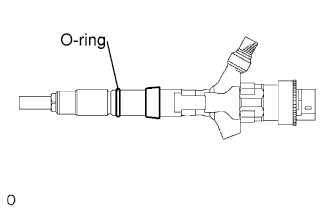
Install a new O-ring.
Tech Tips
Apply a light coat of engine oil to the O-ring.
-
Install the injector assembly into each cylinder referring to the tags with cylinder numbers (#1 to #4).
Note
If the wrong injector assembly is installed on the cylinder, rough idling or noise may occur.
-
Temporarily install the 4 injection pipes.
Note
When replacing the injector, replace the injection pipe as well.
Tech Tips
Hand tighten the union nuts of the injection pipes.
-
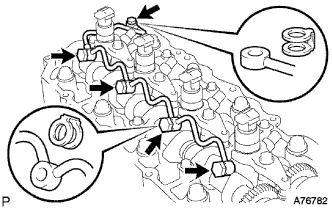
Apply a light coat of engine oil to the 4 hollow screws and union bolt.
-
Temporarily install the nozzle leakage pipe assembly and 5 new nozzle leakage pipe gaskets and hand tighten the 4 hollow screws and union bolt until them cannot turn.
Note
Check the injector hollow screws and union bolt for any deformation or damage.
-
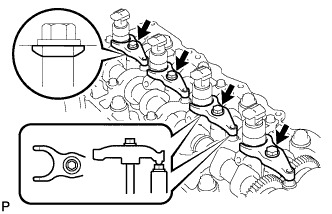
Install the 4 nozzle holder clamps and 4 new washers with the 4 bolts.
- Torque:
- 22 N*m { 220 kgf*cm, 16 ft.*lbf }
Note
-
Do not install the washers in the wrong direction.
-
Clip the injector at the fork portion with a clamp which is set on the head of the cam cap bolt. At this time, check that the clamp does not hold the injector at the part where the spring is attached.
-
Temporarily torque the clamp bolts by hand until the bolt touches the washer, then tighten them by the specified torque.
-
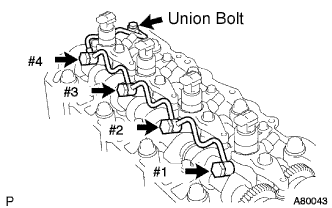
Tighten the 4 hollow screws from #1 to #4 in order.
- Torque:
- 16 N*m { 163 kgf*cm, 12 ft.*lbf }
-
Tighten the union bolt.
- Torque:
- 13 N*m { 127 kgf*cm, 9 ft.*lbf }
Note
If the bolt is excessively tightened, replace the nozzle leakage pipe assembly with a new one.
-
Remove injection pipe No. 1, No. 2, No. 3, and No. 4.
-
-
INSPECT FOR NOZZLE LEAKAGE PIPE LEAK
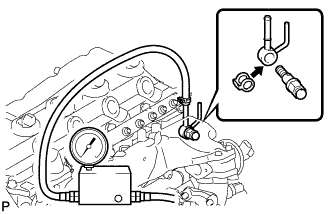
-
Using SST, install the No. 2 nozzle leakage pipe and a new gasket.
- SST
- 09280-00010
- Torque:
- 21 N*m { 215 kgf*cm, 15 ft.*lbf }
No. 2 nozzle leakage pipe 23762 - 27010 Gasket 90904 - 30012 -
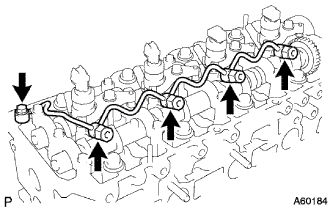
Using SST (turbo charge pressure gauge), set the SST to the No. 2 nozzle leakage pipe and maintain 250 kPa (2.5 kgf/cm2, 37 psi) of pressure for 60 seconds to check that there are no leaks from the nozzle leakage pipe assembly.
Note
Maintain the pressure at the desired level to prevent fuel leakage.
Tech Tips
-
Apply a coat of engine oil to the nozzle leakage pipe assembly connection, and check that no bubbles come out from the nozzle leakage pipe assembly.
-
Check that indication on the SST (turbo charger pressure gauge) does not go down while pressure is applied.
-
-
Remove SST and the No. 2 nozzle leakage pipe assembly.
-
-
INSTALL CYLINDER HEAD COVER SUB-ASSEMBLY
-
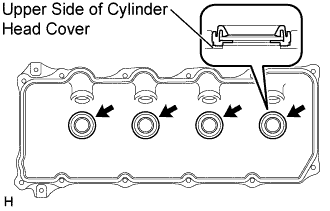
Install 4 new No. 3 cylinder head cover gaskets to the cylinder head cover as shown in the illustration.
Note
-
Do not install the gaskets at an angle.
-
Keep the lip of the gasket free from foreign materials.
-
-
Install a new cylinder head cover gasket to the cylinder head cover.
-
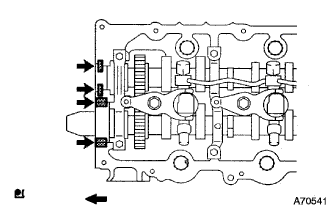
Apply a seal packing to the cylinder head as shown in the illustration.
Seal packing Toyota Genuine Seal Packing Black, Three Bond 1207B or equivalent Note
-
Remove any old packing from the contact surface.
-
After applying the seal packing, install the cylinder head cover within 3 minutes, and tighten the bolts within 15 minutes.
-
-
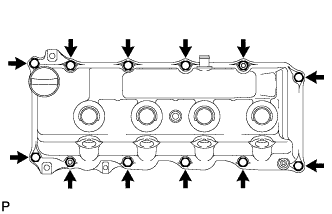
Install the cylinder head cover with the 10 bolts and 2 nuts.
- Torque:
- 9.0 N*m { 92 kgf*cm, 80 in.*lbf }
-
Connect the ventilation hose.
-
Install new nozzle holder seals.
-
-
INSTALL NO. 2 NOZZLE LEAKAGE PIPE ASSEMBLY
-
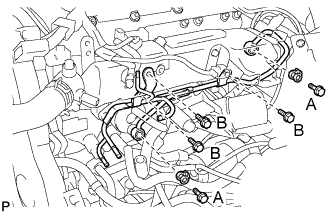
Temporarily install the No. 2 nozzle leakage pipe assembly with the 3 bolts.
-
Install the 2 union bolts and 2 new gaskets.
- Torque:
- 21 N*m { 214 kgf*cm, 16 ft.*lbf, for bolt A }
-
Tighten the 3 bolts.
- Torque:
- 13 N*m { 129 kgf*cm, 9 ft.*lbf, for bolt B }
-
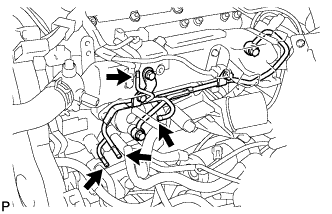
Connect the 4 fuel hoses to the No. 2 nozzle leakage pipe assembly.
-
-
INSTALL FUEL INLET PIPE SUB-ASSEMBLY
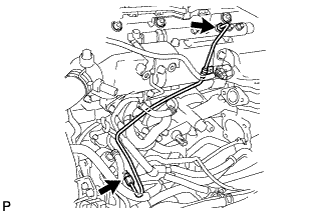
Note
-
When replacing the fuel supply pump, common rail, cylinder block, cylinder head, cylinder head gasket, or timing gear case with a new one, replace the fuel inlet pipe.
-
Be careful not to adhere dusts, dirt or any other materials onto the joint area of the fuel inlet pipe.
-
Temporarily install the fuel inlet pipe.
-
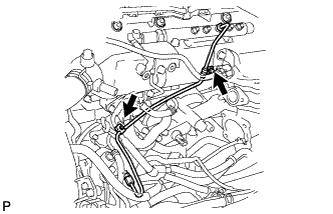
Connect the No. 1 injection pipe clamp with the bolt.
- Torque:
- 5.0 N*m { 51 kgf*cm, 44 in.*lbf }
-
Install the No. 2 injection pipe clamp with the bolt.
- Torque:
- 5.0 N*m { 51 kgf*cm, 44 in.*lbf }
-
Using SST, tighten the union nut on the common rail side.
- SST
- 09023-12701
- Torque:
- 32 N*m { 326 kgf*cm, 24 ft.*lbf, for use with SST }
- 35 N*m { 357 kgf*cm, 26 ft.*lbf, for use without SST }
Tech Tips
-
Use a torque wrench with a fulcrum length of 300 mm (11.81 in.).
-
This torque value is effective when SST is parallel to a torque wrench.
-
Using SST, tighten the union nut on the supply pump side.
- SST
- 09023-12701
- Torque:
- 32 N*m { 326 kgf*cm, 24 ft.*lbf, for use with SST }
- 35 N*m { 357 kgf*cm, 26 ft.*lbf, for use without SST }
Tech Tips
-
Use a torque wrench with a fulcrum length of 300 mm (11.81 in.).
-
This torque value is effective when SST is parallel to a torque wrench.
-
-
INSTALL INJECTION PIPE SUB-ASSEMBLY
Note
-
When replacing the fuel injector, common rail, or cylinder head with a new one, replace injection pipes No. 1, No. 2, No. 3, and No. 4.
-
Keep the injection pipe connection clean.
-
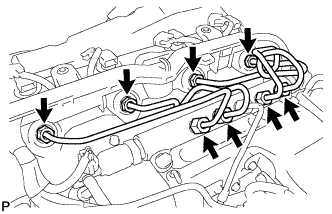
Install the injection pipes.
-
Temporarily install the 4 injection pipes.
-
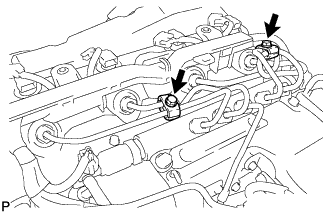
Install the 2 No. 2 injection pipe clamps with the 2 bolts.
- Torque:
- 5.0 N*m { 51 kgf*cm, 44 in.*lbf }
-
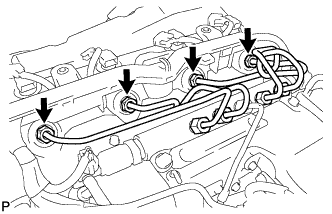
Using SST, tighten the union nut on the fuel injector side to the specified torque.
- SST
- 09023-12701
- Torque:
- 32 N*m { 326 kgf*cm, 24 ft.*lbf, for use with SST }
- 35 N*m { 357 kgf*cm, 26 ft.*lbf, for use without SST }
Tech Tips
-
Use a torque wrench with a fulcrum length of 300 mm (11.81 in.).
-
This torque value is effective when SST is parallel to a torque wrench.
-
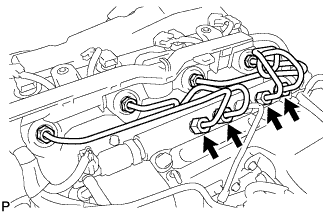
Using SST, tighten the union nut on the common rail side to the specified torque.
- SST
- 09023-12701
- Torque:
- 32 N*m { 326 kgf*cm, 24 ft.*lbf, for use with SST }
- 35 N*m { 357 kgf*cm, 26 ft.*lbf, for use without SST }
Tech Tips
-
Use a torque wrench with a fulcrum length of 300 mm (11.81 in.).
-
This torque value is effective when SST is parallel to a torque wrench.
-
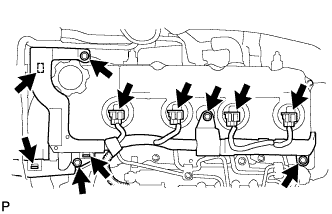
Install the 3 bolts.
-
Connect the fuel injector connector and harness clamps.
-
-
-
INSTALL OIL LEVEL GAUGE GUIDE
-
Install a new O-ring onto the oil level gauge guide.
-
Apply a light coat of engine oil to the O-ring.
-
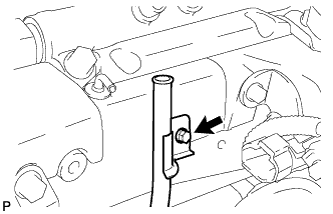
Install the oil level gauge guide with the bolt.
- Torque:
- 8.0 N*m { 82 kgf*cm, 71 in.*lbf }
-
Install the oil level gauge.
-
-
TEMPORARILY TIGHTEN ELECTRIC EGR CONTROL VALVE ASSEMBLY
-
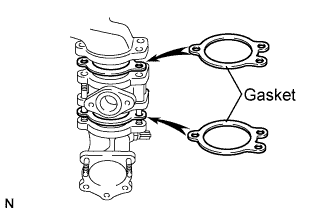
Temporarily tighten the electric EGR control valve.
-
Install 2 new gaskets and the electric EGR control valve onto the intake air connector as shown in the illustration.
-
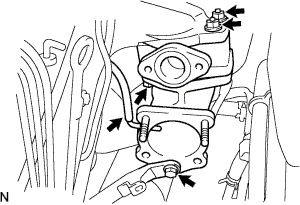
Temporarily tighten the intake air connector with electric EGR control valve to the intake manifold with the bolt and the 2 nuts.
-
Install the vacuum hose onto the intake air connector.
-
Temporarily tighten the manifold stay with the bolt.
-
-
-
TEMPORARILY TIGHTEN EGR COOLER ASSEMBLY
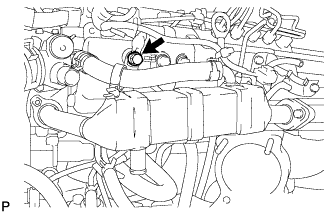
-
Tighten the EGR cooler assembly stay bolt.
- Torque:
- 22 N*m { 224 kgf*cm, 16 ft.*lbf }
-
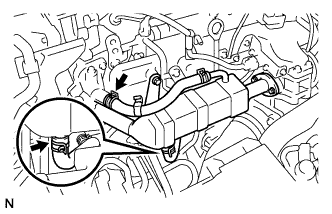
Install the No. 2 water by-pass hose with the clip.
-
Install the No. 4 water by-pass hose with the clip.
-
-
TIGHTEN ELECTRIC EGR CONTROL VALVE ASSEMBLY
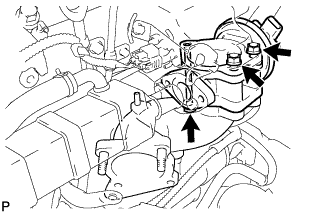
-
Tighten the electric EGR control valve with the bolt and 2 nuts.
- Torque:
- 20 N*m { 204 kgf*cm, 15 ft.*lbf }
-
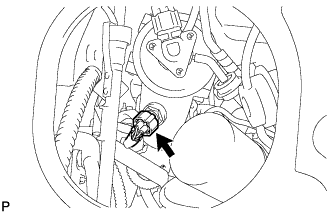
Connect the intake air temperature sensor connector.
-
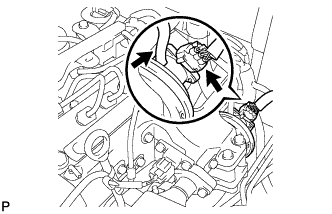
Connect the vacuum hose to the electric EGR control valve.
-
Connect the electric EGR control valve connector.
-
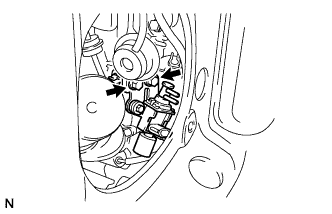
Install the vacuum regulating valve with bracket with the 2 bolts.
- Torque:
- 20 N*m { 204 kgf*cm, 15 ft.*lbf }
-
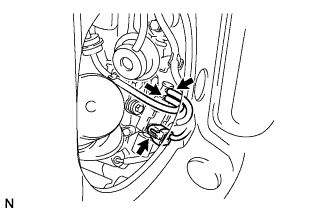
Connect the 2 vacuum hoses to the vacuum regulating valve.
-
Connect the vacuum regulating valve connector.
-
-
TIGHTEN EGR COOLER ASSEMBLY
-
Tighten the EGR cooler assembly stay bolt.
- Torque:
- 22 N*m { 224 kgf*cm, 16 ft.*lbf }
-
Install the No. 2 water by-pass hose with the clip.
-
Install the No. 4 water by-pass hose with the clip.
-
-
INSTALL MANIFOLD STAY
-
Tighten the manifold stay bolt.
- Torque:
- 19 N*m { 194 kgf*cm, 14 ft.*lbf }
-
-
INSTALL NO. 2 ENGINE SERVICE HOLE COVER
-
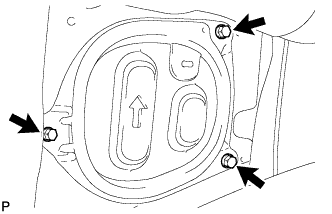
Install the No. 2 engine service hole cover with the 3 bolts.
-
-
INSTALL DIESEL THROTTLE BODY ASSEMBLY
Note
After removing and installing, or replacing the throttle body, be sure to perform the operation check.
-
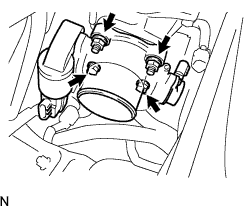
Install a new gasket onto the intake air connector.
-
Install the throttle body with the 2 bolts and the 2 nuts.
- Torque:
- 20 N*m { 204 kgf*cm, 15 ft.*lbf }
-
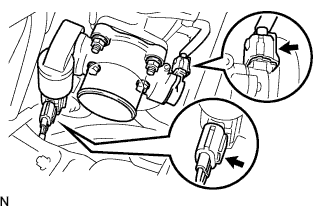
Connect the 2 throttle body connectors.
-
-
INSTALL NO. 4 AIR HOSE
-
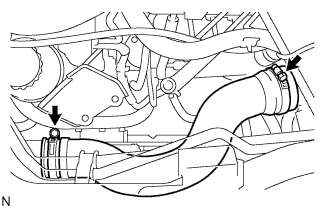
Install the No. 4 air hose with the 2 clamps.
- Torque:
- 6.0 N*m { 61 kgf*cm, 53 in.*lbf }
-
-
CONNECT OIL RETURN HOSE
-
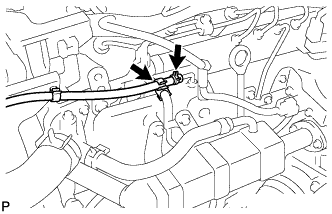
Connect the oil return hose with the 2 clips.
-
-
INSTALL VANE PUMP OIL RESERVOIR ASSEMBLY
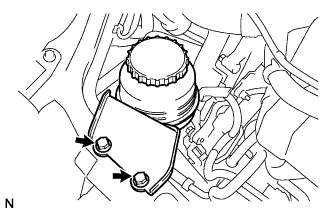
-
Install the vane pump oil reservoir assembly with the 2 bolts.
- Torque:
- 8.0 N*m { 82 kgf*cm, 71 in.*lbf }
-
-
INSTALL ENGINE SERVICE HOLE SUB COVER SUB-ASSEMBLY
-
Install the engine service hole sub cover sub-assembly with the 5 bolts.
- Torque:
- 13 N*m { 133 kgf*cm, 10 ft.*lbf }
-
-
INSTALL FRONT DOOR SCUFF PLATE RH
-
INSTALL FRONT SEAT ASSEMBLY RH
-
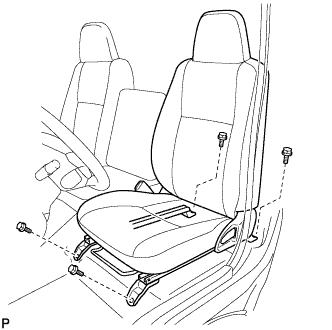
Move the front seat assembly fully forward.
-
Remove the 2 bolts on the rear side of the seat.
-
Move the front seat assembly to the rearmost position.
-
Remove the 2 bolts on the front side of the seat.
-
Move the front seat assembly to the center of the seat slide rail. Set the seatback in the upright position.
-
Disconnect the front seat inner belt assembly connector.
-
Remove the front seat assembly.
-
-
CONNECT CABLE TO NEGATIVE BATTERY TERMINAL
- Torque:
- 5.4 N*m { 55 kgf*cm, 48 in.*lbf }
-
INJECTOR COMPENSATION CODE
-
Check that the injector compensation code registered in the injector assembly installed on each cylinder match the ones registered in the ECM. Click here
-
-
ADD ENGINE COOLANT
-
Firmly tighten the drain plugs.
-
Fill the radiator reserve tank assembly with coolant to the top of the inlet.
Coolant capacity Condition Capacity w/ rear heater 18.2 liters (19.2 US qts, 16.0 lmp. qts) w/o rear heater 16.2 liters (17.0 US qts, 14.0 lmp. qts) Note
Do not substitute plain water for engine coolant.
Tech Tips
-
Use of improper coolants may damage the engine cooling system.
-
Use only Toyota Super Long Life Coolant or similar high quality ethylene glycol based non-silicate, non-amine, non-nitrite, and non-borate coolant with long-life hybrid organic acid technology (coolant with long-life hybrid organic acid technology consists of a combination of low phosphates and organic acids).
-
-
Loosen the bleeder plug of the outlet housing.
-
When air is bled and the coolant drains out, firmly install the bleeder plug.
-
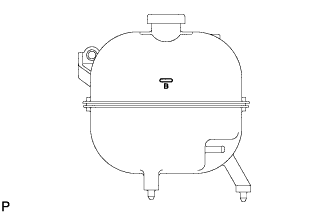
Add coolant up to the B line mark in the radiator reserve tank assembly and install the radiator cap.
-
Warm up the engine until the thermostat opens.
-
While the thermostat is open, circulate the coolant for several minutes.
Tech Tips
The thermostat open timing can be confirmed by pressing the inlet radiator hose by hand, and checking when the engine coolant starts to flow inside the hose.
-
-
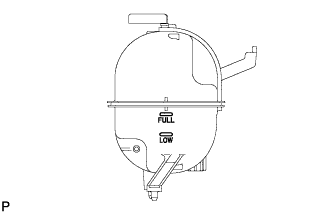
After the engine cools down, check that the coolant level is between the LOW and FULL level marks.
-
-
INSPECT FOR ENGINE COOLANT LEAK
-
BLEED FUEL LINE
-
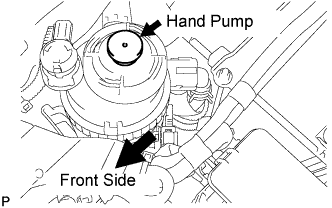
Using a hand pump, bleed air from the fuel system until pumping becomes difficult.
-
-
INSPECT FOR FUEL LEAK
-
Perform the Active Test.
-
Connect the intelligent tester to the DLC3.
-
Turn the ignition switch ON.
-
Turn the intelligent tester ON.
-
Select the following menu items: Powertrain / ECD / Active Test.
-
Perform the Active Test.
Intelligent Tester Display Test Details Control Range Diagnostic Notes Test the Fuel Leak Pressurizes common rail internal fuel pressure, and checks for fuel leaks Stop/Start
-
Fuel pressure inside common rail pressurized to specified value and engine speed increased to 2,000 rpm when ON is selected
-
Above conditions preserved while test is ON
-
-
-
-
INSPECT FOR OIL LEAK
-
INSPECT FOR EXHAUST GAS LEAK
-
PERFORM INITIALIZATION
-
Perform initialization procedures Click here.
Note
Certain systems need to be initialized after reconnecting the cable to the negative (-) battery terminal.
-