BODY STRUCTURE
-
CONSTRUCTION
-
Impact Absorbing Structure for Frontal Collision
-
A structure that ensures collision energy absorption efficiency, dissipates impact and minimizes cabin deformation during a frontal collision has been achieved.
-
A structure which dissipates impact load from the front side member sub-assembly through the torque box front to the rocker portion is used.
-
A structure which dissipates impact load from the front apron to cowl side member sub-assembly through the front body pillar portion to the rail portion is used.
-
A structure which dissipates impact load from the front apron to cowl side member sub-assembly through the MICS* bulkhead (cowl top side panel) to the access panel instrument panel reinforcement sub-assembly is used.
Tech Tips
*: MICS: Minimum Intrusion Cabin System
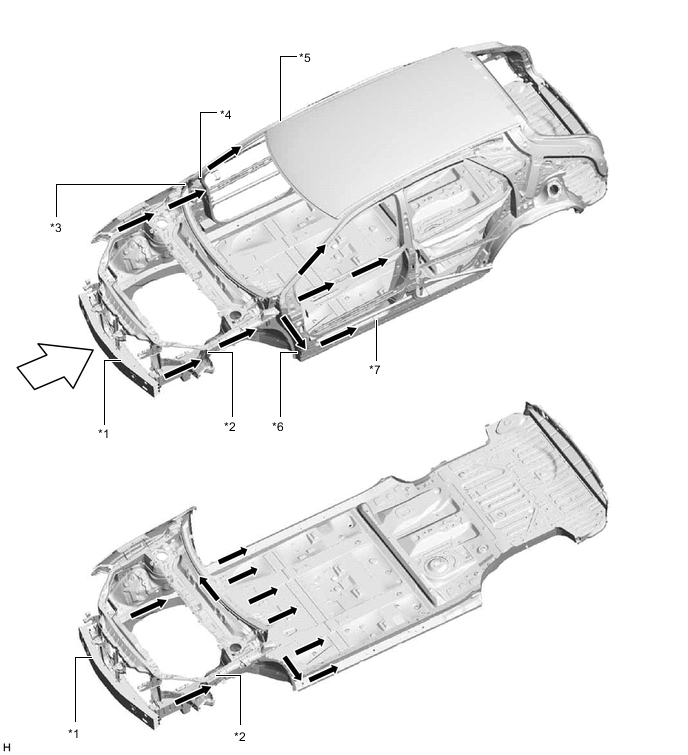
*1 Front Bumper Reinforcement Sub-assembly *2 Front Side Member Sub-assembly *3 Cowl Top Side Panel *4 Front Body Pillar Portion *5 Rail Portion *6 Torque Box Front *7 Rocker Portion - - 
Front Impact Energy 
Dissipate
-
-
-
Impact Absorbing Structure for Side Collision
-
A structure that ensures collision energy absorption efficiency, dissipates impact and minimizes cabin deformation during a side collision has been achieved.
-
Ultra high strength sheet steel is used for the rocker reinforcement outer and center pillar reinforcement. Hot-stamped steel is used for the roof side rail. High strength sheet steel is used for the roof panel side strength, etc.
-
A structure which uses the floor side member reinforcement No. 1 and front floor panel side plate in the rocker and under body under the center body pillar to efficiently transmit impact load during a side collision to the floor is used.
-
A structure which optimizes the placement of the rear door protection beam sub-assembly to efficiently transmit impact load is used.
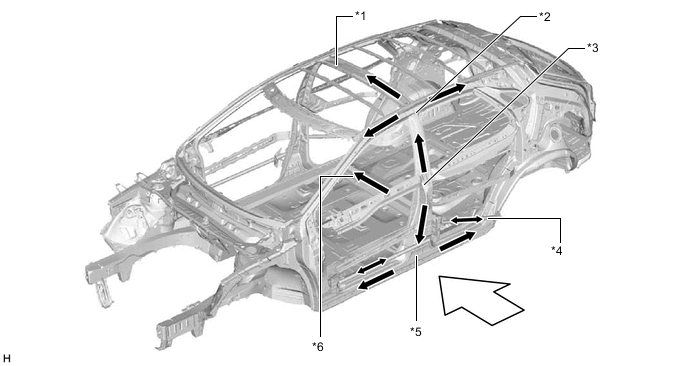
*1 Roof Side Rail (Tensile Strength: 1500 MPa class) *2 Roof Panel Side Strength *3 Center Body Pillar Reinforcement Outer *4 Rear Door Protection Beam Sub-assembly *5 Rocker Reinforcement Outer *6 Floor Cross Member Reinforcement Side Impact Energy Dissipate
-
-
-
Impact Absorbing Structure for Rear Collision
-
A structure that ensures collision energy absorption efficiency, dissipates impact and minimizes cabin deformation during a rear collision has been achieved.
-
The large-size rear bumper reinforcement is used to dissipate the impact load during a rear offset collision. The rear bumper reinforcement dissipates impact load to the left and right members to suppress deformation of the cabin.
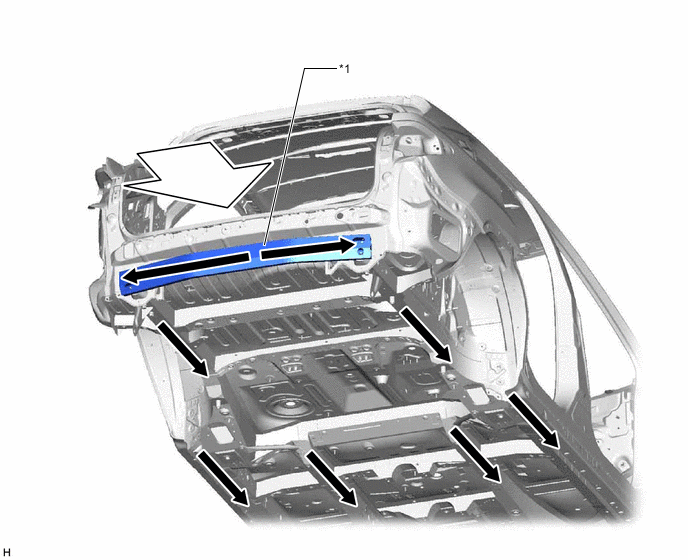
*1 Rear Bumper Reinforcement - - Rear Impact Energy Dissipate
-
-
-
Roof Crush Resistance
-
Loads are supported by the front body pillar, center body pillar, roof and header during a roof crush.
-
An integrated construction between the upper and lower parts of the center body pillar inner UPR and large belt anchor to center pillar reinforcement LWR are used. For both of them, high-tensile strength sheet steel is used, thus ensuring the rigidity of the center body pillar during a roof crush.
-
High-tensile strength sheet steel is used for the windshield header panel inner and front body pillar reinforcement UPR OUT No. 2to suppress the deformation of the T-shaped part of the front header during a roof crush.
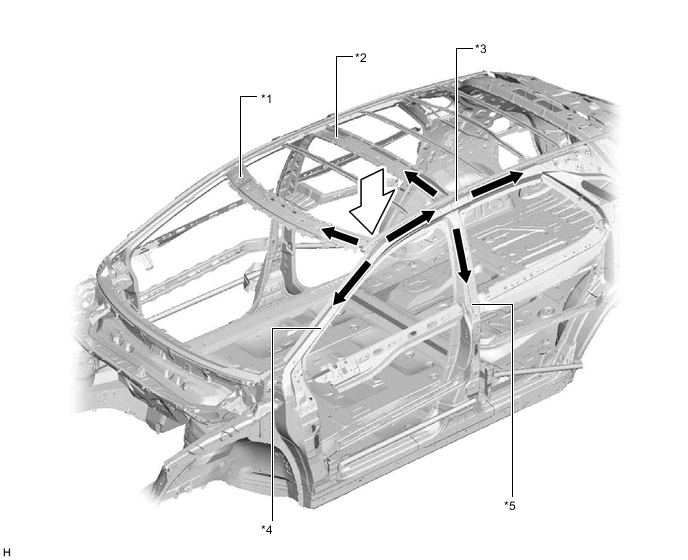
*1 Windshield Header Panel Inner *2 Roof Cross Reinforcement CTR *3 Side Panel Outer *4 Front Body Pillar *5 Center Pillar Upper Reinforcement - - Roof Impact Energy Dissipate
-
-
-
Reduction Pedestrian Head Injury
-
The following shape is used for around the front body, thus maintaining necessary rigidity and aiming for a reduction of impact against a pedestrian in a collision with a pedestrian.
-
The hood panel uses a structure which ensures an impact absorption stroke at the front between the hood lock hook and hood inner panel reinforcement in order to reduce the impact to the pedestrian whose head and legs struck the hood.
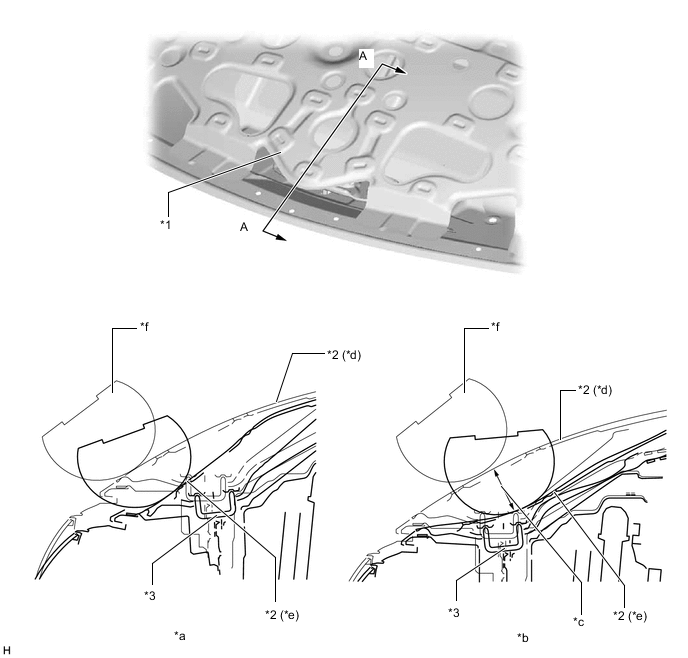
*1 Hood Panel Reinforcement *2 Hood Panel *3 Hood Lock Hook - - *a A - A Cross Section (Front Part) *b A - A Cross Section (Near the Hood Lock Hook) *c Impact Absorption Stroke *d Before Collision *e After Collision *f Head Form -
The parts surrounding the cowl top ventilator louver sub-assembly use a crushable structure to improve the rate of energy absorption from the estimated collision direction to reduce the impact to the pedestrian whose head, etc., struck the area. The structure of the cowl top ventilator louver sub-assembly maintains the necessary rigidity while having a lowered deformation strength in order to absorb impact load.
-
During a collision, a falling stroke for the front wiper motor and link assembly is ensured in consideration of reducing damage by preventing the front wiper motor and link assembly from striking the bottom.
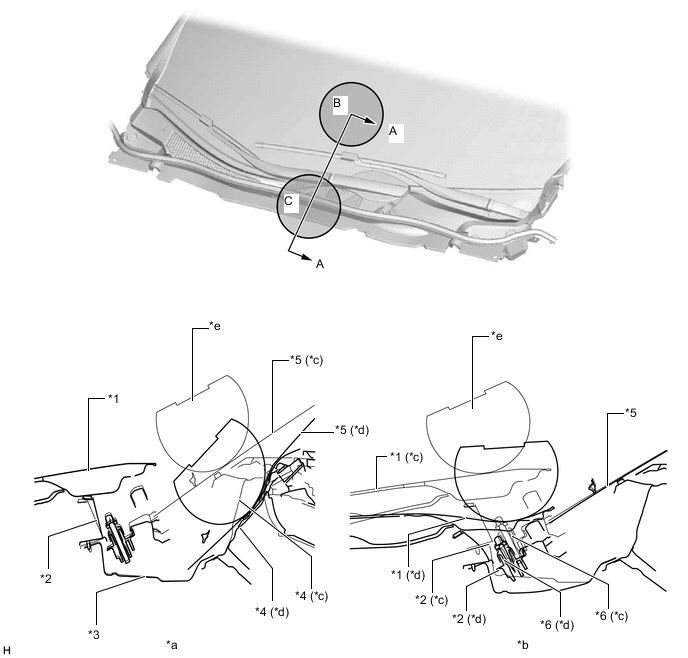
*1 Hood Sub-assembly *2 Cowl Top Ventilator Louver Sub-assembly *3 Cowl Top Panel Outer Front *4 Cowl Top Panel Inner *5 Windshield Glass *6 Front Wiper Motor And Link Assembly *a A - A Cross Section (B part) *b A - A Cross Section (C part) *c Before Collision *d After Collision *e Head Form - - -
An impact absorption brackets are provided around the front fender apron sub-assembly to absorb impact load during a collision and collapse, forming a structure which reduces the impact to the pedestrian whose head, etc., struck the fender.
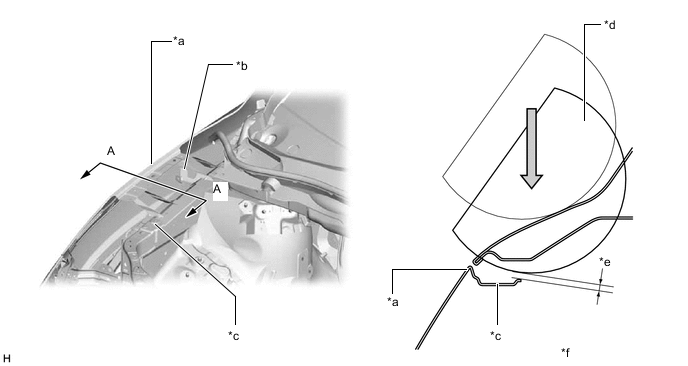
*a Fender Outer Panel *b Impact Absorbing Bracket *c Front Fender Apron Sub-assembly *d Head Form *e Impact Absorption Stroke *f A - A Cross Section
-
-
-
Reduction Pedestrian lower extremity portion Injury
-
A front bumper energy absorber and front lower bumper absorber are provided to dampen the impact to the legs of a pedestrian in the event of a collision.
-
The front lower bumper absorber is fall off at the event of collision, it has been considered to reduce the impact on the lower extremity.
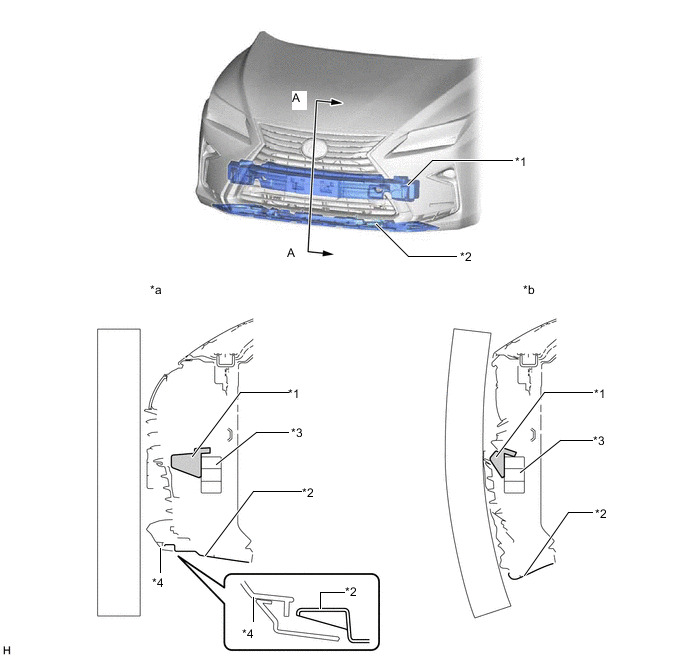
*1 Front Bumper Energy Absorber *2 Front Lower Bumper Absorber *3 Front Bumper Reinforcement *4 Bumper Cover *a A - A Cross Section (Before Collision) *b A - A Cross Section (After Collision)
-
-