СИСТЕМА СНИЖЕНИЯ ТОКСИЧНОСТИ ОТРАБОТАВШИХ ГАЗОВ ПРОВЕРКА БЕЗ СНЯТИЯ С АВТОМОБИЛЯ
-
CHECK FUEL CUT RPM
-
Increase the engine speed to at least 3,500 rpm.
-
Use a sound scope to check for injector operation noise.
-
Check that when the throttle lever is released, injector operation noise stops momentarily and then resumes.
Fuel cut off rpm 2,500 rpm Fuel return rpm 1,200 rpm
-
-
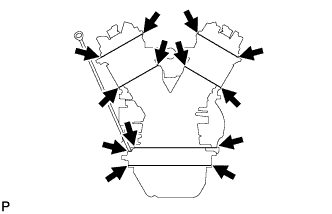
VISUALLY CHECK HOSES, CONNECTORS AND GASKETS
-
Check that there are no cracks, leaks or damage.
Note
-
Detachment or other problems with the engine oil dipstick, filler cap, PCV hose and other components may cause the engine to run improperly.
-
Air suction caused by disconnections, looseness or cracks in the parts of the air induction system between the throttle body and cylinder head will cause engine failure or engine malfunctions.
If the result is not as specified, replace parts as necessary.
-
-
-
CHECK HOSES AND CONNECTORS
-
Visually check for loose connections, sharp bends or damage.
-
-
CHECK FUEL TANK ASSEMBLY
-
Visually check for deformation, cracks or fuel leakage.
-