REAR BRAKE(for Opposed Type Caliper) INSPECTION
PROCEDURE
-
CHECK BRAKE CYLINDER AND PISTON
-
Check the cylinder bore and piston for rust and scoring.
-
-
INSPECT PAD LINING THICKNESS
-
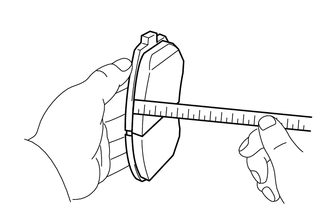
Using a ruler, measure the rear disc brake pad lining thickness.
Standard Thickness 9.0 mm (0.354 in.) Minimum Thickness 1.2 mm (0.0472 in.) If a rear disc brake pad lining thickness is less than the minimum thickness, replace the rear disc brake pads.
Tech Tips
Be sure to check rear disc thickness when replacing the rear disc brake pads with new ones.
-
-
INSPECT DISC THICKNESS
-
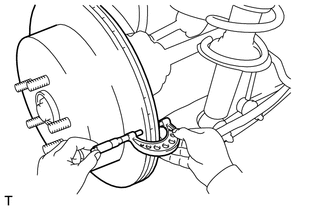
Using a micrometer, measure the rear disc thickness.
Standard Thickness 20.0 mm (0.787 in.) Minimum Thickness 18.0 mm (0.709 in.) If the rear disc thickness is less than the minimum thickness, replace the rear disc.
-
-
INSPECT DISC RUNOUT
-
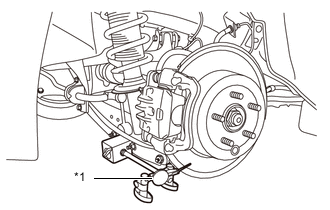
Text in Illustration *1 Dial Indicator Check the bearing play in the axial direction and check for the axle hub runout Click here.
-
Tighten the disc with the 5 nuts.
- Torque:
- 120 N*m { 1224 kgf*cm, 89 ft.*lbf }
-
Using a dial indicator, measure the disc runout 10 mm (0.394 in.) away from the outer edge of the rear disc.
Maximum disc runout 0.07 mm (0.0028 in.) Note
-
If the runout exceeds the maximum value, change the installation positions of the disc and axle to make the minimum runout. If the runout exceeds the maximum even when the installation positions are changed, replace the rear disc.
-
-
Remove the 5 hub nuts and rear disc.
-
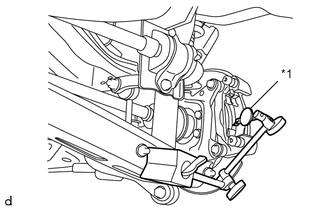
Text in Illustration *1 Dial Indicator Set the dial indicator 10 mm (0.394 in.) inside the rear disc outer circumference, and then rotate the rear disc to check the runout at the back.
Maximum disc runout 0.07 mm (0.0028 in.) Tech Tips
The illustration shows an example.
-