СИСТЕМА SFI
-
CONSTRUCTION
-
A planar type air fuel ratio sensor and a cup type oxygen sensor are used. The basic construction of the oxygen sensor and the air fuel ratio sensor is the same. However, they are divided into the planar type and cup type, in accordance with the different types of heater construction used.
-
The planar type air fuel ratio sensor uses alumina, which excels in heat conductivity and electrical insulation, to integrate the sensor element with the heater, thus improving the warmup performance of the sensor.
-
The cup type oxygen sensor contains a sensor element that surrounds the heater.
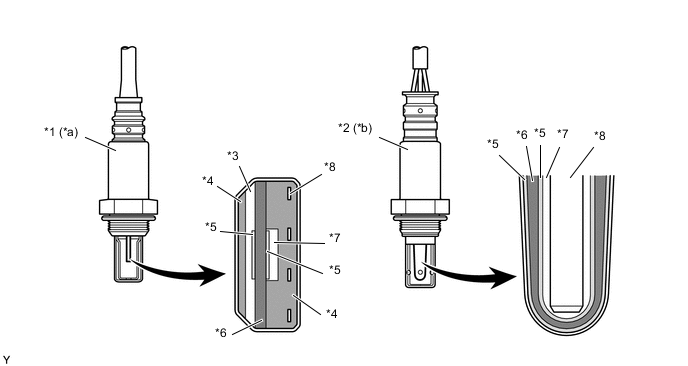
*1 Air Fuel Ratio Sensor *2 Oxygen Sensor *3 Diffusion Resistance Layer *4 Alumina *5 Platinum Electrode *6 Sensor Element (Zirconia) *7 Atmosphere *8 Heater *a Planar Type *b Cup Type -
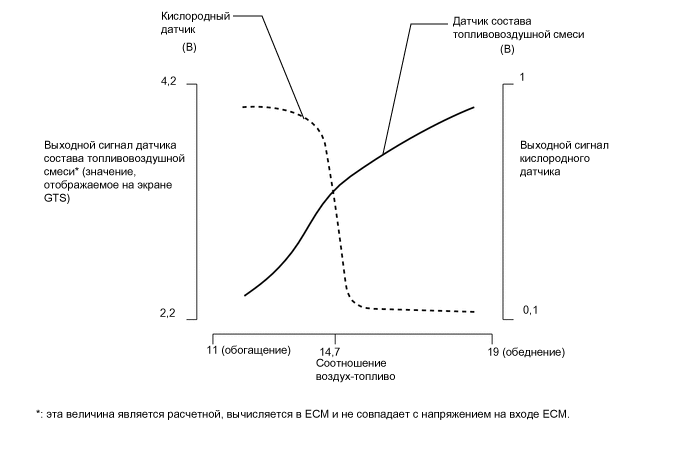
As illustrated below, the conventional oxygen sensor is characterized by a sudden change in its output voltage at the threshold of the stoichiometric air fuel ratio (14.7:1). In contrast, the air fuel ratio sensor data is approximately proportionate to the existing air fuel ratio. The air fuel ratio sensor converts the oxygen density to current and sends it to the ECM. As a result, the detection precision of the air fuel ratio has been improved. The air fuel ratio sensor data can be viewed using the Global TechStream (GTS).
Figure 1. Characteristics of Air Fuel Ratio Sensor and Oxygen Sensor
-