CYLINDER HEAD REPAIR
-
REPAIR INTAKE VALVE SEAT
-
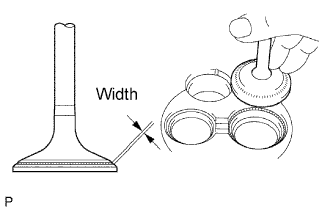
Check the valve seating position.
-
Apply a light coat of prussian blue (or white lead) to the valve face.
-
Lightly press the valve against the seat. Do not rotate valve.
-
-
Check the valve face and seat for the following:
-
If blue appears 360° around the face, the valve is concentric. If not, replace the valve.
-
If blue appears 360° around the valve seat, the guide and face are concentric. If not, resurface the seat.
-
Check that the seat contact is in the middle of the valve face with the width below.
Standard width 1.5 to 1.9 mm (0.059 to 0.075 in.)
-
-
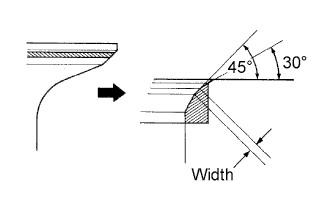
If the seating is too high on the valve face, use 30 and 45° cutters to correct the seat.
-
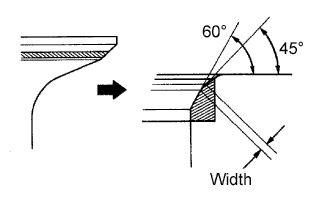
If the seating is too low on the valve face, use 60 and 45° cutters to correct the seat.
-
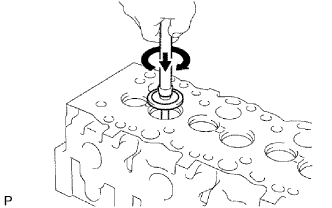
Hand-lab the valve and valve seat with an abrasive compound.
-
After hand-lapping, clean the valve and valve seat.
-
-
REPAIR EXHAUST VALVE SEAT
-
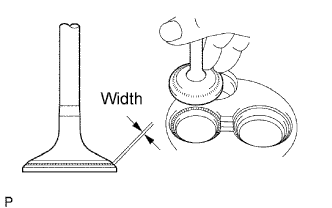
Check the valve seating position.
-
Apply a light coat of prussian blue (or white lead) to the valve face.
-
Lightly press the valve against the seat. Do not rotate valve.
-
-
Check the valve face and seat for the following:
-
If blue appears 360° around the face, the valve is concentric. If not, replace the valve.
-
If blue appears 360° around the valve seat, the guide and face are concentric. If not, resurface the seat.
-
Check that the seat contact is in the middle of the valve face with the width below.
Standard width 1.8 to 2.2 mm (0.071 to 0.087 in.)
-
-
If the seating is too high on the valve face, use 30 and 45° cutters to correct the seat.
-
If the seating is too low on the valve face, use 60 and 45° cutters to correct the seat.
-

Hand-lap the valve and valve seat with an abrasive compound.
-
After hand-lapping, clean the valve and valve seat.
-