NAVIGATION SYSTEM(except Sedan) OPERATION CHECK
CHECK NAVIGATION SYSTEM NORMAL CONDITION
If the symptom is applicable to any of the following, it is intended behavior, and not a malfunction.
Symptom
Answer
A longer route than expected is chosen.
Depending on the road conditions, the navigation ECU may determine that a longer route is quicker.
Even when distance priority is high, the shortest route is not shown.
Some routes may not be advised due to safety concerns.
When the vehicle is put into motion immediately after the engine starts, the navigation system deviates from the correct position.
If the vehicle starts before the navigation system activates, the system may not react.
When driving on certain types of roads, especially new roads, the vehicle position deviates from the correct position.
When the vehicle is driving on new roads not available on the hard disk drive, the system attempts to match it to another nearby road, causing the position mark to deviate.
-
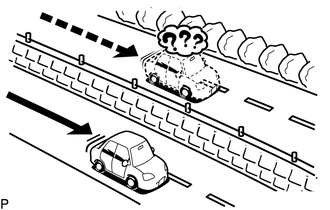
The following symptoms are not malfunctions, but are caused by errors inherent in the GPS, gyro sensor, vehicle speed signal or navigation ECU.
The current position mark may be displayed on a nearby parallel road.
-
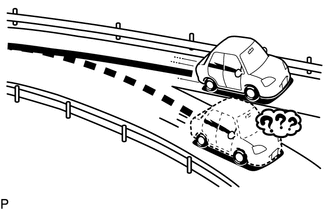
Immediately after a fork in the road, the current vehicle position mark may be displayed on the wrong road.
-
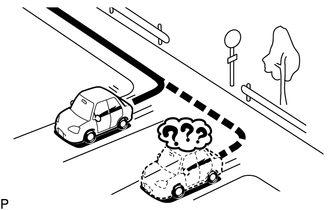
When the vehicle turns right or left at an intersection, the current vehicle position mark may be displayed on a nearby parallel road.
-
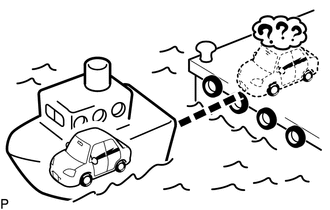
When the vehicle is carried, such as on a ferry, and the vehicle itself is not driving, the current vehicle position mark may be displayed in the position where the vehicle was until a measurement can be performed by the GPS.
-
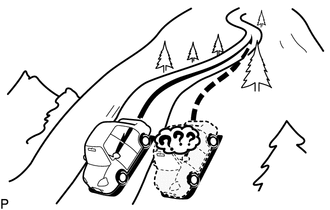
When the vehicle travels on a steep hill, the current vehicle position mark may deviate from the correct position.
-
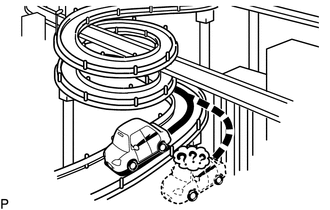
When the vehicle makes a continuous turn (e.g. 360, 720, 1080 degrees), the current vehicle position mark may deviate from the correct position.
-
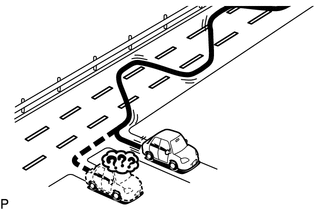
When the vehicle moves erratically, such as constant lane changes, the current vehicle position mark may deviate from the correct position.
-
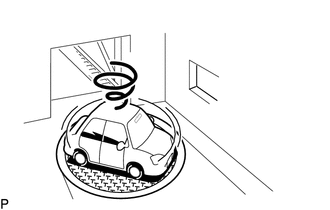
When the ignition switch is turned to ACC or ON and the vehicle is turned on a turntable before parking, the current vehicle position mark may not indicate the correct direction. The same will occur when the vehicle comes out of the parking garage.
-
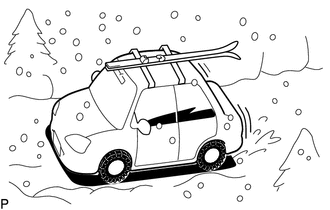
When the vehicle travels on a snowy road or a mountain path with tire chains installed or using a spare tire, the current vehicle position mark may deviate from the correct position.
-
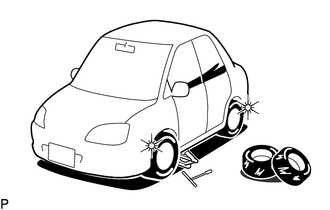
When the tires are changed, the current vehicle position mark may deviate from the correct position.
Tip:A change in tire diameter may cause a speed sensor error.
Performing "tire change" in calibration mode will allow the system to correct the current vehicle position faster.
CHECK PANEL & STEERING SWITCH
Tip:The radio and display receiver assembly panel switches and steering switches are checked in the following procedure.
Illustrations may differ from the actual vehicle screen depending on the device settings and options. Therefore, some detailed areas may not be shown exactly the same as on the actual vehicle screen.
Enter diagnostic mode.
-
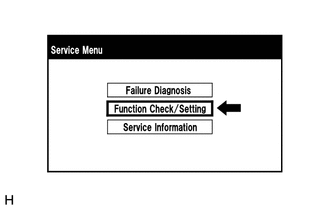
Select "Function Check/Setting" from the "Service Menu" screen.
-
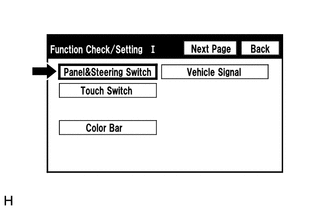
Select "Panel & Steering Switch" from the "Function Check/Setting I" screen.
-
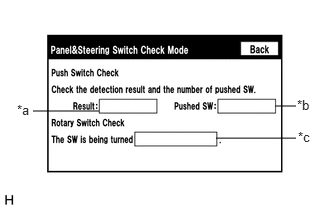
Panel & Steering Switch Check Mode
Table 1. Screen Description Display
Content
*a: Switch condition
"Pushed" is displayed when any switch is pushed
*b: Number of switches pushed
Number of switches pushed at once is displayed
If more than 3 switches are pushed at once, "More than 3" is displayed
*c: Rotary switch direction
Direction of rotary switch is displayed
Operate each switch and check that the switch conditions are correctly displayed.
Note:When the "SETUP" switch is pressed and held for 3 seconds or more, diagnostic mode will be canceled.
CHECK TOUCH SWITCH
Tip:The touch switches on the screen are checked in the following procedure.
Illustrations may differ from the actual vehicle screen depending on the device settings and options. Therefore, some detailed areas may not be shown exactly the same as on the actual vehicle screen.
Enter diagnostic mode.
-
Select "Function Check/Setting" from the "Service Menu" screen.
-
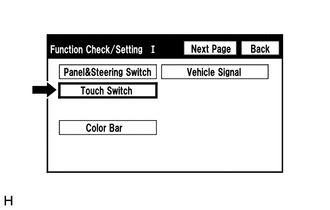
Select "Touch Switch" from the "Function Check/Setting I" screen.
-
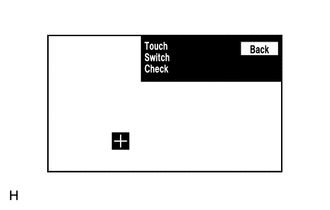
Touch Switch Check
Touch the display anywhere in the open area to perform the check when the "Touch Switch Check" screen is displayed.
Tip:A "+" mark is displayed where the display is touched.
The "+" mark remains on the display even after your finger is removed.
CHECK COLOR BAR
Tip:The display color on the screen is checked in the following procedure.
Illustrations may differ from the actual vehicle screen depending on the device settings and options. Therefore, some detailed areas may not be shown exactly the same as on the actual vehicle screen.
Enter diagnostic mode.
-
Select "Function Check/Setting" from the "Service Menu" screen.
-
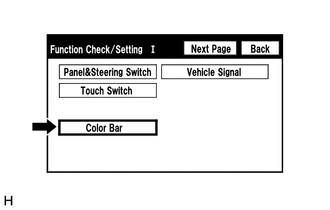
Select "Color Bar" from the "Function Check/Setting I" screen.
-
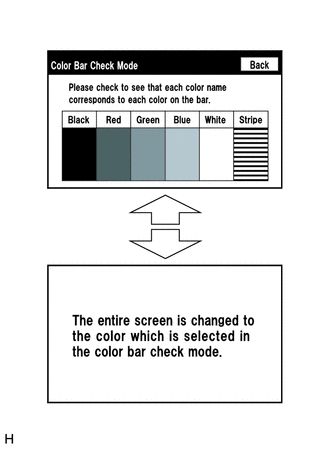
Color Bar Check Mode
Select a color bar from the "Color Bar Check Mode" screen.
Check the display color.
Tip:The entire screen turns to the color or stripe selected.
Touching the display will return to the "Color Bar Check Mode" screen.
CHECK VEHICLE SIGNALS
Tip:Vehicle signals received by the radio and display receiver assembly are checked in the following procedure.
Illustrations may differ from the actual vehicle screen depending on the device settings and options. Therefore, some detailed areas may not be shown exactly the same as on the actual vehicle screen.
Enter diagnostic mode.
-
Select "Function Check/Setting" from the "Service Menu" screen.
-
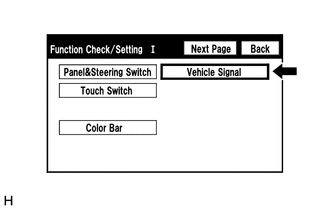
Select "Vehicle Signal" from the "Function Check/Setting I" screen.
-
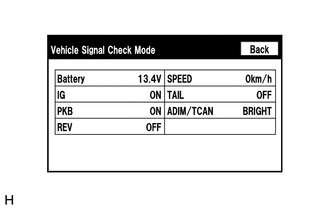
Vehicle Signal Check Mode
Table 2. Screen Description Display
Content
Battery
Battery voltage is displayed.
IG
Ignition switch ON/OFF state is displayed.
PKB
Parking brake ON/OFF state is displayed.
REV
Reverse signal ON/OFF state is displayed.
SPEED
Vehicle speed is displayed in km/h.
TAIL
Tail signal (light control switch) ON/OFF state is displayed.
ADIM/TCAN
Brightness state DIM (with)/BRIGHT (without) is displayed.
Tip:Only items sending vehicle signals will be displayed.
This screen displays vehicle signals input to the radio and display receiver assembly.
This screen is updated once per second when vehicle input signals change.
When the "Vehicle Signal Check Mode" screen is displayed, check all the vehicle signal conditions.
CHECK DAB RECEPTION (w/ DAB Function)
Tip:The reception condition of DAB (Digital Audio Broadcast) can be checked.
Illustrations may differ from the actual vehicle screen depending on the device settings and options. Therefore, some detailed areas may not be shown exactly the same as on the actual vehicle screen.
Enter diagnostic mode.
-
Select "Function Check/Setting" from the "Service Menu" screen.
-
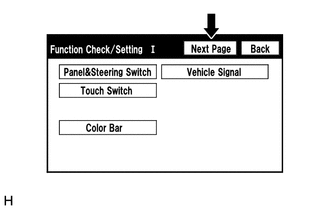
Select "Next Page" from the "Function Check/Setting I" screen.
-
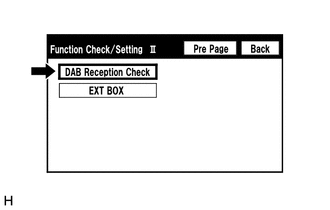
Select "DAB Reception Check" from the "Function Check/Setting II" screen.
-
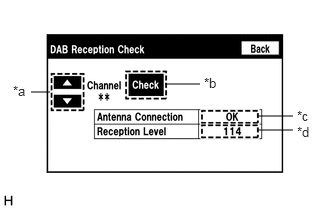
DAB Reception Check
Table 3. *a: Channel Change Switch Description Display
Content
Up or down button
Enables the channel to be changed to the one to be checked.
Table 4. *b: Check Switch Description Display
Condition
Content
Check
Before/after check
Starts checking
STOP
During check
Stops checking
Table 5. *c: Antenna Connection Check Result Description Display
Content
OK
Connected properly
NG
Not connected properly
-
Not equipped with DAB antenna
Table 6. *d: DAB Tuner Reception Level Check Result Description Display
Content
Black
Good reception
Red
Poor reception
-
Not equipped with DAB antenna
Select the "Check" button to start the DAB reception check.
Check that the results are displayed when the DAB reception check is performed.
CHECK MICROPHONE LEVEL
Tip:The microphone and microphone input level are checked in the following procedure.
Illustrations may differ from the actual vehicle screen depending on the device settings and options. Therefore, some detailed areas may not be shown exactly the same as on the actual vehicle screen.
Enter diagnostic mode.
-
Select "Function Check/Setting" from the "Service Menu" screen.
-
Select "Next Page" from the "Function Check/Setting I" screen.
-
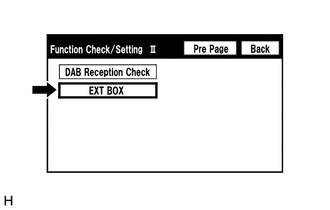
Select "EXT BOX" from the "Function Check/Setting II" screen.
-
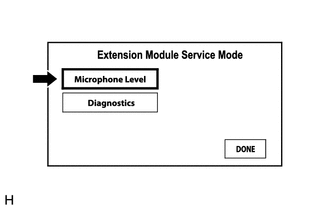
Select "Microphone Level" from the "Extension Module Service Mode" screen.
-
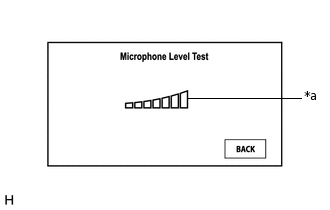
Microphone Level Test
Table 7. Screen Description Display
Content
*a: Microphone input level meter
Monitors the microphone input level every 0.1 seconds and displays the results in 8 different levels.
When speaking into the microphone, check that the microphone input level meter changes according to the input level.
Tip:The microphone is active at all times when this screen is displayed.
CHECK DIAGNOSTICS
Tip:The connection condition of the USB device and each item (antenna) can be checked using the following procedure.
Illustrations may differ from the actual vehicle screen depending on the device settings and options. Therefore, some detailed areas may not be shown exactly the same as on the actual vehicle screen.
Enter diagnostic mode.
-
Select "Function Check/Setting" from the "Service Menu" screen.
-
Select "Next Page" from the "Function Check/Setting I" screen.
-
Select "EXT BOX" from the "Function Check/Setting II" screen.
-
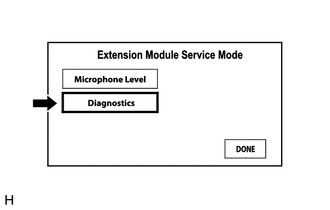
Select "Diagnostics" from the "Extension Module Service Mode" screen.
-
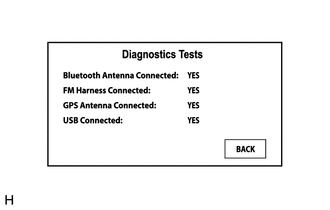
Diagnostics Tests
Check the connection condition of the USB device and each item (antenna) on the "Diagnostics Tests" screen.
Tip:"YES" is displayed when the connection is good and "NO" is displayed when it is not.
If "NO" is displayed for any of the item connected conditions, check each connection condition.
CHECK SOFTWARE ERROR HISTORY
Tip:This function is used to check the cause when the radio and display receiver assembly screen is blacked out.
Check software error history.
Connect the GTS to the DLC3.
Turn the ignition switch to ON.
Turn the GTS on.
Enter the following menus: Body Electrical / Navigation System / Utility / Software Error History.
Body Electrical > Navigation System > Utility
Tester Display
Software Error History
When an item is stored for Software Error History, record it before repairing the radio and display receiver assembly.
Table 8. Software Error History Screen Description Error Description
Trigger
Detail
Software Reset
Navi microcomputer
Hexadecimal Number
Audio microcomputer
CAN microcomputer
No Video Signal
Front monitor
Rear monitor
MOST Cold Restart
Always
Tip:Software Error History can store up to 5 history data items. If a new software error occurs when 5 data items have already been stored, the oldest data is cleared and the new data is stored.
If an error that is unsupported by the GTS occurs, a "-" is displayed for the display items.
Clear software error history.
When DTCs are cleared using any of the following operations, Software Error History will be cleared as well.
Body Electrical > Navigation System > Clear DTCs
Cleared using the GTS.
Cleared using the system check mode screen.
Cleared using the unit check mode screen.
CHECK OPTICAL DISC ERROR HISTORY
Tip:This function is used to check the cause of an optical disc error.
Check optical disc error history.
Connect the GTS to the DLC3.
Turn the ignition switch to ON.
Turn the GTS on.
Enter the following menus: Body Electrical / Navigation System / Utility / Optical Disc Error History.
Body Electrical > Navigation System > Utility
Tester Display
Optical Disc Error History
When an item is stored for Optical Disc Error History, record it before proceeding with troubleshooting.
Table 9. Optical Disc Error History Screen Description Display
Content
Error Type
Displays the type of error.
Device
Displays the malfunctioning device.
Date
Displays the date and time that the malfunction occurred.
Table 10. "Error Type" Screen Description Error Type
Detection Condition
Action
Read Error
When a disc read error occurs.
Proceed to next suspected area shown in Problem Symptoms Table.
Disc damaged/upside down/dirty
When it is determined that any of the following is the cause of the disc read error:
The disc cannot be read.
The disc cannot be read because of dirt or scratches.
The disc cannot be read because it is inserted upside down.
Cannot determine disc type
An unsuitable disc is inserted.
DPS error
When an error occurs while decoding MP3/WMA files.
Some files are corrupt
When MP3/WMA files cannot be played back because they are unsupported.
Even though the file extensions are MP3 or WMA, files cannot be played back because the header information cannot be read.
Some files cannot be found
When a disc without music data is played back.
When there are no playable MP3/WMA files.
Copy protection violation
When a file with copyright protection that cannot be played back is played back.
Table 11. "Device" Screen Description Device
Component
DVD-P
Not available
CD-P
Radio and display receiver assembly
R-Seat DVD-P
Not available
Tip:Optical Disc Error History can store up to 7 history data items. If a new optical disc error occurs when 7 data items have already been stored, the oldest data is cleared and the new data is stored.
If an error that is unsupported by the GTS occurs, a "-" or blank is displayed for the display items.
Clear optical disc error history.
When DTCs are cleared using any of the following operations, Optical Disc Error History will be cleared as well.
Body Electrical > Navigation System > Clear DTCs
Cleared using the GTS.
Cleared using the system check mode screen.
Cleared using the unit check mode screen.