VACUUM WARNING SWITCH (for Diesel) ON-VEHICLE INSPECTION
-
INSPECT BRAKE FLUID LEVEL IN RESERVOIR
-
Check the brake fluid level.
If the brake fluid level is lower than the MIN line, check for leaks and brake pad wear. If necessary, reservoir with brake fluid to the MAX line after repair or replacement.
Brake Fluid SAE J1703 or FMVSS No. 116 DOT3 Note
If using a dropper to adjust the brake fluid amount, make sure that the dropper has not been used with mineral oils, water or deteriorated brake fluid. Sealed areas may deteriorate and lead to brake fluid leaks, or the brake fluid may deteriorate and lead to decreased efficiency.
-
-
INSPECT BRAKE BOOSTER ASSEMBLY
-
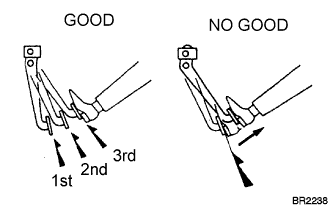
Air tightness check.
-
Start the engine and stop it after 1 or 2 minutes. Depress the brake pedal several times slowly.
Tech Tips
If the pedal can be depressed to the floor on the first time, but on the 2nd or 3rd time cannot be depressed as far, the booster is airtight.
-
Depress the brake pedal while the engine is running, and stop the engine with the pedal depressed.
Tech Tips
If there is no change in the pedal reserve distance while holding the pedal for 30 seconds, the booster is airtight.
-
-
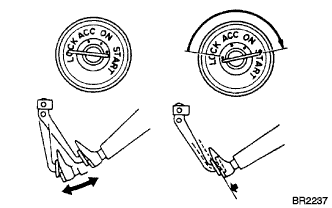
Operating check.
-
Depress the brake pedal several times with the ignition switch off and check that there is no change in the pedal reserve distance when the pedal is depressed.
-
Start the engine with the brake pedal depressed.
Tech Tips
If the pedal goes down slightly, operation is normal.
-
-
-
INSPECT VACUUM WARNING SWITCH ASSEMBLY
-
Start the engine and stop it after 1 or 2 minutes.
-
Disconnect the connector from the vacuum warning switch assembly.
-
Measure the resistance of the vacuum warning switch assembly.
Standard Resistance 10 kΩ or higher -
With the engine stopped, depress the brake pedal several times to release vacuum from the brake booster assembly, and measure the resistance of the vacuum warning switch assembly.
Standard Resistance Below 1Ω -
Connect the connector to the vacuum warning switch assembly.
-