AUTOMATIC TRANSAXLE FLUID ADJUSTMENT

CAUTION / NOTICE / HINT
The necessary procedures (adjustment, calibration, initialization or registration) that must be performed after parts are removed and installed, or replaced during automatic transaxle fluid replaced are shown below.
| Replacement Part or Performed Procedure | Necessary Procedures | Effect/Inoperative Function when Necessary Procedure not Performed | Link |
|---|---|---|---|
|
Bleed the oil pump assembly with motor (automatic transaxle assembly) | Stop and start system |
-
*1: w/ Stop and Start System
PROCEDURE
-
PRECAUTIONS AND WORK DESCRIPTION
-
The U661E automatic transaxle assembly does not have an oil filler tube and oil level gauge. When adding automatic transaxle fluid, add automatic transaxle fluid through the refill hole on the rear transaxle cover sub-assembly. The automatic transaxle fluid level can be adjusted by draining excess automatic transaxle fluid (allowing excess fluid to overflow) through the No. 1 transmission oil filler tube of the automatic transaxle oil pan sub-assembly.
Tech Tips
"Overflow" indicates the condition under which automatic transaxle fluid comes out of the overflow plug hole.
-
Before adjusting the automatic transaxle fluid level, add the specified amount of automatic transaxle fluid when the engine is cold and warm up the engine to circulate the automatic transaxle fluid in the automatic transaxle assembly. Ensure that the automatic transaxle fluid temperature is as specified and the engine is idling.
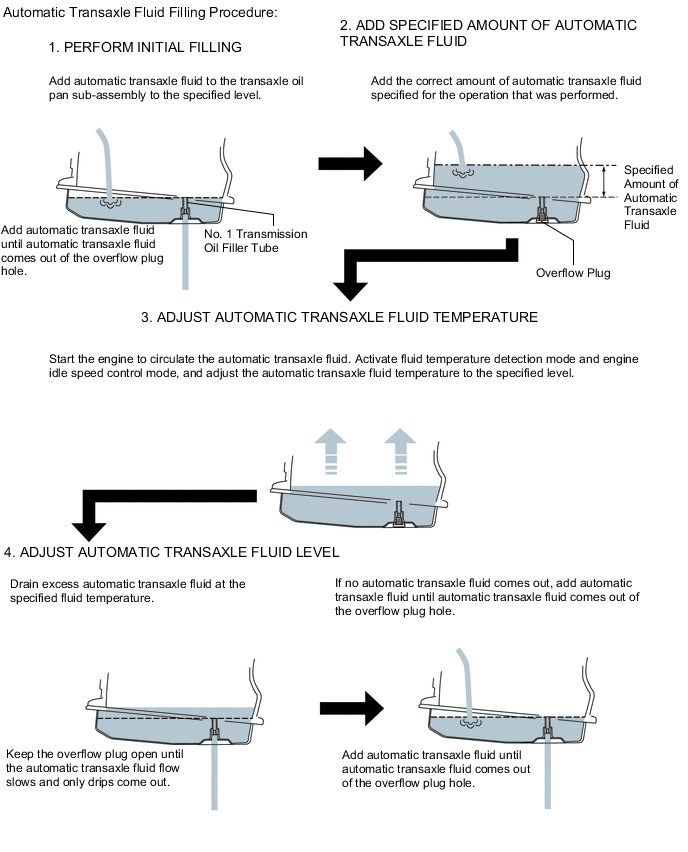
-
The U661E automatic transaxle assembly requires Toyota Genuine ATF WS.
-
The adjustment should be performed according to the procedures and notes.
-
-
WORK FLOW
-
The adjustment should be performed according to the procedure referenced in the work flow below.
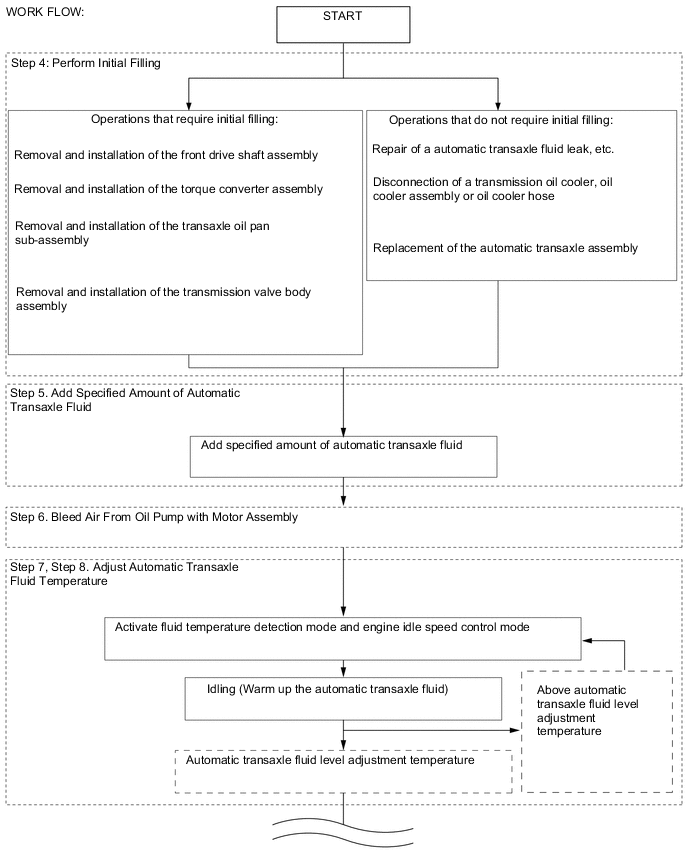
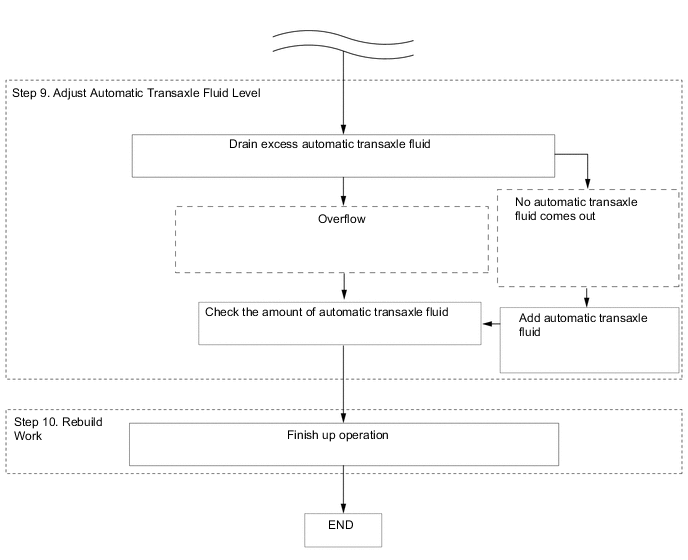
-
-
PREPARATION WORK
-
Lift the vehicle.
Note
Set the vehicle on a lift so that the vehicle is kept level when it is lifted up (make sure that the tilt angle from the front to rear of the vehicle is within +/- 1°).
-
Remove the front wheel opening extension pad LH.
-
Remove the No. 3 engine under cover.
-
Remove the front fender apron seal LH.
-
Using compressed air, clean the cap of the transmission oil thermostat.
-
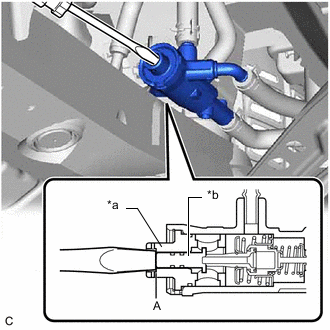
*a Cap *b Shaft Using a screwdriver, push in the shaft of the transmission oil thermostat.
Tech Tips
-
Standard Depth:
5.5 to 7.0 mm (0.217 to 0.276 in.)
-
Push the shaft of the transmission oil thermostat until the end of the shaft is aligned with (A) shown in the illustration.
-
-
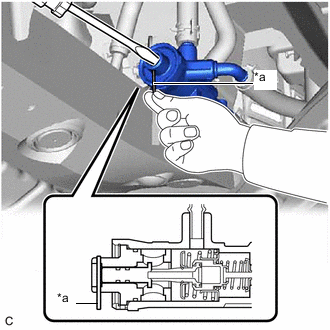
*a Pin With the shaft of the transmission oil thermostat pushed in, insert a pin into a hole on the side of the cap. Insert the pin until it passes through the hole on the other side of the cap to secure the shaft.
Tech Tips
Make sure to use a pin with a length of 30 mm (1.18 in.) or more and a diameter of 1.5 mm (0.0591 in.).
-
-
PERFORM INITIAL FILLING
Note
If the automatic transaxle assembly is hot (ATF temperature is high), wait until the fluid temperature becomes the same as the ambient temperature before starting the following procedure. (Recommended ATF temperature: around 20°C [68°F])
-
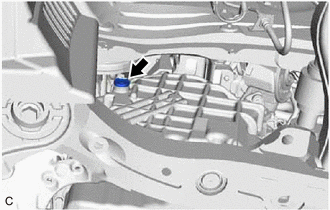
Remove the refill plug and gasket from the rear transaxle cover sub-assembly.
Note
After performing either of the following operations, it is not necessary to perform the initial filling procedure. Proceed to the "Add Specified Amount of Automatic Transaxle Fluid" procedure.
Operations that do not require initial filling
-
Disconnection of a transmission oil cooler, oil cooler assembly or oil cooler hose
-
Repair of an automatic transaxle fluid leak due to a loose case plug, or a faulty plug gasket or O-ring
-
Replace of the automatic transaxle assembly
-
-
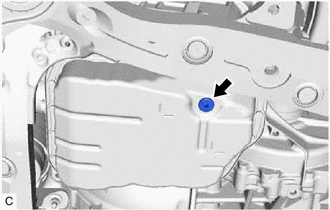
Using a 6 mm hexagon socket wrench, remove the overflow plug and gasket from the automatic transaxle oil pan sub-assembly.
Note
-
If ATF comes out after removing the overflow plug, wait until the automatic transaxle fluid flow slows and only drips come out.
-
If ATF comes out, it is not necessary to perform the initial filling procedure. After checking the tightening torque of the No. 1 transmission oil filler tube, temporarily install the overflow plug.
-
-
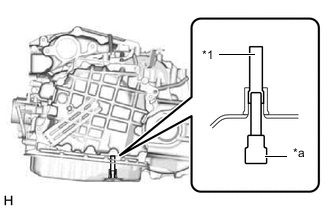
*1 No. 1 Transmission Oil Filler Tube *a 6 mm Hexagon Socket Wrench Using a 6 mm hexagon socket wrench, check that the No. 1 transmission oil filler tube is tightened to the specified torque.
- Torque:
- 1.7 N*m { 17 kgf*cm, 15 in.*lbf }
Note
If the No. 1 transmission oil filler tube is not tightened to the specified torque, the amount of automatic transaxle fluid cannot be precisely adjusted.
Tech Tips
To check the torque of the No. 1 transmission oil filler tube, insert the 6 mm hexagon socket wrench into the overflow plug hole.
-
Perform initial filling.
-
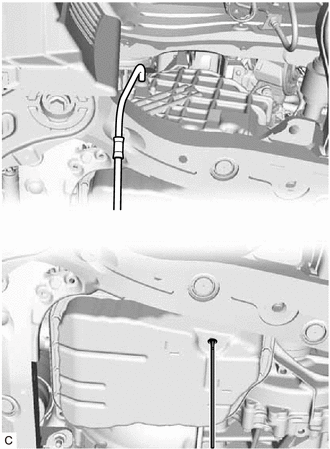
Fill the automatic transaxle assembly through the refill hole until fluid begins to come out of the overflow plug hole.
Note
Use Toyota Genuine ATF WS.
-
-
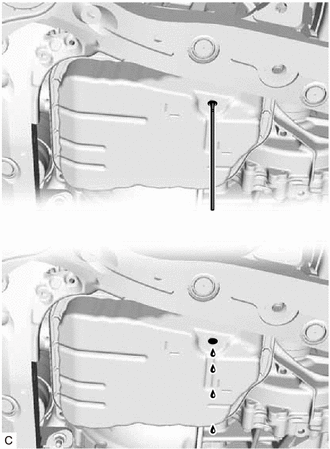
Wait until the automatic transaxle fluid flow slows and only drips come out.
-
Using a 6 mm hexagon socket wrench, temporarily install the gasket and overflow plug to the automatic transaxle oil pan sub-assembly.
Tech Tips
Reuse the old gasket as the overflow plug will be removed again to adjust the automatic transaxle fluid level.
-
Temporarily install the gasket and refill plug to the rear transaxle cover sub-assembly.
Tech Tips
Reuse the old gasket as the refill plug will be removed again to adjust the automatic transaxle fluid level.
-
-
ADD SPECIFIED AMOUNT OF AUTOMATIC TRANSAXLE FLUID
-
Remove the refill plug and gasket from the rear transaxle cover sub-assembly.
-
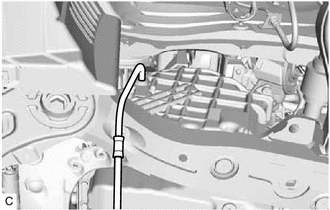
Fill the automatic transaxle assembly with the correct amount of automatic transaxle fluid as listed in the table below.
Note
Use Toyota Genuine ATF WS.
Tech Tips
The refill amount differs depending on the operation that was performed.
Reference Capacity Performed Repair Fill Amount Automatic transaxle assembly replacement (with a new torque converter assembly) 5.3 liters (5.6 US qts, 4.7 Imp. qts) Automatic transaxle assembly replacement (when reusing the torque converter assembly) 3.4 liters (3.6 US qts, 3.0 Imp. qts) Removal and installation of the torque converter assembly 4.8 liters (5.1 US qts, 4.2 Imp. qts) Removal and installation of the transmission valve body assembly 3.2 liters (3.4 US qts, 2.8 Imp. qts) Removal and installation of the automatic transaxle oil pan sub-assembly 2.8 liters (3.0 US qts, 2.5 Imp. qts) Removal and installation of a front drive shaft assembly 2.8 liters (3.0 US qts, 2.5 Imp. qts) Removal and installation of the front drive shaft oil seal LH or front drive shaft oil seal RH 2.8 liters (3.0 US qts, 2.5 Imp. qts) Removal and installation of the transmission oil cooler, oil cooler assembly or an oil cooler hose 0.5 liters (0.5 US qts, 0.4 Imp. qts) Repair of an automatic transaxle fluid leak due to a loose case plug, or a faulty plug gasket or O-ring 0.5 liters (0.5 US qts, 0.4 Imp. qts) -
Temporarily install the gasket and refill plug to avoid automatic transaxle fluid spillage.
Tech Tips
Reuse the old gasket as the refill plug will be removed again to adjust the automatic transaxle fluid level.
-
Lower the vehicle.
-
-
BLEED AIR FROM OIL PUMP WITH MOTOR ASSEMBLY
-
ADJUST AUTOMATIC TRANSAXLE FLUID TEMPERATURE (when Using the GTS)
Tech Tips
The actual ATF temperature can be checked on the Data List using the GTS.
-
Connect the GTS to the DLC3 with the engine switch off.
-
Turn the engine switch on (IG) and turn the GTS on.
Note
To reduce load, make sure that all electrical systems, such as the air conditioning, lighting system, electric fan and audio system, are off.
-
Enter the following menus: Powertrain / Transmission / Active Test / Activate the TC Terminal
Powertrain > Transmission > Active TestActive Test Display Activate the TC Terminal Data List Display A/T Oil Temperature No.1 -
According to the display on the GTS, perform the Data List "A/T Oil Temperature No. 1".
-
According to the display on the GTS, perform the Active Test "Activate the TC Terminal / ON".
-
Check the ATF temperature.
Note
-
If the automatic transaxle fluid temperature is below 45°C (113°F), proceed to the next step. Recommended ATF temperature: 40°C (104°F) or less
-
If the automatic transaxle fluid temperature is 45°C (113°F) or more, turn the engine switch off and wait until the automatic transaxle fluid temperature drops below 45°C (113°F).
-
-
Depress and hold the brake pedal.
-
Start the engine.
-
Slowly move the shift lever from P to D, then back to P (keep the shift lever in each position for approximately 3 seconds).
Tech Tips
Slowly move the shift lever to circulate the automatic transaxle fluid through each part of the automatic transaxle assembly.
-
While observing the D shift indicator on the combination meter, move the shift lever back and forth between N and D at an interval of less than 1.5 seconds for 6 seconds or more.
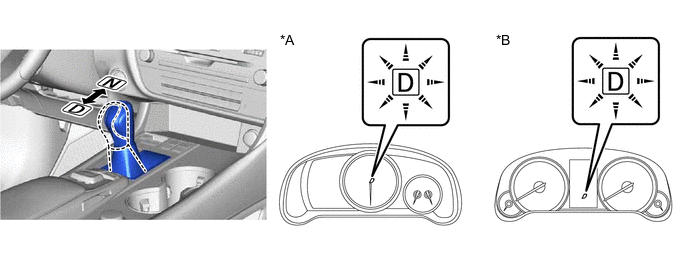
*A for TFT Meter Type *B for Optitron Meter Type Note
Do not pause for more than 1.5 seconds.
Tech Tips
Performing this operation will cause the vehicle to enter automatic transaxle fluid temperature detection mode.
-
Check that the D shift indicator comes on for 2 seconds.
Tech Tips
-
When automatic transaxle fluid temperature detection mode is activated, the D shift indicator on the combination meter comes on for 2 seconds.
-
If the D shift indicator does not come on for 2 seconds, return to the first step and perform the procedure again.
-
-
Move the shift lever to P.
-
Release the brake pedal.
-
Change the Active Test item Activate the TC Terminal to OFF.
Note
Be sure that Activate the TC Terminal are not connected. If the terminals are connected, the automatic transaxle fluid level cannot be precisely adjusted due to fluctuations in engine speed.
Tech Tips
-
Disconnecting terminals TC and TE1 activates engine idle speed control mode.
-
In engine idle speed control mode, engine idle speed control starts when the automatic transaxle fluid temperature becomes 35°C (95°F) or more.
-
Even after terminals TC and TE1 are disconnected, automatic transaxle fluid temperature detection mode will be active until the engine switch is turned off.
-
-
Warm up the engine with the engine idling until the automatic transaxle fluid temperature reaches the automatic transaxle fluid level adjustment temperature (40 to 45°C (104 to 113°F)).
Automatic Transaxle Oil Temperature Below Automatic Transaxle Fluid Level Adjustment Temperature Automatic Transaxle Fluid Level Adjustment Temperature Above Automatic Transaxle Fluid Level Adjustment Temperature 40°C or less
(104°F or less)
40 to 45°C
(104 to 113°F)
45°C or more
(113°F or more)
Note
-
If the automatic transaxle fluid temperature is within the automatic transaxle fluid level adjustment temperature range, immediately proceed to the "Adjust Fluid Level" procedure.
-
If the automatic transaxle fluid temperature is 45°C (113°F) or more, stop the engine and wait until the automatic transaxle fluid temperature drops to 40°C (104°F) or less. Then perform the "Adjust Fluid Temperature" procedure again from the beginning.
Tech Tips
In automatic transaxle fluid temperature detection mode, the D shift indicator comes on, goes off or blinks depending on the automatic transaxle fluid temperature.
D Shift Indicator Below Automatic Transaxle Fluid Level Adjustment Temperature
(40°C or less)
(104°F or less)
Automatic Transaxle Fluid Level Adjustment Temperature
(40 to 45°C)
(104 to 113°F)
Above Automatic Transaxle Fluid Level Adjustment Temperature
(45°C or more)
(113°F or more)
OFF ON Blinks -
-
-
ADJUST AUTOMATIC TRANSAXLE FLUID TEMPERATURE (when Not Using the GTS)
-
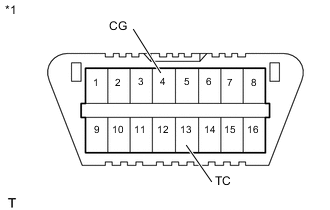
*1 DLC3 Using SST, connect terminals 13 (TC) and 4 (CG) of the DLC3 with the engine switch off.
- SST
- 09843-18040
-
Depress and hold the brake pedal.
-
Start the engine.
Note
To reduce load, make sure that all electrical systems, such as the air conditioning, lighting system, electric fan and audio system are off.
Tech Tips
The indicator lights on the combination meter blink to indicate stored DTCs when terminals 13 (TC) and 4 (CG) are connected.
-
Slowly move the shift lever from P to D, then back to P (keep the shift lever in each position for approximately 3 seconds).
Tech Tips
Slowly move the shift lever to circulate the automatic transaxle fluid through each part of the automatic transaxle assembly.
-
While observing the D shift indicator on the combination meter, move the shift lever back and forth between N and D at an interval of less than 1.5 seconds for 6 seconds or more.
*A for TFT Meter Type *B for Optitron Meter Type Note
Do not pause for more than 1.5 seconds.
Tech Tips
Performing this operation will cause the vehicle to enter automatic transaxle fluid temperature detection mode.
-
Check that the D shift indicator comes on for 2 seconds.
Tech Tips
-
When automatic transaxle fluid temperature detection mode is activated, the D shift indicator on the combination meter comes on for 2 seconds.
-
If the D shift indicator does not come on for 2 seconds, return to the first step and perform the procedure again.
-
-
Move the shift lever to P.
-
Release the brake pedal.
-
Remove SST from terminals 13 (TC) and 4 (CG).
- SST
- 09843-18040
Note
Be sure that terminals 13 (TC) and 4 (CG) are not connected. If the terminals are connected, the automatic transaxle fluid level cannot be precisely adjusted due to fluctuations in the engine speed.
Tech Tips
-
Disconnecting terminals 13 (TC) and 4 (CG) activates engine idle speed control mode.
-
In engine idle speed control mode, engine idle speed control starts when the automatic transaxle fluid temperature becomes 35°C (95°F) or more.
-
Even after terminals 13 (TC) and 4 (CG) are disconnected, automatic transaxle fluid temperature detection mode will be active until the engine switch is turned off.
-
Allow the engine to idle until the D shift indicator comes on again.
D Shift Indicator Below Automatic Transaxle Fluid Level Adjustment Temperature
(40°C or less)
(104°F or less)
Automatic Transaxle Fluid Level Adjustment Temperature
(40 to 45°C)
(104 to 113°F)
Above Automatic Transaxle Fluid Level Adjustment Temperature
(45°C or more)
(113°F or more)
OFF ON Blinks Note
-
If the D shift indicator is on, immediately proceed to the "Adjust Fluid Level" procedure.
-
If the D shift indicator blinks, stop the engine and wait until the automatic transaxle fluid temperature drops to 40°C (104°F) or less (the indicator goes off). Then perform the "Adjust Fluid Temperature" procedure again from the beginning.
Tech Tips
-
In automatic transaxle fluid temperature detection mode, the D shift indicator comes on, goes off, or blinks depending on the automatic transaxle fluid temperature.
-
Automatic transaxle fluid filling procedure should be performed when the D shift indicator is on (the automatic transaxle fluid temperature is within the automatic transaxle fluid level adjustment temperature range).
-
-
-
ADJUST AUTOMATIC TRANSAXLE FLUID LEVEL
CAUTION:
Use caution while the engine is idling and the radiator fans are operating.
-
Lift the vehicle.
Note
Set the vehicle on a lift so that the vehicle is kept level when it is lifted up (make sure the tilt angle from the front to rear of the vehicle is within +/- 1°).
-
Using a 6 mm hexagon socket wrench, remove the overflow plug and gasket from the automatic transaxle oil pan sub-assembly.
CAUTION:
Be careful as the automatic transaxle fluid coming out of the overflow plug hole is hot.
-
Check the amount of automatic transaxle fluid that comes out of the overflow plug hole.
-
If the amount of automatic transaxle fluid that comes out of the overflow plug hole is large, proceed to step [#1].
-
If no automatic transaxle fluid comes out of the overflow plug hole, proceed to step [#2].
Note
If only a small amount of automatic transaxle fluid (approximately 1 cc) comes out of the overflow plug hole, then only automatic transaxle fluid remaining in the No. 1 transmission oil filler tube has come out. This condition is not considered as overflow, so it is necessary to add automatic transaxle fluid.
-
-
If the amount of automatic transaxle fluid that comes out of the overflow plug hole is large. [#1]
-
Wait until the automatic transaxle fluid flow slows and only drips come out.
Tech Tips
The automatic transaxle fluid flow will not stop completely because the automatic transaxle fluid continues to expand as its temperature increases.
-
-
If no automatic transaxle fluid comes out of the overflow plug hole. [#2]
-
Remove the refill plug and gasket from the rear transaxle cover sub-assembly.
-
Then add automatic transaxle fluid through the refill hole until fluid comes out of the overflow plug hole.
Note
Use Toyota Genuine ATF WS.
-
Wait until the automatic transaxle fluid flow slows and only drips come out.
-
-
Using a 6 mm hexagon socket wrench, install the overflow plug and a new gasket to the automatic transaxle oil pan sub-assembly.
- Torque:
- 40 N*m { 408 kgf*cm, 30 ft.*lbf }
-
Install the refill plug and a new gasket to the rear transaxle cover sub-assembly.
- Torque:
- 49 N*m { 500 kgf*cm, 36 ft.*lbf }
-
Lower the vehicle.
-
Turn the engine switch off.
-
Disconnect the GTS from the DLC3 (when using the GTS).
-
-
REBUILD WORK
-
Lift the vehicle.
-
Clean each part.
-
Check for fluid leaks.
-
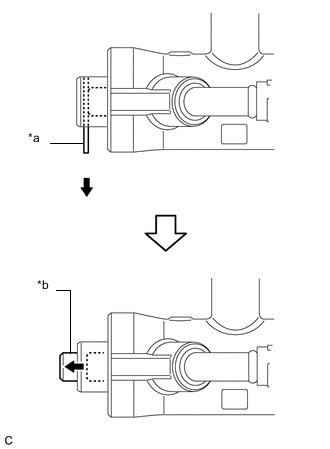
*a Pin *b Shaft Push the shaft of the transmission oil thermostat with a screwdriver and remove the pin.
Note
Make sure the shaft of the transmission oil thermostat returns to its original position after removing the pin.
-
Install the front fender apron seal LH.
-
Install the No. 3 engine under cover.
-
Install the front wheel opening extension pad LH.
-
Lower the vehicle.
-