POWER STEERING SYSTEM
-
OUTLINE
-
A rack assist type Electric Power Steering (EPS) system is used.
-
An Electric Power Steering (EPS) system transmits the assist torque during steering to the rack shaft by operating the motor and reduction mechanism to reduce the steering force.
-
A rack and pinion power steering gear assembly, in which the power steering ECU and power steering motor are integrated and positioned parallel to the rack shaft, is used to make the steering gear easier to install. As a result, a lower vehicle center of gravity is achieved, improving driving performance.
-
The reduction mechanism of the rack and pinion power steering gear assembly is composed of balls and a ball screw nut, and the support structure of the ball screw nut is optimized to achieve superior steering feeling.
Figure 1. 2WD Models
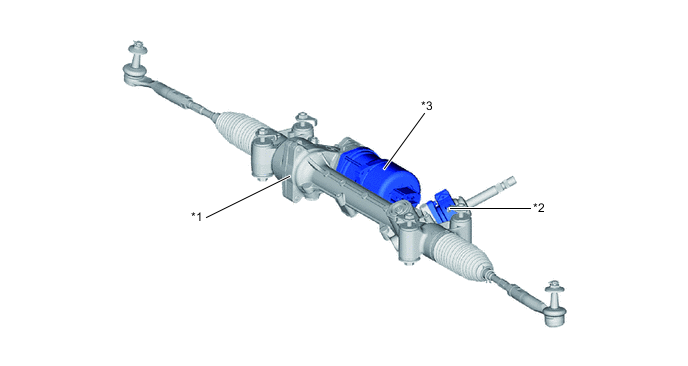
*1 Rack and Pinion Power Steering Gear Assembly *2 Steering Torque Sensor *3 Power Steering ECU with Motor Assembly
-
Power Steering ECU
-
Power Steering Motor
- - Figure 2. AWD Models
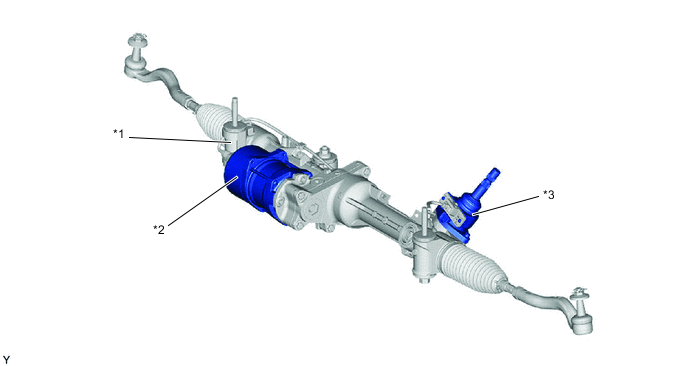
*1 Rack and Pinion Power Steering Gear Assembly *2 Power Steering ECU with Motor Assembly
-
Power Steering ECU
-
Power Steering Motor
*3 Steering Torque Sensor - - -
-
-
MAIN FEATURES
-
Low Fuel Consumption Characteristics
-
The hydraulic power steering system constantly operates the vane pump using the engine motive force while the EPS system only drives the motor during steering, which is when assist torque is required. As a result, energy is saved while idling or driving straight ahead and superior low fuel consumption characteristics are achieved.
-
-
Vehicle Speed Sensing Function
-
The assist characteristics are changed according to speed sensor signals, achieving a light steering feeling at low speeds and a moderately responsive steering feeling at high speeds.
-
-