HYBRID TRANSMISSION SYSTEM
-
CONSTRUCTION
-
A lightweight forged aluminum transmission valve body assembly is used.
-
A 2-part structure composed of the upper valve body and lower valve body is used, and the solenoid valves are positioned on the lower valve body.
-
The number of valves is reduced, the shape of the fluid path is optimized, the length of the fluid path is minimized and the valve clearance is reduced to achieve a highly responsive hydraulic pressure control.
-
A linear solenoid valve (solenoid valve SL1, SL2, SL3 and SL4) is positioned on each friction engagement component to achieve a high-precision hydraulic pressure control.
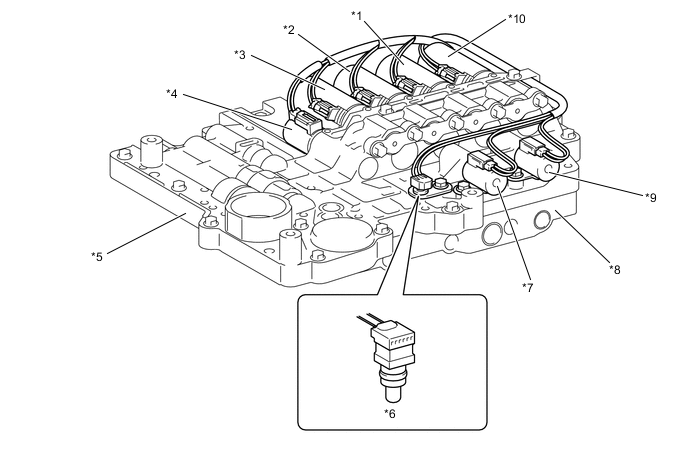
*1 Solenoid Valve SL3 *2 Solenoid Valve SL2 *3 Solenoid Valve SL1 *4 Solenoid Valve SLT *5 Lower Valve Body *6 ATF Temperature Sensor *7 Solenoid Valve SC2 *8 Upper Valve Body *9 Solenoid Valve SC1 *10 Solenoid Valve SL4
-
-
OPERATION
-
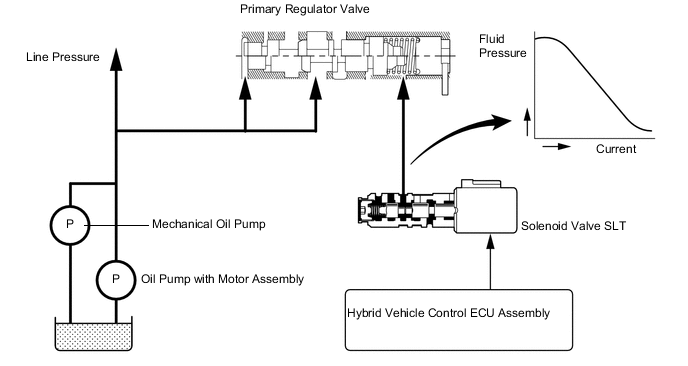
Linear solenoid valves are used for line pressure control and extremely detailed control is performed according to driving conditions to achieve superior shift characteristics.
-
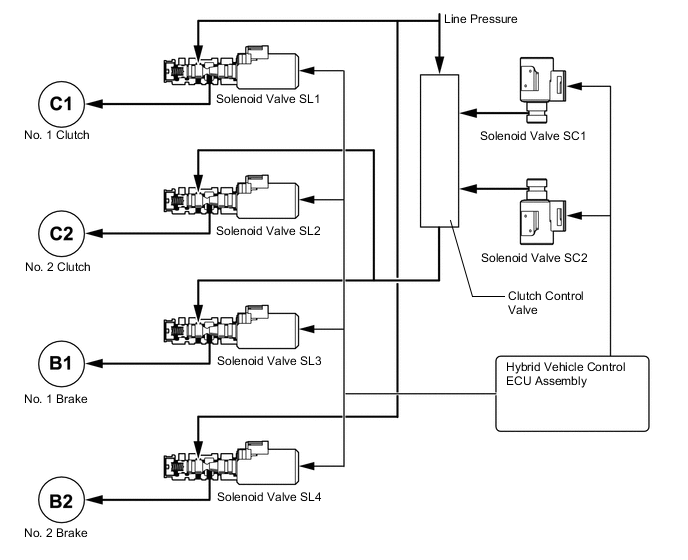
Linear solenoid valves are used to perform clutch and brake engagement hydraulic pressure control. The clutch and brake engagement hydraulic pressure is controlled directly and independently to achieve superior response and a superior shift feeling.
-
A 3-way solenoid valve is used to perform switching control for the D and R ranges. The 3-way solenoid valve operates a clutch control valve to perform control to switch the hydraulic pressure supplied to solenoid valves SL2 and SL3 on and off.
-
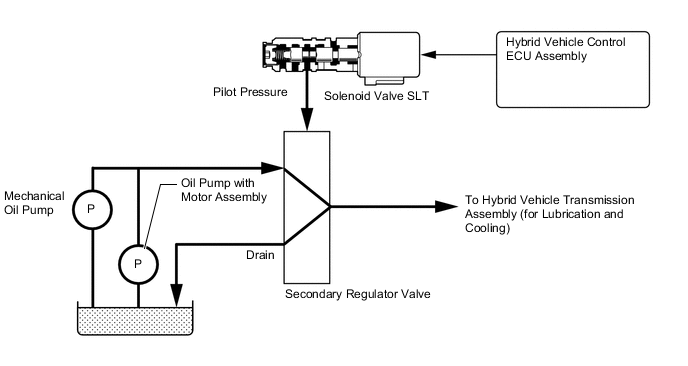
The volume of lubricant that flows in the transmission is controlled according to the requested motive force. The volume of fluid required for lubrication and cooling is optimized to reduce losses due to friction and improve fuel efficiency.
-