EXHAUST SYSTEM
-
CONSTRUCTION
-
A double-pipe structure is used upstream from the front exhaust pipe assembly catalyst to suppress drops in the exhaust gas temperature and increase the temperature of the catalyst. As a result, exhaust gas purification efficiency and fuel economy have been improved.
-
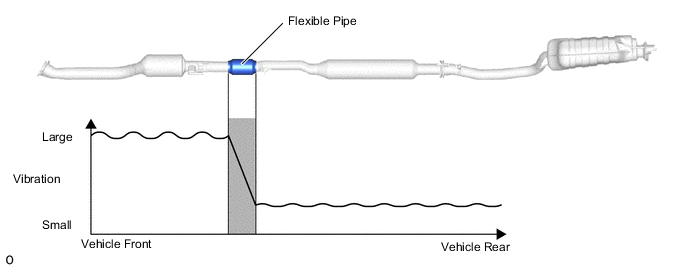
The transmission of vibrations from the engine is blocked by the flexible pipe, improving the quietness in the cabin.
-
The flexible pipe in the front exhaust pipe assembly has a three-layered construction made up of mesh, bellows and an interlock. The role of each part is described below.
Role of Each Part Mesh (Outermost Side) Protects against damage from flying stones, etc. Bellows (Center) Seals the exhaust gas. Interlock (Innermost Side)
-
Suppresses excessive deformation.
-
Protects the bellows from hot exhaust air.
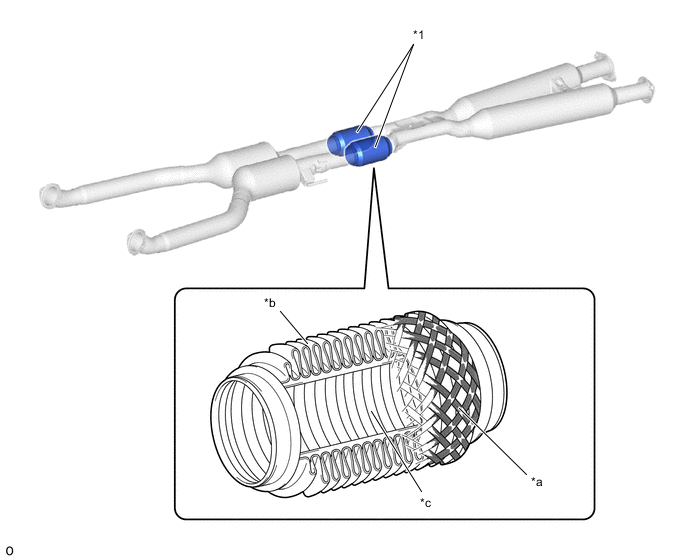
*1 Flexible Pipe - - *a Mesh *b Bellows *c Interlock - - -
-
A 2-way exhaust system is used to ensure quietness and achieve improvements in the exhaust efficiency and engine output. The control valve that adjusts the area of the exhaust gas passage is provided inside the main muffler. The control valve is closed according to the force of the return spring at high engine speeds (when idling). When the engine speed increases, the control valve opens.
-
-
OPERATION
-
2-way Exhaust System
-
When Control Valve is Closed (Low Engine Speed)
-
Since the pressure in the main muffler is low, the control valve is closed. Hence exhaust gas does not pass the bypass passage, and exhaust noise is decreased in the main muffler.
-
-
When Control Valve is Open (High Engine Speed)
-
The valve opens as the engine speed and back pressure in the muffler increases. This allows a large volume of exhaust gas to pass into the bypass passage, thereby substantially decreasing the back pressure.
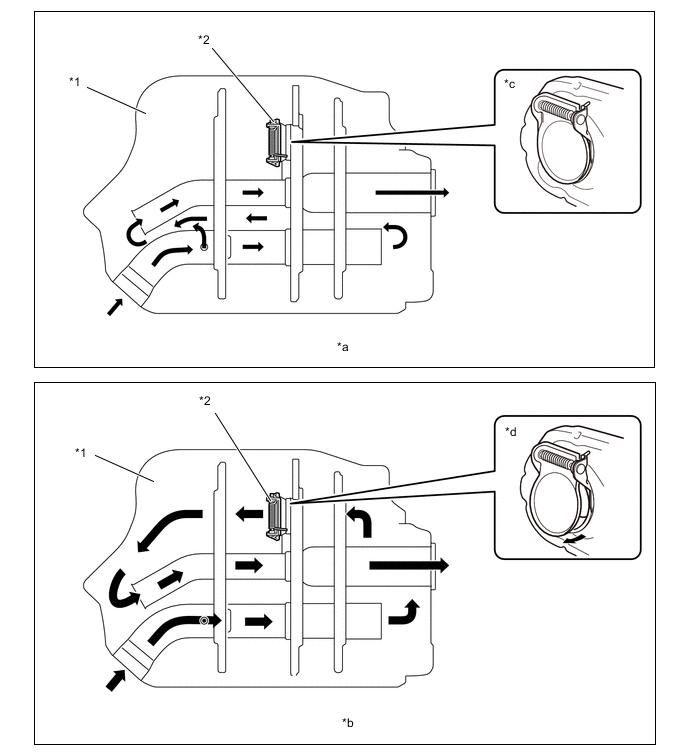
*1 Main Muffler *2 Control Valve *a Low Engine Speed *b High Engine Speed *c Control Valve Closed *d Control Valve Open 
Exhaust Gas Flow - - -
-
-