FUEL SYSTEM
-
FUNCTION
-
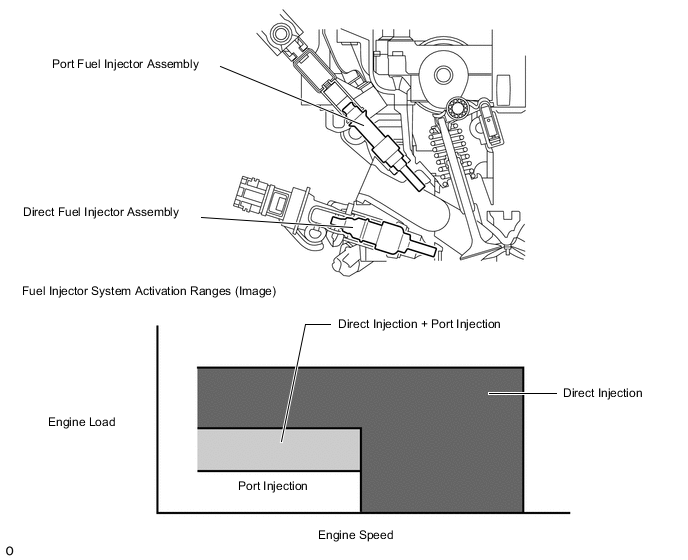
The Direct injection 4-stroke gasoline engine Superior version (D-4S) system has 2 fuel injection methods. One is the in-cylinder direct injection method that directly injects pressurized fuel into the combustion chamber. The other is the intake port injection method. The ECM determines which fuel injection method to use in accordance with the engine conditions.
-
When the engine is in the low to middle load range, the direct injection method or port injection method is used, or both methods are used together, to improve fuel economy and achieve low emissions by achieving a homogeneous air-fuel mixture and stable combustion. Also, only the direct injection method is used when the engine is in the high load range. As a result, engine output performance is improved while high compression is achieved by reducing knocking and improving the effect of charging due to cooling the intake.
-
Directly after a cold engine start, fuel is injected from the fuel injector assembly (for direct injection) during the compression stroke while the air-fuel mixture in the combustion chamber homogenizes due to the injection of fuel from the fuel injector assembly (for port injection). As a result, the air-fuel mixture is stratified around the spark plug to enable a large retarded angle during ignition timing, increase the exhaust gas temperature and quickly warm the catalyst.
-
A high-pressure injector with multiple injection holes (6-hole type) in which the injection angle is optimized and fuel is highly atomized is used for the direct fuel injector assembly. Highly pressurized and atomized fuel promotes the mixing of fuel and air by following a vertical swirl flow (tumble flow) to achieve high performance and high engine output.
Figure 1. D-4S System
-