SFI SYSTEM
-
FUNCTION
-
A Direct injection 4-stroke gasoline engine Superior version Sequential multiport Fuel Injection (D-4S SFI) system which has both direct injection type and port injection type is used for the fuel injection system.
-
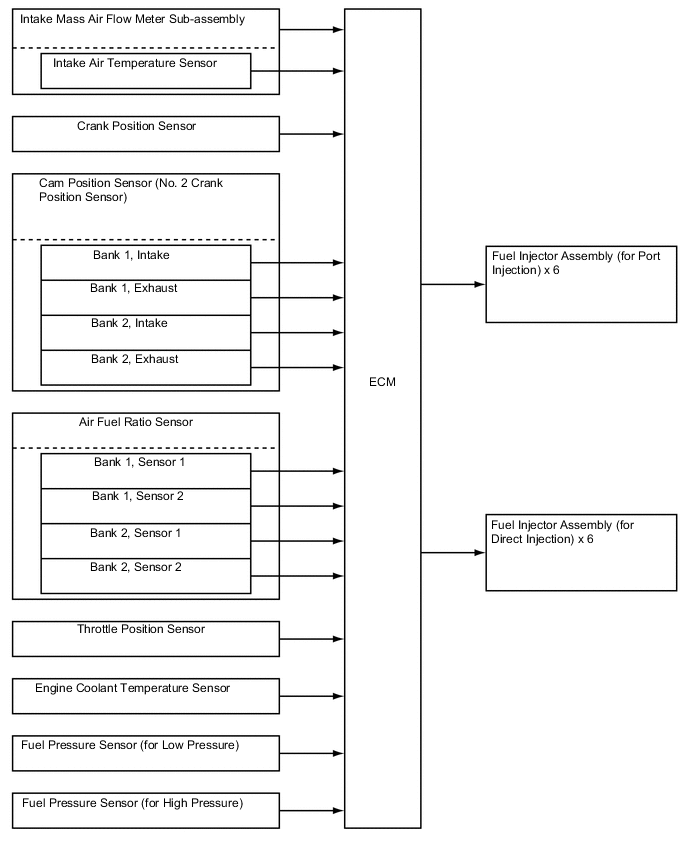
The intake air mass is detected by the intake mass air flow meter sub-assembly to control the fuel injection volume.
-
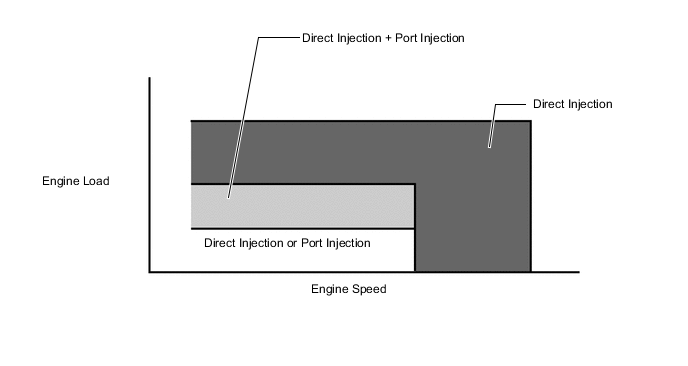
Based on signals from each sensor, the ECM controls the injection volume and timing of each type of injector assembly (for direct injection and port injection) in accordance with the engine speed and engine load in order to optimize combustion conditions. Due to this, engine oil dilution reduction, low fuel consumption, and improved emission as well as high engine output are achieved.
-
To promote warm-up of the catalyst after a cold engine start, this system uses a stratified air-fuel mixture. This creates an area near the spark plug that is richer than the rest of the air-fuel mixture. This also allows a greater amount of ignition timing retard to be used, raising the exhaust gas temperature. The increased exhaust gas temperatures promote rapid warm-up of the catalysts, significantly reducing exhaust emissions.
Figure 1. Fuel Injector System Activation Ranges
-
Stratified Combustion:
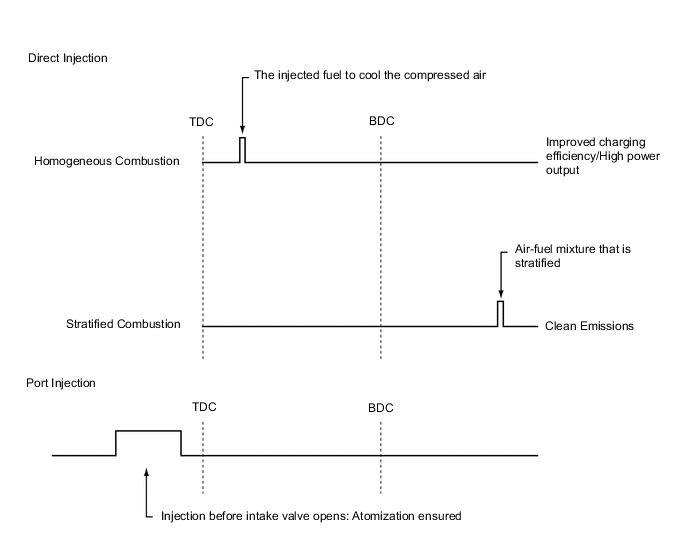
To achieve stratified combustion, immediately after a cold engine start, fuel is injected into the intake port from the fuel injector assembly (for port injection) during the exhaust stroke. Fuel is also injected from the fuel injector assembly (for direct injection) near the end of the compression stroke. This results in an air-fuel mixture that is stratified, and the area near the spark plug richer than the rest of the air-fuel mixture.
-
Homogeneous Combustion:
To optimize combustion conditions, the ECM controls injection volume and timing of the fuel injector assemblies (for port injection) which inject fuel into the intake ports during the expansion, exhaust, and intake strokes. The ECM also controls the injection volume and timing of the fuel injector assemblies (for direct injection) which inject fuel during the first half of the intake stroke. The homogeneous air-fuel mixture is created by either combined or individual use of the 2 different types of injectors. This allows utilization of the evaporation heat of the injected fuel to cool the compressed air, and it also allows an increase of charging efficiency and power output.
Figure 2. Fuel Injection Timing
-