AUTOMATIC TRANSMISSION SYSTEM
-
OUTLINE
-
An AGA0E 10-speed automatic transmission (Direct Shift-10AT) is used.
-
A lightweight, compact and highly efficient 10-speed gear train is used.
-
A wide range of gear ratios is used, dramatically improving start-off acceleration performance by using a low gear ratio for 1st gear and fuel economy at high speeds by using a high gear ratio for 10th gear. Also, a close gear ratio is used for the low gear positions to achieve rhythmical gear changes. Furthermore, the transmission constantly selects the optimal gear ratio to achieve improved fuel economy in situations such as city driving.
-
The gear train is composed of 3 planetary gears. Also, the gear train uses a 2-stage clutch mechanism and aluminum parts, achieving weight reduction and compactness. As a result, superior packaging is also ensured.
-
A resin oil pan with an integrated oil strainer is used to achieve weight reduction.
-
An oil level detection mechanism (overflow method) is used. For details of fluid filling and adjustment procedures, refer to the Repair Manual.
-
-
SPECIFICATION
-
Automatic Transmission Assembly
Gear Ratio 1st 4.923 2nd 3.153 3rd 2.349 4th 1.879 5th 1.462 6th 1.193 7th 1.000 8th 0.792 9th 0.640 10th 0.598 Reverse 5.169 Fluid Type Toyota Genuine ATF WS Fluid Capacity 8.8 Liters (9.3 US qts, 7.7 Imp. qts) Weight (Reference)* 95 kg (209.9 lb) *: Weight shows the figure with the fluid fully filled.
-
Planetary Gears
Front Planetary Gear Unit No. of Large Sun Gear Teeth 46 No. of Small Sun Gear Teeth 42 No. of Long Pinion Gear Teeth 18 No. of Short Pinion Gear Teeth 17 No. of Ring Gear Teeth 82 Middle Planetary Gear Unit No. of Sun Gear Teeth 26 No. of Pinion Gear Teeth 36 No. of Ring Gear Teeth 102 Rear Planetary Gear Unit No. of Sun Gear Teeth 26 No. of Pinion Gear Teeth 30 No. of Ring Gear Teeth 90 -
Friction Engagement Components
No. 1 Clutch (C1) No. of Discs 6 No. 2 Clutch (C2) 7 No. 3 Clutch (C3) 5 No. 4 Clutch (C4) 6 No. 1 Brake (B1) No. of Discs 6 No. 2 Brake (B2) 6 -
Torque Converter Assembly
Torque Converter Type 3-element, 1-step, 2-phase Stall Torque Ratio 1.86
-
-
MAIN FEATURES
-
Aim of Development
-
A direct driving feel
-
Rhythmical and highly responsive shifting
-
A powerful and linear feeling of acceleration
-
Superior fuel economy performance
-
A top-class level of weight reduction and compactness
-
Quietness when driving at high speeds
-
-
Close Gear Ratios and Wide Gear Ratios
-
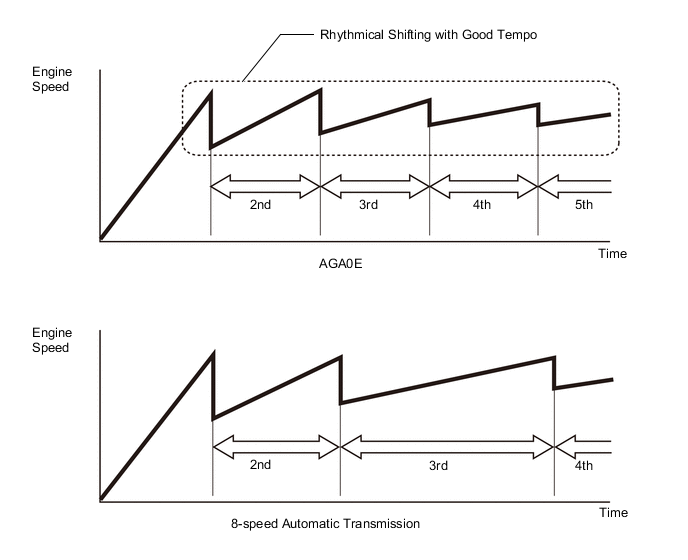
Close gear ratios are used to achieve rhythmical shifting with a good tempo during acceleration.
-
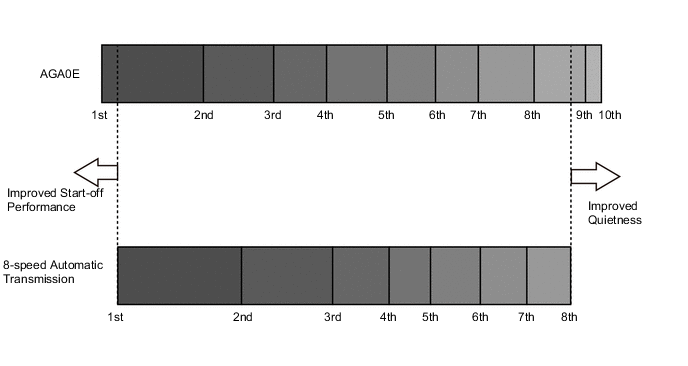
Wide gear ratios are used to achieve smooth and powerful start-off acceleration performance in low gears and suppress engine speed in high gears, achieving quiet and relaxed high-speed driving. As a result, start-off performance and quietness are improved.
-
-
Shifting Speed
-
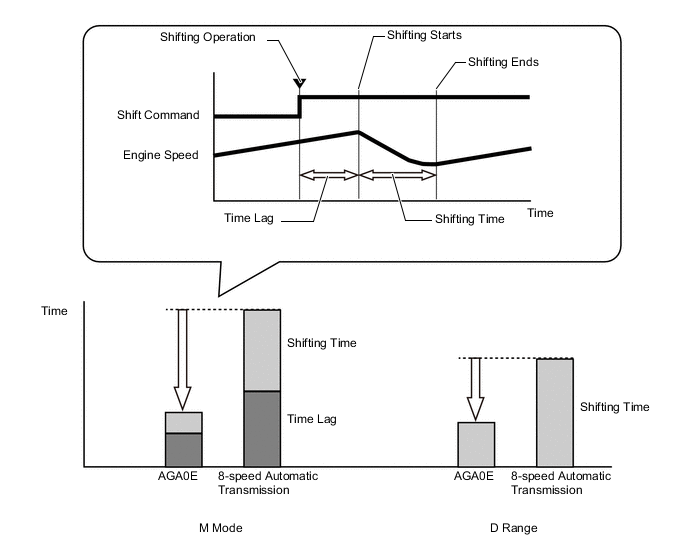
Close gear ratios are used and components used for shifting control and the oil pressure control system are optimized to reduce the time it takes for shifting to start and end, achieving quick shifting. Furthermore, the time lag in M mode is reduced to achieve superior shifting response. Also, quick shifting results in the engine sound switching instantaneously, achieving crisp and pleasant driving.
-
-
Drive Force
-
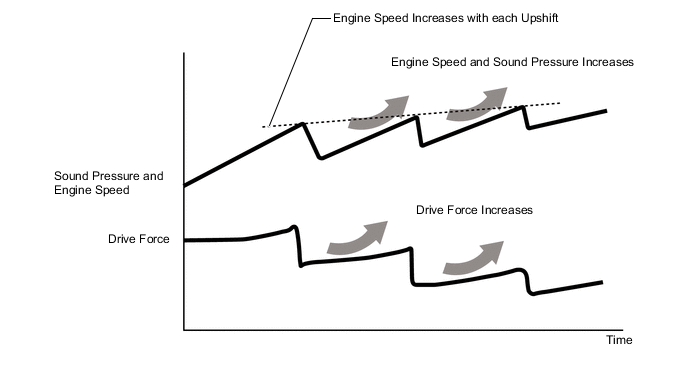
When gradually accelerating with a low accelerator pedal opening angle, a smooth drive is provided, expressing "refinement". When forcefully accelerating with a high accelerator pedal opening angle, a dynamic engine sound and rhythmical and crisp shifting come together, expressing "sharpness". As a result, a drive force that embodies both "refinement" and "sharpness" is used to achieve emotional driving. Also, when forcefully accelerating with a high accelerator pedal opening angle, the sound pressure and motive force both increase each time that the engine speed increases when the gear changes when upshifting, expressing a drive force with a sensation of forceful acceleration.
Figure 1. Low Accelerator Pedal Opening Angle
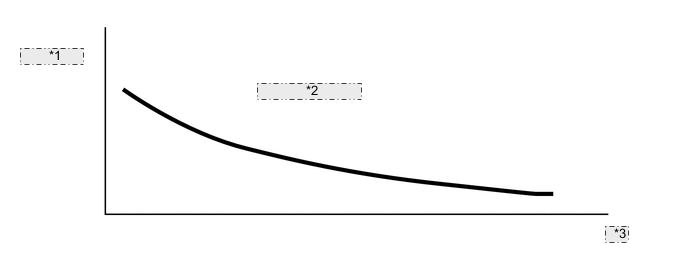
*1 Drive Force *2 Smooth Drive Force *3 Time Figure 2. High Accelerator Pedal Opening Angle
-
-