FEATURES
-
OUTLINE
-
Audio System
-
The following audio systems are available:
Audio System Audio Head Unit Speaker Navigation System Radio Receiver Assembly 12 Speakers 13 Speakers
-
-
Bluetooth Audio System
-
The bluetooth audio system is provided.
-
The Bluetooth audio system enables users to enjoy music stored on a portable audio player from the vehicle speakers via Bluetooth communication.
-
-
Bluetooth Hands-free System
-
The bluetooth hands-free system is provided.
-
The Bluetooth hands-free system allows the user to make or receive a call without taking their hands off the steering wheel when the system is linked with a Bluetooth-compatible cellular phone.
-
-
Active Noise Control System
-
The active noise control system is provided.
-
An active noise control system is used to reduce muffled sounds from the engine and propeller shaft, ensuring high levels of quietness in the cabin.
-
-
Navigation System
-
The navigation system is equipped with a wide 10.3-inch display and remote touch, ensuring ease of use.
-
-
Remote Touch
-
An exclusive hierarchical structure is used for each screen displayed on the multi-display in consideration of the remote touch.
-
-
Telematics System
-
ERA-GLONASS is provided.
-
-
Lexus Parking Assist-sensor System
-
The Lexus parking assist-sensor system is provided.
-
The Lexus parking assist-sensor system uses ultrasonic sensors to detect obstacles in front, at the corners or rear of the vehicle.
-
-
Parking Assist Monitor System
-
The parking assist monitor system is provided.
-
The parking assist monitor system consists of the rear monitor and parking guide lines to assist the driver in parking the vehicle.
-
-
Blind Spot Monitor System
-
The blind spot monitor system is provided.
-
The blind spot monitor system performs 2 functions using the same blind spot monitor sensors: BSM (Blind Spot Monitor) function and RCTA (Rear Cross Traffic Alert*1/Rear Crossing Traffic Alert*2) function.
Tech Tips
*1: Except modes for Europe
*2: Models for Europe
-
The BSM function uses sensors to detect vehicles that are in or rapidly approaching the vehicle's blind spot, helping the driver to confirm safety when changing lanes.
-
If the RCTA function detects a vehicle approaching from the right or left at the rear of the vehicle while the driver is reversing in a parking lot, the function alerts the driver by sounding the RCTA buzzer (blind spot monitor buzzer) and flashing the outer rear view mirror indicator light to provide information for the driver, supporting decision making.
-
-
Power Door Lock Control System
-
The power door lock control system is provided.
-
-
Wireless Door Lock Control System
-
The wireless door lock control system is provided.
-
-
Entry and Start System
-
The entry and start system is provided.
-
-
Theft Deterrent System
-
The theft deterrent system is provided.
-
The theft deterrent system can sound the alarm when somebody attempts to forcibly enter the vehicle, open the engine hood, unlock any door without the electrical key transmitter sub-assembly, when a battery terminal is disconnected and reconnected, when objects moving in the cabin are detected or when the vehicle is determined to be sloping.
-
-
Combination Meter Assembly
-
An 8-inch color TFT type combination meter assembly is used.
-
-
Supplemental Restraint System
-
The dual-stage Supplemental Restraint System (SRS) driver and front passenger airbags supplement the seat belts to help reduce shock to the head and chest of the driver and front passenger in the event of a frontal collision.
-
The SRS driver and front passenger knee airbags supplement the seat belts to help restrain the occupant's lower body (mainly knees) of the driver and front passenger in the event of a frontal collision, enhancing the effectiveness of occupant protection.
-
The SRS driver and front passenger side airbags are used to help reduce shock to the chest of the driver and front passenger in the event of a side collision.
-
The SRS curtain shield airbag assemblies are used to help reduce shock to the head of the driver, front passenger and rear passengers in the event of a side or rear side collision.
-
The Roll Sensing Curtain shield Airbags (RSCA) help to reduce the impact applied to the occupants by operating the seat belt pretensioners for the driver, front passenger and rear passengers and the left and right curtain shield airbag assemblies.
-
-
Pop Up Hood System
-
The pop up hood system is provided.
-
-
Flush Handle System
-
The flush handle system is provided.
-
-
Luggage Compartment Door Opener System
-
The luggage compartment door opener system is provided.
-
-
Fuel Lid Opener System
-
The fuel lid opener system is provided.
-
-
Mirror System
-
The outer rear view mirror which has the position memory system, automatic glare-resistant electrochromic (EC) dimming function and mirror heater is provided in accordance with the specification.
-
-
Lexus Safety System+
-
The preventive safety package "Lexus Safety System+" has been adopted to support the safe driving.
-
System that are included in the "Lexus Safety System+" are as follows:
-
Pre-collision System (PCS)
-
Lane Keeping Assist (LKA) System
-
Dynamic Radar Cruise Control System
-
Automatic High Beam (AHB)
-
Road Sign Assist (RSA) System
-
-
-
Pre-collision System (PCS)
-
The pre-collision system is provided.
-
The pre-collision system helps to lessen the damage sustained in a collision by operating in unison with warning devices and brake systems.
-
-
Lane Keeping Assist (LKA) System
-
The lane keeping assist system is provided.
-
The lane keeping assist system uses a forward recognition camera to detect lane markers on the road surface, assists the driver's steering operation by using the warning buzzer and electric power steering, and activates the lane departure warning when needed.
-
-
Lane Departure Alert (LDA) System
-
The lane departure alert system is provided.
-
The lane departure alert system uses a forward recognition camera to detect lane markers on the road surface, assists the driver's steering operation by using the warning buzzer and electric power steering, and activates the lane departure warning when needed.
-
-
Dynamic Radar Cruise Control System
-
The dynamic radar cruise control system is provided.
-
The dynamic radar cruise control system is designed to help reduce driver fatigue by helping to control the vehicle to a speed chosen by the driver. Once the dynamic radar cruise control system is set to the desired vehicle speed, the ECM automatically regulates the motive force to maintain the set vehicle speed without any accelerator pedal operation.
-
-
Cruise Control System
-
The cruise control system is provided.
-
The cruise control system is designed to help reduce driver fatigue by helping to control the vehicle to a speed chosen by the driver. Once the cruise control system is set to the desired vehicle speed, the ECM automatically regulates the motive force to maintain the set vehicle speed without any accelerator pedal operation.
-
-
Road Sign Assist System
-
The road sign assist system is provided.
-
The road sign assist system recognizes traffic signs using the forward recognition camera and provides information to the driver via the multi-information display.
-
-
Tire Pressure Warning System
-
The tire pressure warning system is provided.
-
The direct-sensing type tire pressure warning system directly detects the tire pressure via tire pressure warning valve and transmitters installed in each disc wheel, and warns the driver about drops in tire pressure by illuminating the tire pressure warning light when the tire pressure drops below the threshold to reduce CO2 emissions and improve safety.
-
-
Light Emitting Diode (LED) Headlight System
-
The LED headlight system use LEDs as its light source. This system consists of LEDs and headlight computer.
-
-
Daytime Running Light System
-
The daytime running light system is provided.
-
The daytime running light system is designed to automatically illuminate the Light Emitting Diode (LED) lights during the daytime to keep the vehicle highly visible to other vehicles.
-
-
Cornering Light System
-
The cornering light system is provided.
-
The cornering light system ensures that visibility is maintained while turning corners.
-
-
Light Auto Turn-off System
-
The light auto turn-off system is provided.
-
The light auto turn-off system is used to prevent the driver from leaving the vehicle with the headlights, clearance lights, taillights or license plate lights on.
-
-
Automatic Headlight Beam Level Control System
-
The automatic headlight beam level control system is provided.
-
When the vehicle is stopped with the engine and headlights on, the automatic headlight beam level control system operates the headlight leveling motors in accordance with movement of the vehicle.
-
-
Automatic Light Control System
-
The automatic light control system is provided.
-
When the light control switch is in the AUTO position, the automatic light control sensor detects the ambient light level and automatically turns the headlights, taillights, clearance lights and license plate lights on or off accordingly.
-
-
Automatic High Beam (AHB) System
-
The automatic high beam system is provided.
-
The automatic high beam system detects lights in front of the vehicle and automatically changes between high beams and low beams to support the driver during night driving.
-
-
Welcome Light Illumination System
-
The welcome light illumination system is provided.
-
The welcome light illumination system operates the clearance lights, taillights and license plate lights in conjunction with the locking and unlocking of the doors, ensuring nighttime usability.
-
-
Headlight On/Off Reminder Control
-
The Headlight On/Off Reminder Control is provided.
-
When the user forgets to turn the headlights on or off, a warning message is displayed on the multi-information display in the combination meter assembly.
-
-
Wiper-Linked Low Beam Headlight Control
-
The wiper-linked low beam headlight control is provided.
-
Wiper-linked low beam headlight control is designed to automatically illuminate the low beam headlights when it is raining to make the vehicle more visible to other vehicles.
-
-
Lane Change Flasher System
-
The lane change flasher system is provided.
-
The lane change flasher system flashes the turn signal light a certain number of times when the turn signal switch (headlight dimmer switch assembly) is moved to the lane change position. By using the lane change flasher system when changing lanes, it is no longer necessary to hold the turn signal switch in the lane change position.
-
-
Rear Window Defogger System
-
The rear window defogger system is provided.
-
The rear window defogger system uses the heater wires on the back window glass to defog the back window glass.
-
-
Windshield Deicer System
-
The windshield deicer system is provided.
-
The windshield deicer system uses a heater element in the windshield glass to help reduce the formation of ice where the front wipers park.
-
-
Wiper and Washer System
-
A wiper system with a rain sensing function is available.
-
-
Headup Display
-
A headup display is provided.
-
Various types of information that are necessary when driving are shown on the windshield glass. As a result, the driver can confirm information with less eye movement than when looking at the combination meter.
-
-
Air Conditioning System
-
The automatic air conditioning system uses left and right independent temperature control and neural network control is provided.
-
-
Seat Variation
-
Either 10-way or 8-way power seats are used for the driver and front passenger seats.
-
An integrated fixed type seat is used for the rear seat.
-
-
Color
-
Exterior Colors and Interior Colors
Exterior Color Interior Color Color No. Color Name Color No. Color Name 083 White Nova Glass Flake 20 Black 30 Dark Rose 40 Ocher 80 Breezy Blue 1G0 Dark Gray Mica 20 Black 30 Dark Rose 40 Ocher 80 Breezy Blue 1J2 Sonic Silver 20 Black 30 Dark Rose 40 Ocher 80 Breezy Blue 1J7 Sonic Titanium 20 Black 30 Dark Rose 40 Ocher 80 Breezy Blue 212 Black 20 Black 30 Dark Rose 40 Ocher 80 Breezy Blue 223 Graphite Black Glass Flake 20 Black 30 Dark Rose 40 Ocher 80 Breezy Blue 3S0 Garnet Red Mica 20 Black 30 Dark Rose 40 Ocher 3T5 Radiant Red Contrast Layering 20 Black 30 Dark Rose 80 Ocher 4X2 Amber Crystal Shine 20 Black 30 Dark Rose 40 Ocher 5C1 Naples Yellow 20 Black 30 Dark Rose 40 Ocher 8X5 Deep Blue Mica 20 Black 30 Dark Rose 40 Ocher
-
White Nova Glass Flake (083)
-
White with extreme purity.
-
Dark Gray Mica (1G0)
-
A sporty dark mica with strong metallic shadows like flowing mercury.
-
Sonic Silver (1J2)
-
Silver which combines brilliantly sharp highlights and strong shadows.
-
Sonic Titanium (1J7)
-
A metallic color that invokes the image of polished metal similar to titanium.
-
Black (212)
-
A chic black that aims for depth and glossiness with a strong dark sensation.
-
Graphite Black Glass Flake (223)
-
Black that combines a metallic texture feel and a strong dark sensation that invokes a graphite (carbon) motif.
-
Garnet Red Mica (3S0)
-
A dark red that emphasizes vivid and brilliant highlights.
-
Radiant Red Contrast Layering (3T5)
-
A vivid and deep red with strong contrast between shadows and radiant highlights.
-
Amber Crystal Shine (4X2)
-
A luxurious brown that produces varied expressions due to the rich coloring properties.
-
Naples Yellow (5C1)
-
An emotional color that invokes the sensation of nimble movement. A high level of color saturation and brilliance that could not previously be achieved has been made possible by layering coats of a high-saturation yellow base (base 1) and a brilliant mica base (base 2). The high-saturation yellow mica particles radiate brilliantly in the highlights, producing a sporty atmosphere.
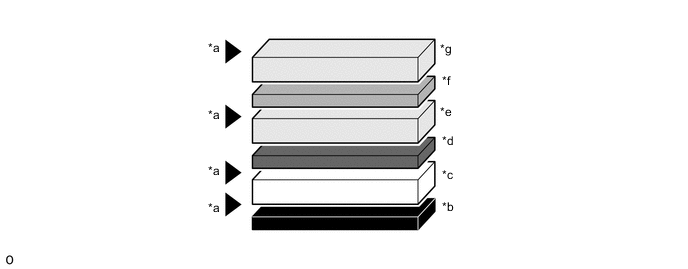
*a Bake *b Electrodeposition Layer *c White Primer Layer *d 1st Base (Yellow Coloration) *e 1st Clear Layer *f 2nd Base (Brightness) *g Top Clear Layer - - -
Deep Blue Mica (8X5)
-
A dark blue that blends both vividness and glamorous depth.
-
-
Self-restoring coat (improved scratch-resistant clear coat)
-
A clear layer which has high anti-scratch performance compared to the previous clear layer is provided. Damage to the paint applies stress to the coating, breaking down or deforming the coating. However, the anti-scratch clear coating makes the coating softer and more elastic, allowing the coating to resist damage and recover from deformation by the elasticity (spring) of the coating. Also, this anti-scratch clear layer uses an extremely high performance macromolecule polymer developed using nanotechnology (which controls responsiveness and functionality at the molecular level) to maintain coating performance (anti-scratch performance, gloss and color) over a long period of time.
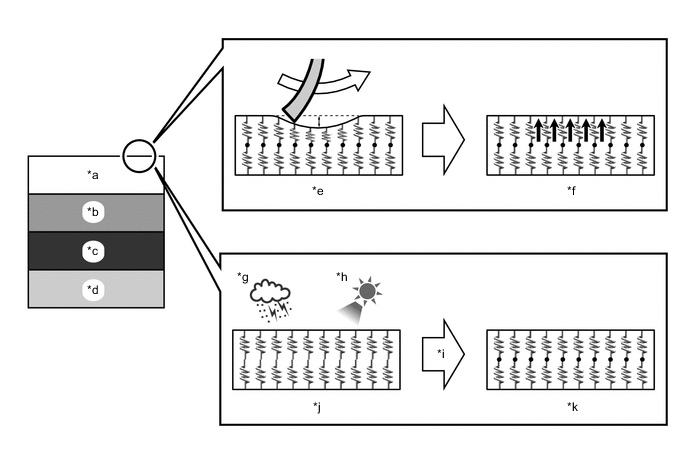
*a Clear Layer *b Base Coat Layer *c Primer Layer *d Electrodeposition Layer *e Scratches μ mm Deep with Maximum Stress of 30 MPa *f Recovery due to Coating Elasticity (Spring) *g Acid Rain *h Sunlight *i Time *j Accurately Designed Strong Springs *k Maintains Spring High Stability and Initial Paint Structure (Color and Luster) - -
-
-
-