SFI SYSTEM
-
CONSTRUCTION
-
The basic construction of the air fuel ratio sensor (sensor 1) and the air fuel ratio sensor (sensor 2) is the same. However, they are divided into the cup type and the planar type, in accordance with the different types of heater construction that are used.
-
The planar type air fuel ratio sensor (sensor 1) uses alumina, which excels in heat conductivity and insulation, to integrate a sensor element with the heater, thus achieving the excellent warm-up performance of the sensor.
-
The cup type air fuel ratio sensor (sensor 2) contains a sensor element that surrounds the heater.
Figure 1. Air Fuel Ratio Sensor (Sensor 1)
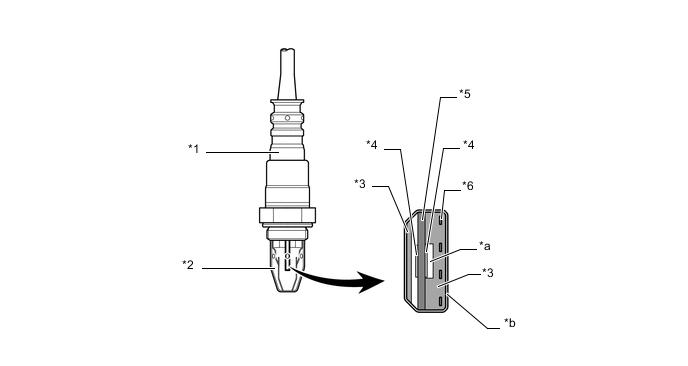
*1 Air Fuel Ratio Sensor (Planar Type) *2 Cover *3 Alumina *4 Platinum Electrode *5 Sensor Element (Zirconia) *6 Heater *a Atmosphere *b Coating (Ceramic) Figure 2. Air Fuel Ratio Sensor (Sensor 2)
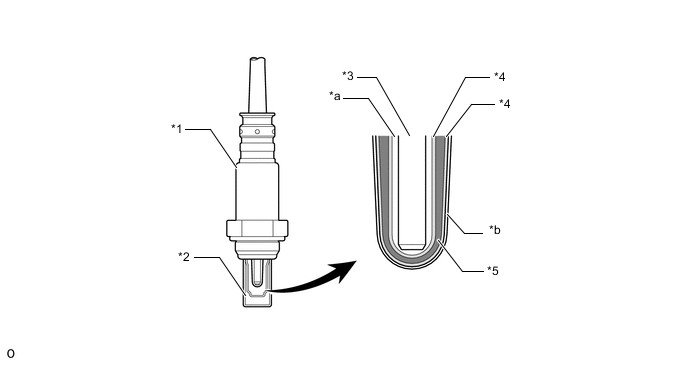
*1 Air Fuel Ratio Sensor (Cup Type) *2 Cover *3 Heater *4 Platinum Electrode *5 Sensor Element (Zirconia) - - *a Atmosphere *b Coating (Ceramic) Figure 3. Output Characteristics of The Air Fuel Ratio Sensor (Sensor 1)
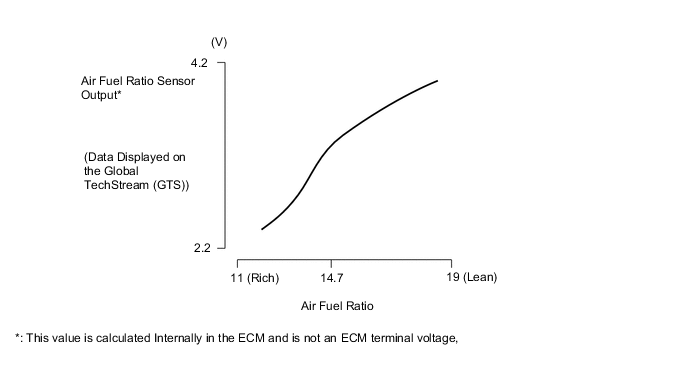
Figure 4. Output Characteristics of The Air Fuel Ratio Sensor (Sensor 2)
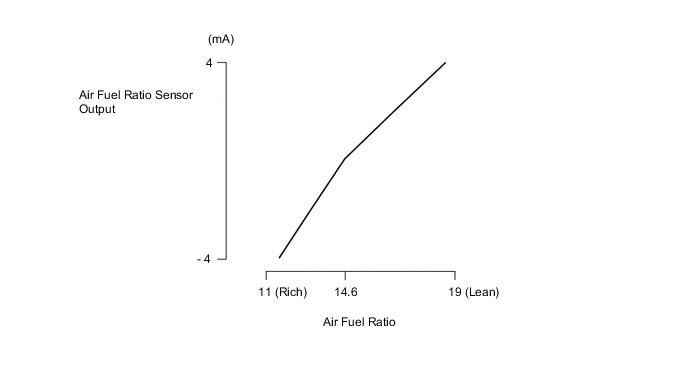
-