SFI SYSTEM
-
FUNCTION
-
The Variable Valve Timing-intelligent (VVT-i) control is designed to control the exhaust camshaft within a range of 40° respectively (of crankshaft angle) to provide valve timing optimally suited to the engine condition. This improves torque in all speed ranges as well as increasing fuel economy and reducing exhaust emissions.

-
The following effects can be achieved due to the advanced angle and retarded angle of the intake and exhaust valves.
Figure 1. Operation Model Diagram: Upon Starting and Idling
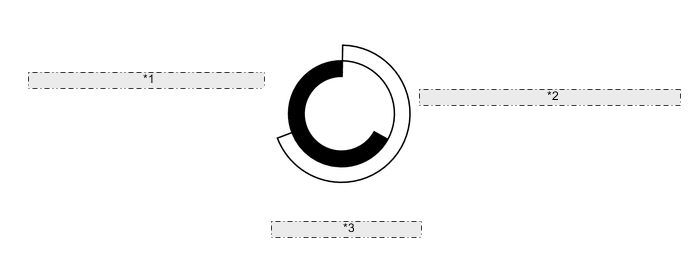
*1 Exhaust Valve Opening (Advanced Position) *2 Intake Valve Opening (Intermediate Position) *3 Ensuring Starting Ability Figure 2. Operation Model Diagram: At Partial Load
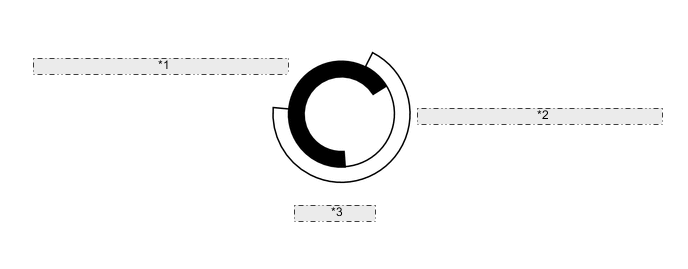
*1 Exhaust Valve Opening (Retarded Position) *2 Intake Valve Opening (Retarded Position) *3 Atkinson Cycle Figure 3. Operation Model Diagram: At Partial Load to Heavy Load

*1 Intake Valve Opening (Advanced Position) *2 Exhaust Valve Opening (Retarded Position) *3 Using Internal EGR or Improving Exhaust Ability -
The ECM cooperatively controls the throttle valve, VVT-iW, VVT-i and wastegate valve of the turbocharger sub-assembly to achieve a driving condition with optimal fuel economy during normal driving. Also, the ECM controls each actuator in accordance with the driver's intentions during acceleration to achieve a high torque response.
-