COOLING SYSTEM
-
FUNCTION
-
The FC stack inside the FC stack assembly produces heat when generating electricity. When temperature increases, the FC stack's electrical generation decreases, so a water cooling system is used to maintain the temperature of the FC stack at optimal levels.
-
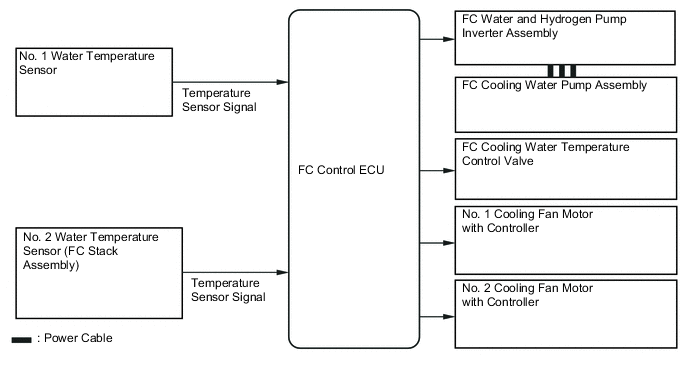
The FC control ECU uses the following controls to maintain the FC stack coolant temperature at optimal levels.
-
FC Cooling Water Pump Flow Control
-
Based on driving conditions, the FC water and hydrogen pump inverter assembly sends operation request signals to the FC cooling water pump, controlling the FC cooling water pump assembly speed to provide the FC cooling system with the optimum coolant flow rate.
-
The FC water and hydrogen pump inverter assembly drives the direct current from the EV battery assembly or inverter with converter assembly on the high voltage circuits.
-
-
Coolant Temperature Control
-
The FC cooling water temperature control valve is driven based on the signal from the water temperature sensor installed to the FC cooling system. The valve changes the channel into which coolant flows so that when coolant temperature is low it is sent to the bypass channel, and when coolant temperature is high it is sent to the radiator, and so the FC stack assembly is maintained at the optimum temperature for electrical generation.
-
-
Cooling Fan Control
-
Based on the FC stack coolant temperature, air conditioner operating status and vehicle speed, the cooling fan speed request signal is sent to the No.1 cooling fan motor with controller in order to maintain the optimum coolant temperature for the current driving conditions.
-
-
Heat cooperative control
-
The heat that is produced at the FC stack during electrical generation is used by the air conditioner system as a heat source for the heater. When the temperature of the FC stack coolant reaches a certain level or above, the FC stack coolant is taken from the FC stack into the air conditioner system, and by also including the heat produced in the FC stack assembly, in cold temperature regions the heating performance is improved and the electrical consumption of the electric heater sub-assembly is reduced while maintaining its heating performance.
-
-
In disaster situations, etc., when the vehicle is supplying power to devices outside the vehicle, the FC control system generates electricity in response to demand. Because the vehicle is stopped while supplying power, the normal driving airflow does not enter the vehicle, so the cooling fan may operate more than usual.
-
-