FEATURES
-
OUTLINE
-
FC System
-
The hydrogen that supplies energy can be produced from various sources of primary energy, and is a promising energy technology for the future. This vehicle adopts the Toyota FC System, which is built around the Toyota-developed FC stack and high-pressure hydrogen tanks. Energy efficiency is high compared to an internal combustion engine, and environmental performance is excellent due to the fact that no carbon dioxide or environmentally harmful substances are produced from the vehicle while it is being driven. With hydrogen tanks that can be refilled in about 3 minutes, and achieving solid driving range performance, the vehicle provides the same convenience as a gasoline engine.
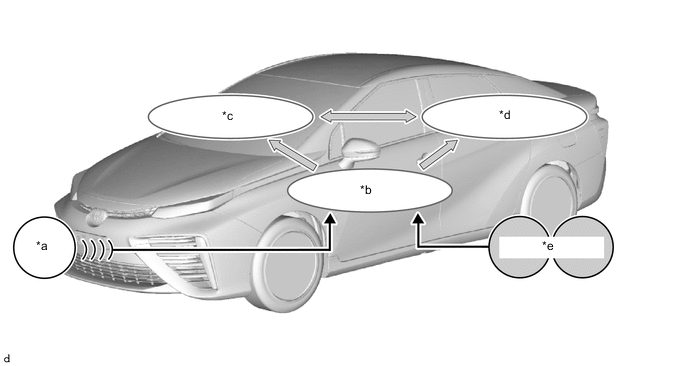
*a Oxygen *b FC Stack *c Traction Motor *d EV Battery (Secondary Battery) *e High Pressure Hydrogen Tank - - -
A fuel cell vehicle efficiently delivers the hydrogen and air (oxygen) necessary for electrical generation to the fuel cell, generates electrical energy, and uses that electrical energy to drive the traction motors that propel the vehicle.
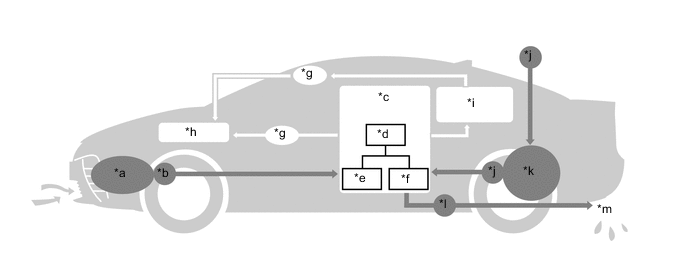
*a Air Oxygen *b O2 *c FC Stack (Fuel Cell) *d Electrical Generation *e Oxygen *f Hydrogen *g Electricity *h Traction Motor *i EV Battery (Secondary Battery) *j H2 *k High Pressure Hydrogen Tank *l H2O *m Water - -
-
Air intake
-
Oxygen and water sent to FC stack (fuel cell)
-
Chemical reaction produces electricity and water
-
Electricity sent to traction motor
-
Traction motor operates to propel vehicle
-
Water leaves vehicle as exhaust
-
-
The Toyota FC System (TFCS), which combines hybrid technology with fuel cell technology such as the Toyota FC Stack and High Pressure Hydrogen Tank, has been adopted.
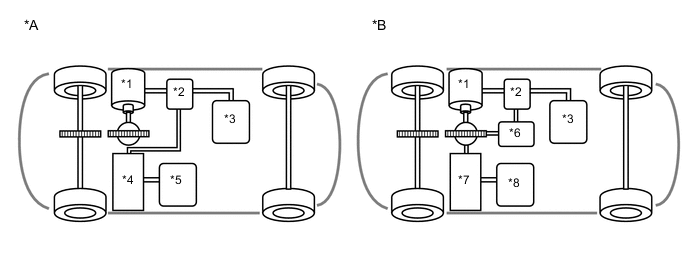
*A Toyota FC System (TFCS) *B Hybrid System (THS-II) *1 Traction Motor *2 Power Control Unit *3 Secondary Battery *4 FC Stack (Fuel Cell) *5 High Pressure Hydrogen Tank *6 Electrical Generator *7 Engine *8 Fuel Tank Comparison of Toyota FC System (TFCS) and Hybrid (THS-2) - Toyota FC System (TFCS) Hybrid System (THS-2) Characteristics
-
Generates its own electricity in the FC stack (fuel cell) to drive the motors.
-
Only emissions are water (water vapor) when driving
-
Rapid refueling, and similar long-range driving to a gasoline engine.
-
Capacity for converting fuel to energy is more than 2 times that of a gasoline engine vehicle
-
Quiet with low vibrations
-
Intelligently switches between engine and motor for drive power
-
Good fuel efficiently, oil-saving
Fuel Hydrogen Gasoline CO2 Emissions Zero / Only water emitted Small amounts emitted Powertrain Motor only Motor + engine Energy Type Used Electrical energy Electrical energy + Mechanical energy Energy Source FC Stack (fuel cell) + NiMH battery (secondary battery) Engine + NiMH battery (secondary battery) -
-
What is a Fuel Cell?

*a Hydrogen *b Oxygen *c Electricity is Generated *d Water
-
A fuel cell is an electrical generating device which uses a chemical reaction between oxygen and hydrogen to generate electricity. Although it is called a "cell" like that of a battery, by supplying oxygen and hydrogen to its respective poles, the fuel cell can generate electricity continuously.
-
One of the main characteristics of a hydrogen fuel cell is its high energy efficiency. Electricity can be taken directly from the cell without burning hydrogen.
-
-
About Hydrogen
-
Hydrogen can be produced using a number of primary energy sources other than petroleum, such as natural gas or ethanol. Also, solar power or wind power can be used to produce hydrogen from water.
-
Characteristics of Hydrogen
-
Compared to gasoline, hydrogen has disadvantages such as "easy leakage due to small molecular size", "odorless and colorless and thus difficult to detect", and "highly flammable at a wide range of concentrations". However, it also has advantages such as "easily dispersed due to low specific gravity", "does not easily autoignite due to high ignition temperature", and due to the wide detonation concentration range, "does not easily explode" unless confined in an enclosed space together with oxygen.
Item Hydrogen Natural Gas Gasoline Hydrogen Characteristics Molecular Weight 2 16 106 Leaks easily Coloring / Odor None Colorless / Odorant can be added Yes Difficult to detect leaks Flammability Concentration Range 4.0 - 74.5% 5.3 - 15.0% 1.0 - 7.6% Burns readily Detonation Concentration Range 18.3 - 59% 6.3 - 13.5% 1.1 - 3.3% Does not readily explode Specific Gravity (air = 1) 0.07 0.55 3.4 - 4.0 Easily dispersed Ignition Temperature 527(°C) 540(°C) 228(°C) Difficult to ignite -
Basic Safety Concepts for Hydrogen System Components
Prevent Leaks Difficult-to-leak Design The connection portions of hydrogen fuel piping have been designed with a strong focus on leak prevention. Selection of Materials Appropriate materials have been selected with regard to hydrogen embrittlement. Detect and Stop Equip with Hydrogen Detector In the unlikely event that a hydrogen leak occurs, the hydrogen detector detects the leaked hydrogen and the hydrogen tank valve operates to prevent a large leak of hydrogen fuel. Equip with Collision Sensor If the vehicle receives an impact that is judged to be a collision, the hydrogen tank valve operates to prevent a large leak of hydrogen fuel. Prevent Accumulation of Leaked Hydrogen In the unlikely event that hydrogen fuel leaks out, the vehicle is designed to prevent the leaked hydrogen from remaining inside. Keep Ignition Sources Away The vehicle is designed so that potential ignition sources are not located near the hydrogen system. CAUTION:
Fuel cell vehicles use high pressure hydrogen fuel at 70 MPa, and improper handling can cause hydrogen leakage possibly resulting in vehicle fires or explosions. When servicing the hydrogen system, make sure to follow the handling instructions in the repair manual.
-
-
-
Toyota FC System (TFCS)
-
Centered around the fuel cell (FC stack assembly), and based on the driving (electricity supplying) conditions, external temperature conditions, etc., control of each system is performed: the [1. Hydrogen Filling and Supply/Circulation System] that supplies hydrogen fuel, the [2. Air Supply System] that supplies air, the [3. Cooling System] that cools the system, and the [4. Exhaust System] that removes the water (water vapor) produced during the electricity-generating chemical reaction.
-
Based on hybrid technology, the electricity generated by the fuel cell (FC stack) and the electricity stored in the EV battery are used by the EV control ECU to control the [5. EV Control System] and drive the vehicle.
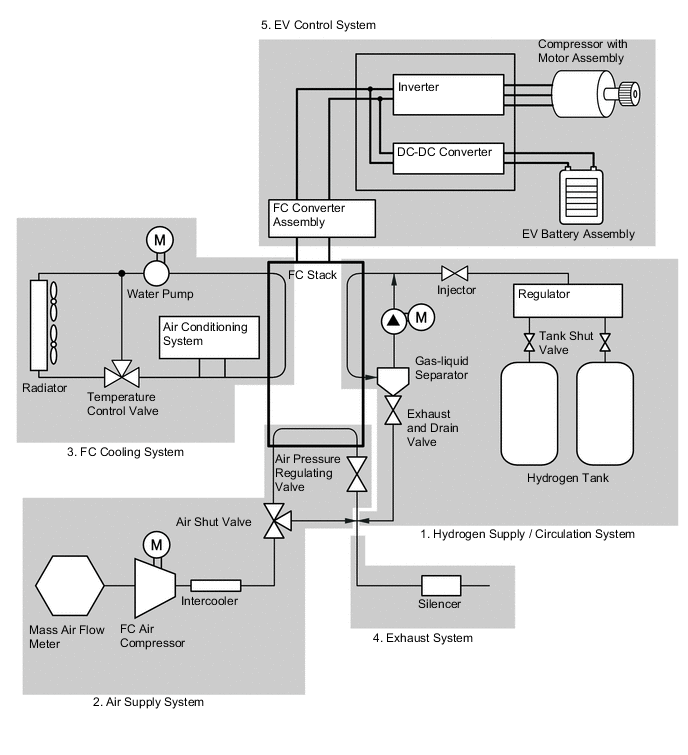
Function Refer to 1 Filling the hydrogen tank assembly and supplying / circulating hydrogen to the fuel cell. Hydrogen Supply / Circulation System 2 Supplies the air that was taken into the vehicle. Air Supply System 3 Cools the entire system. FC Cooling System 4 Exhausts the water (water vapor) that is produced by the chemical reaction. Exhaust System 5 Uses the electricity generated by the fuel cell (FC stack assembly) and the electricity stored in the EV battery to drive the vehicle. Hybrid Control System
-
-
Transaxle
-
The Q410 type FCV transaxle is used.
-
-
Suspension
-
A MacPherson strut type independent suspension is used for the front.
-
A torsion beam type suspension is used for the rear.
-
-
Brake
-
A ventilated disc brake is provided for the front brake.
-
A solid disc brake equipped with brake caliper-with-parking brake actuator is provided for the rear brake.
-
An electronically controlled brake system is used to control the hydraulic pressure at the 4 wheels.
-
The following brake control functions are provided: Anti-lock Brake system (ABS), Electronic Brake Force Distribution(EBD), brake assist, Traction Control (TRC), Vehicle Stability Control (VSC), VSC+ and hill-start assist control.
-
-
Steering
-
A rack and pinion type steering gear assembly is used.
-
An Electric Power Steering (EPS) system is used.
-
-