ECD SYSTEM
-
FUNCTION
-
Based on signals received from the sensors, the ECM calculates and controls the fuel injection timing that is optimal for the engine condition.
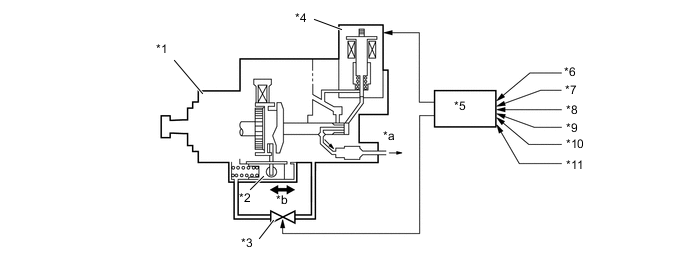
*1 Injection Pump Assembly *2 Timer Piston *3 Timing Control Valve *4 Spill Control Valve *5 ECM *6 Engine Speed Signal *7 Engine Coolant Temperature Signal *8 Vehicle Speed Signal *9 Intake Air Pressure Signal *10 Crank Position Signal *11 Start Signal - - *a Fuel [to Injection Nozzle (Nozzle Holder and Nozzle Set)] *b Movement of Timer Piston -
The ECM adds the corrections from the sensor signals to the basic fuel injection timing to calculate the fuel injection timing that is optimal for the engine condition.
Function of ECM Control Function Basic Injection Timing The basic injection timing is determined in accordance with the injection volume and the engine speed. Injection Timing Correction Intake Air Pressure Correction Corrects the basic fuel injection timing in accordance with the intake air pressure. The injection timing is advanced when the intake air pressure is low such as in high altitude areas. Engine Coolant Temperature Correction Corrects the basic fuel injection timing in accordance with the engine coolant temperature. The injection timing is advanced when the engine coolant temperature is low. Starting Injection Timing Control The starting injection timing is determined in accordance with the starting signal, engine coolant temperature signal, and engine speed. The injection timing is advanced when the engine coolant temperature is low and engine speed is high.
-