CVT SYSTEM
-
FUNCTION OF MAIN COMPONENTS
-
The main components of the K115 Continuously Variable Transaxle (CVT) are as follows:
Component Function On-off Solenoid Valve SC (for Clutch) Used to switch control of the linear solenoid valve SLU for forward and reverse clutch control. On-off Solenoid Valve SL (for Lock-up) Used to switch control of the linear solenoid valve SLU for lock-up clutch control. Linear Solenoid Valve SLU (for Lock-up Control) Performs forward and reverse clutch control or lock-up clutch control depending on the state of the on-off solenoid valves SC and SL. Linear Solenoid Valve SLP (for Primary Pulley Control) Controls the oil pressure of the primary pulley in accordance with the vehicle speed and accelerator pedal position signals to control the speed ratio. Linear Solenoid Valve SLS (for Secondary Pulley Control) Controls the oil pressure of the secondary pulley in accordance with the input shaft torque to control belt clamping force. Transmission Revolution Sensor (NIN) Detects the primary pulley speed (input speed). Transmission Revolution Sensor (NOUT) Detects the secondary pulley speed (output speed). Transmission Revolution Sensor (NT) Detects the turbine speed of the torque converter. CVT Fluid Temperature Sensor Detects the CVT fluid temperature. Oil Pressure Sensor Detects the steel belt clamping force. Engine Coolant Temperature Sensor Detects the engine coolant temperature. Throttle Body with Motor Assembly Throttle Position Sensor Detects the opening angle of the throttle valve. Airbag ECU Assembly Yawrate Sensor Detects the vehicle yaw rate. Acceleration Sensor Detects the vehicle's longitudinal and lateral acceleration and deceleration. Combination Switch Assembly ECO MODE Switch Sends the ECO MODE switch operation signal to the air conditioning amplifier assembly. Stop Light Switch Assembly Detects when the brake pedal is depressed. Park/Neutral Position Switch Assembly Detects the shift lever position. Shift Lever Assembly (Shift Lock Control Unit Assembly) Transmission Control Switch
-
Detects when the shift lever is in M.
-
Detects the driver's shift-up and shift-down operations when the shift lever is in M.
Crank Position Sensor Detects the engine speed. Accelerator Pedal Sensor Detects the accelerator pedal opening angle. Air Conditioning Amplifier Assembly Transmits the operating state of the air conditioning system to the ECM. ECM Drives each solenoid valve based on signals from each sensor and switch and optimally controls the CVT. Combination Meter Assembly Malfunction Indicator Lamp (MIL) Illuminates to inform the driver when the ECM detects a malfunction. Multi-information Display
-
Displays the shift lever position and shift range.
-
Displays the ECO MODE.
Buzzer Sounds when shift-down operation is rejected in 7-speed sport sequential shiftmatic mode. Electric CVT Oil Pump (Oil Pump with Motor Assembly) Ensures a stable CVT oil pressure while the stop and start system is operating. Oil Pump Motor Driver Controls the power output of the electric CVT oil pump (oil pump with motor assembly). -
-
-
SYSTEM CONTROL
-
Control List
-
The electronic control system of the K115 CVT consists of the controls listed below.
Control Outline Engine-CVT Integrated Control Effects coordinate control of the CVT system and engine control system to ensure both smooth and powerful driving that excels in shift response and fuel economy. Automatic Shift Control (Speed Ratio Control) Controls the primary pulley speed to approach the calculated target input rotation speed based on information such as the accelerator pedal position, vehicle speed and stop light switch signals. Acceleration Improvement Control Controls the acceleration rate in proportion to the accelerator pedal position, improving feeling of linear acceleration and expanding the feeling of accelerator pedal input. Deceleration Improvement Control Determines a pulley ratio which allows for high engine speed is maintained, thus ensuring adequate engine braking. Uphill/Downhill Shift Control Uses the ECM to determine whether the vehicle is traveling uphill or downhill in order to restrict upshifts or provide appropriate engine braking force by restricting downshifts. Lock-up Control By enhancing the lock-up operation range into the low vehicle speed range, the fuel cut range has been enlarged, achieving improved fuel economy. Flex Lock-up Control 7-speed Sport Sequential Shiftmatic Enables driving in a specific shift range which is selected using the shift lever, providing engine braking force appropriate to each shift range.
-
-
Engine - CVT Integrated Control
-
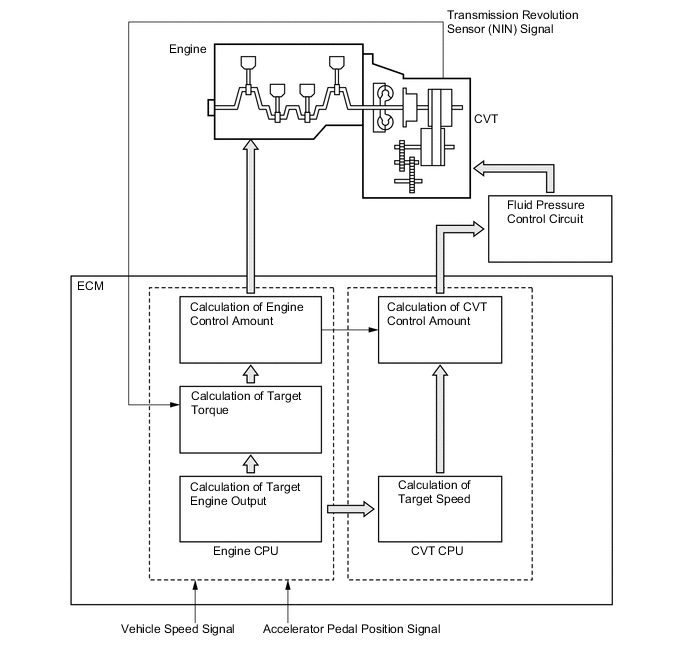
To effect fine-tuned control in accordance with driving conditions, various signals are exchanged between the engine control system and the CVT system. As a result, both smooth and powerful driving that excels in shift response and fuel economy has been achieved.
-
-
Automatic Shift Control (Speed Ratio Control)
-
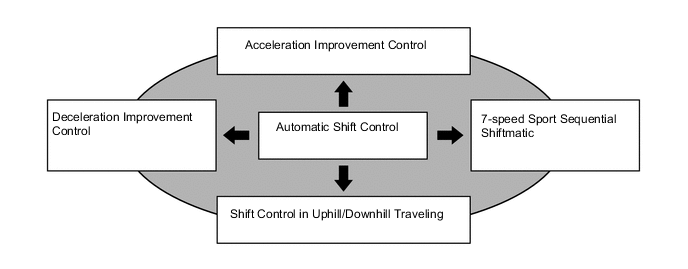
The ECM determines the driving conditions through each input signal and selects the optimal control to achieve output which meets the driver's intentions.
-
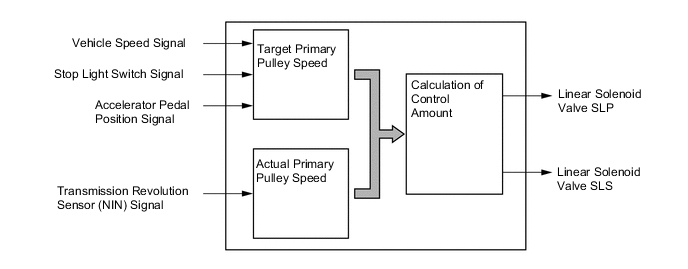
The ECM calculates the target primary pulley speed in accordance with the accelerator pedal position signal, vehicle speed signal, and stop light switch signal, in order to attain an optimal pulley ratio and shifting speed. To adjust the actual primary pulley speed (acquired from the primary speed sensor) to match the target primary pulley speed, the ECM actuates linear solenoid valves SLP and SLS in order to control the pressure of primary pulley and secondary pulley. As a result, the optimal pulley ratio and shifting speed are achieved.
-
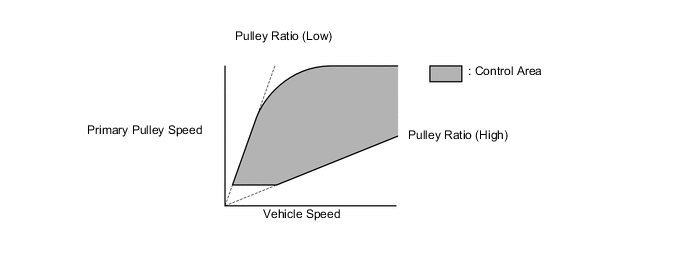
When the shift lever is in D, the system effects engine integrated control to optimize fuel economy characteristics and driving performance.
-
ECO mode changes the transmission characteristics to ones which prioritize fuel efficient driving to ensure low fuel consumption compared to those of NORMAL mode. This drive mode provides optimal fuel efficiency.
-
-
Acceleration Improvement Control
-
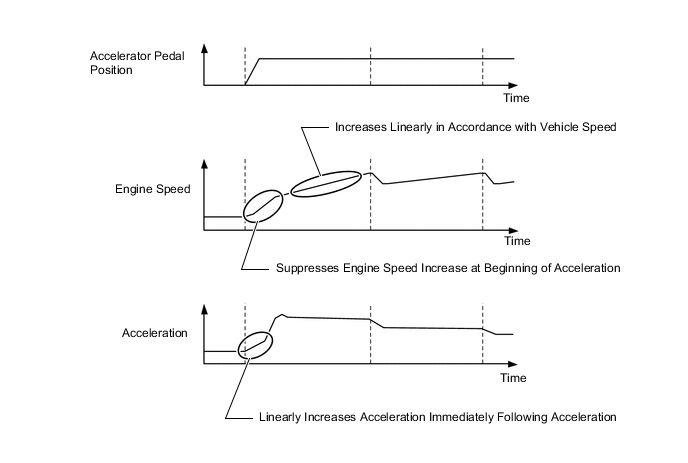
The system determines the driver's acceleration request based on the vehicle speed and changes in the accelerator pedal position. When the system determines this request, it will change the shift characteristics to ones in which the engine speed and vehicle speed increase linearly, providing improved acceleration feeling.
-
-
Deceleration Improvement Control
-
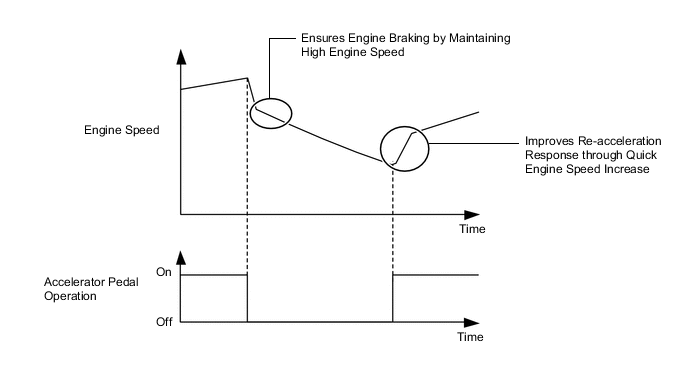
During deceleration, a pulley ratio which allows high engine speed to be maintained, is calculated, thus ensuring adequate engine braking.
-
During subsequent acceleration, the engine is controlled to generate driving force quickly.
-
-
7-speed Sport Sequential Shiftmatic
-
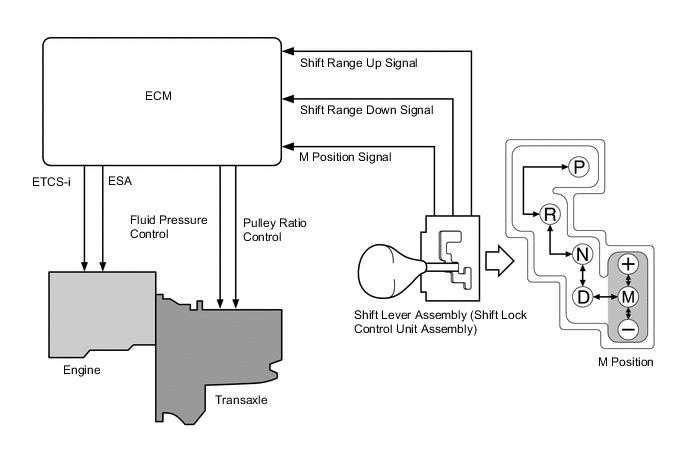
The driver can select the desired shift range by moving the shift lever to "+" (forward) or to "-" (backward) while the shift lever is in M (7-speed sport sequential shiftmatic mode). Thus, the driver is able to change shift range with a manual-like feel.
-
Through the engine-CVT integrated control, the pulley ratio and engine torque which correspond to various shift speeds are finely controlled, thus improving shift response and achieving reduced shifting shock.
-
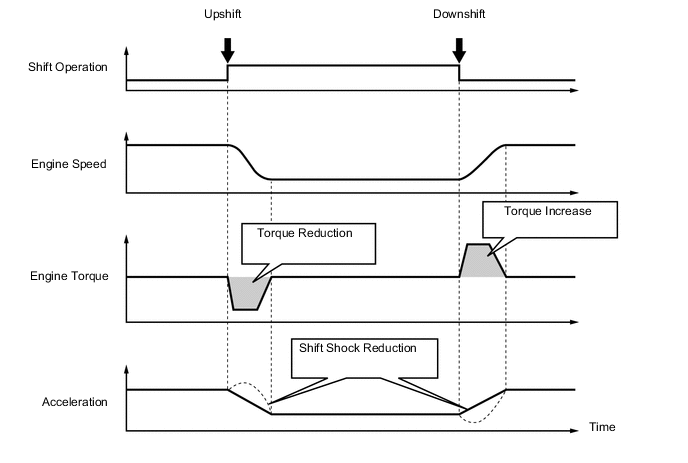
Through cooperative control with the Electronic Spark Advance (ESA) and Electronic Throttle Control System-intelligent (ETCS-i), meticulous control of the engine torque in accordance with the transmission gear ratio and transmission shift speed realizes an improved shift response and reduction in shift shock during the upshift or downshift operation, ensuring a smooth and sharp response.
-
The shift position and shift range indicator is provided in the combination meter assembly. When the shift lever is in P, R, N or D, the shift position is indicated on the shift position and shift range indicator. When the shift lever is in M, "M" and the selected shift range is displayed on the shift position and shift range indicator.
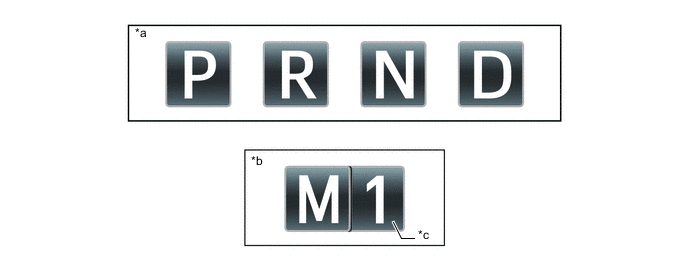
*a When shift lever is in P, R, N or D *b When shift lever is in M *c Shift Range Indicator - - -
In 7-speed sport sequential shiftmatic mode, the transmission automatically upshifts or downshifts under the following conditions:
Condition System Control Engine is under-revving. 1 step downshift Engine is over-revving. 1 step upshift -
When the vehicle is stopped during 7-speed sport sequential shiftmatic mode, the transmission automatically downshifts to M1.
-
The ECM will restrict the selection of shift ranges if it detects a malfunction in the CVT system.
-
If the vehicle speed or engine speed exceeds or goes below a preset level in response to the driver's downshift operation request, changing the shift range will be prohibited. In this case, the buzzer in the combination meter will sound to alert the driver.
-
-
Uphill/Downhill Shift Control
-
Uphill/downhill shift control helps perform optimal shifting while driving on a winding uphill or downhill road.
-
When the ECM determines the vehicle is traveling uphill, the control restricts upshifting, thus offering smooth driving.
-
If a signal indicating that the driver has operated the brake pedal is input when the ECM has determined the vehicle is traveling downhill, the control downshifts to generate optimal engine braking force.
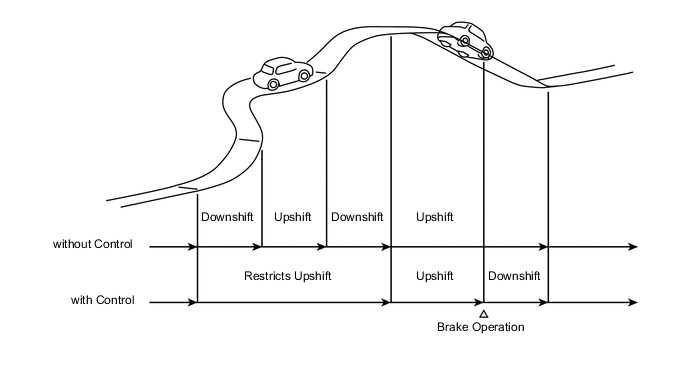
-
The actual acceleration calculated from the vehicle speed signal is compared with the reference acceleration (based on level road travel) stored in the ECM to determine uphill or downhill travel.
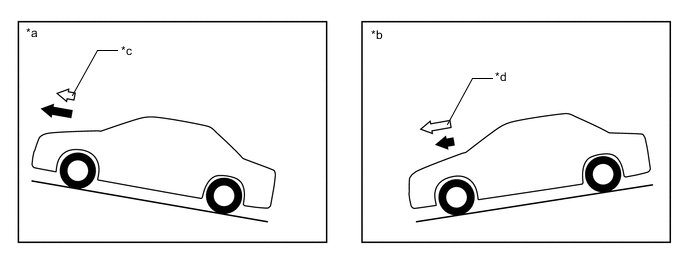
*a Uphill *b Downhill *c Smaller *d Greater 
Reference Acceleration 
Actual Acceleration
-
-
Lock-up Control
-
The lock-up operation range has been expanded from that of previous continuously variable transaxles, thus enabling control to start from low speeds.
-
The lock-up operation range during deceleration has been expanded to the low-speed range. This expands the fuel cut range and achieves excellent fuel economy.
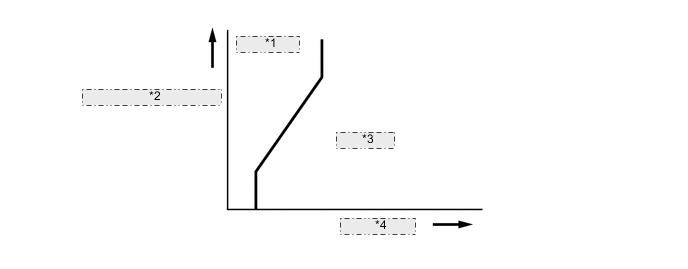
*1 Lock-up Off *2 Throttle Opening Angle *3 Lock-up On *4 Vehicle Speed
-
-
Flex Lock-up Control
-
In order to improve the transmission efficiency and also the fuel economy, the linear solenoid valve SLU for lock-up engagement pressure control is employed to deliver flex lock-up control that can provide more precise control than that of a conventional lock-up clutch mechanism.
-
The flex lock-up control consists of flex start control and flex lock-up control during deceleration.
-
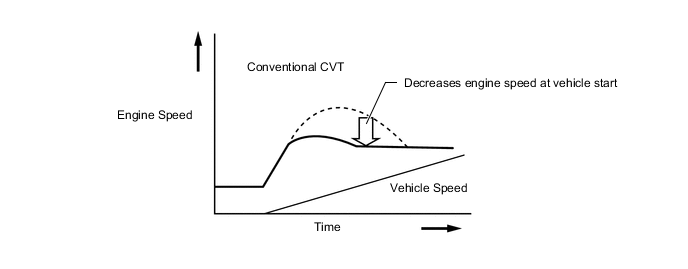
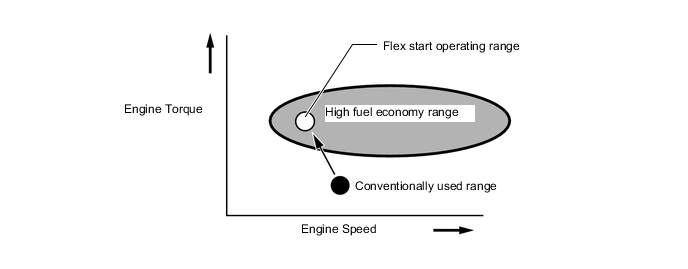
The flex start control aggressively operates the lock-up clutch during start-off to increase the transmission efficiency, as a result, the engine can run in its most efficient operating range.
-
Flex lock-up control during deceleration is used to expand the fuel-cut range. It operates the lock-up clutch over the low vehicle speed range when the vehicle decelerates so that minimal speed difference between the engine speed and turbine speed can be maintained.
-
-
-
FAIL-SAFE
-
This function minimizes the loss of operability when a malfunction occurs in any sensor or shift solenoid valve.
-
For details, refer to the Repair Manual.
-
-
DIAGNOSIS
-
When the ECM detects a malfunction, it records the malfunction and information related to the fault. Furthermore, the ECM will illuminate the Malfunction Indicator Lamp (MIL) in the combination meter to inform the driver.
-
At the same time, Diagnostic Trouble Codes (DTCs) are stored in memory. The DTCs can be read by connecting the Global TechStream (GTS) to the DLC3. For details, refer to the Repair Manual.
-