AIR CONDITIONING SYSTEM
-
CONSTRUCTION
-
Individual servo motors are used for the fresh/recirculation damper, front mode switching damper, driver side air mix damper, front passenger side air mix damper, rear air mix damper and rear mode switching damper.
-
A No. 1 air conditioning radiator damper servo sub-assembly that combines 3 types of servo motors (for the front mode switching damper, driver side air mix damper and front passenger side air mix damper) is used.
-
The servo motors are pulse pattern type servo motors, which are controlled by signals from the air conditioning amplifier assembly sent over the bus wire. Along with using pulse pattern type servo motors, bus connectors contain ICs that have such functions as communicating with the air conditioning amplifier assembly.
Figure 1. Front Air Conditioning Unit (LHD Models)
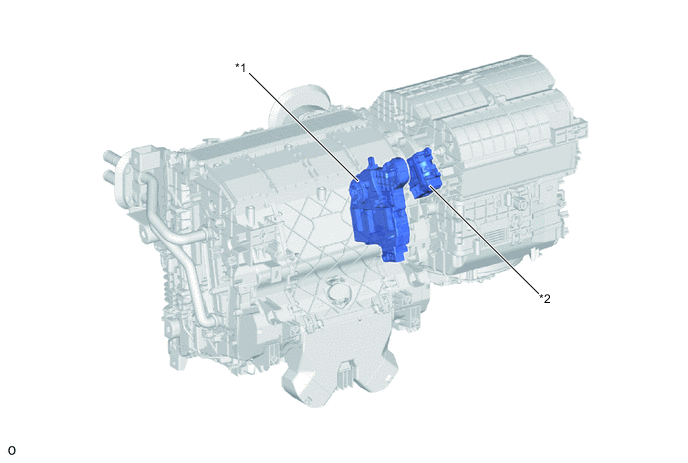
*1 No. 1 Air Conditioning Radiator Damper Servo Sub-assembly
-
Damper Servo (Mode Switching)
-
Damper Servo (Driver Side Air Mix)
-
Damper Servo (Front Passenger Side Air Mix)
*2 No. 1 Blower Damper Servo Sub-assembly (Fresh/Recirculation Damper) Figure 2. Front Air Conditioning Unit (RHD Models)
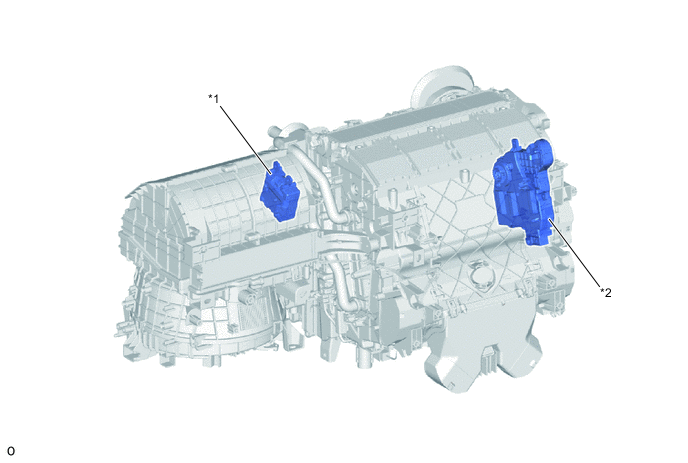
*1 No. 1 Blower Damper Servo Sub-assembly (Fresh/Recirculation Damper) *2 No. 1 Air Conditioning Radiator Damper Servo Sub-assembly
-
Damper Servo (Mode Switching)
-
Damper Servo (Driver Side Air Mix)
-
Damper Servo (Front Passenger Side Air Mix)
Figure 3. Rear Cooling Unit Assembly
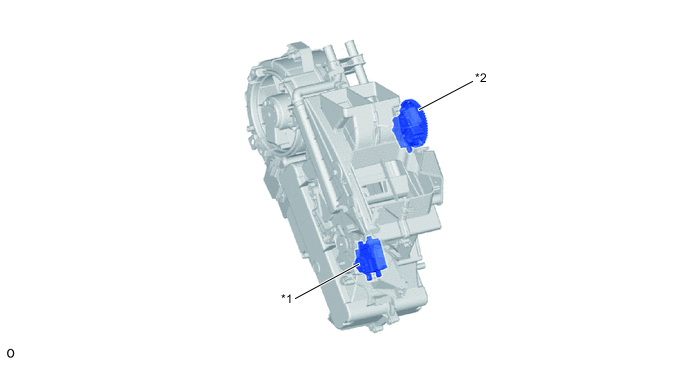
*1 Rear No. 1 Cooling Unit Damper Servo Sub-assembly
-
Damper Servo (Air Mix)
*2 Rear No. 2 Cooling Unit Damper Servo Sub-assembly
-
Damper Servo (Mode Switching)
-
-
-
OPERATION
-
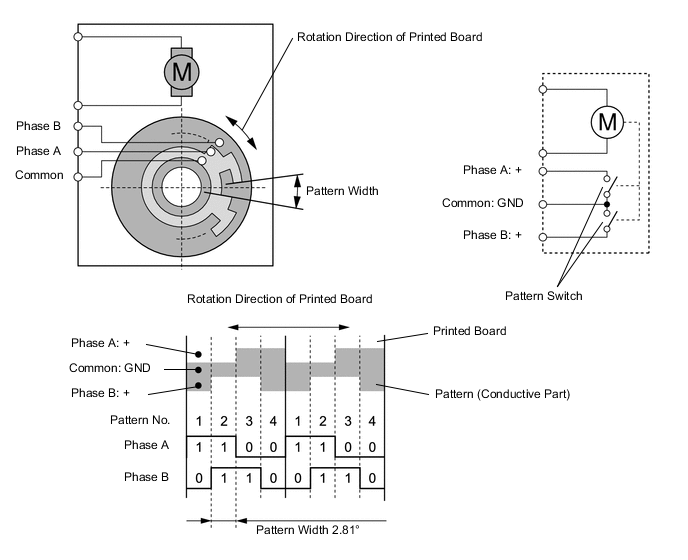
In contrast to the previous type that detects the position via the potentiometer voltage, the pulse pattern type servo motor detects the relative position via 2-bit on/off signals.
-
The forward and reverse revolutions of this motor are detected via 2 phases, A and B, which output 4 types of patterns. The air conditioning amplifier assembly counts the number of pulse patterns in order to determine the stopped position.
-