MULTIPLEX COMMUNICATION SYSTEM
-
OUTLINE
-
The multiplex communication system uses 2 communication protocols (CAN and LIN) to achieve a streamlined wiring harness configuration.
Protocol Outline Controller Area Network (CAN) CAN is classified into 2 types according to communication speed. High Speed CAN (HS-CAN) is used for the powertrain, chassis and body electrical systems, and Middle Speed CAN (MS-CAN) is used for the body electrical system. Local Interconnect Network (LIN) LIN is used for local area networking, in which the system has a LIN bus for each respective body electrical system. -
Due to the introduction of the CAN communication system for the powertrain, chassis and body electrical systems, the wiring harness configuration has been streamlined.
-
There is no direct communication between CAN and LIN networks because these multiplex communication systems are incompatible. CAN and LIN are separate networks. Because of this, some ECUs serve as gateways for the transfer of data, allowing communication between CAN and LIN networks.
-
A customizable body electrical system is used, enabling some of the control functions of the ECUs to be set using the Global TechStream (GTS). For details, refer to the Repair Manual.
Tech Tips
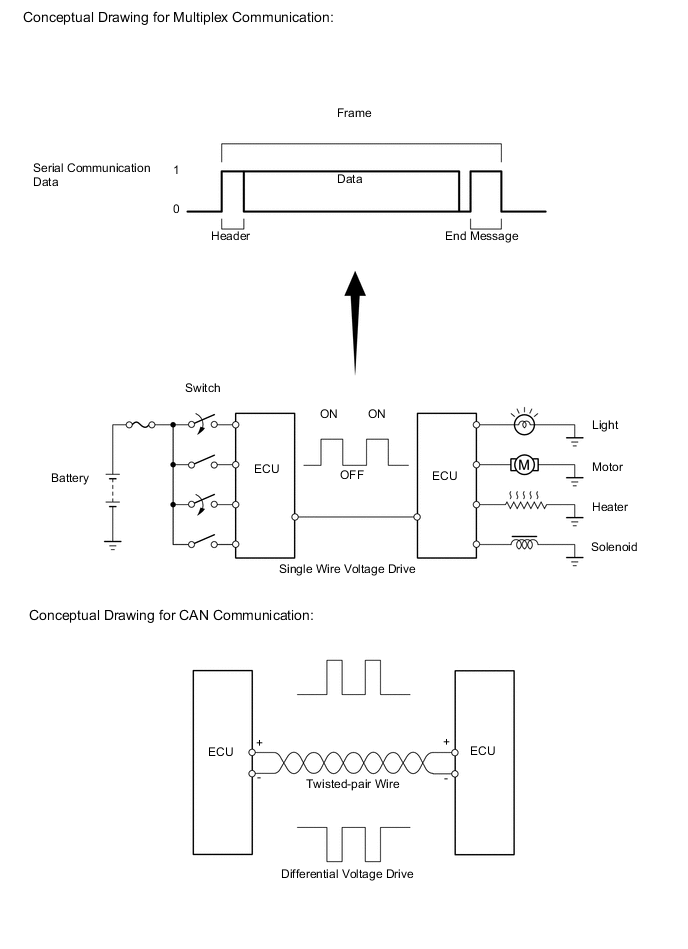
Generally speaking, multiplex communication refers to the use of serial communication data that consists of bits and frames in order to exchange information among various ECUs. This allows for a reduction of the amount of wiring on the vehicle. A bit is the basic unit of communication that is used to represent the information. A bit is represented by binary values of "0" or "1". For CAN communication, a differential voltage drive is used to represent the binary values of "0" or "1". This "differential voltage drive" reduces the effects of electrical interference.
-
Differences between CAN and LIN
-
Protocols, which are the rules for establishing data communication, differ between CAN and LIN. If the ECUs in the networks use different data frameworks such as communication speed, communication wire or signals, they will be unable to understand each other. Therefore, protocols (rules) must be established among them.
-
Compared to LIN, CAN features high-speed data transmission. Therefore, CAN is able to transmit larger amounts of data faster than other protocols. This feature makes it possible to transmit data accurately for the powertrain and chassis control systems. These systems require large amounts of data to be transmitted in short periods of time.
Protocol CAN LIN HS-CAN MS-CAN Communication Speed 500 kbps* 250 kbps* 9.6 to 20 kbps* Communication Wire Twisted-pair Wire AV Single Wire Drive Type Differential Voltage Drive Single Wire Voltage Drive Data Length 1-8 Byte (Variable) 2, 4, 8 Byte (Variable) *: "bps" is an abbreviation for "Bits Per Second", indicating the number of bits that can be transmitted per second.
-
A twisted-pair of wires is used for CAN communication. A single Automobile Vinyl (AV) wire is used for LIN communication.
Communication Wire Outline Twisted-pair Wire 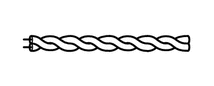
This communication wire is a pair of twisted wires. Communication is driven by applying different voltages to the 2 lines in order to send a single signal. This system, which is called a "Differential Voltage Drive", reduces the effects of electrical noise. AV Single Wire 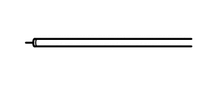
This is a lightweight single communication wire that consists of a single core line surrounded by insulation. Voltage is applied to this line in order to drive communication, and this system is called a "Single Wire Voltage Drive".
-
-