BODY STRUCTURE
-
OUTLINE
-
Lightweight and Highly Rigid Body
-
High-strength steel, ultra high-tensile strength steel, hot-stamped steel and aluminum are used in order to achieve excellent body rigidity and a lightweight body.
-
-
Safety Features
-
The impact absorbing structure minimizes cabin deformation by effectively helping to absorb the impact energy in the event of a front, side or rear collision. This provides high performance occupant protection.
-
-
Rust-resistant Body
-
Rust-resistant performance is enhanced by the extensive use of anti-corrosion sheet steel and aluminum as well as by an anti-corrosion treatment that includes the application of anti-rust wax and sealer to easily corroded parts such as the lower edge portion of the doors, the door hinge, the fuel filler lid hinge, and the hemmed portions of the hood panel.
-
-
Low Vibration and Low Noise Body
-
Effective application of vibration damping and noise suppressant materials reduces engine, wind and road noise.
-
-
Aerodynamics
-
Optimization of the shape of the body and underfloor ensures excellent aerodynamic performance.
-
-
-
MAIN FEATURES
-
Exterior Design
-
Front View
-
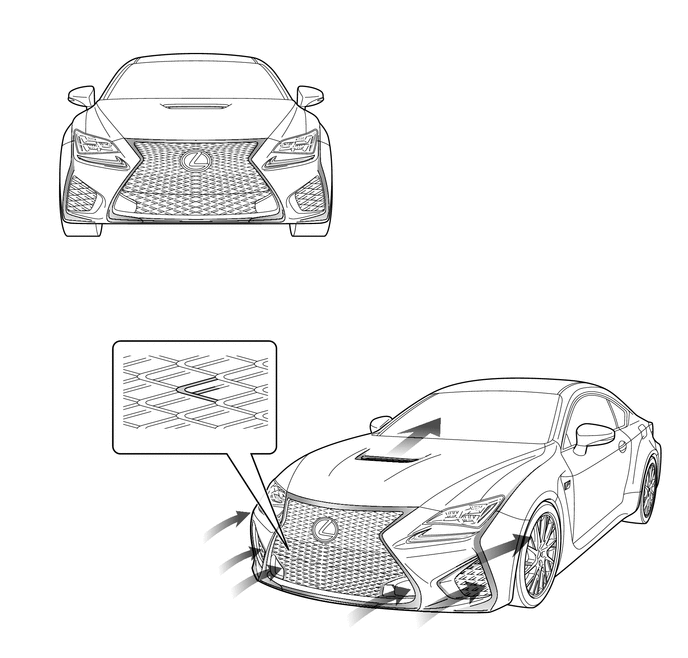
An air vent has been integrated into the raised section of the hood, contributing to excellent handling stability.
-
Brake cooling ducts have been integrated into the grille. A large radiator and oil cooler air inlets form a double spindle shape, providing an impressive front view.
-
A newly developed mesh grill with a vertical mesh pattern that gradually transforms into an "F" shape toward the bottom has been adopted. This expresses the uniquely individual appearance of the RC F and an enhanced sporty image while continuing the tradition of F models.
-
-
Side View
-
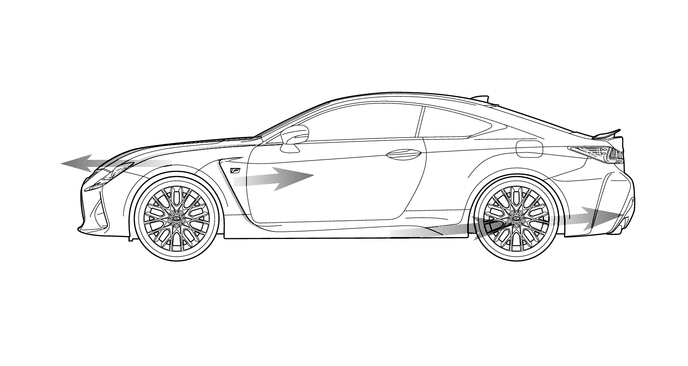
A powerful hood silhouette linked to the image of a V8 engine creates high performance appeal. The strong mass of the hood together with a continuous flow from the front fender to the belt line emphasize the forward movement of the vehicle.
-
The "F" shaped side air vents that extend to the top of the front fender not only give a dynamic impression but also aerodynamically enhance handling stability.
-
Shapes provided in front of and behind the rear wheels realize both excellent aerodynamics and a wide and low stance.
-
-
Rear View
-
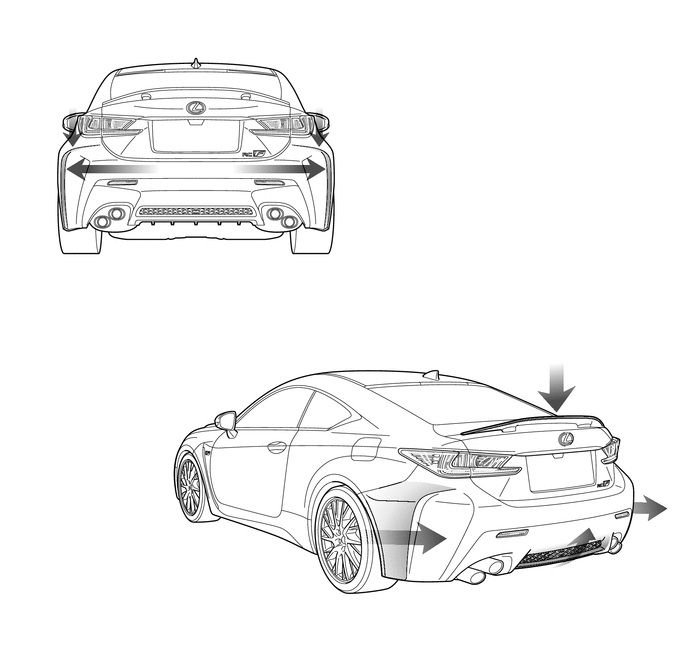
The quad tip exhaust and rear diffuser design developed for the IS-F is continued. This design allows the sides of the rear bumper to manage airflow, enhancing aerodynamics and emphasizing the wide and low stance.
-
The active rear wing raises to increase downforce when the vehicle speed reaches 80 km/h and is stored when the vehicle speed drops below 40 km/h.
-
Together with the underbody aero parts, the rear bumper lower garnish fins contribute to smooth the flow of air under the body.
-
-
Laser-brazed Structure and Hemming Treatment
-
The laser-brazed structure. The roof panel and outer side panel are joined directly by laser brazing to produce a clean look that is highly attractive.*
*: Except models with carbon package
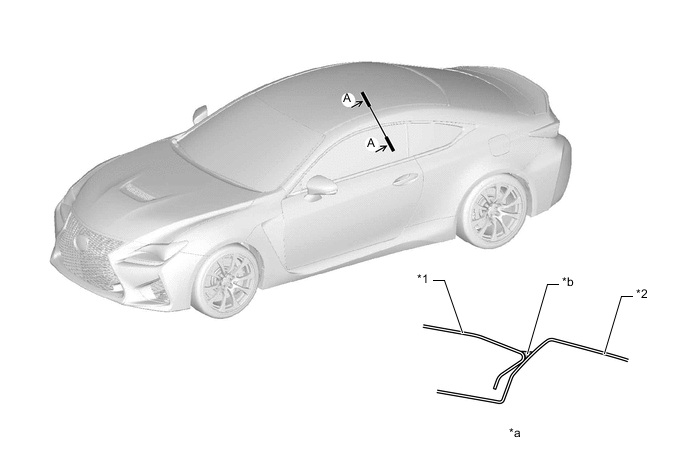
*1 Roof Panel *2 Outer Side Panel *a A-A Cross Section *b Laser-brazed -
The hemming treatment* on the rear wheel arch flanges. The adoption of this hemming treatment decreases the lateral distance between the tire and wheel arch, and the tires are positioned further outward to add a stylish look to the design.
Tech Tips
*: A fabrication method used for folding the panel back.
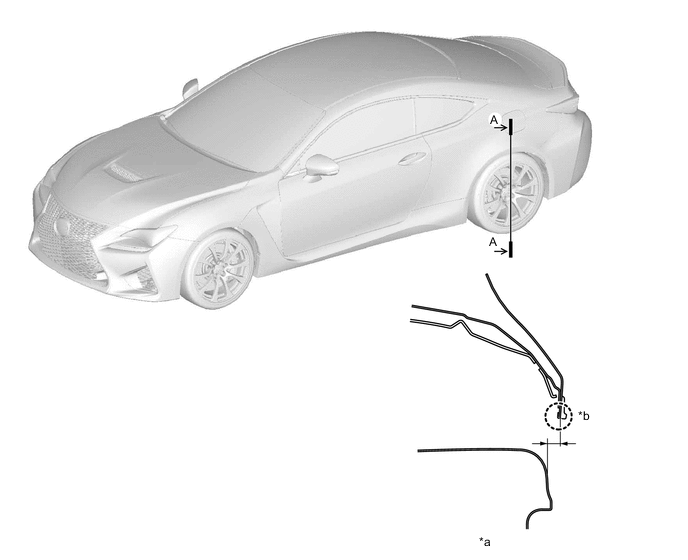
*a A-A Cross Section *b Hemming Treatment
-
-
-