SFI SYSTEM
-
OPERATION
-
When the engine is cold, the ECM controls the intake air control valve actuator, closing the tumble control valves to generate a strong tumble flow in the combustion chamber. As a result, even when cold, stable combustion is possible using a leaner air fuel ratio.
-
The ECU promotes rapid warming of the catalyst by retarding the ignition timing.
-
The ECM can optimize fuel economy and control exhaust emissions when cold because vacuum is generated downstream of the tumble control valves after they close, reducing the adhesion of fuel to the sides of the intake ports.
-
When the engine is warm, the ECM controls the intake air control valve actuator, opening the tumble control valves completely. As a result, the intake air resistance due to the tumble control valves is minimized.
-
The tumble control valves are moved to the fully closed position during cold starting and cold running conditions to improve exhaust emissions while the engine is cold.
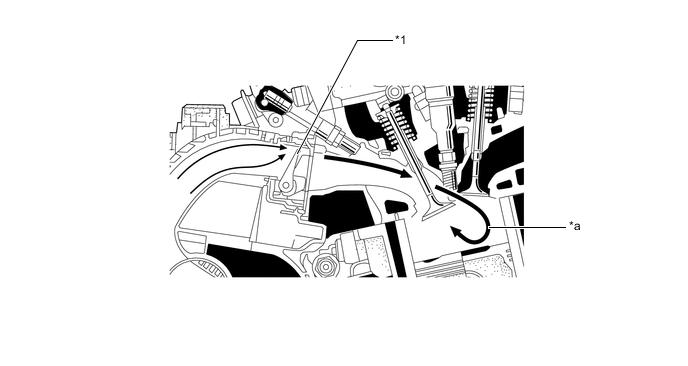
*1 Tumble Control Valve - - *a Tumble Flow - -
-