AUDIO AND VISUAL SYSTEM
-
OUTLINE
-
Audio System
-
The following audio systems are available:
Audio System Audio Head Unit Speaker 12-speaker Surround Sound System Radio Receiver Assembly 12 Speakers 17-speaker Surround Sound System 17 Speakers Navigation System 12 Speakers 17 Speakers
-
-
Audio Head Unit
-
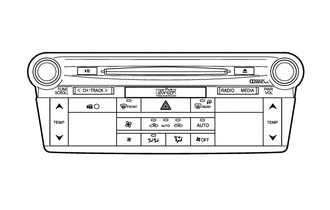
In consideration of the unity with the instrument panel, a uniquely sized audio head unit is provided.
-
A Thin Film Transistor Liquid Crystal Display (TFT LCD) is used for the multi-display, enabling operation of the audio screen, Bluetooth hands-free screen, vehicle information screen, etc. using the remote touch.
-
The audio source can be switched on the audio source selection screen. The arrangement of the audio sources displayed on the audio source screen can be changed according to the frequency of use.
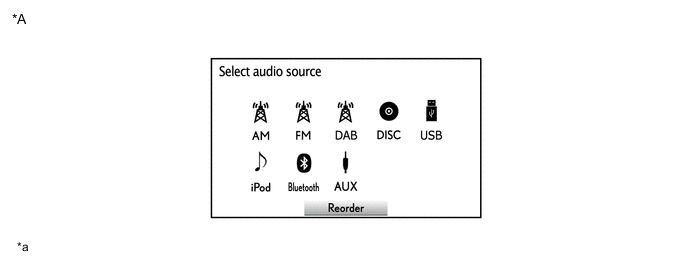
*A Audio Source Selection Screen - - *a The illustration shown is an example only. The illustration may differ from the actual vehicle screen. - - -
The status of the audio source currently selected can be displayed on the multi-information display in the combination meter assembly, or head-up display*. In addition, switching the audio source or selecting a song or radio station can be performed on the multi-information display.
*: Models with head-up display
-
Discs containing MPEG audio layer-3 (MP3) files, Windows Media Audio (WMA) files and Advanced Audio Coding (AAC) files can be played.
-
Discs with the marks shown below can be played.
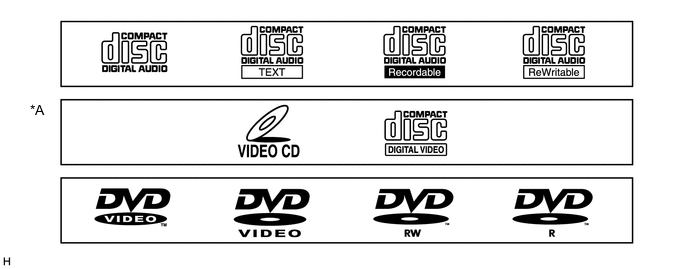
*A Destination Package for Indonesia, Singapore, Malaysia, Brunei and Philippines - -
-
-
Digital Audio Broadcast (DAB) (Models with Digital Audio Broadcast (DAB) Tuner)
-
Digital Audio Broadcast (DAB) reception is available. This mostly prevents broadcast interference, achieving clear reception with high quality sound.
-
The time shift operation function can be used to play back DAB programs at a later time. (Except destination package for Hong Kong)
Tech Tips
The amount of playback possible depends on the bit rate of the DAB station to be recorded, the amount of DAB unit memory, and the time at which reception of the broadcast began.
-
-
USB/AUX Port
-
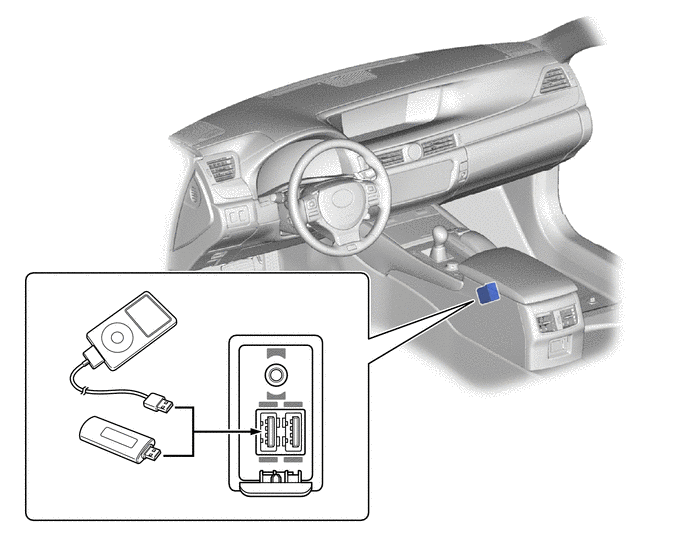
2 USB ports are provided so that up to 2 of the following items can be available at once: USB memory device, portable audio player (USB type), iPhone, iPod classic, iPod, iPod nano or iPod touch.
-
The USB system enables playback of video data stored on a USB memory device and the display of photo data. (Except models for Australia and except destination package for Hong Kong)
-
Videos stored on a video capable device such as an iPod or VTR, can be displayed on the multi-display by connecting the video capable device to the AUX port using a dedicated 4-pole AUX cable. (Except destination package for Hong Kong)
Tech Tips
-
Even if 3 or more USB devices are connected using a USB hub, only the first 2 connected USB devices will be recognized.
-
If 2 of the same type of device (for example, 2 Apple devices, USB flash drives or USB portable audio players) are connected, only the first connected device will be recognized.*
*: Models for Australia
-
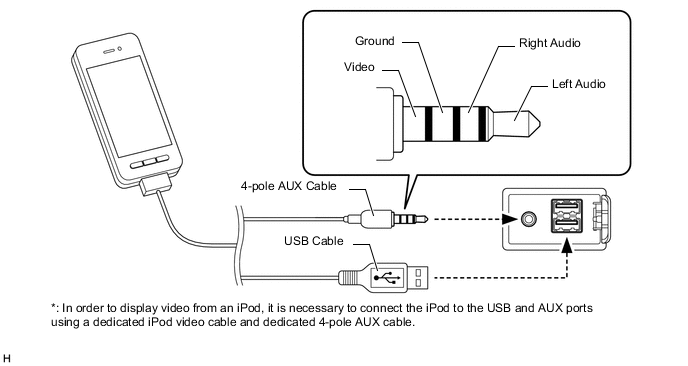
In order to display video from an iPod, it is necessary to connect the iPod to the USB and AUX ports using a dedicated iPod video cable and dedicated 4-pole AUX cable and select "video sound input cable" from the "iPod Settings" screen.
-
Depending on the specifications of the 4-pole AUX cable used for connecting a video capable device such as an iPod or VTR, the video function may not operate correctly. Use a dedicated 4-pole AUX cable as shown in the illustration when using the video function.
-
iPhone, iPod, iPod classic, iPod nano and iPod touch are trademarks of Apple Inc., registered in the U.S. and other countries.
-
The following iPod, iPod nano, iPod classic, iPod touch and iPhone devices can be used with this system.
-
Made for
-
iPod touch (5th generation)*
-
iPod touch (4th generation)
-
iPod touch (3rd generation)
-
iPod touch (2nd generation)
-
iPod touch (1st generation)
-
iPod classic
-
iPod with video
-
iPod nano (7th generation)*
-
iPod nano (6th generation)
-
iPod nano (5th generation)
-
iPod nano (4th generation)
-
iPod nano (3rd generation)
-
iPod nano (2nd generation)
-
iPod nano (1st generation)
-
iPhone 5*
-
iPhone 4S
-
iPhone 4
-
iPhone 3GS
-
iPhone 3G
-
iPhone
-
*: iPod video not supported.
-
-
Depending on differences between models, software versions, etc., some models may be incompatible with this system.
-
USB memory devices that meet the following specifications are supported:
USB Communication Formats
-
USB 2.0, Full Speed (12 Mbps)
-
USB 2.0, High Speed (480 Mbps)
File System FAT 16/32 Correspondence Class Mass Storage Class File Format MP3, WMA, AAC -
-
Photo data, which meets the following specifications, is supported:*
File Format JPEG Compatible Image Size Maximum 10MB Compatible Pixel Size Maximum 10,000,000 pixels *: Except models for Australia and except destination package for Hong Kong.
-
Video data, which meets the following specifications, is supported:*
File Format WMV, AVI, MP4 Compatible Image Size Maximum 1920 X 1080 Compatible Frame Rates Maximum 60 i/30 p *: Except models for Australia and except destination package for Hong Kong.
-
-
Bluetooth Audio System
-
The Bluetooth audio system enables users to enjoy music stored on a portable audio player from the vehicle speakers via Bluetooth communication.
-
The Bluetooth specifications and profiles required for operation are as follows:
Specification/Profile Version Requirements Recommendations Bluetooth Specification Version 2.0 Version 3.0 + EDR Profile Advanced Audio Distribution Profile (A2DP) Version 1.0 Version 1.3 Audio/Video Remote Control Profile (AVRCP) Version 1.0 Version 1.5
-
-
Bluetooth Hands-free System
-
The Bluetooth hands-free system allows the user to make or receive a call without taking their hands off the steering wheel when the system is linked with a Bluetooth-compatible cellular phone.
-
The Bluetooth specifications and profiles required for operation are as follows:
Specification/Profile Version Requirements Recommendations Bluetooth Specification Version 2.0 Version 3.0 + EDR Profile Hands Free Profile (HFP) Version 1.0 Version 1.6 Object Push Profile (OPP) Version 1.1 Version 1.2 Phone Book Access Profile (PBAP) Version 1.0 Version 1.1 Message Access Profile (MAP)*1*2 - Version 1.0 Serial Port Profile (SPP)*3*4 - Version 1.2 Dial-up Networking Profile (DUN)*3*5 - Version 1.2 Personal Area Network (PAN)*5 - Version 1.0 *1: Models for Europe and Australia
*2: Destination package for South Africa
*3: Models for Hong Kong
*4: Models for Australia
*5: Models for Europe
Tech Tips
-
The operation of the interrupt call function of the Bluetooth hands-free system may vary with the Bluetooth phone or the telephone company that is used.

"Bluetooth" is a trademark owned by Bluetooth SIG, Inc. -
Some profiles described above may not be supported by the system depending on the audio head unit equipped.
-
If the specification of the connected Bluetooth phone is lower than the recommended or does not support the functions required, the available functions may be limited.
-
Registration and connection of a Bluetooth phone is not available when only Object Push Profile (OPP), Phone Book Access Profile (PBAP) and MAP (Message Access Profile) are supported.
-
When multiple Bluetooth-compatible devices are registered, the user can select different devices for the Bluetooth audio system and Bluetooth hands-free system.
-
-
When a Bluetooth phone is connected to the audio head unit, e-mails and Short Message Service (SMS) messages received on the phone can be displayed or read out. In addition, it is possible to reply to the received e-mails and send Short Message Service (SMS) messages. (Messages may not be displayed depending on the message service or profile that the connected Bluetooth phone supports.)
-
-
Status Display
-
The user can confirm the Wi-Fi and Bluetooth connection statuses, signal strength and remaining battery level of a cellular phone which is connected by Bluetooth, using the status bar displayed on the screen. The status bar is displayed in all modes.
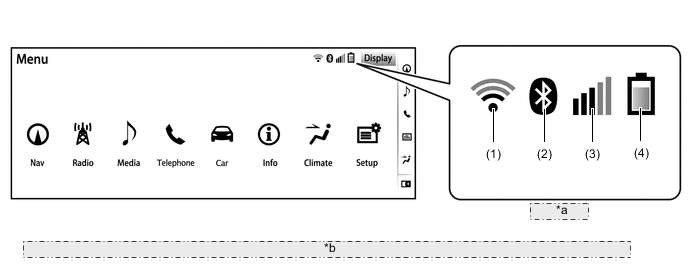
*a Status Bar *b The illustrations shown are examples only. The illustrations may differ from the actual vehicle screens. Item Outline (1) Wi-Fi connection status*1 Displays the Wi-Fi connection status between the audio head unit and a tethering-compatible cellular phone or mobile Wi-Fi router. (2) Bluetooth connection status Displays the Bluetooth connection status between the audio head unit and cellular phone. (3) Cellular phone signal strength*2 Displays the signal strength of the cellular phone connected by Bluetooth. (4) Cellular phone battery level*2 Displays the battery level of the cellular phone connected by Bluetooth. *1: Models for Europe with navigation system
*2: May not be displayed depending on the Bluetooth specifications and profiles of the cellular phone.
-
-
High Definition (HD) Voice Support for Phone Calls
-
HD Voice achieves higher quality than previous cellular phones and fixed phones to make more natural voice calling possible. This is achieved by having next-generation phone call quality and using devices and lines that support HD Voice.
-
HD Voice can be used with cellular phones which support Hands-Free Profile (HFP) ver. 1.6.
-
-
Voice Recognition Search System (Models for Europe and Australia and Destination Package for South Africa)
-
Due to the Grapheme to Phoneme (G2P) function of converting sounds into text, songs on an iPod, iPod nano, iPod classic, iPod touch or iPhone device can be searched for by saying an artist name, album name, title or playlist name. Additionally, the adoption of the Gracenote MediaVOCS database improves the speech recognition ratio of the Grapheme to Phoneme (G2P) function.
Tech Tips
-
Music recognition technology and related data are provided by Gracenote.
-
Gracenote is the industry standard in music recognition technology and related content delivery. For more information, please visit www.gracenote.com.

Gracenote, CDDB, MusicID, Playlist Plus, MediaVOCS, the Gracenote logo and logotype, and the "Powered by Gracenote" logo are either registered trademarks or trademarks of Gracenote, Inc. in the United States and/or other countries. -
One or more patents owned by Gracenote apply to this product and service.
-
See the Gracenote website for a non-exhaustive list of applicable Gracenote patents.
-
-
-
Class D Amplifier
-
A class D amplifier, which realizes both high quality sound and low power consumption by digitizing the sound signal sent from the source to speakers, has been adopted on the 17-speaker system.
-
A class D amplifier that exhibits extremely high amplification efficiency with high output, even with low power consumption, has been adopted. Additionally, as the amplifier generates little heat, it is possible to provide a smaller heatsink, realizing a compact and lightweight amplifier.
-
-
Automatic Sound Levelizer (ASL)
-
The Automatic Sound Levelizer (ASL) function automatically adjusts the audio system volume level in order to compensate for increased vehicle noise (vehicle noise tends to increase as vehicle speed increases).
-
Vehicle speed signals are received from the combination meter assembly and used for ASL control.
-
-
Clari-Fi Music Restoration Technology (Models with 17-speaker Surround Sound System or Navigation System (with 17 Speakers))
-
Files such as an MP3 or AAC have lost the audio details of the original music source during the file compression process. The Clari-Fi technology is used to restore the lost audio details and optimize data.
-
During playback of a compressed music file, the Clari-Fi technology improves the frequency characteristics, dynamic range, low frequency sounds, etc. of the music file in real time, recreating the wide soundstage of the original music source.
-
-
GreenEdgeTMSpeakers
-
GreenEdgeTMspeakers that efficiently convert electricity to sound with less sound corruption are used. These speakers achieve high sound pressure levels with low power consumption while still maintaining superb sound quality.
-
UnityTMtechnology is used, giving a construction which combines high-range and middle-range units. The gap between the high-range cone and middle-range cone has been made smaller than that of the normal coaxial. As a result, a linear phase sound source has been achieved, reducing sound problems and giving clear sound.
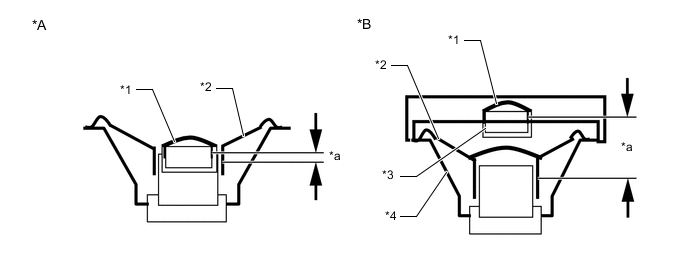
*A Unity Construction *B Coaxial Construction *1 High-range Cone *2 Middle-range Cone *3 High-range Unit *4 Middle-range Unit *a Gap between High-range Cone and Middle-range Cone - -
-
-
Audio Control Switch (Models with Cooler Control Switch Panel)
-
The audio control switch allows a rear seat occupant to operate the audio system.
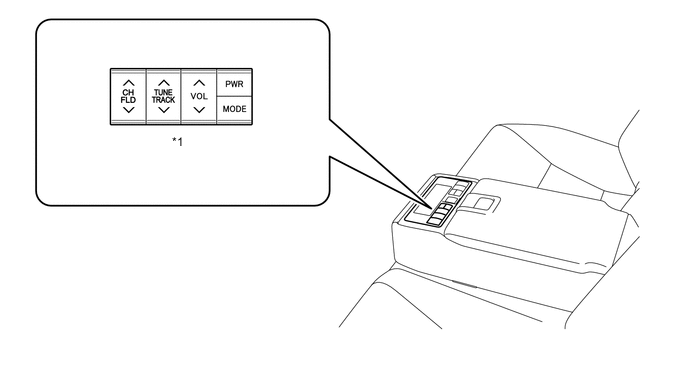
*1 Audio Control Switch - -
-
-
Steering Pad Switch
-
Switches that the driver often uses are provided on the steering wheel for convenience.
-
-
-
SPECIFICATION
-
Audio Head Unit
-
Models for Europe (Including All Destination Packages)
Design Specification 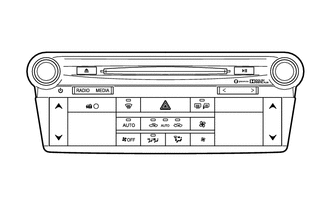
-
AM/FM Tuner
-
Digital Audio Broadcast (DAB) Tuner (Models with Digital Audio Broadcast (DAB) Tuner)
-
Digital Sound Processor (DSP)
-
Automatic Sound Levelizer (ASL)
-
CD/DVD Player: Compatible with MP3, Windows Media Audio (WMA)and Advanced Audio Coding (AAC) files
-
CD-TEXT Display Function
-
Bluetooth Audio
-
Bluetooth Hands-free System
-
Portable Audio Player (USB type) Interface
-
iPod/iPhone Interface
-
USB Memory Device Interface
-
Stereo Jack Adapter (4-pole AUX cable supported)
-
Customizable vehicle settings can be changed
-
12-speaker System
-
Unit: Pioneer
-
Stereo Amplifier: Pioneer
12-speaker Surround Sound System:
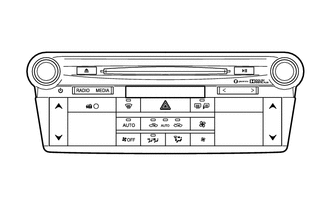
-
AM/FM Tuner
-
Digital Audio Broadcast (DAB) Tuner (Models with Digital Audio Broadcast (DAB) Tuner)
-
Radio Data System Traffic Message Channel (RDS-TMC) Tuner
-
Transport Protocol Experts Group (TPEG) Tuner
-
Digital Sound Processor (DSP)
-
Automatic Sound Levelizer (ASL)
-
CD/DVD Player: Compatible with MP3, Windows Media Audio(WMA) and Advanced Audio Coding (AAC) files
-
CD-TEXT Display Function
-
Bluetooth Audio
-
Bluetooth Hands-free System
-
Portable Audio Player (USB type) Interface
-
iPod/iPhone Interface
-
USB Memory Device Interface
-
Stereo Jack Adapter (4-pole AUX cable supported)
-
Customizable vehicle settings can be changed
-
12-speaker System
-
Unit: Pioneer
-
microSD Card (Disc Player Disc): AISIN AW
-
Stereo Amplifier: Pioneer
Navigation System:
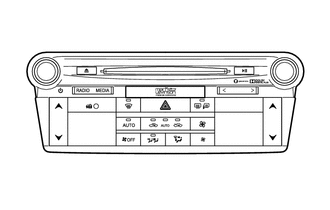
-
AM/FM Tuner
-
Digital Audio Broadcast (DAB) Tuner (Models with Digital Audio Broadcast (DAB) Tuner)
-
Radio Data System Traffic Message Channel (RDS-TMC) Tuner
-
Transport Protocol Experts Group (TPEG) Tuner
-
Digital Sound Processor (DSP)
-
Automatic Sound Levelizer (ASL)
-
CD/DVD Player: Compatible with MP3, Windows Media Audio (WMA) and Advanced Audio Coding (AAC) files
-
CD-TEXT Display Function
-
Bluetooth Audio
-
Bluetooth Hands-free System
-
Portable Audio Player (USB type) Interface
-
iPod/iPhone Interface
-
USB Memory Device Interface
-
Stereo Jack Adapter (4-pole AUX cable supported)
-
Clari-Fi Restoration Technology
-
Customizable vehicle settings can be changed
-
17-speaker System
-
Unit: Pioneer
-
microSD Card (Disc Player Disc): AISIN AW
-
Stereo Amplifier: Mark Levinson
Navigation System:
Tech Tips
The audio head units above are shown as examples.
-
-
Models for G.C.C. Countries (Including All Destination Packages)
Design Specification 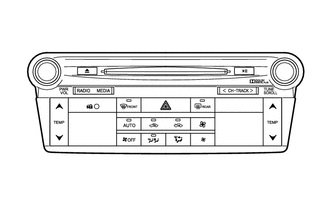
-
AM/FM Tuner
-
Digital Sound Processor (DSP)
-
Automatic Sound Levelizer (ASL)
-
CD/DVD Player: Compatible with MP3, Windows Media Audio (WMA) and Advanced Audio Coding (AAC) files
-
CD-TEXT Display Function
-
Bluetooth Audio
-
Bluetooth Hands-free System
-
Portable Audio Player (USB type) Interface
-
iPod/iPhone Interface
-
USB Memory Device Interface
-
Stereo Jack Adapter (4-pole AUX cable supported)
-
Customizable vehicle settings can be changed
-
12-speaker System
-
Unit: Pioneer
-
Stereo Amplifier: Pioneer
12-speaker Surround Sound System:
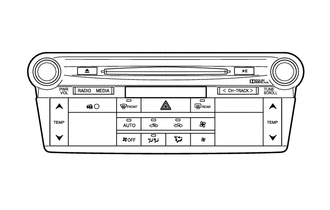
-
AM/FM Tuner
-
Digital Sound Processor (DSP)
-
Automatic Sound Levelizer (ASL)
-
CD/DVD Player: Compatible with MP3, Windows Media Audio (WMA) and Advanced Audio Coding (AAC) files
-
CD-TEXT Display Function
-
Bluetooth Audio
-
Bluetooth Hands-free System
-
Portable Audio Player (USB type) Interface
-
iPod/iPhone Interface
-
USB Memory Device Interface
-
Stereo Jack Adapter (4-pole AUX cable supported)
-
Customizable vehicle settings can be changed
-
12-speaker System
-
Unit: Pioneer
-
microSD Card (Disc Player Disc): AISIN AW
-
Stereo Amplifier: Pioneer
Navigation System:
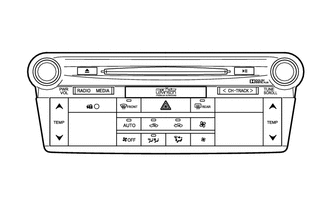
-
AM/FM Tuner
-
Digital Sound Processor (DSP)
-
Automatic Sound Levelizer (ASL)
-
CD/DVD Player: Compatible with MP3, Windows Media Audio (WMA) and Advanced Audio Coding (AAC) files
-
CD-TEXT Display Function
-
Bluetooth Audio
-
Bluetooth Hands-free System
-
Portable Audio Player (USB type) Interface
-
iPod/iPhone Interface
-
USB Memory Device Interface
-
Stereo Jack Adapter (4-pole AUX cable supported)
-
Clari-Fi Restoration Technology
-
Customizable vehicle settings can be changed
-
17-speaker System
-
Unit: Pioneer
-
microSD Card (Disc Player Disc): AISIN AW
-
Stereo Amplifier: Mark Levinson
Navigation System:
Tech Tips
The audio head units above are shown as examples.
-
-
Model for Australia (Including All Destination Packages)
Design Specification 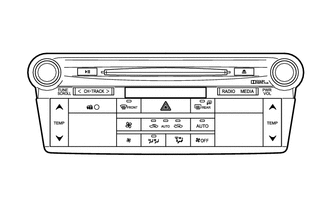
-
AM/FM Tuner
-
Digital Audio Broadcast (DAB) Tuner (Models with Digital Audio Broadcast (DAB) Tuner)
-
Radio Data System Traffic Message Channel (RDS-TMC) Tuner
-
Digital Sound Processor (DSP)
-
Automatic Sound Levelizer (ASL)
-
CD/DVD Player: Compatible with MP3, Windows Media Audio (WMA) and Advanced Audio Coding (AAC) files
-
CD-TEXT Display Function
-
Bluetooth Audio
-
Bluetooth Hands-free System
-
Portable Audio Player (USB type) Interface
-
iPod/iPhone Interface
-
USB Memory Device Interface
-
Stereo Jack Adapter (4-pole AUX cable supported)
-
Customizable vehicle settings can be changed
-
12-speaker System
-
Unit: Pioneer
-
microSD Card (Disc Player Disc): DENSO
-
Stereo Amplifier: Pioneer
Navigation System:
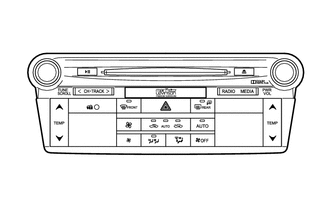
-
AM/FM Tuner
-
Digital Audio Broadcast (DAB) Tuner (Models with Digital Audio Broadcast (DAB) Tuner)
-
Radio Data System Traffic Message Channel (RDS-TMC) Tuner
-
Digital Sound Processor (DSP)
-
Automatic Sound Levelizer (ASL)
-
CD/DVD Player: Compatible with MP3, Windows Media Audio (WMA) and Advanced Audio Coding (AAC) files
-
CD-TEXT Display Function
-
Bluetooth Audio
-
Bluetooth Hands-free System
-
Portable Audio Player (USB type) Interface
-
iPod/iPhone Interface
-
USB Memory Device Interface
-
Stereo Jack Adapter (4-pole AUX cable supported)
-
Clari-Fi Restoration Technology
-
Customizable vehicle settings can be changed
-
17-speaker System
-
Unit: Pioneer
-
microSD Card (Disc Player Disc): DENSO
-
Stereo Amplifier: Mark Levinson
Navigation System:
Tech Tips
The audio head units above are shown as examples.
-
-
Destination package for Korea
Design Specification 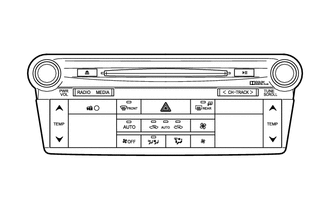
-
AM/FM Tuner
-
Digital Sound Processor (DSP)
-
Automatic Sound Levelizer (ASL)
-
CD/DVD Player: Compatible with MP3, Windows Media Audio (WMA) and Advanced Audio Coding (AAC) files
-
CD-TEXT Display Function
-
Bluetooth Audio
-
Bluetooth Hands-free System
-
Portable Audio Player (USB type) Interface
-
iPod/iPhone Interface
-
USB Memory Device Interface
-
Stereo Jack Adapter (4-pole AUX cable supported)
-
Customizable vehicle settings can be changed
-
12-speaker System
-
Unit: F-ten
-
Stereo Amplifier: Pioneer
12-speaker Surround Sound System:
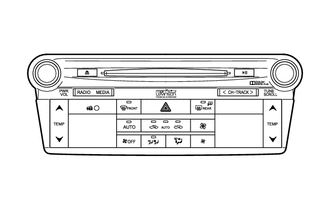
-
AM/FM Tuner
-
Digital Sound Processor (DSP)
-
Automatic Sound Levelizer (ASL)
-
CD/DVD Player: Compatible with MP3, Windows Media Audio (WMA) and Advanced Audio Coding (AAC) files
-
CD-TEXT Display Function
-
Bluetooth Audio
-
Bluetooth Hands-free System
-
Portable Audio Player (USB type) Interface
-
iPod/iPhone Interface
-
USB Memory Device Interface
-
Stereo Jack Adapter (4-pole AUX cable supported)
-
Clari-Fi Restoration Technology
-
Customizable vehicle settings can be changed
-
17-speaker System
-
Unit: Pioneer
-
Stereo Amplifier: Mark Levinson
17-speaker Surround Sound System:
Tech Tips
The audio head units above are shown as examples.
-
-
Destination package for Taiwan
Design Specification 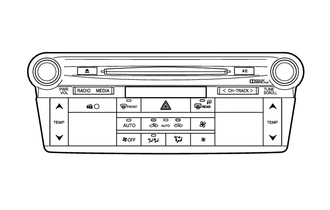
-
AM/FM Tuner
-
Radio Data System Traffic Message Channel (RDS-TMC) Tuner
-
Digital Sound Processor (DSP)
-
Automatic Sound Levelizer (ASL)
-
CD/DVD Player: Compatible with MP3, Windows Media Audio (WMA) and Advanced Audio Coding (AAC) files
-
CD-TEXT Display Function
-
Bluetooth Audio
-
Bluetooth Hands-free System
-
Portable Audio Player (USB type) Interface
-
iPod/iPhone Interface
-
USB Memory Device Interface
-
Stereo Jack Adapter (4-pole AUX cable supported)
-
Customizable vehicle settings can be changed
-
12-speaker System
-
Unit: Pioneer
-
microSD Card (Disc Player Disc): AISIN AW
-
Stereo Amplifier: Pioneer
Navigation System:
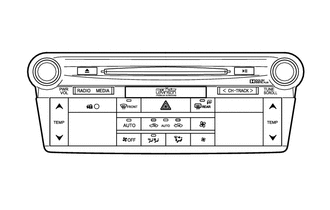
-
AM/FM Tuner
-
Radio Data System Traffic Message Channel (RDS-TMC) Tuner
-
Digital Sound Processor (DSP)
-
Automatic Sound Levelizer (ASL)
-
CD/DVD Player: Compatible with MP3, Windows Media Audio (WMA) and Advanced Audio Coding (AAC) files
-
CD-TEXT Display Function
-
Bluetooth Audio
-
Bluetooth Hands-free System
-
Portable Audio Player (USB type) Interface
-
iPod/iPhone Interface
-
USB Memory Device Interface
-
Mirror Link Function
-
Stereo Jack Adapter (4-pole AUX cable supported)
-
Clari-Fi Restoration Technology
-
Customizable vehicle settings can be changed
-
17-speaker System
-
Unit: Pioneer
-
microSD Card (Disc Player Disc): AISIN AW
-
Stereo Amplifier: Mark Levinson
Navigation System:
Tech Tips
The audio head units above are shown as examples.
-
-
Destination package for Hong Kong
Design Specification 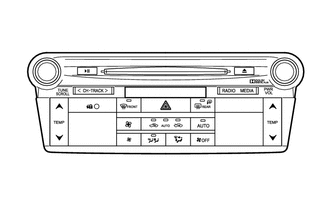
-
AM/FM Tuner
-
Digital Audio Broadcast (DAB) Tuner (Models with Digital Audio Broadcast (DAB) Tuner)
-
Digital Sound Processor (DSP)
-
Automatic Sound Levelizer (ASL)
-
CD/DVD Player: Compatible with MP3, Windows Media Audio(WMA) and Advanced Audio Coding (AAC) files
-
CD-TEXT Display Function
-
Bluetooth Audio
-
Bluetooth Hands-free System
-
Portable Audio Player (USB type) Interface
-
iPod/iPhone Interface
-
USB Memory Device Interface
-
Stereo Jack Adapter (4-pole AUX cable supported)
-
Customizable vehicle settings can be changed
-
12-speaker System
-
Unit: Pioneer
-
microSD Card (Disc Player Disc): DENSO
-
Stereo Amplifier: Pioneer
Navigation System:
-
AM/FM Tuner
-
Digital Audio Broadcast (DAB) Tuner (Models with Digital Audio Broadcast (DAB) Tuner)
-
Digital Sound Processor (DSP)
-
Automatic Sound Levelizer (ASL)
-
CD/DVD Player: Compatible with MP3, Windows Media Audio (WMA) and Advanced Audio Coding (AAC) files
-
CD-TEXT Display Function
-
Bluetooth Audio
-
Bluetooth Hands-free System
-
Portable Audio Player (USB type) Interface
-
iPod/iPhone Interface
-
USB Memory Device Interface
-
Stereo Jack Adapter (4-pole AUX cable supported)
-
Clari-Fi Restoration Technology
-
Customizable vehicle settings can be changed
-
17-speaker System
-
Unit: Pioneer
-
microSD Card (Disc Player Disc): DENSO
-
Stereo Amplifier: Mark Levinson
Navigation System:
Tech Tips
The audio head units above are shown as examples.
-
-
Destination package for Southeast Asia
Design Specification 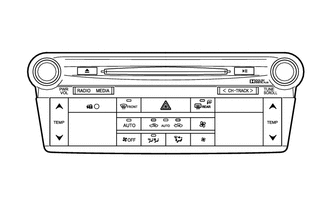
-
AM/FM Tuner
-
Digital Sound Processor (DSP)
-
Automatic Sound Levelizer (ASL)
-
CD/DVD Player: Compatible with MP3, Windows Media Audio (WMA) and Advanced Audio Coding (AAC) files
-
CD-TEXT Display Function
-
Bluetooth Audio
-
Bluetooth Hands-free System
-
Portable Audio Player (USB type) Interface
-
iPod/iPhone Interface
-
USB Memory Device Interface
-
Stereo Jack Adapter (4-pole AUX cable supported)
-
Customizable vehicle settings can be changed
-
12-speaker System
-
Unit: Pioneer
-
Stereo Amplifier: Pioneer
12-speaker Surround Sound System:
-
AM/FM Tuner
-
Radio Data System Traffic Message Channel (RDS-TMC) Tuner
-
Digital Sound Processor (DSP)
-
Automatic Sound Levelizer (ASL)
-
CD/DVD Player: Compatible with MP3, Windows Media Audio (WMA) and Advanced Audio Coding (AAC) files
-
CD-TEXT Display Function
-
Bluetooth Audio
-
Bluetooth Hands-free System
-
Portable Audio Player (USB type) Interface
-
iPod/iPhone Interface
-
USB Memory Device Interface
-
Stereo Jack Adapter (4-pole AUX cable supported)
-
Customizable vehicle settings can be changed
-
17-speaker System
-
Unit: Pioneer
-
microSD Card (Disc Player Disc): AISIN AW
-
Stereo Amplifier: Pioneer
Navigation System:
-
AM/FM Tuner
-
Radio Data System Traffic Message Channel (RDS-TMC) Tuner
-
Digital Sound Processor (DSP)
-
Automatic Sound Levelizer (ASL)
-
CD/DVD Player: Compatible with MP3, Windows Media Audio (WMA) and Advanced Audio Coding (AAC) files
-
CD-TEXT Display Function
-
Bluetooth Audio
-
Bluetooth Hands-free System
-
Portable Audio Player (USB type) Interface
-
iPod/iPhone Interface
-
USB Memory Device Interface
-
Stereo Jack Adapter (4-pole AUX cable supported)
-
Clari-Fi Restoration Technology
-
Customizable vehicle settings can be changed
-
17-speaker System
-
Unit: Pioneer
-
microSD Card (Disc Player Disc): AISIN AW
-
Stereo Amplifier: Mark Levinson
Navigation System:
Tech Tips
The audio head units above are shown as examples.
-
-
Destination package for South America
Design Specification
-
AM/FM Tuner
-
Digital Sound Processor (DSP)
-
Automatic Sound Levelizer (ASL)
-
CD/DVD Player: Compatible with MP3,Windows Media Audio (WMA) and Advanced Audio Coding (AAC) files
-
CD-TEXT Display Function
-
Bluetooth Audio
-
Bluetooth Hands-free System
-
Portable Audio Player (USB type) Interface
-
iPod/iPhone Interface
-
USB Memory Device Interface
-
Stereo Jack Adapter (4-pole AUX cable supported)
-
Customizable vehicle settings can be changed
-
12-speaker System
-
Unit: Pioneer
-
Stereo Amplifier: Pioneer
12-speaker Surround Sound System:
Tech Tips
The audio head units above are shown as examples.
-
-
Destination package for South Africa
Design Specification 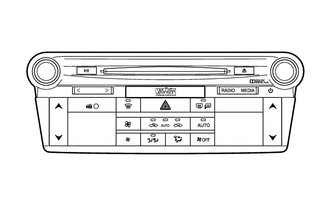
-
AM/FM Tuner
-
Digital Audio Broadcast (DAB) Tuner
-
Radio Data System Traffic Message Channel (RDS-TMC) Tuner
-
Digital Sound Processor (DSP)
-
Automatic Sound Levelizer (ASL)
-
CD/DVD Player: Compatible with MP3, Windows Media Audio (WMA) and Advanced Audio Coding (AAC) files
-
CD-TEXT Display Function
-
Bluetooth Audio
-
Bluetooth Hands-free System
-
Portable Audio Player (USB type) Interface
-
iPod/iPhone Interface
-
USB Memory Device Interface
-
Stereo Jack Adapter (4-pole AUX cable supported)
-
Clari-Fi Restoration Technology
-
Customizable vehicle settings can be changed
-
12-speaker System
-
Unit: Pioneer
-
microSD Card (Disc Player Disc): Aisin AW
-
Stereo Amplifier: Mark Levinson
Navigation System:
Tech Tips
The audio head units above are shown as examples.
-
-
-
Speaker System
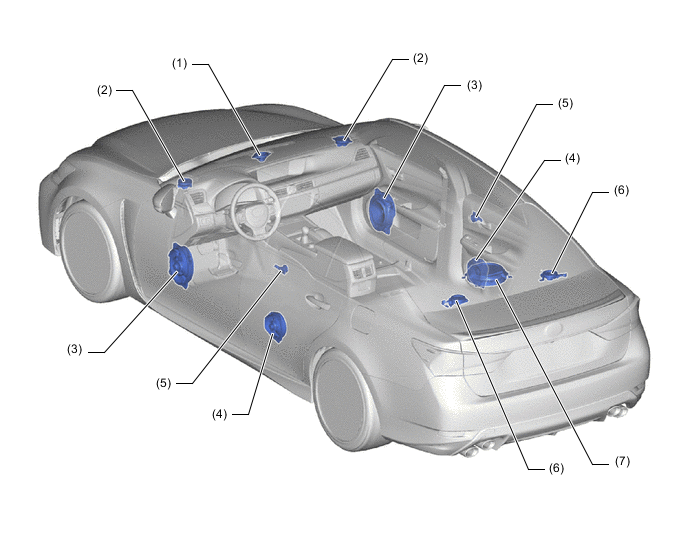
12-speaker System Location Speaker Name Quantity Size Impedance Rated Input Power (1) Front No. 3 Speaker Assembly 1 9 cm (3.5 in.) 4 Ω 20 W (2) Front No. 2 Speaker Assembly (1 + 1) x 2 9 cm (3.5 in.) 4 Ω 20 W (3) Front No. 1 Speaker Assembly 2 18 cm (7 in.) 4 Ω 20 W (4) Rear Speaker Assembly 2 16 cm (6.2 in.) 4 Ω 20 W (5) Rear No. 2 Speaker Assembly 2 2.5 cm (0.9 in.) 4 Ω 20 W (7) Rear No. 3 Speaker Assembly 1 25 cm (9.8 in.) 2.5 Ω 32 W 17-speaker System Location Speaker Name Quantity Size Impedance Rated Input Power (1) Front No. 3 Speaker Assembly 1 + 1 9 cm (3.5 in.) 8.1 Ω 4 W (2) Front No. 2 Speaker Assembly (1 + 1) x 2 9 cm (3.5 in.) 8.1 Ω 4 W (3) Front No. 1 Speaker Assembly 2 17.7 cm x 25.4 cm (7 in. x 10 in.) 5.2 Ω 9 W (4) Rear Speaker Assembly 2 17 cm (6.7 in.) 4.6 Ω 18 W (5) Rear No. 2 Speaker Assembly 2 2.5 cm (0.9 in.) 4 Ω 0.5 W (6) Rear Header Speaker Assembly (1 + 1) x 2 9 cm (3.5 in.) 8.1 Ω 4 W (7) Rear No. 3 Speaker Assembly 1 25 cm (9.8 in.) 5.8 Ω 4 W -
Steering Pad Switch Assembly
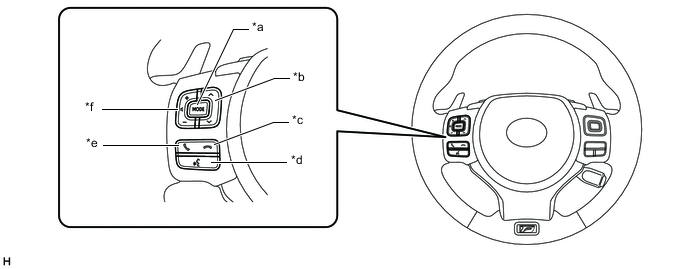
*a MODE Switch *b Seek +/- Switch *c On Hook Switch *d Voice Switch *e Off Hook Switch *f Volume +/- Switch
-