FUEL SYSTEM
-
CONSTRUCTION
-
The fuel pump assembly (for high pressure) consists of a plunger, spill control valve, and check valve. It pressurizes the fuel that is sent by the fuel pump assembly (for low pressure) to a pressure ranging from 2.5 to 18 MPa, and sends it to the high pressure fuel delivery pipe.
-
To simplify the fuel system, a relief valve and fuel pressure pulsation damper are integrated into the fuel pump assembly (for lower pressure).
-
Due to the use of a roller driven pump with a large diameter plunger, the fuel system can cope with high engine output and high fuel pressure, ensuring high engine performance.
-
A spill control valve is used to control the fuel pump assembly (for high pressure) discharge pressure. The spill control valve is located in the inlet passage of the fuel pump assembly (for high pressure). It is electrically opened and closed by the injector driver (EDU), based on instructions from the ECM.
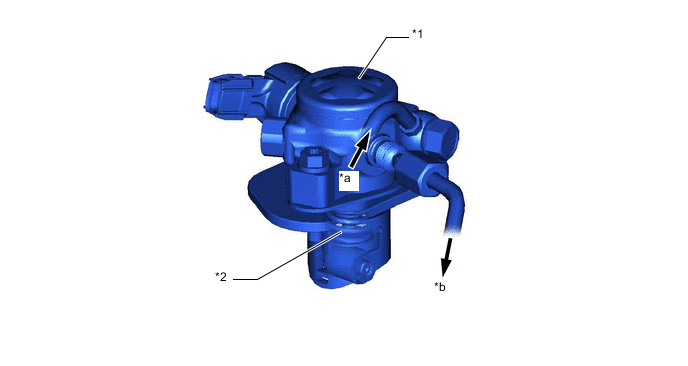
*1 Spill Control Valve *2 Plunger *a from Fuel Tank Assembly *b to Fuel Delivery Pipe Figure 1. High-pressure Fuel System Diagram
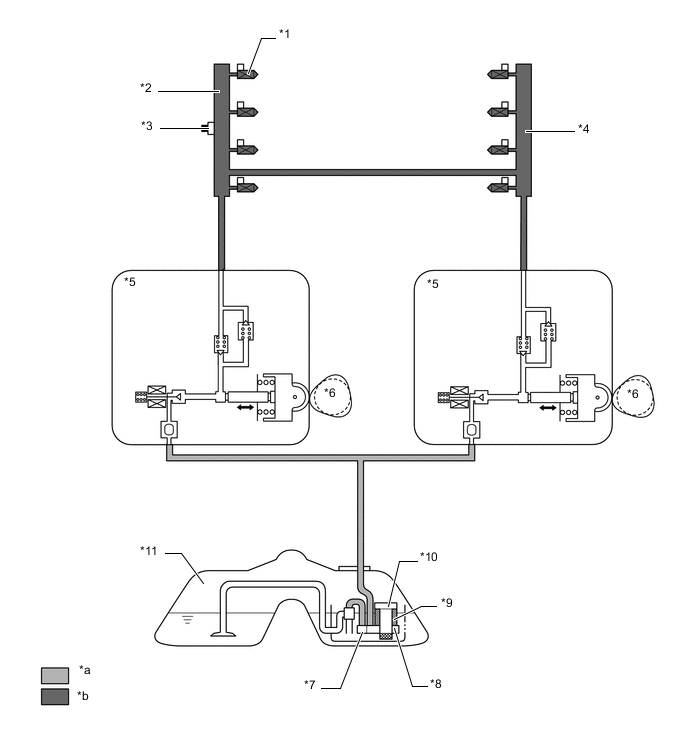
*1 Fuel Injector Assembly (for Direct Injection) *2 Fuel Delivery Pipe LH *3 Fuel Pressure Sensor *4 Fuel Delivery Pipe RH *5 Fuel Pump Assembly (for High Pressure) *6 Intake Camshaft (Cam to Drive Fuel Pump) *7 Fuel Main Valve Assembly *8 Fuel Pressure Regulator Assembly *9 Fuel Filter *10 Fuel Pump *11 Fuel Tank Assembly - - *a Low Pressure Fuel System *b High Pressure Fuel System
-
-
OPERATION
-
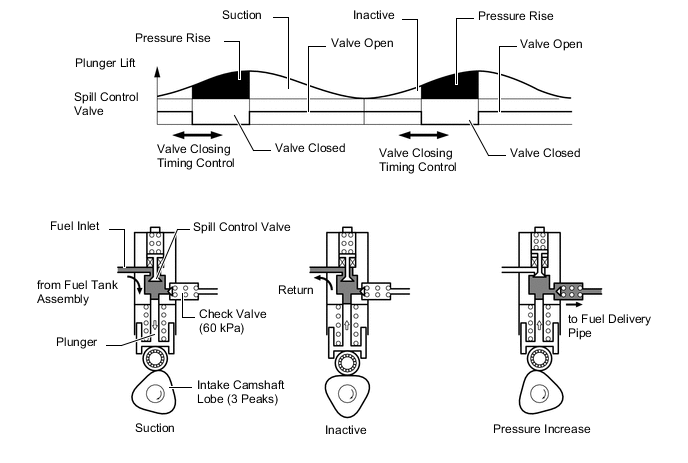
During the intake portion of the pump cycle, the spill control valve is opened, and the pump plunger (piston) is moved downward by spring force. This allows fuel to be drawn into the cylinder of the pump. If the spill control valve has not been closed yet, when the cam forces the plunger to move upward, the fuel in the pump cylinder (this fuel is not pressurized) will be pushed back to the pump inlet (fuel tank side).
-
In order to close the spill control valve as the piston is moving upward, the ECM sends a signal to the valve via the EDU. When the spill control valve is closed and the plunger is moving upward, the pressure in the pump cylinder will rise. As this pressure rises above 60 kPa (or the pressure of the delivery pipe, whichever is higher), the fuel will begin to flow to the fuel delivery pipe sub-assembly (for direct injection). The ECM calculates the target fuel pressure based on driving conditions. The ECM controls the pressure by operating the spill control valve via the EDU. The timing and duration of the spill control valve closing are varied to cause the pump pressure to meet the target pressure.
-