СИСТЕМА ECD
-
OPERATION
-
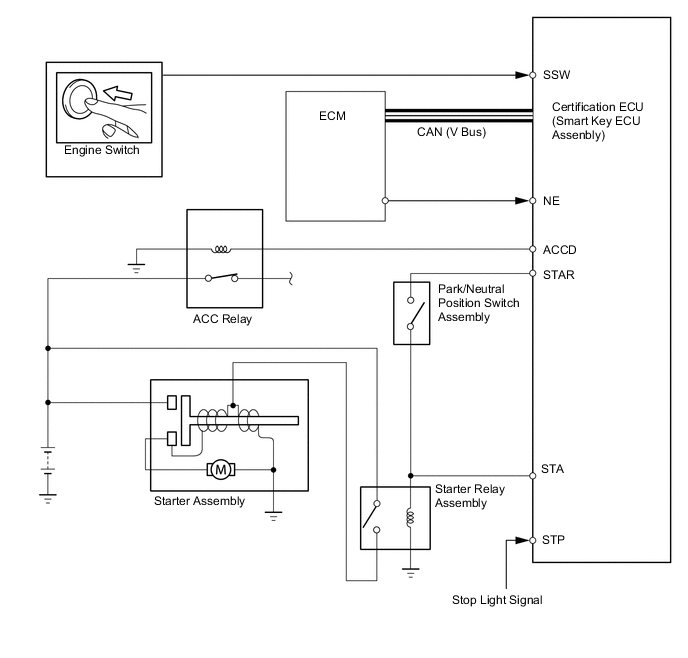
When the driver pushes the engine switch once and the certification ECU detects a start signal, the certification ECU will output the ACCD and STAR signals and begin cranking. Also, the driver can continue cranking for up to 30 seconds by pushing and holding the engine switch.
-
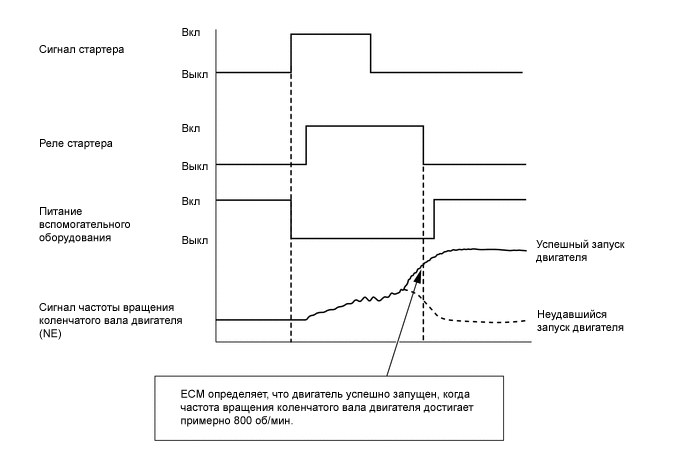
If the engine speed reaches approximately 800 rpm, the ECM will judge that the engine has started and will send a signal to the certification ECU using CAN communication. The certification ECU will then stop the operation of the starter.
-
If CAN communication is cut between the certification ECU and the ECM, the certification ECU will receive an engine speed signal (NE) directly from the ECM and will stop the operation of the starter.
-
This system will cut off the power current which activates the accessories while the engine is being cranked. This prevents the intermittent blinking of the accessory lights caused by the voltage instability that occurs during engine cranking.
-
This system has the following protections:
-
The starter will not operate if the engine is operating normally.
-
When the engine switch is pushed and held, cranking stops once the engine speed reaches a pre-determined level. This prevents the starter from over-revving.
-
When the engine does not start even after approximately 6 seconds of starter operation, the certification ECU cancels the starter relay output. Furthermore, if the engine does not start after the engine switch has been pushed and held and cranking has continued for 30 seconds, cranking will be canceled in order to protect the starter.
-
It will not be possible to operate the starter for 2 seconds after engine starting has failed and cranking has been canceled. This helps to protect the starter.
-
-