СИСТЕМА CVT
-
CONSTRUCTION
-
Forward/Reverse Switching Unit
-
The forward/reverse switching unit consists of a planetary gear, a forward clutch, and a reverse brake.
-
The forward clutch, which operates during a forward movement, connects the input shaft with the planetary carrier.
-
The reverse brake, which operates during reverse movement, keeps the ring gear stationary.
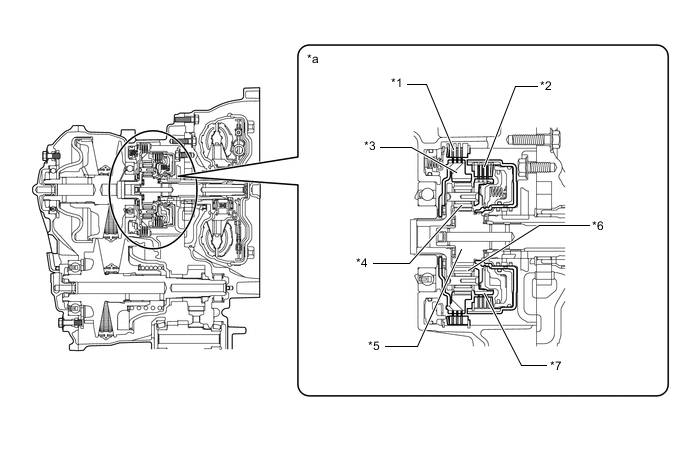
*1 Reverse Brake *2 Forward Clutch *3 Ring Gear *4 No. 1 Pinion Gear *5 Sun Gear *6 No. 2 Pinion Gear *7 Planetary Carrier - - *a Forward/Reverse Switching Unit - -
-
-
Pulley and Steel Belt Unit
-
The widths of the grooves of the pulleys are changed through hydraulic control.
-
During acceleration, the operation of the linear solenoid valve for primary pulley control (SLP) increases the oil pressure of the primary pulley, thus decreasing the width of the pulley groove.
-
During deceleration, the operation of the linear solenoid valve for primary pulley control (SLP) decreases the oil pressure of the primary pulley, thus increasing the width of the pulley groove.
-
The secondary pulley is hydraulically controlled by the linear solenoid valve for secondary pulley control (SLS). It controls the belt clamping pressure to ensure the proper power transmission efficiency.
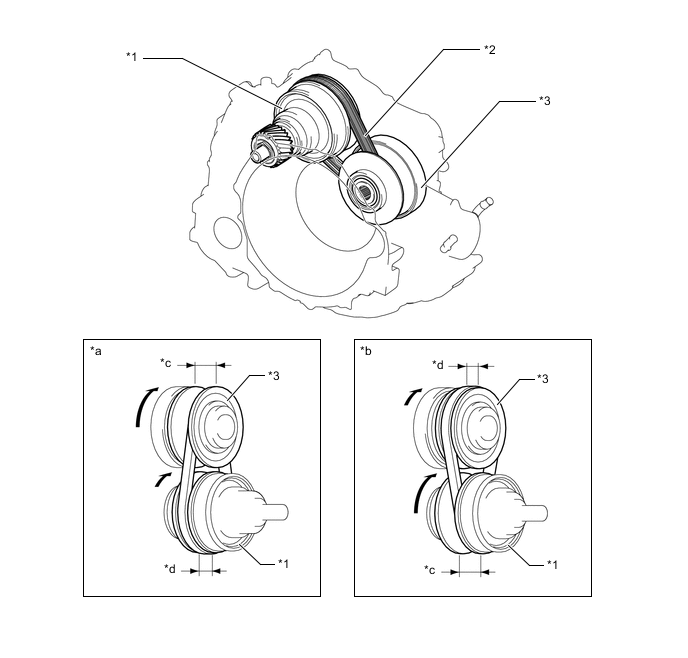
*1 Secondary Pulley *2 Steel Belt *3 Primary Pulley - - *a Pulley Ratio (Low) *b Pulley Ratio (High) *c Groove Width (Large) *d Groove Width (Small) -
The primary pulley uses a single piston construction.
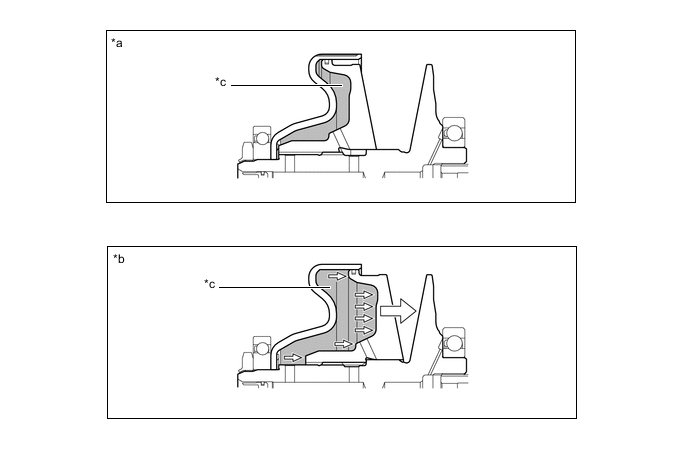
*a Pulley Ratio (Low) *b Pulley Ratio (High) *c Chamber - - -
The steel belt consists of elements and 2 rows of steel rings. In contrast to chains and belts, which transmit power through the use of tensile force, this steel belt uses the compressive action (pushing force) of the elements to transmit power.
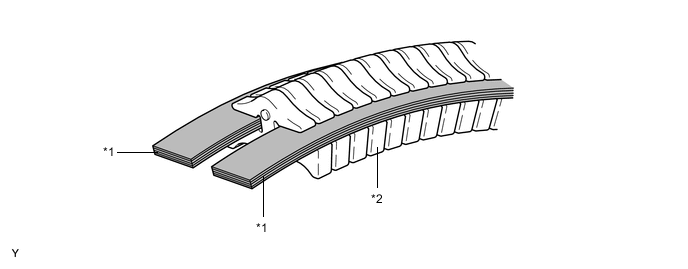
*1 Steel Ring *2 Element
-
-
Reduction Gear and Differential
-
The reduction gear reduces the power output from the secondary pulley and transmits it to the differential.
-
A 2-pinion type differential is used.
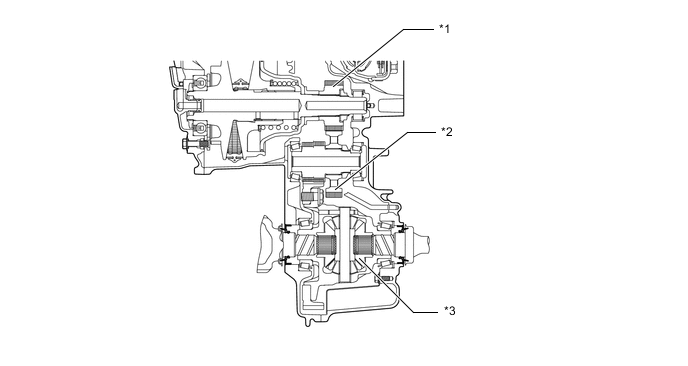
*1 Reduction Drive Gear *2 Reduction Driven Gear *3 Front Differential - -
-
-
-
OPERATION
-
Forward/Reverse Switching Unit
-
The forward clutch is connected when advancing, and engine torque is input from the input shaft to the planetary carrier and is output to the primary pulley.
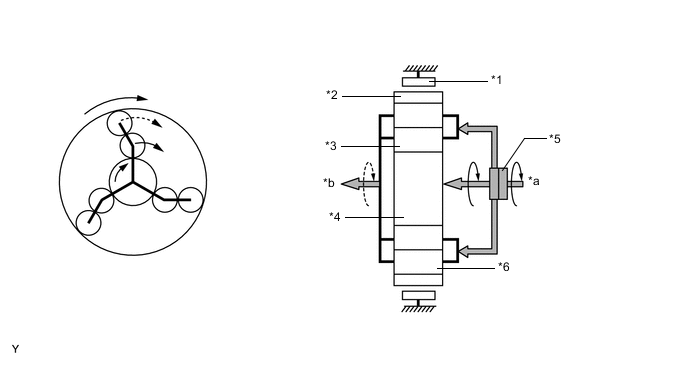
*1 Reverse Brake *2 Ring Gear *3 No. 1 Pinion Gear *4 Sun Gear *5 Forward Clutch *6 No. 2 Pinion Gear *a Input *b Output -
Engine torque is input to the sun gear when reversing. The ring gear is fixed by the reverse brake to transmit engine torque to the stepless shift transmission mechanism with inverse rotation.
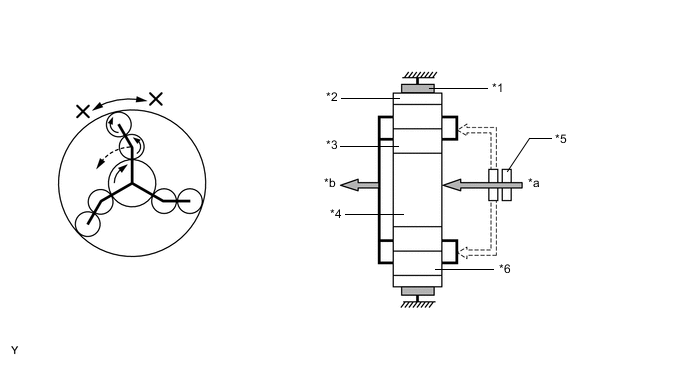
*1 Reverse Brake *2 Ring Gear *3 No. 1 Pinion Gear *4 Sun Gear *5 Forward Clutch *6 No. 2 Pinion Gear *a Input *b Output
-
-
Transaxle Power Flow
-
The changing of the pulley ratio is accomplished in a continuously variable manner by varying the widths of the grooves of the primary and secondary pulleys.
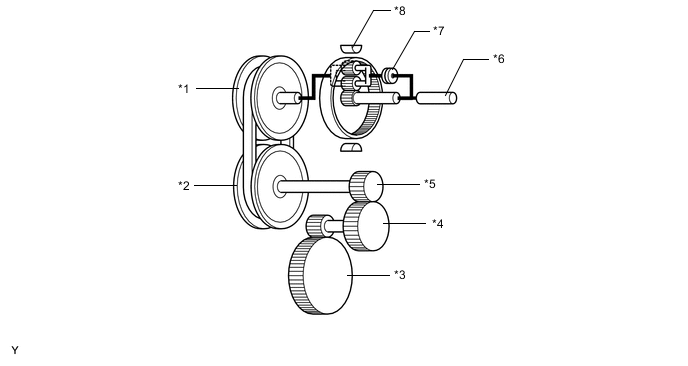
*1 Primary Pulley *2 Secondary Pulley *3 Differential Ring Gear *4 Reduction Driven Gear *5 Reduction Drive Gear *6 Input Shaft *7 Forward Clutch *8 Reverse Brake -
Shift Lever in D (Pulley Ratio Low)
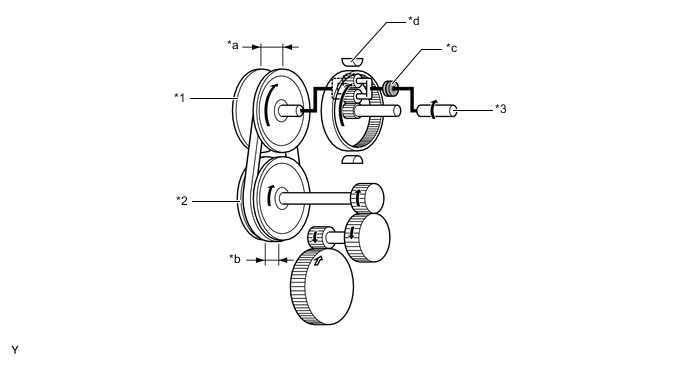
*1 Primary Pulley *2 Secondary Pulley *3 Input Shaft - - *a Groove Width (Large) *b Groove Width (Small) *c Forward Clutch (On) *d Reverse Brake (Off) -
Shift Lever in D (Pulley Ratio High)
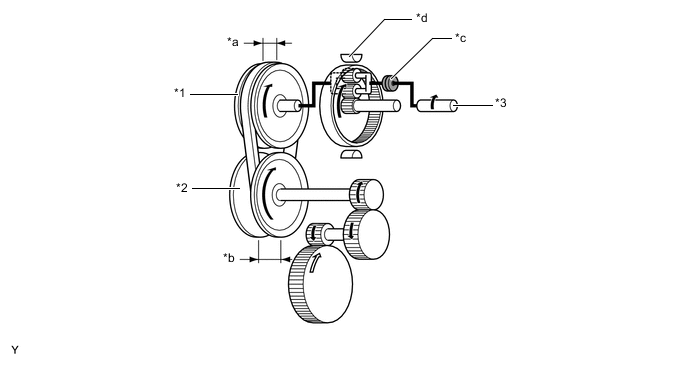
*1 Primary Pulley *2 Secondary Pulley *3 Input Shaft - - *a Groove Width (Small) *b Groove Width (Large) *c Forward Clutch (On) *d Reverse Brake (Off) -
Shift Lever in N
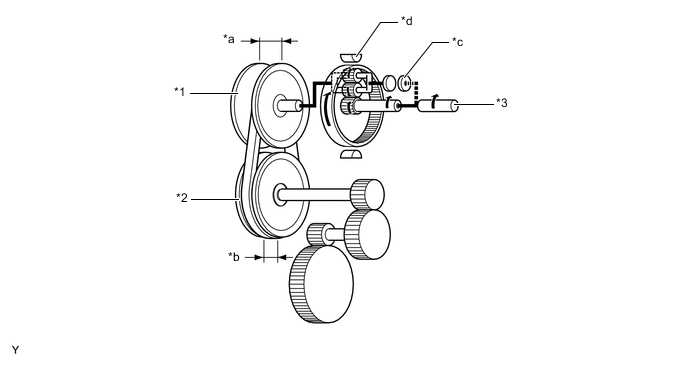
*1 Primary Pulley *2 Secondary Pulley *3 Input Shaft - - *a Groove Width (Large) *b Groove Width (Small) *c Forward Clutch (Off) *d Reverse Brake (Off) -
Shift Lever in R
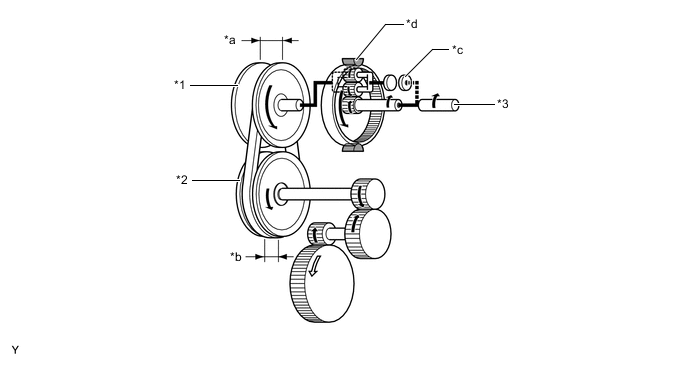
*1 Primary Pulley *2 Secondary Pulley *3 Input Shaft - - *a Groove Width (Large) *b Groove Width (Small) *c Forward Clutch (Off) *d Reverse Brake (On) -
Shift Lever in M
-
Gear train movement when the shift lever is in M is similar to the one when the shift lever is in D. However, since pulley ratio is adjusted in accordance with driver's shift operation, the driver is able to upshift or downshift with a manual-like feel.
-
-
-