SFI SYSTEM
-
OPERATION
-
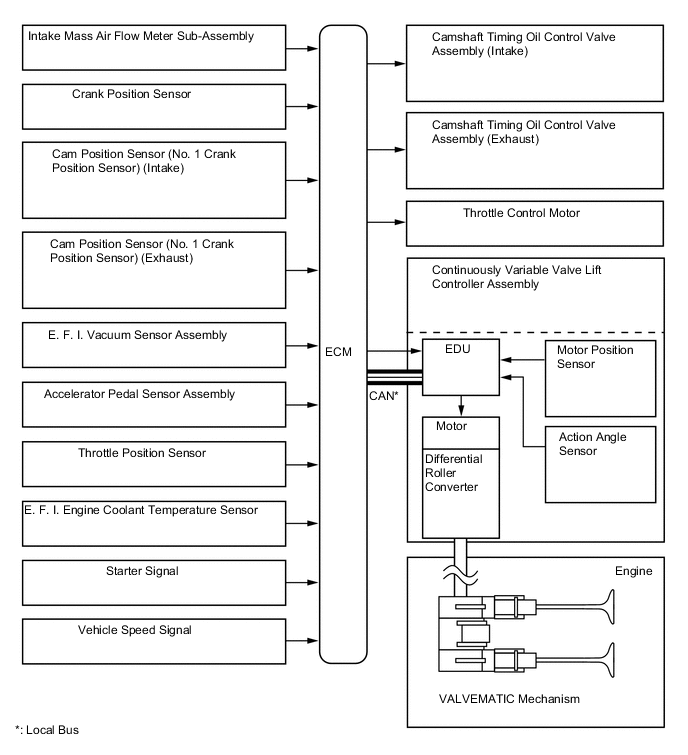
The continuously variable valve lift controller assembly operates the VALVEMATIC mechanism in accordance with signals from the ECM in order to control the amount of intake valve lift and the intake valve action angle.
-
The VALVEMATIC system effects coordinated control with the Dual VVT-i system and ETCS-i.
-
For basic control, the ECM determines the target intake air volume in accordance with the accelerator pedal opening angle, engine speed, and various sensor signals. The EDU, which is integrated in the continuously variable valve lift controller assembly, determines the target amount of lift and action angle of the intake valve in accordance with signals from the ECM.
-
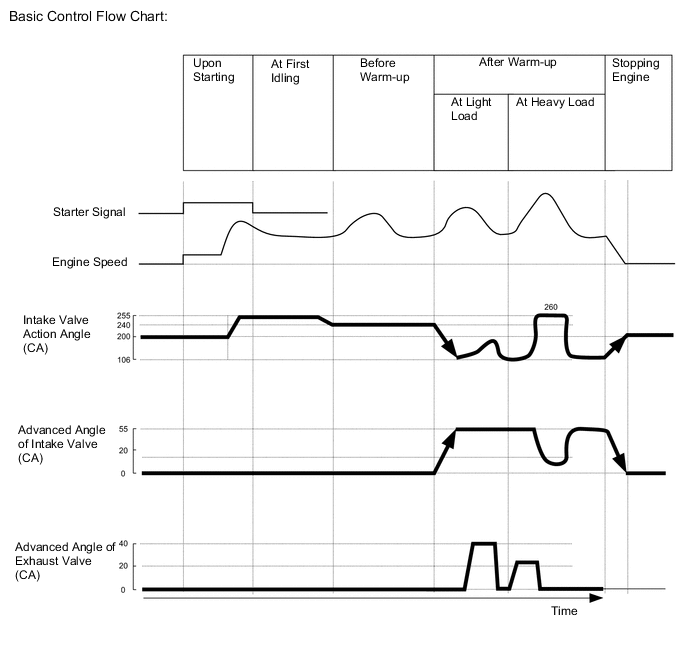
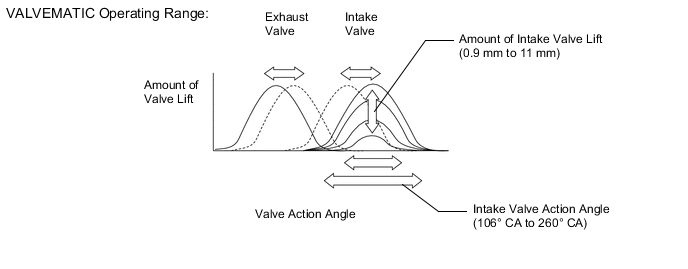
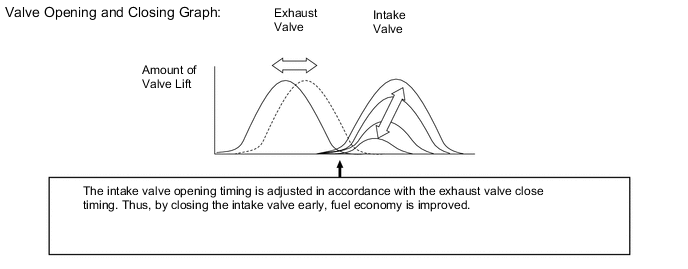
To optimize the valve opening and closing timing, the VALVEMATIC system effects coordinated control with the Dual VVT-i. Thus, it controls the amount of valve lift and action angle in accordance with the driving conditions. Because the VALVEMATIC system features timing advance characteristics in which the amount of valve lift and action angle vary, it effects proper control to attain the intended amount of valve lift. This Dual VVT-i system has timing advance characteristics that differ from conventional Dual VVT-i systems.
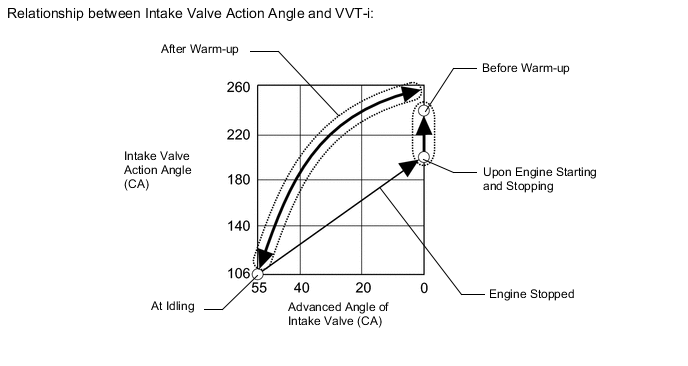
-
The following table shows the coordinated control of the VALVEMATIC system with the ETCS-i during basic control:
Control Operation Starting Control The VALVEMATIC system controls the intake valve action angle, and the ETCS-i operates the throttle valve to control the intake air volume. First Idle Control Before Warm-up Control After Warm-up Control
-
The VALVEMATIC system controls the amount of intake valve lift and intake valve timing, the ETCS-i opens the throttle valve wider than the normal opening and reduces the intake manifold negative pressure in order to minimize pumping loss.
-
During idling, when the intake air volume is small, the ETCS-i controls the intake air volume as in the past.
Engine Stop Control -
-