SFI SYSTEM
-
CONSTRUCTION
-
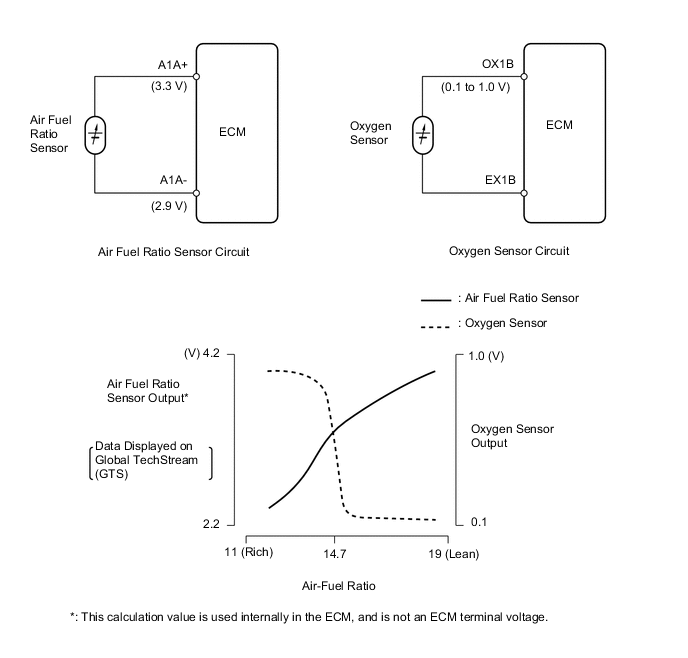
The oxygen sensor and the air fuel ratio sensor differ in output characteristics.
-
The output voltage of the oxygen sensor changes in accordance with the oxygen concentration in the exhaust gas. The ECM uses this output voltage to determine whether the present air fuel ratio is richer or leaner than the stoichiometric air fuel ratio.
-
Approximately 0.4 V is constantly applied to the air fuel ratio sensor, which outputs an amperage that varies in accordance with the oxygen concentration in the exhaust gas. The ECM converts the changes in the output amperage into voltage in order to linearly detect the present air fuel ratio.
-
The basic construction of the oxygen sensor and the air fuel ratio sensor is the same. However, they are divided into the cup type and the planar type, according to the different types of heater construction that are used.
-
The cup type sensor contains a sensor element that surrounds a heater.
-
The planar type sensor uses alumina, which excels in heat conductivity and insulation, to integrate a sensor element with a heater, thus improving the warm up performance of the sensor.
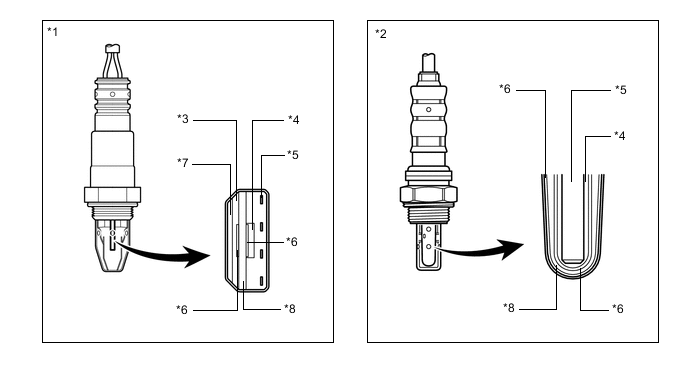
*1 Air Fuel Ratio Sensor (Planar Type) *2 Oxygen Sensor (Cup Type) *3 Diffusion Resistance Layer *4 Atmosphere *5 Heater *6 Platinum Electrode *7 Alumina *8 Sensor Element (Zirconia)
-