BODY STRUCTURE
-
OUTLINE
-
Light Weight and Highly Rigid Body
-
High tensile strength steel and ultra high-tensile strength steel are used in order to achieve excellent body rigidity and a lightweight body.
-
-
Safety Features
-
The impact absorbing structure minimizes cabin deformation by effectively helping to absorb the impact energy in the event of a front, side or rear collision. This provides high performance.
-
-
Rust-resistant Body
-
Rust-resistant performance is enhanced by the extensive use of anti-corrosion sheet steel, as well as by an anti-corrosion treatment that includes the application of anti-rust wax, sealer and anti-chipping paint to the easily corroded parts such as the hood and fender.
-
-
Low Vibration and Low Noise Body
-
Effective application of vibration damping and noise suppressant materials reduces engine, wind and road noise.
-
-
Aerodynamics
-
Optimization of the shape of the body and under floor ensures excellent aerodynamic performance.
-
-
Parts with Low Repair Cost
-
A construction, which does not cause damage to the body in low-impact collisions, is used for repair cost reduction.
-
-
-
MAIN FEATURES
-
Aim of Exterior Design
-
A swift and dynamic design is expressed while carrying over a sense of strength suitable for a Land Cruiser.
-
-
Exterior Design
-
Front Design
-
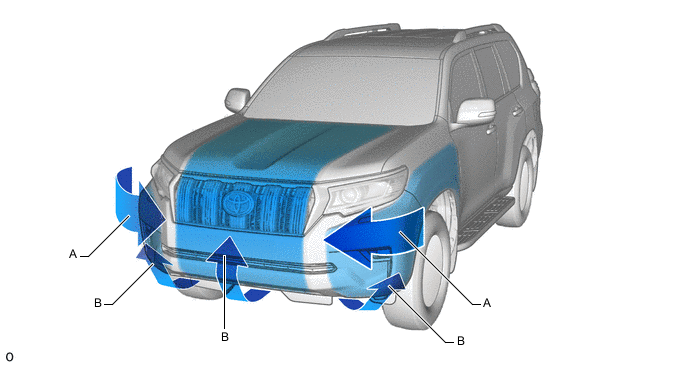
In order to protect the three-dimensional structure built into the center power unit, a design theme that embraces the center area from the side bumpers (A in illustration). In addition, the lower portion of the bumper corners round up from the bottom and are designed in the form of skid plates, achieving a design with a high level of mobility and driveability (B in illustration).
-
The hood sub-assembly is shaped in consideration of downward visibility though the center area.
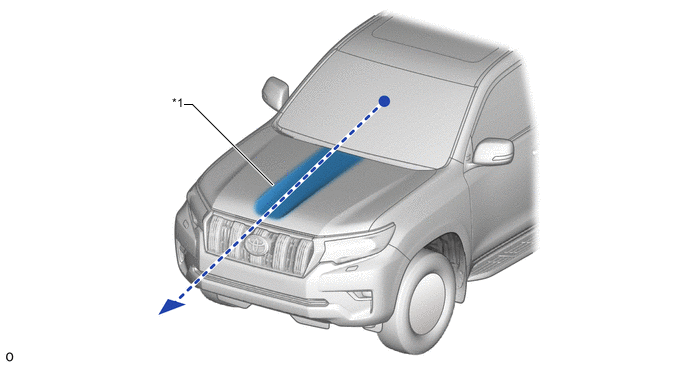
*1 Hood Sub-assembly - - -
The fender tops are elevated to achieve a design that allows the driver to easily feel the width of the vehicle.
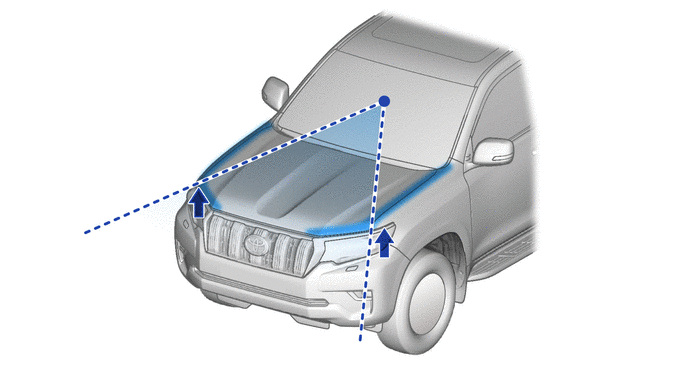
-
The radiator grille and headlights are laid out in a high position. As a result, the radiator grille and headlights can avoid bushes and obstacles when off-road driving, ensuring their functionality.
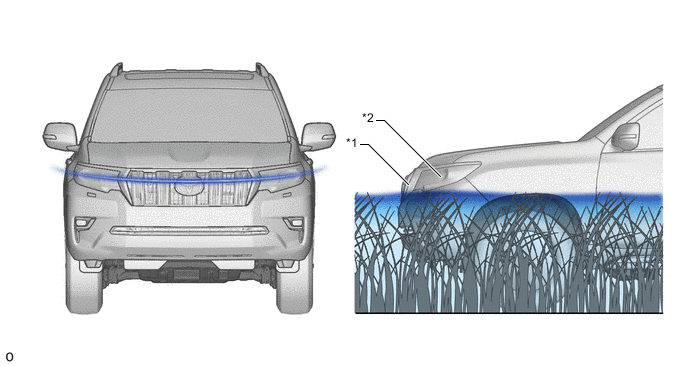
*1 Radiator Grille *2 Headlight -
Combined graphics are used for the front fascia, achieving a sense of unity with the Land Cruiser series. The radiator grille is enlarged as much as possible to ensure cooling performance. The main beams of the headlights are positioned closer to the center of the vehicle to avoid damage from contact with bushes and other obstacles when driving on bad roads. These are achieved together, resulting in a combined form.
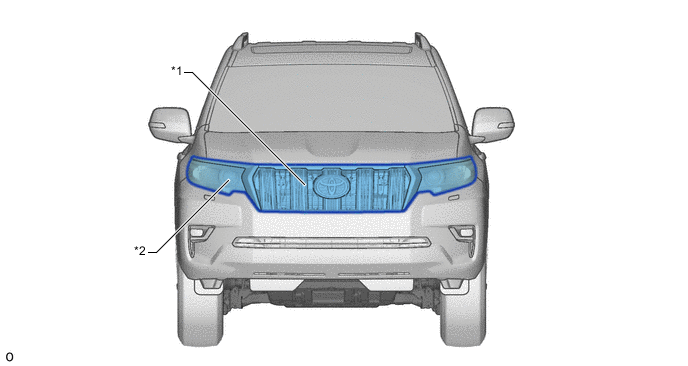
*1 Radiator Grille *2 Main Beam -
The vertical rail is provided inside the radiator grille to carry on the heritage as the Land Cruiser PRADO. A wide vertical rail is sandwiched between plated parts and is given slit-shaped openings, achieving a design that ensures cooling performance. As a result, both toughness and refinement are achieved.
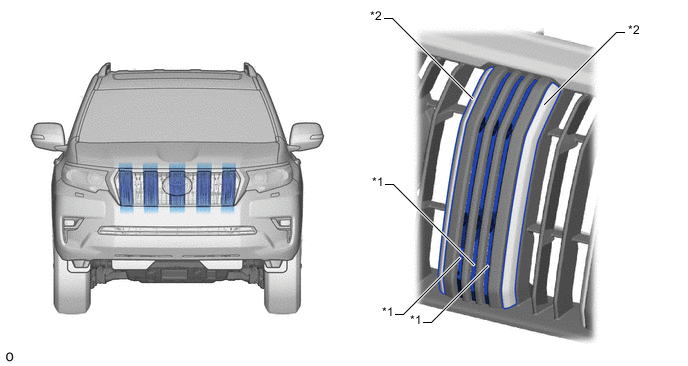
*1 Slit-shaped Opening *2 Plated Part -
The LED headlights, which are unified with the radiator grille, are vertically narrowed and combined with the geometrically structured main beam and outwardly extended clearance light. As a result, an innovative and vigorous looking impression is achieved.
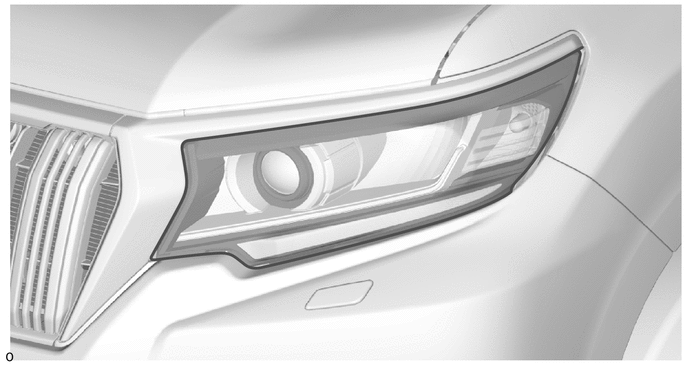
-
The plated frames are given a continuous structure for the halogen type headlights, expressing a glamorous and dignified appearance. The daytime running lights (or clearance lights) are positioned on the outer sides, resulting in a design with a sense of wideness.
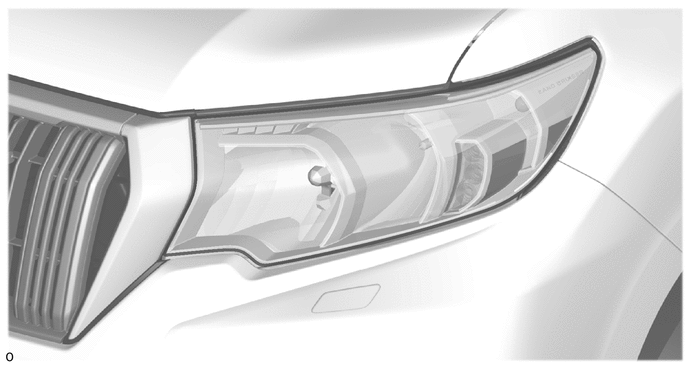
-
-
Side Design
-
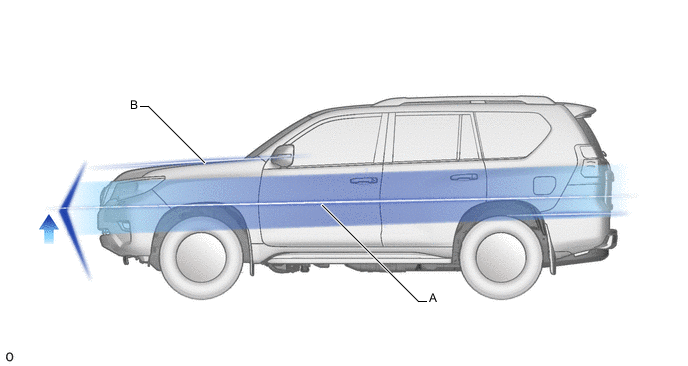
The peak of the front bumper is positioned high to align with the peak of the door cross-section, expressing the posture of the vehicle with a horizontally flowing axis. By providing a sense of flow through the horizontal axis, a design with a sense of refreshing mobility and a dynamic image is achieved (A in illustration).
-
The hood, fender line, front bumper, rear bumper are composed on a horizontal axis and the plated molding is added to the belt line, emphasizing the flowing impression (B in illustration).
-
-
Rear Design
-
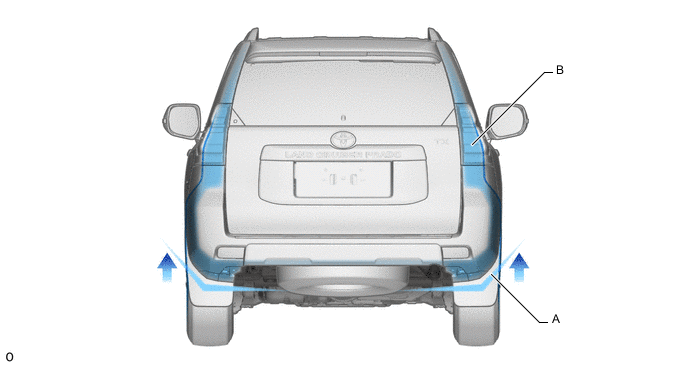
The corners of the rear bumper protrude outwards (A in illustration) and the protrusion of the rear combination lights is suppressed (B in illustration), achieving a design with a sense of stability.
-
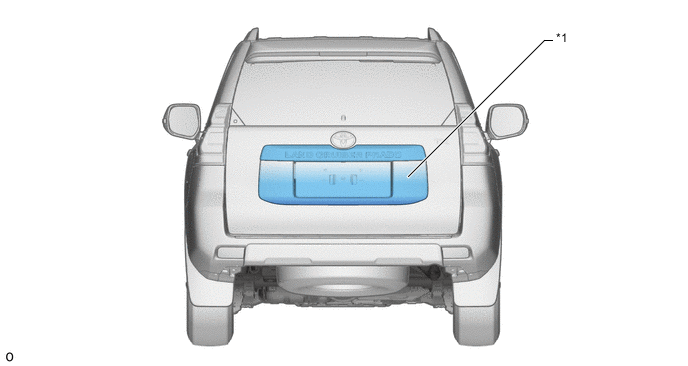
The rear garnish uses combined graphics in an effort to erase the image of roughness while still expressing powerfulness.
*1 Rear Garnish - - -
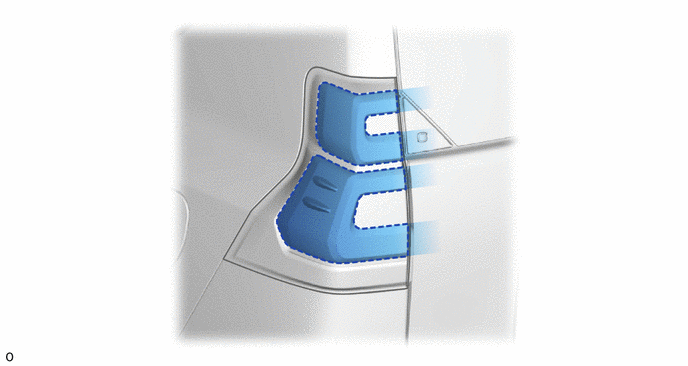
The three-sided rectangular shapes used for the rear combination lights are layered on top of one another in an iconic composition, achieving a design with a tough and modern image.
-
-
-