BODY STRUCTURE
-
CONSTRUCTION
-
Sound Absorbing and Vibration Damping Materials
-
A hood insulator is provided on the rear of the hood sub-assembly. This achieves excellent sound insulation performance.
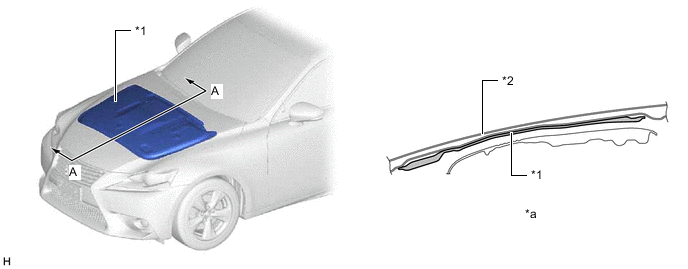
*1 Hood Insulator *2 Hood Sub-assembly *a A-A Cross Section - - -
The holding parts of the front panel assembly are optimally structured and a damping material is used, thus aiming for suppression of muffled sounds caused by glass vibration.
-
A cowl top panel insulator is provided for the front outer cowl top panel, thus aiming for reduction of noise intruding from the engine compartment into the cabin.
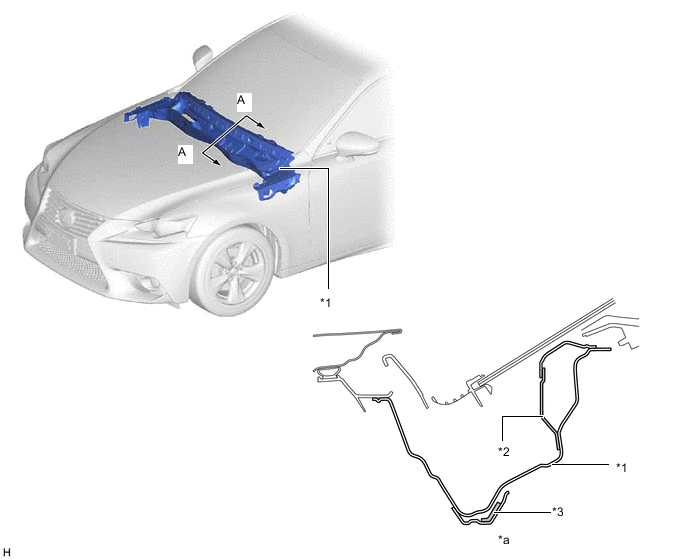
*1 Front Outer Cowl Top Panel *2 Cowl Top Panel Brace *3 Cowl Top Insulator Sheet - - *a A-A Cross Section - - -
A dash panel insulator assembly is provided. This insulates and absorbs the engine noise to reduce the amount of engine noise leaking into the cabin.
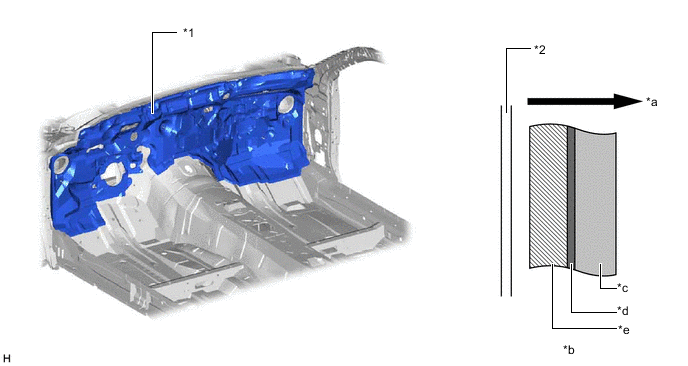
*1 Dash Panel Insulator Assembly *2 Dash Panel *a Interior Side *b Construction Material *c Felt *d Film *e Silencer - - -
An outer dash panel insulator is provided. This reduces the amount of engine noise leaking into and out of the cabin.
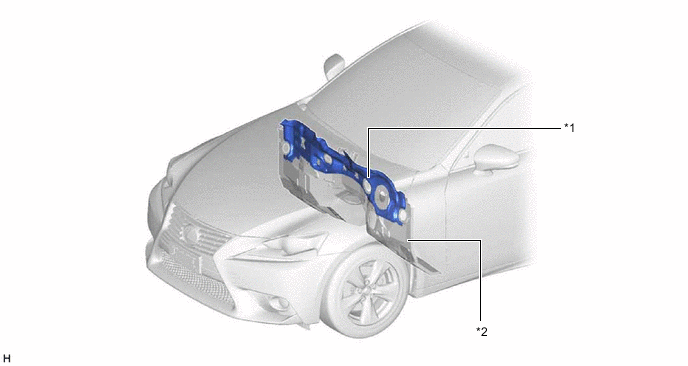
*1 Outer Dash Panel Insulator *2 Dash Panel Sub-assembly -
By using the following structures, resonance tuning of the dash panel and floor pan has been implemented. As a result, superior Noise, Vibration, Harshness (NVH) performance is ensured.
-
A front side member to dash panel cross member is provided.
-
A dash panel to cowl brace is provided.
-
Dash sandwich sheet steel is provided, in which the dash panel insulator sheet and dash panel insulator sheet LH are sandwiched by the dash panel and rear dash panel in the driver seat side, and the dash panel insulator sheet RH is sandwiched by the dash panel and rear dash panel in the front passenger side.
-
The bead shape and the location of the center floor pan and rear floor pan have been optimized.
-
The sheet thickness of the dash panel has been optimized.
-
The sheet thickness of the center floor pan has been optimized.
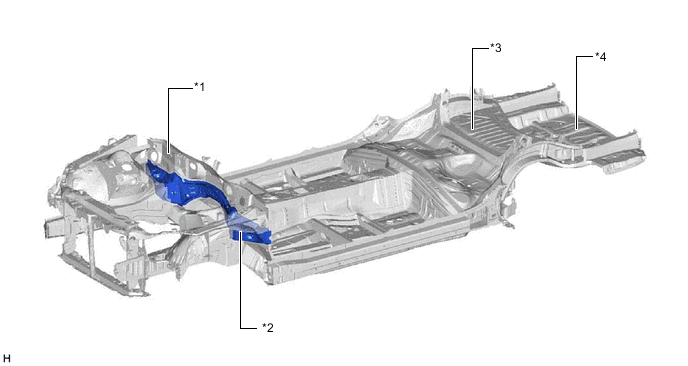
*1 Dash Panel Sub-assembly *2 Front Side Member to Dash Panel Cross Member *3 Center Floor Pan *4 Rear Floor Pan 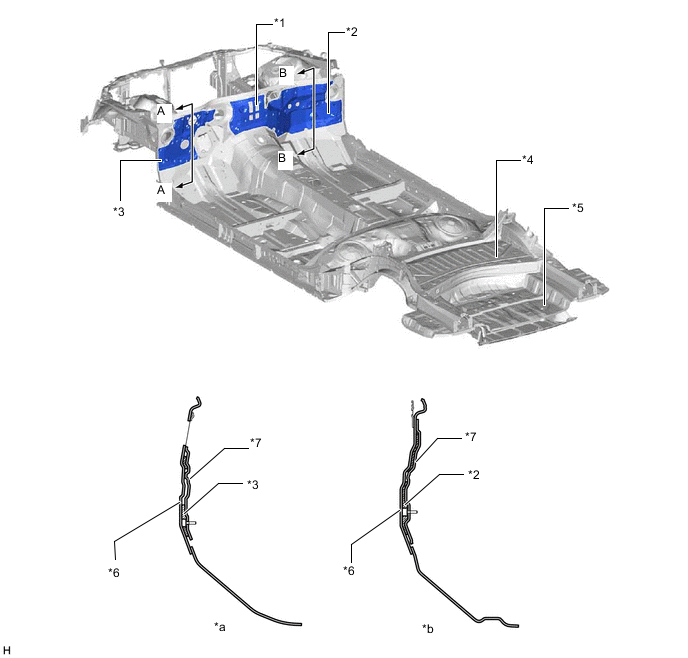
*1 Dash Panel to Cowl Brace *2 Dash Panel Insulator Sheet RH *3 Dash Panel Insulator Sheet LH *4 Center Floor Pan *5 Rear Floor Pan *6 Dash Panel *7 Rear Dash Panel - - *a A-A Cross Section *b B-B Cross Section -
-
The upper back reinforcement is connected with the longitudinal wall of the upper back panel and the closed cross-section is used for the reinforcement, thus suppressing vibration of the upper back panel to reduce chatter sounds caused by the speakers and muffled sounds.
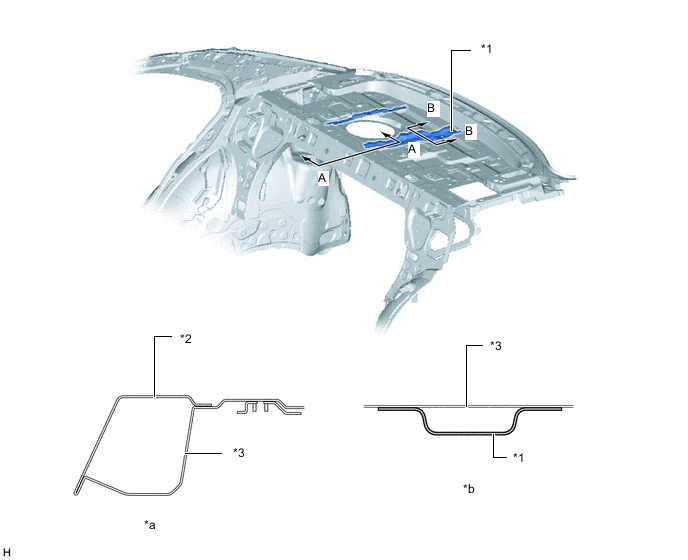
*1 Upper Back Reinforcement *2 Outer Upper Back Panel *3 Upper Back Panel - - *a A-A Cross Section *b B-B Cross Section -
To reduce the amount of road noise, engine noise, and droning sound that enters the cabin, the floor panel is coated with a floor silencer.
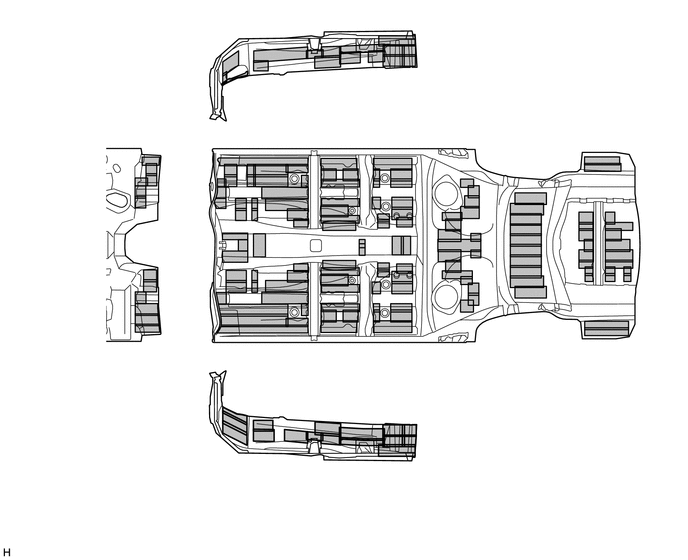

Floor Silencer - - -
Sound insulation materials are used in the body frame profile, thus dampening various noises which intrude from the outside of the vehicle to the inside of the cabin.
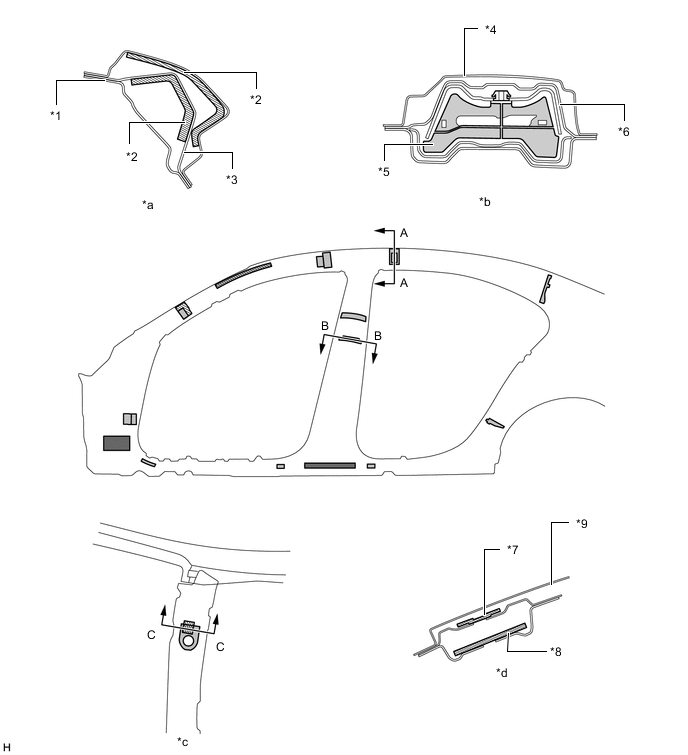
*1 Inner Roof Side Rail *2 No. 6 Pillar Pad *3 Roof Side Rail *4 Upper Center Body Pillar Reinforcement *5 No. 3 (No. 4) Pillar Pad *6 Outer Side Panel *7 No. 2 Roof Silencer Pad *8 No. 6 Roof Silencer Pad *9 Roof Panel - - *a A-A Cross Section *b B-B Cross Section *c Windshield Head Panel *d C-C Cross Section 
Damping Materials Sponges 
Foam Materials - - -
By reducing the level differences between the windshield glass and the roof panel, aerodynamic characteristics have been ensured and wind noise has been reduced.
-
The differences between the outside windshield molding and windshield glass, the thickness of the side outer panel and the corner shape of the side outer panel have been optimized to suppress wind noise.
-
A front fender side panel protector is provided between the side outer panel and the front fender panel. This prevents road noise from entering the cabin, and achieves superior quietness.
-
A hood to front fender seal is provided to suppress wind noise on the periphery of the front fender panel and hood sub-assembly.
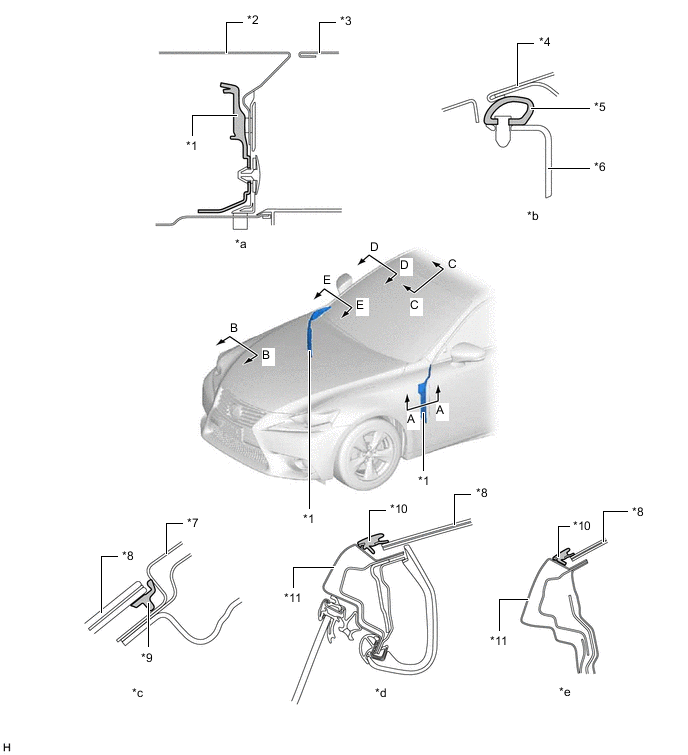
*1 Front Fender Side Panel Protector *2 Front Fender Panel *3 Outer Front Door Panel *4 Hood Sub-assembly *5 Hood to Front Fender Seal *6 Front Fender Panel *7 Roof Panel *8 Windshield Glass *9 Rain Gutter Molding *10 Outside Windshield Molding *11 Front Pillar - - *a A-A Cross Section *b B-B Cross Section *c C-C Cross Section *d D-D Cross Section *e E-E Cross Section - - -
Gap-fitting seals (front rear door window frame molding and No. 2 rear door weatherstrip) are provided on the periphery of the doors to reduce wind noise and road noise entering into the cabin.
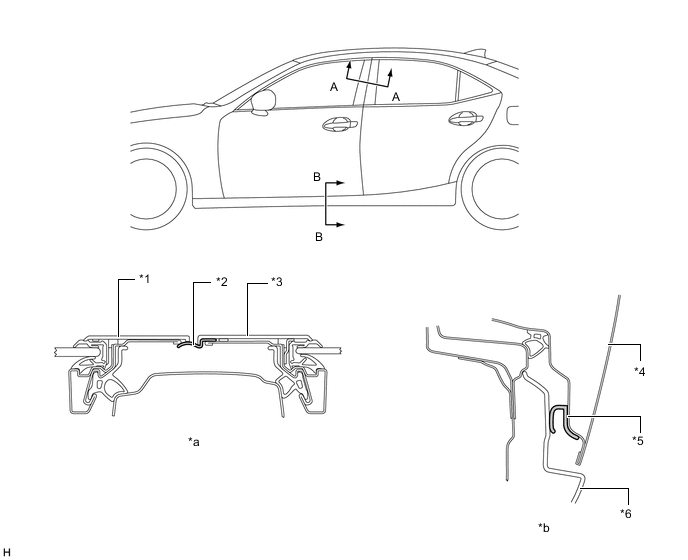
*1 Rear Front Door Window Frame Molding *2 Weatherstrip *3 Front Rear Door Window Frame Molding *4 Front Door Panel Sub-assembly *5 No. 2 Rear Door Weatherstrip *6 Body Rocker Panel Molding Assembly *a A-A Cross Section *b B-B Cross Section
-
-
Performance Damper
-
Performance damper have been adopted for 2WD models.
-
The performance damper absorb minor vibrations in the vehicle body, realizing excellent handling stability.
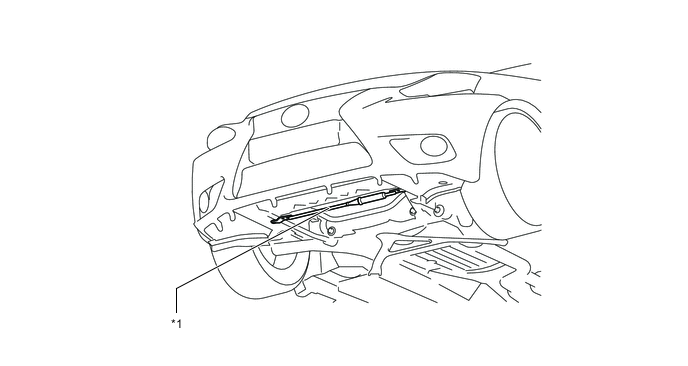
*1 Performance Damper - -
-
-