BRAKE CONTROL SYSTEM
-
SYSTEM CONTROL
-
The VSC and Cooperative Control with EPS*1 or VSC+*2 is used.
*1: Models for General countries
*2: Models for Europe
-
Brake Force Control on Roads with High and Low Friction Coefficient
-
Brake force increases in the high μ (friction coefficient) area of the road and the vehicle attempts to deviate rightward (in the high μ side). Therefore, the front wheels are steered to face the vehicle leftward, thus counteracting the moment generated in the rotating direction.
Figure 1. Concept Image
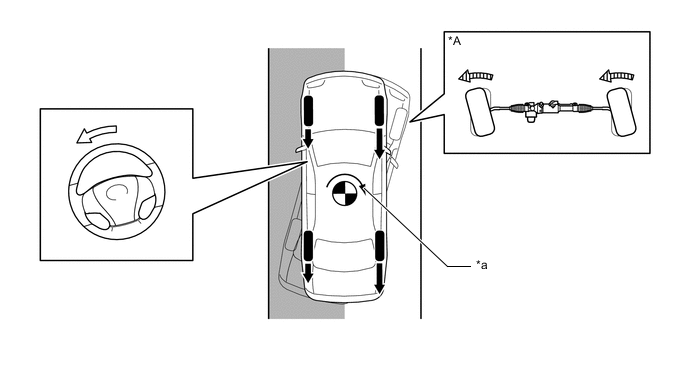
*A Models with Variable Gear Ratio Steering System - - *a Moment Generated due to Left and Right Brake Force Differences - - 
Brake Force 
Steering Torque Assist Direction 
Front Wheel Turning Angle Control Direction 
Slippery Surface
-
-
Acceleration Control on Roads with High and Low Friction Coefficient
-
Drive force increases in the high μ (friction coefficient) area of the road and the vehicle tilts leftward (in the low μ side). Therefore, the front wheels are steered to face the vehicle rightward, thus counteracting the moment generated in the rotating direction.
Figure 2. Concept Image
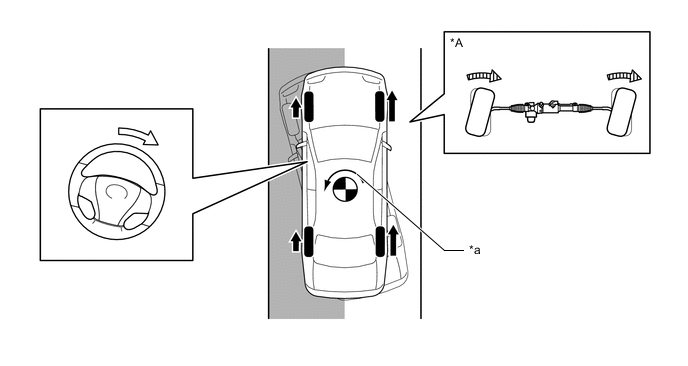
*A Models with Variable Gear Ratio Steering System - - *a Moment Generated due to Left and Right Drive Force Differences - - Drive Force Steering Torque Assist Direction Front Wheel Turning Angle Control Direction Slippery Surface Tech Tips
-
On models without the VGRS system, VDIM controls the vehicle to maintain a straight driving line.
-
On models with the VGRS system, high brake force and drive force can be maintained during control due to increase vehicle stability.
-
-
-
Oversteer Control
-
When the rear wheels are slipping laterally, both normal brake control and drive force control and steering control of the front wheels stabilize the vehicle movement. Stabilization moment is generated not only by brake force and drive force but also by steering control, thus stabilizing the vehicle without causing a feeling of extra speed reduction.
Figure 3. Concept Image
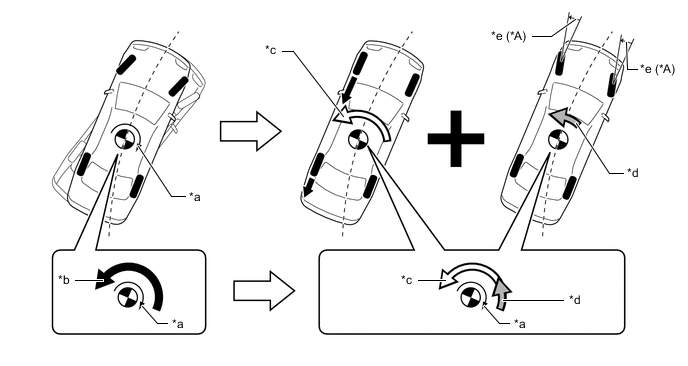
*A Models with Variable Gear Ratio Steering System - - *a Rear Wheel Skid Moment *b Moment Necessary to Suppress Oversteer *c Control Moment by Brake Control and Drive Force Control *d Control Moment by EPS System and VGRS System *e Front Wheel Turning Angle Control - -
-
-
Understeer Control
-
Brake force and drive force are controlled to generate force in the same direction as the turning direction, thus suppressing excessive lateral slippage. In addition, VGRS steering gear ratio is changed to suppress oversteer in the front wheels. Torque assist is applied in the return direction of the steering wheel, thus prompting the driver's steering operation.
Figure 4. Concept Image
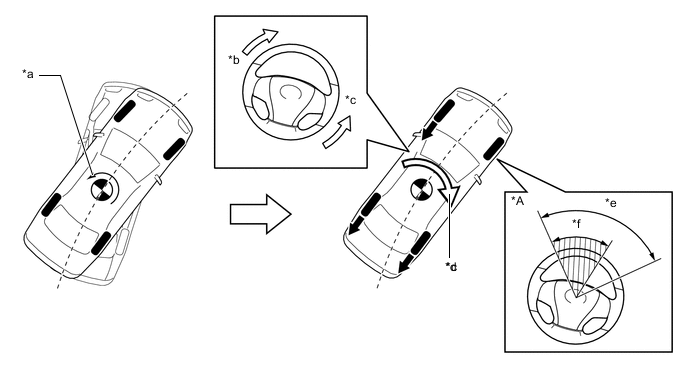
*A Models with Variable Gear Ratio Steering System - - *a Front Wheel Skid Moment *b Steering Torque Assist Direction to Inform of Front Wheel Skid *c Steering Torque Assist Direction to Prevent Excessive Turning *d Control Moment by Brake Control and Drive Force Control *e Driver's Steering Angle *f Actual Front Wheel Turning Angle
-
-
-