SEAT ASSEMBLY
-
FUNCTION
-
Front Seat
-
The driver seat uses a power pneumatic lumbar system. The system changes the expansion rate of the bladder by sending air to it and adjusts the lumbar support. The switch on the seat outer side shield is used for adjustment. The bladder shape and position have been optimized for European body size.
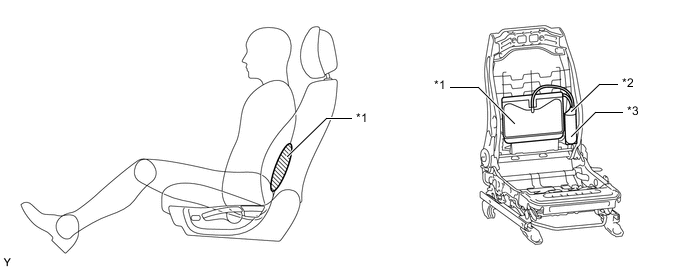
Text in Illustration *1 Bladder *2 Valve *3 Pump - - -
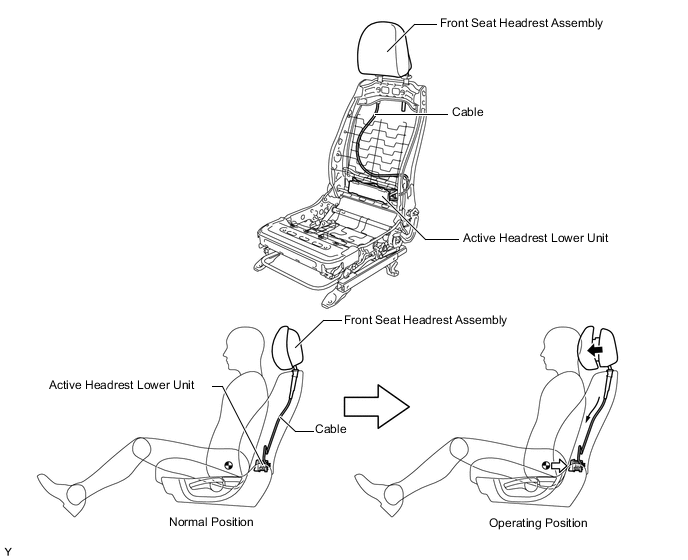
A seat frame structure and an active headrest mechanism have been provided, to help alleviate neck injury during a rear-end collision. The active headrest moves forward almost instantly in the event of a rear-end collision when the inertial force of the occupant's body is applied to the seatback, then the distance between the occupant's head and the headrest is reduced. The active headrest consists of an active headrest lower unit, a cable and a front seat headrest assembly. When the active headrest lower unit built into the seatback is pressed by the occupant's lumber region as the occupant's body slides down during a rear-end collision, the cable is pulled and the headrest is moved forward, reducing the distance between the occupant's head and the headrest.
-
-
Rear Seat
-
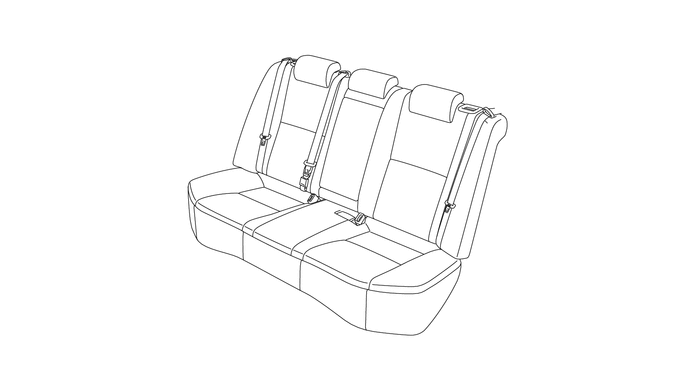
A 60/40 separate type seat with one-touch folding function is provided.
-
-
Child Restraint System
-
A child restraint seat anchor bracket sub-assembly for securing child seats has been provided behind the rear seat cushion assembly.
-
Child restraint seat tether anchor brackets are provided above the package tray trim on sedan models.
-
Child restraint seat tether anchor brackets are provided behind the rear seat back assembly on the wagon models.
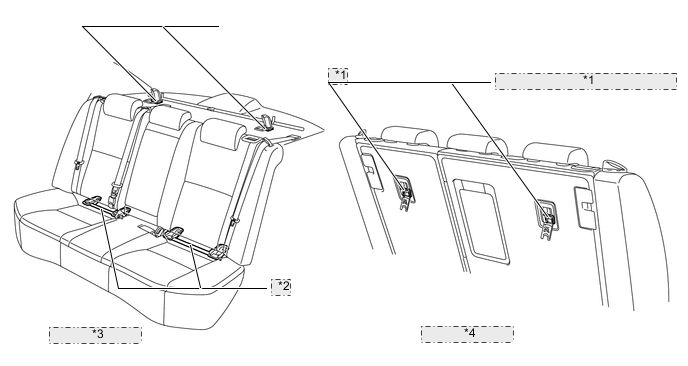
*1 Child Restraint Seat Tether Anchor Bracket *2 Child Restraint Seat Anchor Bracket Sub-assembly *3 for Sedan Models *4 for Wagon Models
-
-