BODY STRUCTURE DETAILS
-
FUNCTION
-
Impact Absorbing Structure for Frontal Collision
-
A structure that ensures collision energy absorption efficiency, dissipates impact, and minimizes cabin deformation during a frontal collision has been achieved.
-
The front body pillar inner and the roof side rail reinforcement inner are overlapped. The buckling force and the duration of buckling during a frontal collision have both been increased, thus suppressing the body deformation of the front door periphery.
-
The front body pillar reinforce lower is divided into two, and is structurally overlapped to suppress the deformation of the front door periphery by the load input from the tires during a frontal collision.
-
Rocker panel outer reinforcement made from ultra high-tensile strength steel has been added to suppress the deformation of the front door periphery by the load input from the tires during a frontal collision.
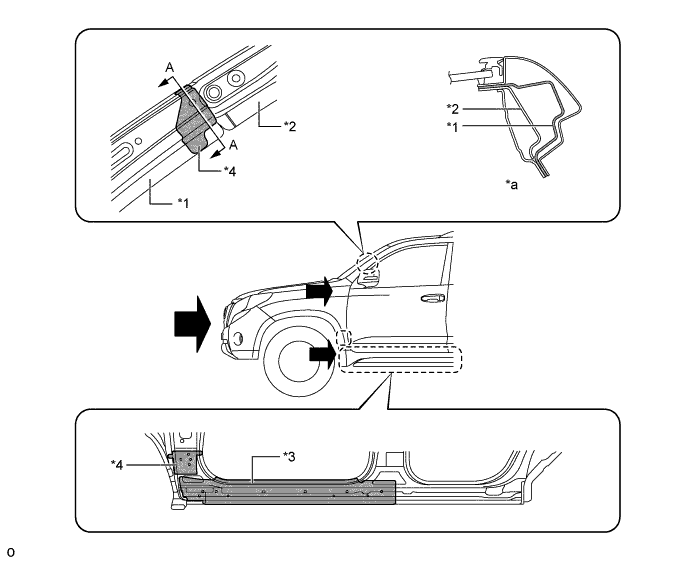
Text in Illustration *1 Front Body Pillar Inner *2 Roof Side Rail Reinforcement Inner *3 Rocker Panel Outer Reinforcement *4 Overlap Area *a A - A Cross Section - - 
Impact Energy - -
-
-
-
Impact Absorbing Structure for Side Collision
-
A structure that ensures collision energy absorption efficiency, dissipates impact, and minimizes cabin deformation during a side collision has been achieved.
-
High-tensile strength steel is used for the front body pillar, center body pillar, and roof side rail. In addition, ultra high-tensile strength steel is used for the center body pillar and rocker, thus ensuring high strength in a side collision.
-
Cross members are optimally positioned in the floor. Cross members efficiently deform to suppress the level of body intrusion during a side collision.
-
Closed cross section roof headlining reinforcement is provided to support the front body pillar, center body pillar, and roof side rail.
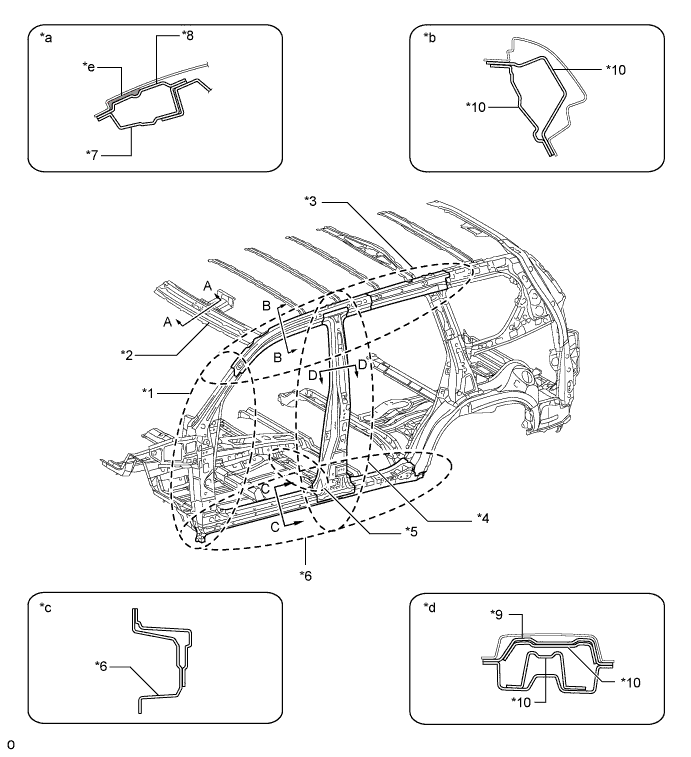
Text in Illustration *1 Front Body Pillar *2 Roof Headlining Reinforcement *3 Roof Side Rail Reinforcement *4 Center Body Pillar Reinforcement *5 Cross Member *6 Rocker Panel Reinforcement *7 Roof Headlining Lower *8 Roof Headlining Upper *9 Ultra High-tensile Strength Steel *10 High-tensile Strength Steel *a A - A Cross Section *b B - B Cross Section *c C - C Cross Section *d D - D Cross Section *e Closed Section - - -
Front floor to brace reinforcement is provided as a load transmission material, in order to efficiently transmit load input from the center pillar to the front floor cross member No.1 and floor cross member. In addition, a load transmission bracket is provided between the rocker inner reinforcement and chassis frame and input load from the rocker panel outer is transmitted to the frame, thus reducing the level of the body deformation.
-
An energy absorbing pad is provided inside the door panel and door trim to enhance the transmission efficiency of collision load and the reduction of the injury criterion on the passenger's lumbar.
-
A crushable structure is provided for the armrest, thus enhancing the reduction of the injury criterion on the passenger's lumbar.
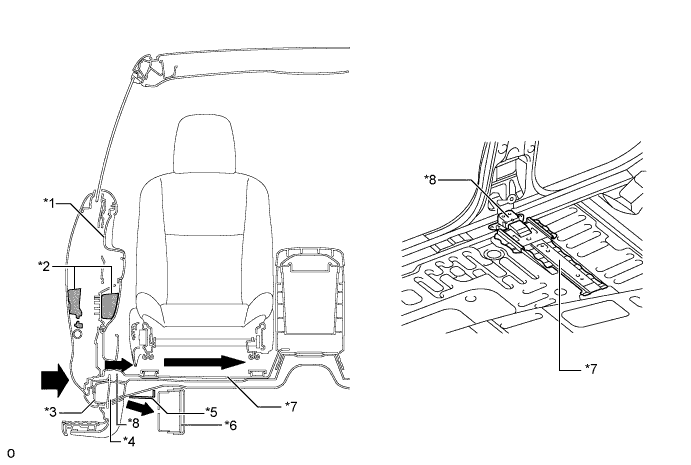
Text in Illustration *1 Door Trim *2 Energy Absorbing Pad *3 Rocker Panel Outer *4 Rocker Panel Inner *5 Load Transmission Bracket *6 Frame *7 Front Floor Cross Member No. 1 *8 Front Floor to Brace Reinforcement Impact Energy - -
-
-
A head impact protection structure is used. With this type of construction, if the occupant's head hits against the roof side rail and pillar in reaction to a collision, the inner panel of the roof side rail and pillar collapses to help reduce the impact.
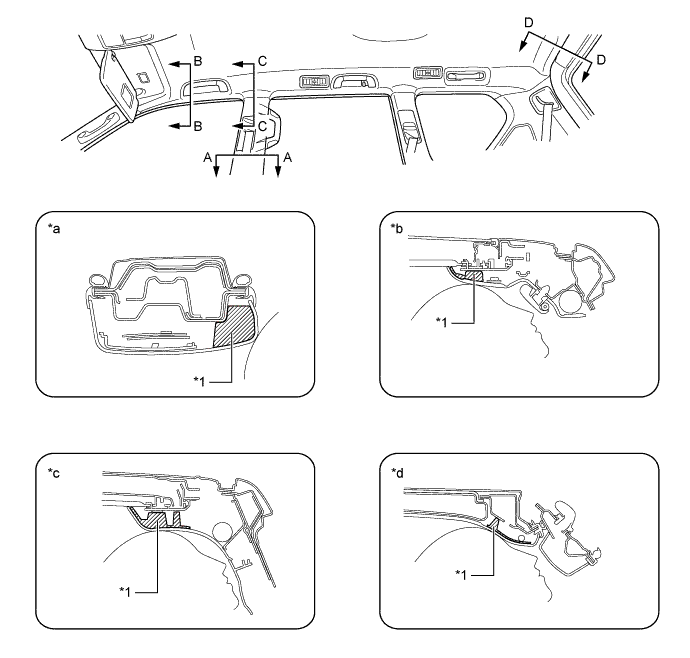
Text in Illustration *1 Energy Absorber - - *a A - A Cross Section *b B - B Cross Section *c C - C Cross Section *d D - D Cross Section
-
-
Lessening Pedestrian Head Injury
-
A vertical frame structure is provided in the hood to enable the hood as a whole to dampen the impact.
-
An impact absorption shape is used for the front section of the hood. In addition, the intersection between the hood outer panel and hood inner panel is positioned further rearward to lower the reaction force from the hood panel. This achieves a reduction of the injury criterion on the pedestrian's head in a collision with a pedestrian.
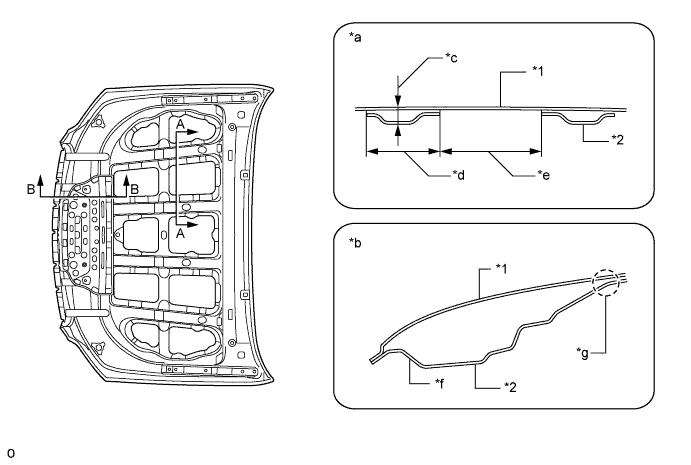
Text in Illustration *1 Hood Panel *2 Hood Inner Panel *a A - A Cross Section *b B - B Cross Section *c Optimized Bead Height *d Optimized Frame Pitch *e Optimized Frame Width *f Impact Absorption Shape *g Intersection between Hood Outer Panel and Hood Inner Panel - - -
An auxiliary catch integrated with a hood lock is used. The auxiliary catch is shaped to enable impact absorption. During a collision with a pedestrian, the auxiliary catch efficiently deforms to absorb the impact, with the aim of reducing the predicted impact to the pedestrian's head.
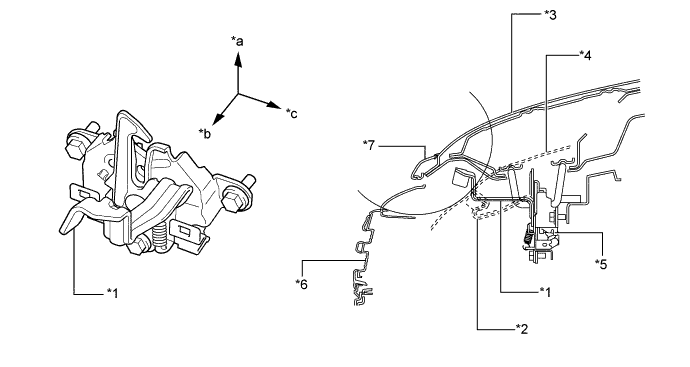
Text in Illustration *1 Auxiliary Catch *2 Auxiliary Catch (after Impact Absorption) *3 Hood Panel *4 Hood Panel (after Impact Absorption) *5 Hood Lock *6 Radiator Grille *7 Hood Molding - - *a Upside *b Front side *c Outside - - -
A collision stopper has been located to allow the hood hinge arm to rotate further downwards than the fully closed position without any interference. This enables the hood hinge arm to rotate downwards when a pedestrian collides with the hood panel, thus reducing collision energy and ensuring pedestrian protection performance.
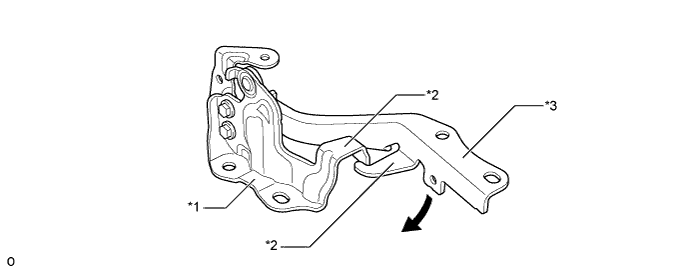
Text in Illustration *1 Hood Hinge Bracket *2 Collision Stopper *3 Hood Hinge Arm - - -
Load reduction holes and fold lines are provided on the front and rear walls of the hood lock hook reinforcement to optimize strength. During a collision with a pedestrian, a space for the pedestrian's head to stroke is ensured, with the aim of reducing the predicted impact to the pedestrian's head.
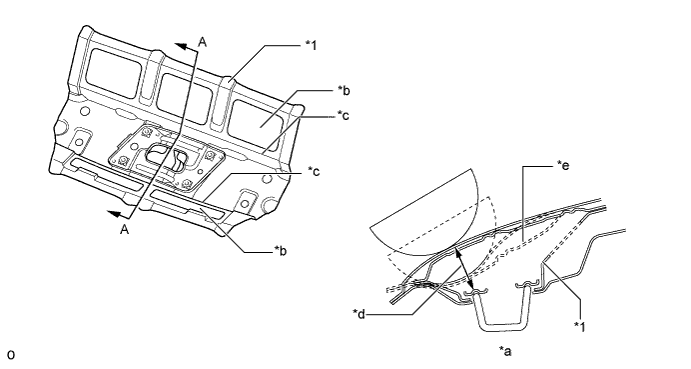
Text in Illustration *1 Hood Lock Hook Reinforcement - - *a A - A Cross Section *b Load Reduction Holes *c Fold Line *d Ensured Stroke *e After Impact Absorption - - -
The cowl panel has an open structure. In the event of a collision with a pedestrian, this structure helps lessen the impact inflicted by the cowl to the head of the pedestrian.
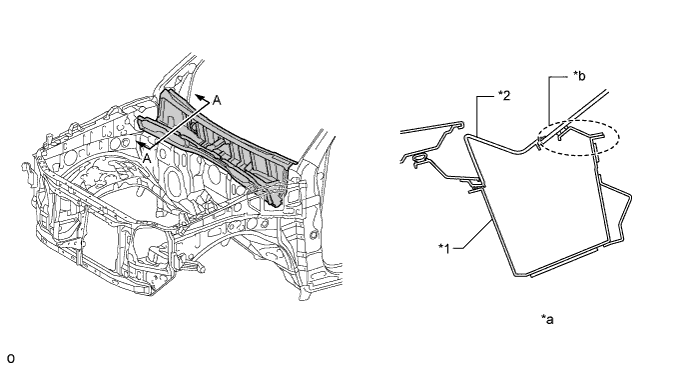
Text in Illustration *1 Cowl Panel *2 Cowl Top Ventilator Louver *a A - A Cross Section *b Open Structure -
Fender brackets (fender apron reinforcement plate, front fender apron reinforcement rear and front fender apron reinforcement) are used in the joint portion of the front fender. The height of the fender bracket and the gap between the fender bracket and the fender have been optimized. Also, fold points are provided on the fender brackets. Therefore, during a collision with a pedestrian, the fender brackets absorb impact energy, with the aim of reducing the predicted impact to the pedestrian's head.
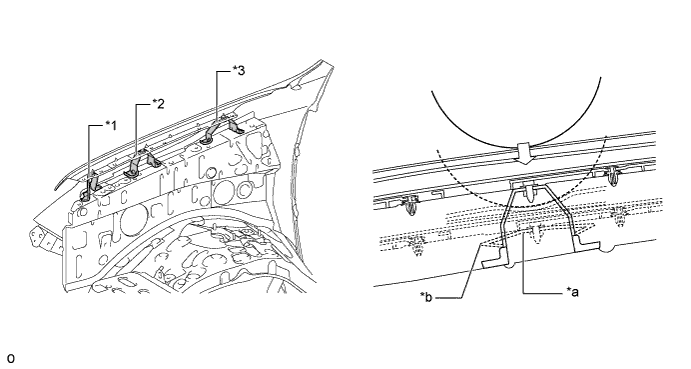
Text in Illustration *1 Fender Apron Reinforcement Plate *2 Front Fender Apron Reinforcement Rear *3 Front Fender Apron Reinforcement - - *a After Impact Absorption *b Fold Point -
A flexible material is used for the front fender main seal. Also, the front fender main seal is structured to slide itself between other components as an impact load is applied to it. Therefore, the reaction force applied by the front fender main seal during a collision with a pedestrian is reduced, with the aim of reducing the predicted impact to the pedestrian's head.
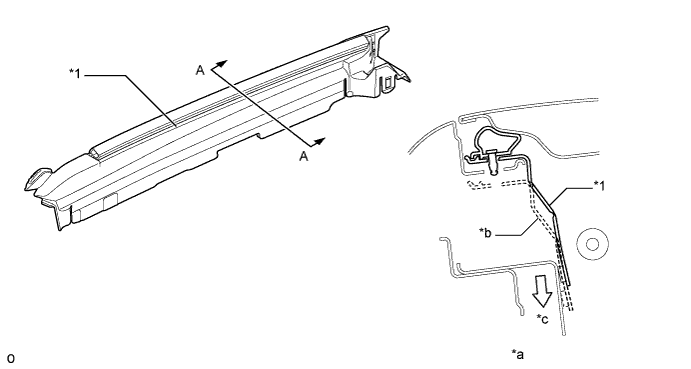
Text in Illustration *1 Front Fender Main Seal - - *a A - A Cross Section *b After Collision *c Slide between Components - - -
The cowl top ventilator louver is structured to be easily broken during a collision with a pedestrian's head. Also, the thickness of the sheets differs to control deformation during a collision. Therefore, the cowl louver maintains the necessary rigidity, with the aim of reducing the predicted impact to the pedestrian's head.
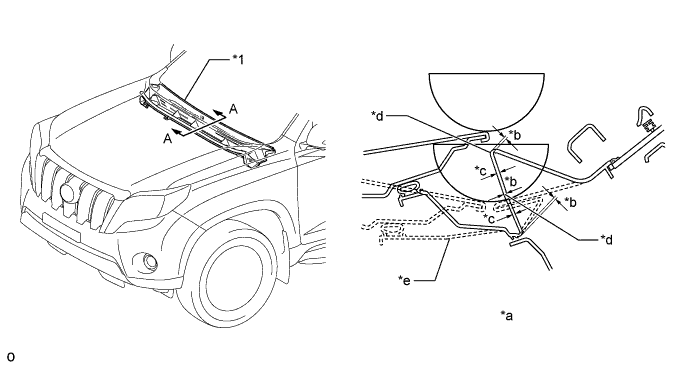
Text in Illustration *1 Cowl Top Ventilator Louver - - *a A - A Cross Section *b Low Thickness *c High Thickness *d Fold Point *e After Impact Absorption - - -
By locating the windshield wiper motor on the lower part of the wiper link, the stroke to reduce impact energy from the top of the hood is ensured.
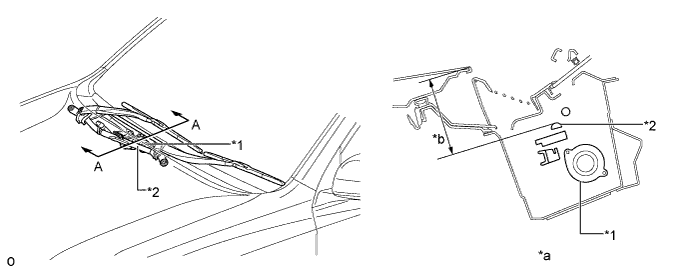
Text in Illustration *1 Windshield Wiper Motor *2 Windshield Wiper Link *a A - A Cross Section *b Stroke Space
-
-
Aerodynamics
-
A front wheel opening extension pad No. 1 and rocker panel molding protector No. 1 are provided, enhancing aerodynamic characteristics by adjusting the airflow to the tires and the wheelhouse section.
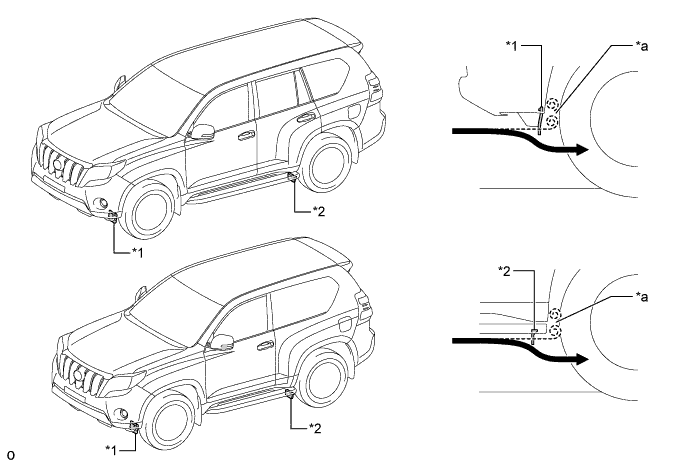
Text in Illustration *1 Front Wheel Opening Extension Pad No. 1 *2 Rocker Panel Molding Protector No. 1 *a Air Flow without Front Wheel Opening Extension Pad No. 1 - - Air Flow - - -
A front spoiler is provided, enhancing aerodynamic characteristics by adjusting the underfloor airflow (on models for Europe and destination packages for South Africa only).
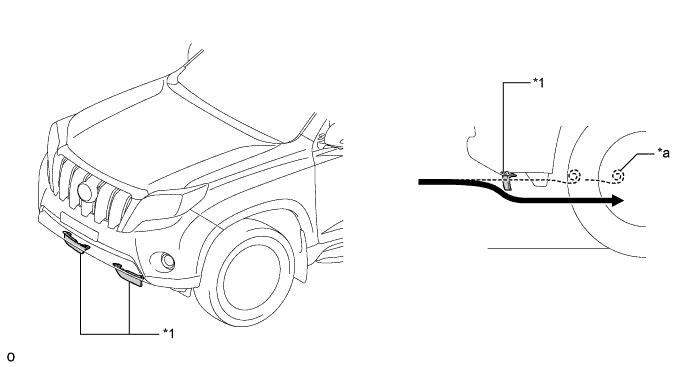
Text in Illustration *1 Front Spoiler - - *a Air Flow without Front Spoiler - - Air Flow - - -
A rear bumper protector is provided to enhance aerodynamic characteristics by adjusting the airflow without sending it from the rear section of the rear tires toward the rear bumper.
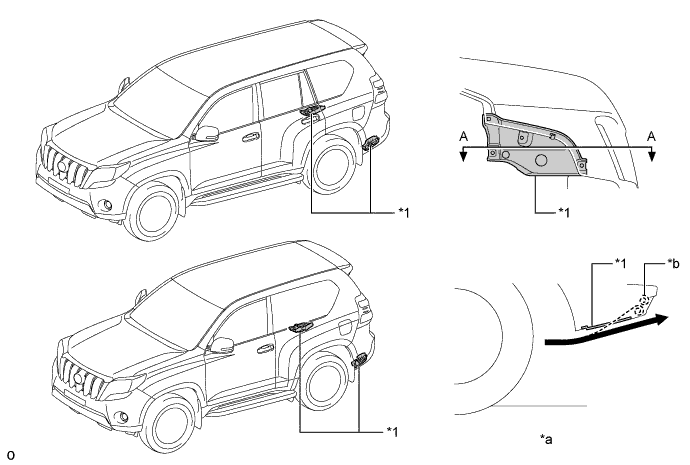
Text in Illustration *1 Rear Bumper Protector - - *a A - A Cross Section *b Air Flow without Rear Bumper Protector Air Flow - - -
A rear spoiler is provided to enhance aerodynamic characteristics by suppressing the turbulence of airflow and by making the air flow rearward.
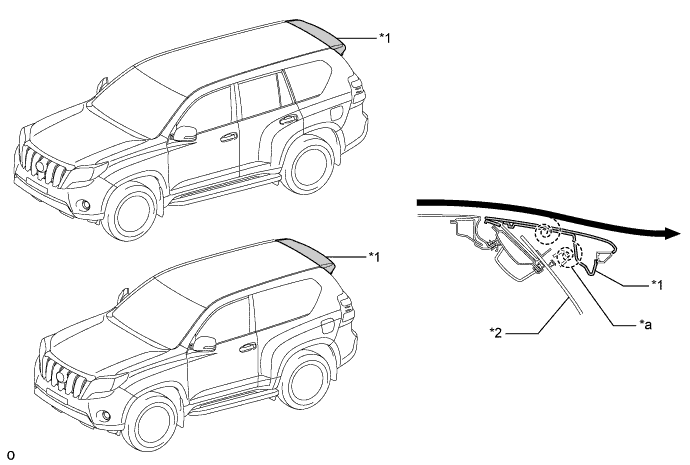
Text in Illustration *1 Rear Spoiler *2 Back Door Glass *a Air Flow without Rear Spoiler - - Air Flow - - -
A radiator side deflector is provided to enhance aerodynamic characteristics by reducing vortices in air flowing from the radiator grille.
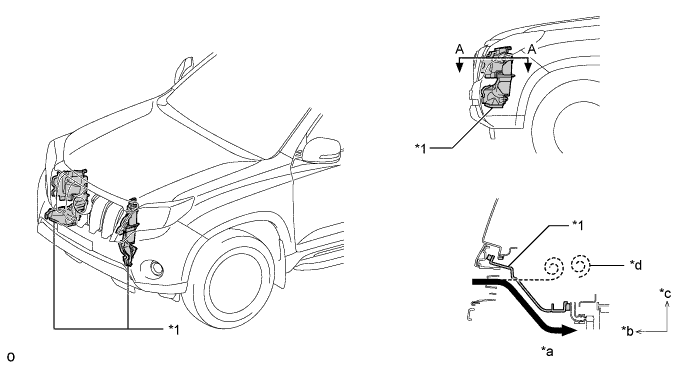
Text in Illustration *1 Radiator Side Deflector - - *a A - A Cross Section *b Front Side *c Outside *d Air Flow without Radiator Side Deflector Air Flow - - -
The corners of front bumper are protruded to adjust the side airflow of the front tires and enhance aerodynamic characteristics.
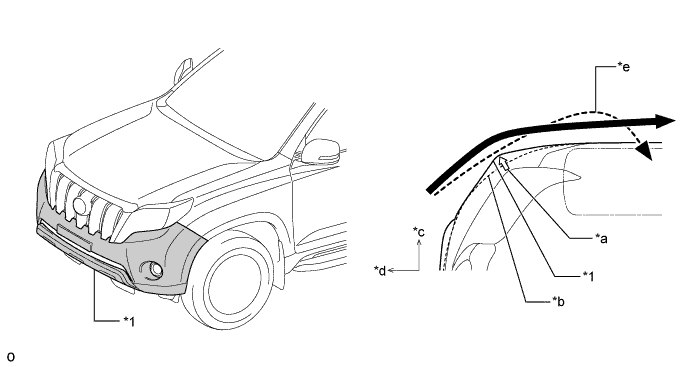
Text in Illustration *1 Front Bumper - - *a Jut *b Conventional Front Bumper *c Outside *d Front Side *e Air Flow with Conventional Front Bumper - - Air Flow - - -
An aero stabilizing fin is provided on the outer rear view mirror assembly and a type of aerodynamic technology known as a vortex generator is used for the fin. Small vortices are purposely generated in the airflow to push the vehicle from the left and right sides, achieving excellent operation stability.
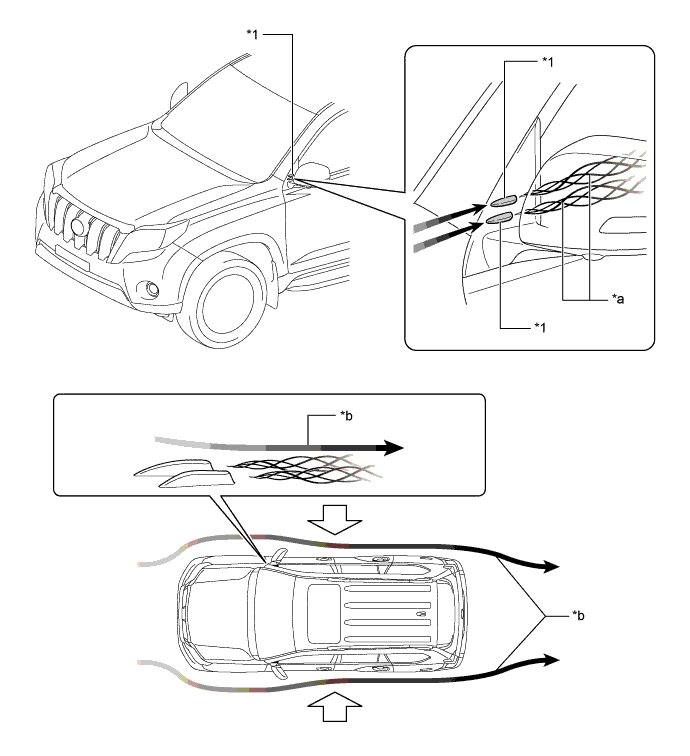
Text in Illustration *1 Aero Stabilizing Fin - - *a Generated Vortex *b Main Airflow -
An air-kick shape is provided on the lens surface of the rear combination light assembly. The air-kick shape cuts and sends airflow rearward to suppress vortices, and air resistance is reduced by the airflow adjustment in order to smooth the airflow.
-
An aero stabilizing fin is provided on the lens surface of the rear combination light assembly and a type of aerodynamic technology known as a vortex generator is used for the fin. Small vortices are purposely generated in the airflow to push the vehicle from the left and right sides, achieving excellent operation stability.
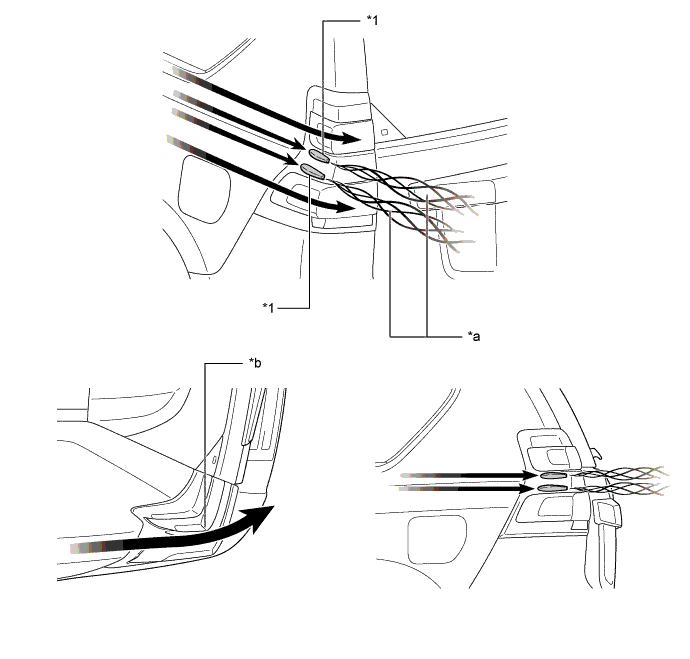
Text in Illustration *1 Aero Stabilizing Fin - - *a Generated Vortex *b Air-kick Shape
-
-
-
CONSTRUCTION
-
High-tensile Strength Steel
-
High-tensile strength steel and ultra high-tensile strength steel are used in order to achieve excellent body rigidity and a lightweight body.
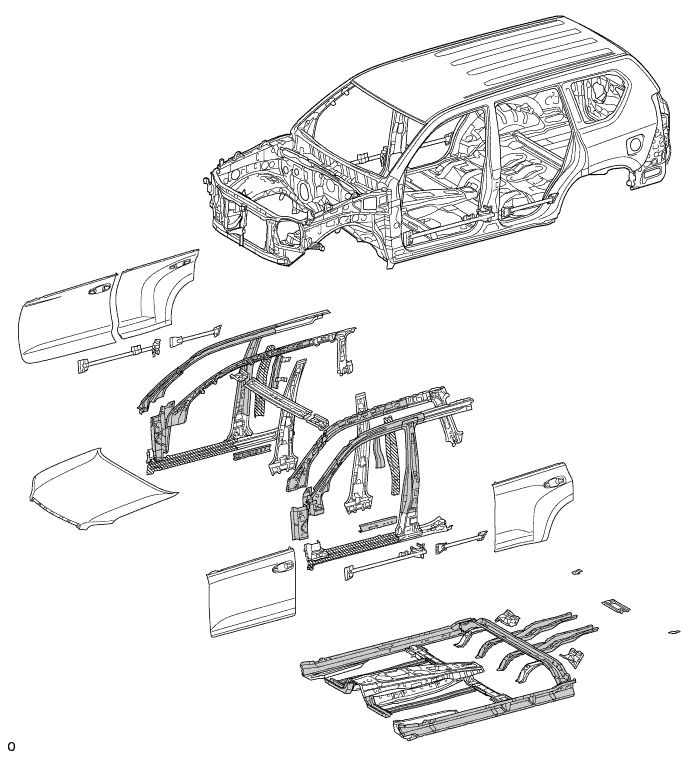
Text in illustration (5-door Models:) 
High-tensile Strength Steel 
Ultra High-tensile Strength Steel 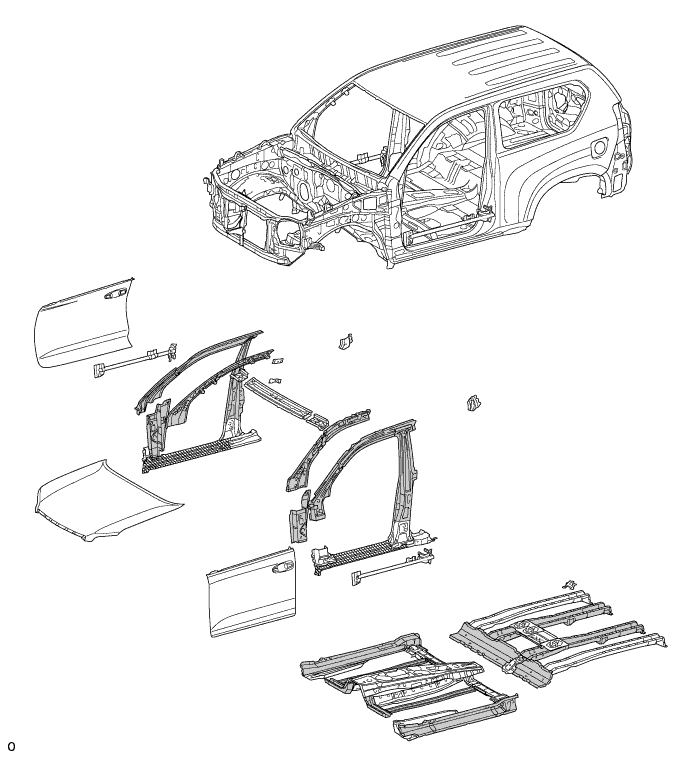
Text in illustration (3-door Models:) High-tensile Strength Steel Ultra High-tensile Strength Steel
-
-
Anti-corrosion Sheet Steel
-
Anti-corrosion sheet steel is used as in the following illustration:
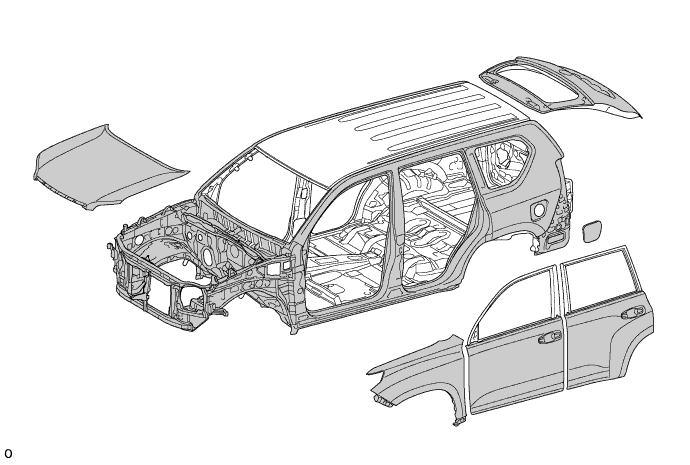
Text in illustration (5-door Models:) Anti-corrosion Sheet Steel - - 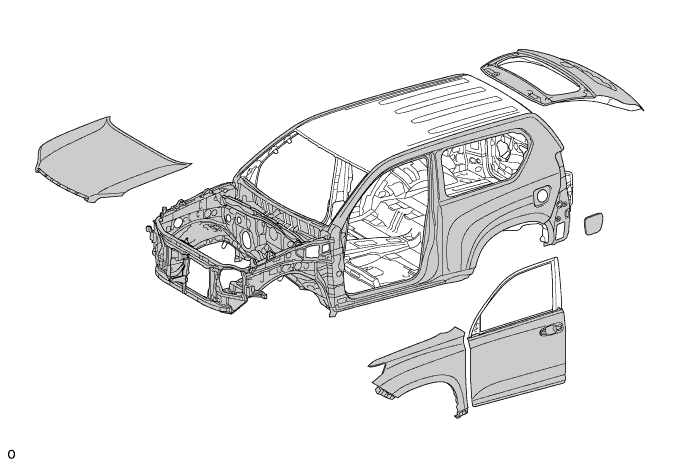
Text in illustration (3-door Models:) Anti-corrosion Sheet Steel - -
-
-
Anti-chipping Application and Rust-resistant Performance
-
A large resin rocker panel molding is used. Mold-in-color is used for the rocker panel molding on 5-door models. An arch protector is used to protect the arch portion of the rear wheelhouse. Also, anti-chipping tape is used on the rocker panel molding on 3-door models. These features achieve a high level of chip resistance.
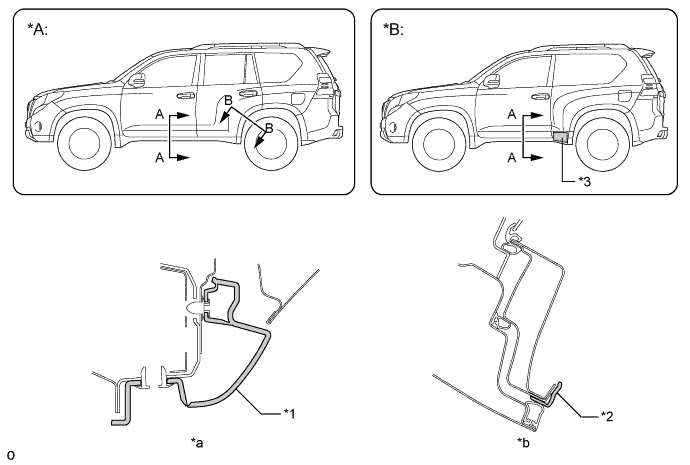
Text in Illustration *A 5-door Models *B 3-door Models *1 Rocker Panel Molding *2 Arch Protector *3 Anti-chipping Tape - - *a A - A Cross Section *b B - B Cross Section -
On models with a side step, a side step protects the paint on the outer panels from flying stones and road debris.
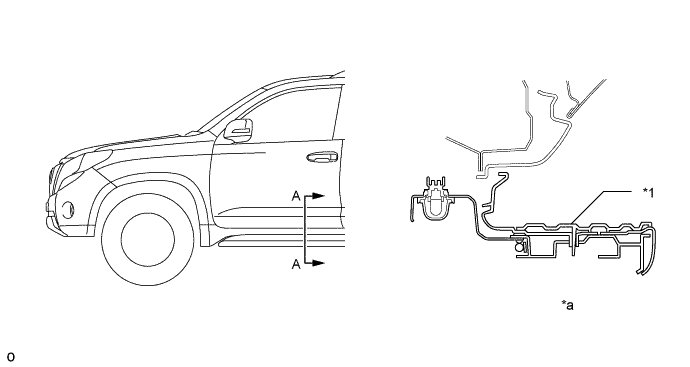
Text in Illustration *1 Side Step - - *a A - A Cross Section - - -
On models without a side step, Polyvinyl Chloride (PVC) anti-chipping coating is applied to the door panels to protect the paint on the outer panels from flying stones and road debris.
-
Soft anti-chipping primer is applied to the front of the hood to help prevent rust.
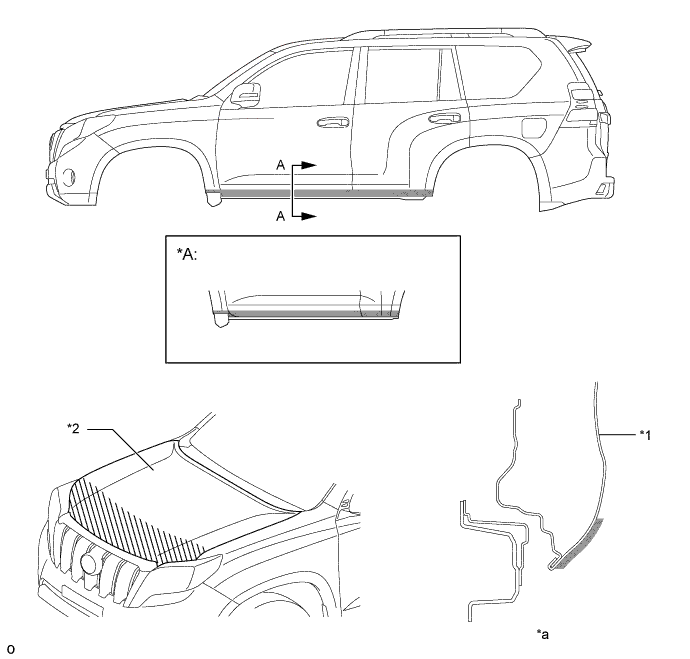
Text in Illustration *A 3-door Models - - *1 Door Panel *2 Hood *a A - A Cross Section - - 
PVC Anti-chipping Coating Soft Anti-chipping Primer -
Wax is applied to edge of the door lower portion, door hinge and fuel filler lid hinge to improve rust-resistant performance. Sealer is applied to hemmed portions of the hood panel and door panels.
-
Under coating is applied to underside of the body, inside the wheel housing and other parts that are susceptible to stone chipping damage, thus improving the rust-resistant performance of these areas.
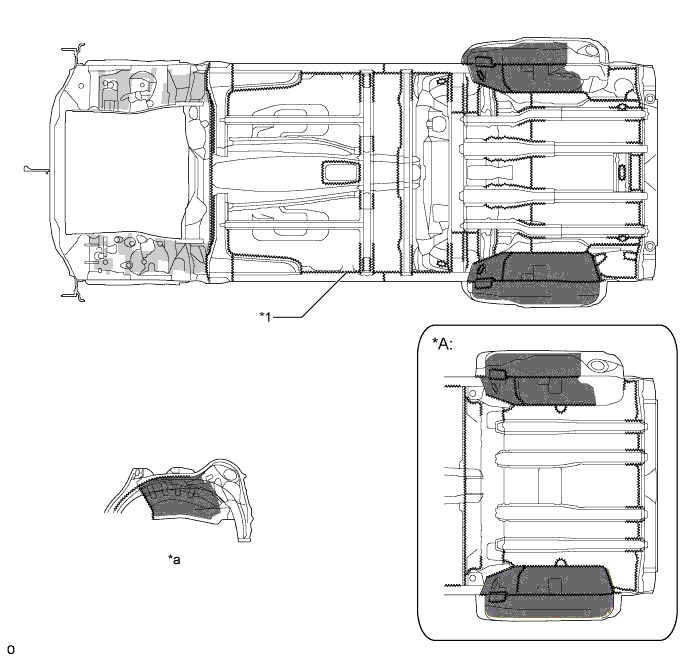
Text in Illustration *A 3-door Models - - *1 Edge Seal - - *a Rear Wheel House - - Under Coating Area Under Coating Area (Thick Coating)
-
-
Sound Absorbing and Vibration Damping Materials
-
A hood insulator is provided on the rear of the hood panel. Provision of air layers achieves excellent sound insulation performance.
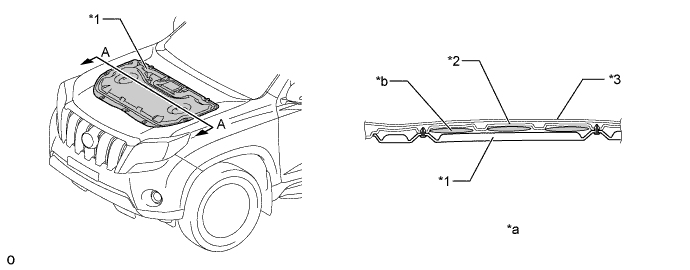
Text in Illustration *1 Hood Insulator *2 Hood Inner Panel *3 Hood Panel - - *a A - A Cross Section *b Air Layer -
A dash panel insulator outer is provided. This reduces the engine noise leaking into and out of the cabin.
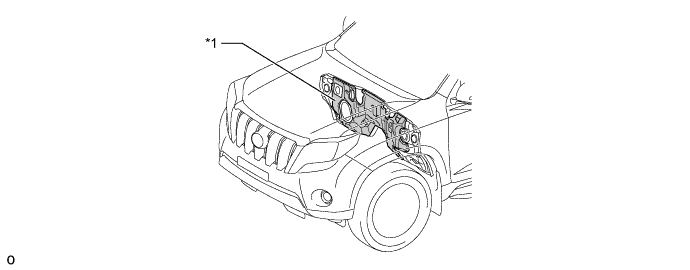
Text in Illustration *1 Dash Panel Insulator Outer - - -
A dash panel insulator is provided. This insulates and absorbs the engine noise to reduce the engine noise leaking into the cabin.
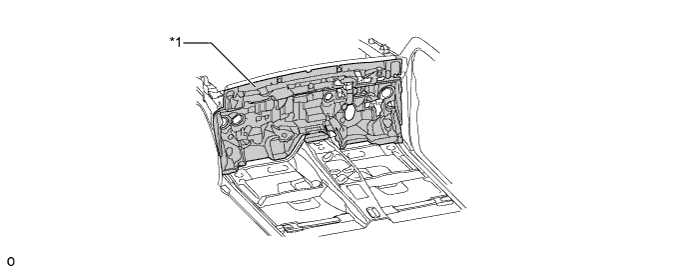
Text in Illustration *1 Dash Panel Insulator - - -
To reduce the amount of road noise, engine noise, and droning sound that enter the cabin, a floor panel is coated with a floor silencer.
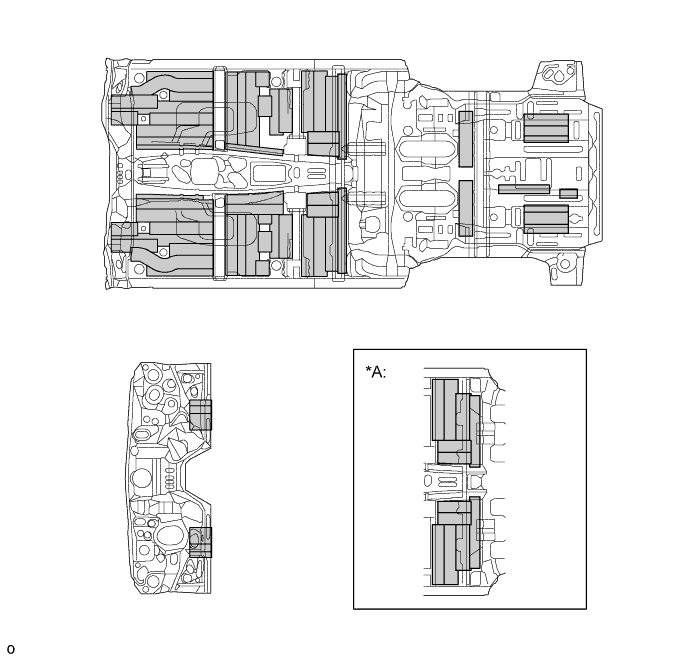
Text in Illustration *A 3-door Models - - Floor Silencer - - -
All the locations of sound insulation and absorption materials in the cabin have been optimized, thus creating a quiet drive.
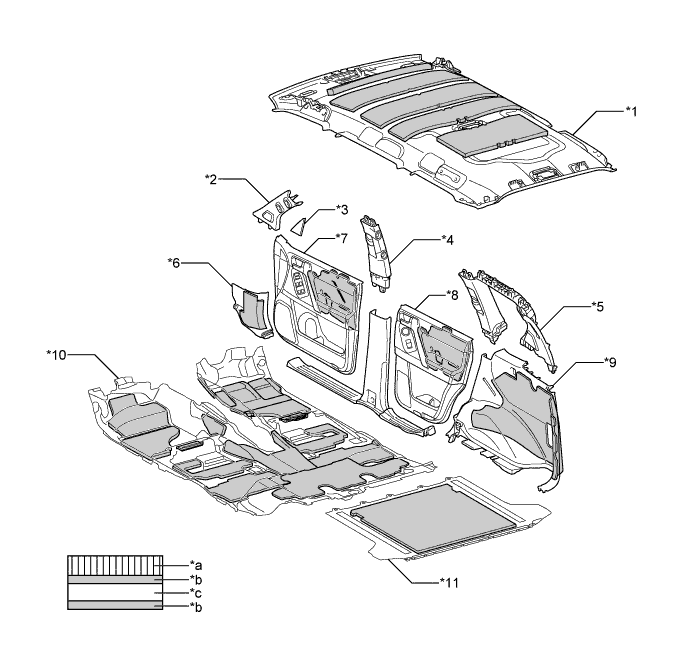
Text in Illustration *1 Roof Headlining and Silencer *2 Front Pillar *3 Front Door Lower Frame Bracket Garnish *4 Center Pillar *5 Quarter Trim and Silencer *6 Cowl Side Trim and Silencer *7 Front Door Trim and Silencer *8 Rear Door Trim and Silencer *9 Deck Side Trim and Silencer *10 Floor Carpet and Silencer *11 Rear Floor Carpet and Silencer - - *a Velour (Needle-punched Nonwoven) *b Insulation Layer *c Absorption Layer - - -
A foam type sound insulation material is used in the body frame profile, thus reducing the various noises which intrude from the outside of the vehicle to the inside of the cabin.
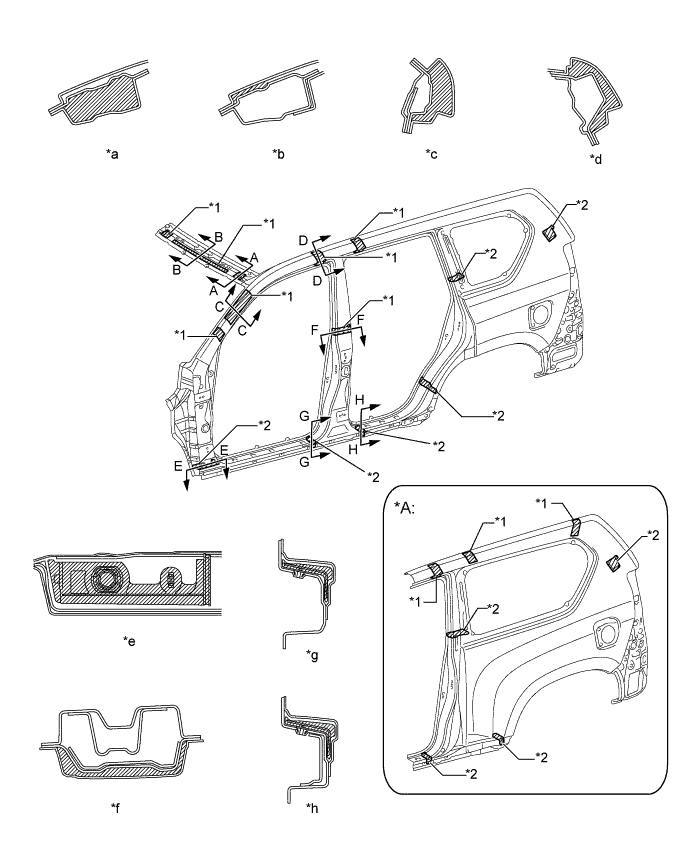
Text in Illustration *A 3-door Models - - *1 Foamed Material *2 Solid Foamed Material *a A - A Cross Section *b B - B Cross Section *c C - C Cross Section *d D - D Cross Section *e E - E Cross Section *f F - F Cross Section *g G - G Cross Section *h H - H Cross Section -
On models with acoustic layer laminated windshield glass, an acoustic layer laminated windshield is provided to reduce engine noise and road noise entering the cabin.
-
A reduction in level differences in the windshield glass molding and the rain gutter molding enhances wind noise reduction.
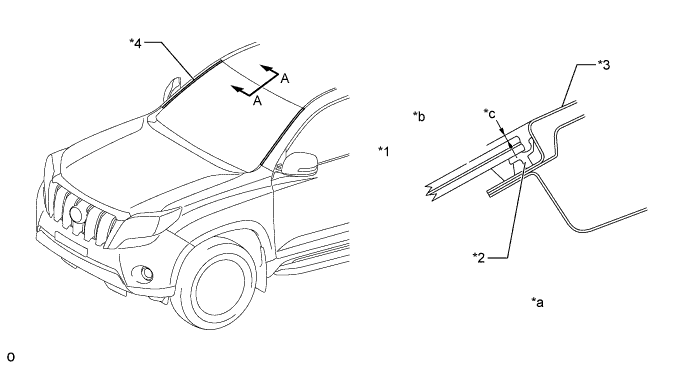
Text in Illustration *1 Windshield Glass *2 Solid Foamed Material *3 Roof Panel *4 Rain Gutter Molding *a A - A Cross Section *b Acoustic Layer *c Minimal Level Difference - - -
A front bumper cover lower and front spoiler* are provided and the underfloor airflow is adjusted to enhance wind noise reduction.
-
*: Models for Europe and destination packages for South Africa only
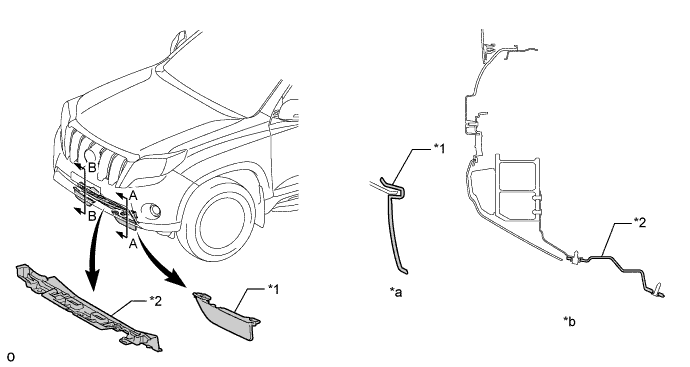
Text in Illustration *1 Front Spoiler *2 Front Bumper Cover Lower *a A - A Cross Section *b B - B Cross Section -
-
-
Parts with Low Repair Cost
-
A crush box structure is used to reduce body deformation during minor collisions. A structure with screw connections is provided for the front bumper extension sub-assembly No. 2 (crush box) to enable easy removal and installation, achieving simpler servicing operation and repair cost reduction.
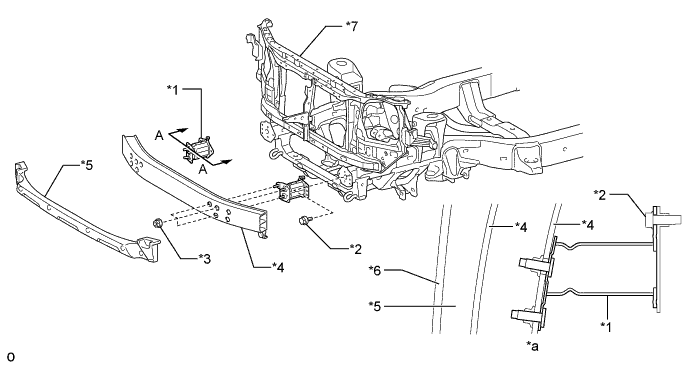
Text in Illustration *1 Front Bumper Extension Sub-assembly No. 2 (Crush Box) *2 Bolt *3 Nut *4 Front Bumper Reinforcement *5 Front Bumper Energy Absorber *6 Front Bumper Cover *7 Radiator Support Sub-assembly - - *a A - A Cross Section - -
-
-