EMISSION CONTROL SYSTEM DETAILS
-
FUNCTION OF MAIN COMPONENTS
-
The main components of the emission control system are as follows:
Component Function Exhaust Emission System ECM Determines an optimal fuel injection volume based on the signals from various sensors. TWC Reduces CO, HC and NOx in the exhaust gas. Oxygen Sensor Detects the oxygen concentration in the exhaust emissions by measuring the electromotive force generated in the sensor itself. For details, see the 2TR-FE Engine Control. Air Fuel Ratio Sensor Air Injection System Air Pump Assembly Uses a built-in DC motor to supply air to the air injection control valve. Air Injection Control Valve Introduces air that is pumped by the electric air pump into the exhaust manifold. Air Injection Control Driver -
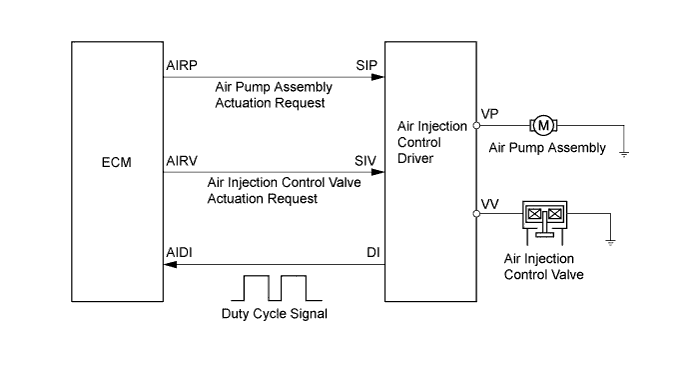
Activated by the ECM, the air injection driver actuates the electric air pump and the air injection control valve.
-
Detects an input-output circuit failure at the air injection driver and transmits it to the ECM.
Air Pressure Sensor* This sensor uses built-in semiconductors to detect the pressure inside the air switching valve. ECM -
Controls the air injection system in accordance with signals from the crankshaft position sensor, engine coolant temperature sensor, mass air flow meter and air pressure sensor.
-
Receives a failure detection signal from the air injection driver and stores a corresponding DTC in memory.
Evaporative Emission Control ECM Sends signals to the VSV (for EVAP) to control the purge flow. Charcoal Canister Sub-assembly Contains activated charcoal to absorb the fuel vapor created in the fuel tank. VSV (for EVAP) Opens in accordance with the signals from the ECM when the system is purging, in order to send the fuel vapor that was absorbed by the charcoal canister into the intake manifold. -
*: Models for China
-
-
-
FUNCTION
-
Air Injection System
-
To ensure the proper warm-up performance of the Three-Way Catalytic converters (TWCs) after starting a cold engine, an air injection system is used.
-
This system consists of an air pump assembly, an air injection control valve, and an air injection control driver.
-
The ECM estimates the amount of air injected to the TWCs based on signals from the mass air flow meter in order to regulate the air injection time.
-
-
-
CONSTRUCTION
-
Three-Way Catalytic converter (TWC)
-
TWCs are provided in the exhaust manifold and front exhaust pipe.
-
This TWC enables improved exhaust emissions by optimizing the cell density and the wall thickness.
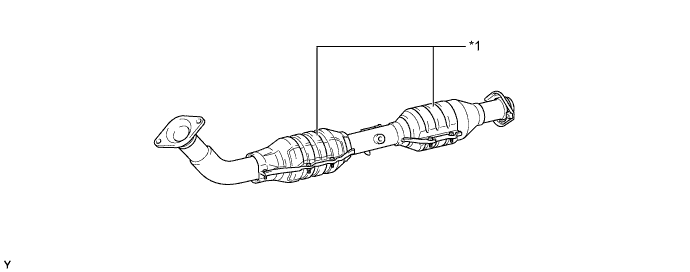
Text in Illustration *1 TWC - -
-
-
Air Pump Assembly
-
An air pump assembly consists of a DC motor, an impeller and an air filter.
-
DC motor operation is controlled by the ECM via an air injection control driver. The motor supplies air into an air injection control valve through the impeller.
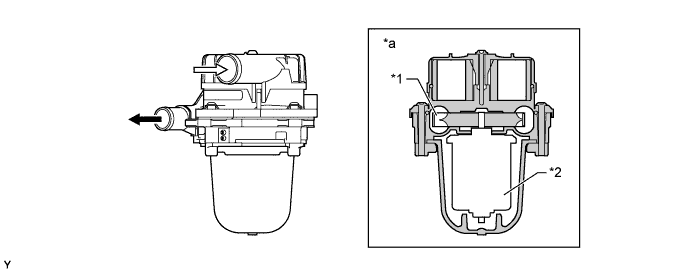
Text in Illustration *1 Impeller *2 DC Motor *a Cross Section - - 
To Air Injection Control Valve 
From Air Inlet
-
-
Air Injection Control Valve
-
An air injection control valve consists of an air switching valve that switches the air flow and a reed valve that restricts the exhaust flow to one direction.
-
The air switching valve is a solenoid valve that is actuated by the air injection control driver.
-
When the air switching valve turns on, an air injection pipe, which is provided in the exhaust manifold, directs the air from the air pump assembly to the exhaust port.
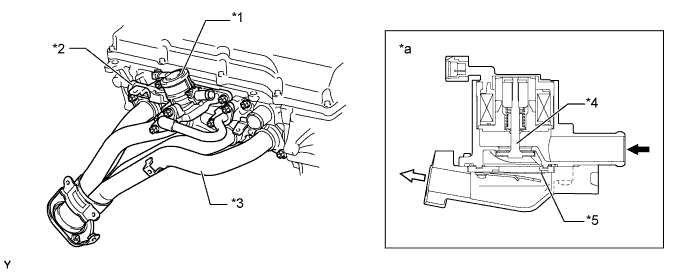
Text in Illustration *1 Air Injection Control Valve *2 Air Injection Pipe *3 Exhaust Manifold *4 Air Switching Valve *5 Reed Valve - - *a Air Injection Control Valve Cross Section - - From Air Pump Assembly To Air Injection Pipe
-
-
Air Pressure Sensor (Models for China)
-
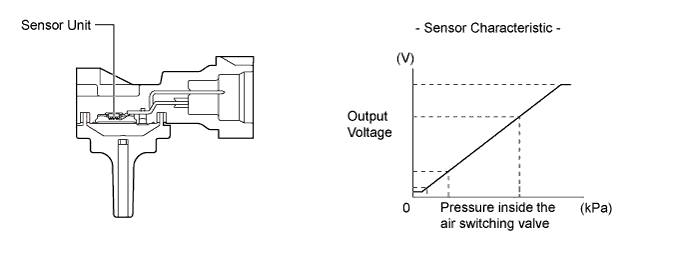
The air pressure sensor consists of a semiconductor which utilizes the characteristics of a silicon chip that changes its electrical resistance when pressure is applied to it. The sensor converts the pressure inside the air switching valve into an electrical signal, and sends it to the ECM in an amplified form.
-
-
-
OPERATION
-
Air Injection Control Driver
-
A semiconductor type air injection control driver is used. Activated by the ECM, this driver actuates the air pump assembly and the air injection control valve.
-
The air injection control driver also detects failures in the input and output circuits of the air injection driver and transmits the failure status to the ECM via duty cycle signals.
DI Terminal Output Condition AIRP AIRV Output (Duty Cycle Signal) Open circuit in line between AIDI and DI terminals. - - 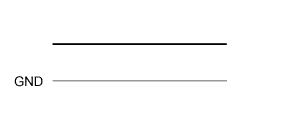
Failure in line between ECM terminals and air injection control driver. - - Output failure at air injection control driver. (Failure in air pump assembly actuation circuit) - - 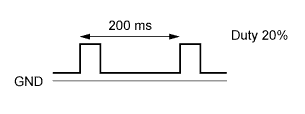
Output failure at air injection control driver. (Failure in air injection control valve actuation circuit) - - 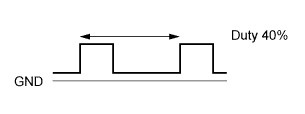
Overheat failure of air injection control driver. - - 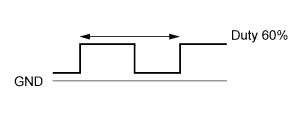
Normal On On 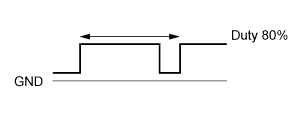
Off Off 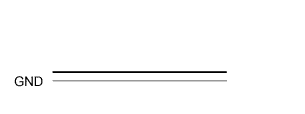
On Off Off On
-
-
Evaporative Emission Control System
-
Based on the signals from various sensors, the ECM opens and closes the VSV (for EVAP). Thus, it controls the purge flow of evaporative emissions (HC) in the charcoal canister sub-assembly in accordance with the engine conditions.
-
-