REAR VIEW MIRROR
-
GENERAL
-
During nighttime driving, if a large difference in intensity exists between the surrounding light and the light reflected off the inner rear view mirror from the headlights behind, an automatic glare-resistant EC (Electro Chromic) mirror automatically reduces the reflection rate of the inner or outer rear view mirrors and thus dampens the glare from the mirror.
-
This system uses 2 sensors (the surrounding light detection sensor and the rear light detection sensor) that are present in the inner rear view mirror to detect the difference between the intensity of light in the environment, and the light that the inner rear view mirror receives from the rear of the vehicle.
-
The EC mirror cells of the outer rear view mirrors are activated simultaneously when the inner rear view mirror is activated. However, the inside EC mirror system provides higher voltage initially for outside mirror cell than for inside mirror cell because privacy glass cut off some of the glare light than normal glass.
-
When the power source is changed from OFF to IG-ON, this system defaults to AUTO mode.
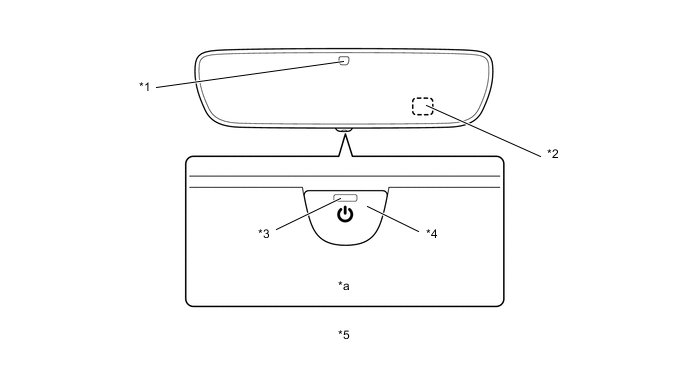
*1 Rear Light Detection Sensor *2 Surrounding Light Detection Sensor *3 LED Indicator Light *4 Mirror Switch *5 Inner Rear View Mirror Assembly - - *a View from the Bottom - -
-
-
-
FUNCTION OF MAIN COMPINENTS
Component Function Surrounding Light Detection Sensor Detects the intensity of the light surrounding the vehicle. Rear Light Detection Sensor Detects the intensity of the light that strikes the inner rear view mirror from behind the vehicle. LED Turns on to inform the driver that the AUTO mode is operating. MIRROR Switch Changes the mode between AUTO and AUTO OFF. EC Mirror Cell Varies the refection rate of the mirror using the EC element. CPU Controls the reflection rate in accordance with the signals from the 2 sensors. -
EC MIRROR CELL
-
The EC elements are placed between a layer of transparent conductive coating, and a layer of conductive reflector surfaces, which are placed between 2 sheets of glass.
-
The EC elements have color changing characteristics. These characteristics are utilized to electronically vary the mirror reflection rate through an electro-chemical oxidation reduction reaction.
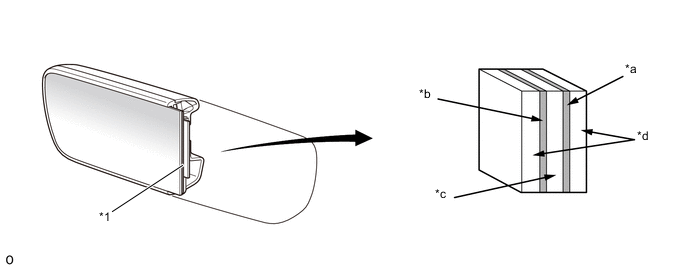
*1 EC Mirror Cell - - *a Transparent Conductive Coating *b Conductive Reflector Surfaces *c EC Element *d Glass
-
-
REFLECTION RATE CONTROL
-
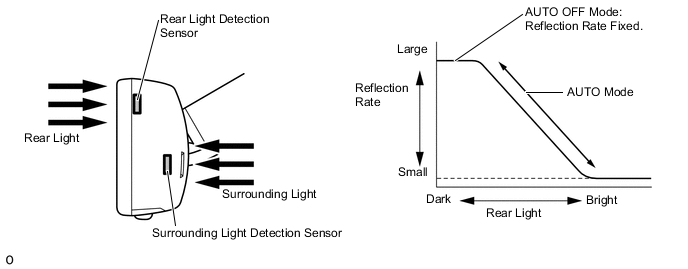
This CPU detects the surrounding light using its surrounding light detection sensor and the rear light using its rear light detection sensor, and determines whether it is day or night based on the intensity of the surrounding light. At the same time, the intensity of the glare from the rear is determined through the difference in intensity between the surrounding and rear light. In accordance with the intensity of the rear light, the reflection rate is varied steplessly.
-