PRE-CRASH SAFETY SYSTEM
-
OPERATING CONDITION
Tech Tips
Availability of the pedestrian detection function and pre-crash braking function depend on the region in which the vehicle was sold.
Regions Function availability Region A The pedestrian detection function and pre-crash braking function are available Region B The pedestrian detection function is not available and the pre-crash braking function is available Region C The pedestrian detection function and pre-crash braking function are not available
-
Region A (The pedestrian detection function and pre-crash braking function are available)
-
The pre-crash safety is enabled and the system determines that the possibility of a frontal collision with a vehicle or pedestrian is high. Each function is operational at the following speeds:
-
Pre-crash warning:
-
Vehicle speed is approximately 7 mph (10 km/h) or more. (For detecting a pedestrian, vehicle speed is between approximately 7 and 50 mph [10 and 80 km/h].)
-
The relative speed between your vehicle and the vehicle or pedestrian ahead is approximately 7 mph (10 km/h) or more.
-
Pre-crash brake assist:
-
Vehicle speed is approximately 19 mph (30 km/h) or more. (For detecting a pedestrian, vehicle speed is between approximately 19 and 50 mph [30 and 80 km/h].)
-
The relative speed between your vehicle and the vehicle or pedestrian ahead is approximately 19 mph (30 km/h) or more.
-
Pre-crash braking:
-
Vehicle speed is approximately 7 mph (10 km/h) or more. (For detecting a pedestrian, vehicle speed is between approximately 7 and 50 mph [10 and 80 km/h].)
-
The relative speed between your vehicle and the vehicle or pedestrian ahead is approximately 7 mph (10 km/h) or more.
-
AVS (Adaptive Variable Suspension System) control:
-
Vehicle speed is approximately 16 mph (25 km/h) or more.
-
The relative speed between your vehicle and the vehicle or pedestrian ahead is approximately 13 mph (20 km/h) or more.
-
The system may not operate in the following situations:
-
If a battery terminal has been disconnected and reconnected and then the vehicle has not been driven for a certain amount of time
-
If the shift lever is in R
-
If VSC is disabled (only the pre-crash warning function will be operational)
-
If the PCS warning light is flashing or illuminated
-
-
-
Region B (The pedestrian detection function is not available and the pre-crash braking function is available)
-
The pre-crash safety is enabled and the system determines that the possibility of a frontal collision with a vehicle is high. Each function is operational at the following speeds:
-
Pre-crash warning:
-
Vehicle speed is approximately10 mph (15 km/h) or more.
-
The relative speed between your vehicle and the vehicle or pedestrian ahead is approximately 7 mph (10 km/h) or more.
-
Pre-crash brake assist:
-
Vehicle speed is approximately 19 mph (30 km/h) or more.
-
The relative speed between your vehicle and the vehicle or pedestrian ahead is approximately 19 mph (30 km/h) or more.
-
Pre-crash braking:
-
Vehicle speed is approximately 10 mph (15 km/h) or more.
-
The relative speed between your vehicle and the vehicle or pedestrian ahead is approximately 7 mph (10 km/h) or more.
-
AVS (Adaptive Variable Suspension System) control:
-
Vehicle speed is approximately 16 mph (25 km/h) or more.
-
The relative speed between your vehicle and the vehicle or pedestrian ahead is approximately 13 mph (20 km/h) or more.
-
The system may not operate in the following situations:
-
If a battery terminal has been disconnected and reconnected and then the vehicle has not been driven for a certain amount of time
-
If the shift lever is in R
-
If VSC is disabled (only the pre-crash warning function will be operational)
-
If the PCS warning light is flashing or illuminated
-
-
-
Region C (The pedestrian detection function and pre-crash braking function are not available)
-
The pre-crash safety is enabled and the system determines that the possibility of a frontal collision with a vehicle is high. Each function is operational at the following speeds:
-
Pre-crash warning:
-
Vehicle speed is approximately10 mph (15 km/h) or more.
-
The relative speed between your vehicle and the vehicle or pedestrian ahead is approximately 7 mph (10 km/h) or more.
-
Pre-crash brake assist:
-
Vehicle speed is approximately 19 mph (30 km/h) or more.
-
The relative speed, between your vehicle and the vehicle or pedestrian ahead is approximately 19 mph (30 km/h) or more.
-
The system may not operate in the following situations:
-
If a battery terminal has been disconnected and reconnected and then the vehicle has not been driven for a certain amount of time
-
If the shift lever is in R
-
If VSC is disabled (only the pre-crash warning function will be operational)
-
If the PCS warning light is flashing or illuminated
-
-
-
Cancelation of the pre-crash braking
Tech Tips
Depending on the region in which the vehicle was sold, the pre-crash braking function may not be available.
-
If either of the following occur while the pre-crash braking function is operating, it will be canceled:
-
The accelerator pedal is depressed strongly.
-
The steering wheel is turned sharply or abruptly.
-
-
If the vehicle is stopped by the operation of the pre-crash braking function, the operation of the pre-crash braking function will be canceled after the vehicle has been stopped for approximately 2 seconds.
-
-
Conditions under which the system may operate even if there is no possibility of a collision
-
In some situations such as the following, the system may determine that there is a possibility of a frontal collision and operate.
-
When passing a vehicle or pedestrian*
-
When changing lanes while overtaking a preceding vehicle
-
When overtaking a preceding vehicle that is changing lanes
-
When overtaking a preceding vehicle that is making a left/right turn
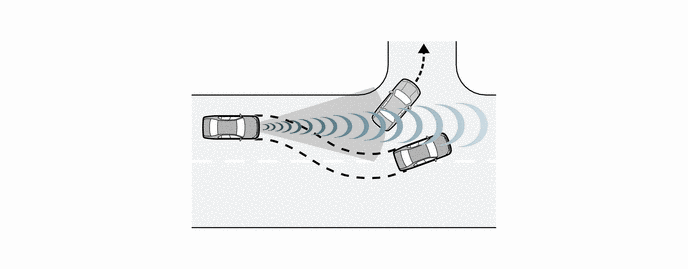
-
When passing a vehicle in an oncoming lane that is stopped to make a right/left turn
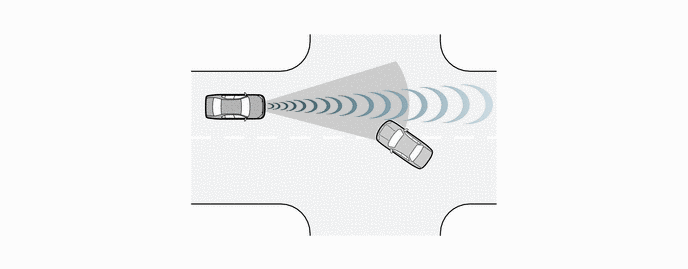
-
When driving on a road where relative location to vehicle ahead in an adjacent lane may change, such as on a winding road

-
When a preceding vehicle suddenly decelerates
-
If the front of the vehicle is raised or lowered, such as when the road surface is uneven or undulating
-
When approaching objects on the roadside, such as guardrails, utility poles, trees, or walls
-
When there is a vehicle, pedestrian*, or object by the roadside at the entrance of a curve
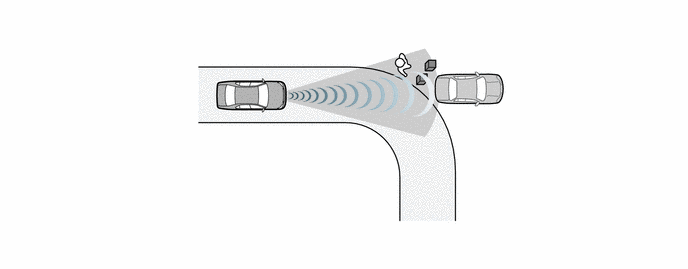
-
When driving on a narrow path surrounded by as structure, such as in a tunnel or on an iron bridge
-
When there is a metal object (manhole cover, steel plate, etc.), steps, or a protrusion on the road surface or roadside
-
When a crossing pedestrian approaches very close to the vehicle*

-
When passing through a place with a low structure above the road (low ceiling, traffic sign, etc.)

-
When passing under an object (billboard, etc.) at the top of an uphill road
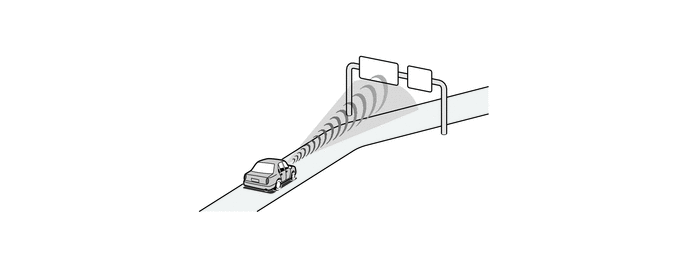
-
When rapidly closing on an electric toll gate barrier, parking area barrier, or other barrier that opens and closes
-
When using an automatic car wash
-
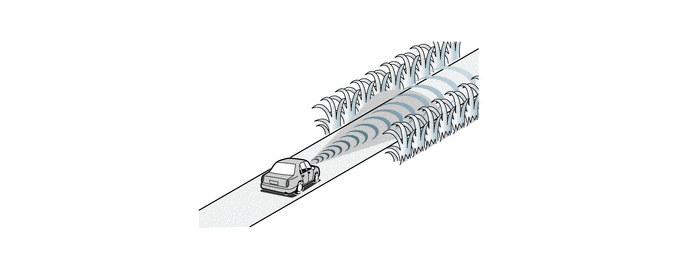
When driving through or under objects that may contact the vehicle, such as thick grass, tree branches, or a banner
-
When the vehicle is hit by water, snow, dust, etc. from a vehicle ahead
-
When driving through steam or smoke
-
When there are patterns or paint on the road or a wall that may be mistaken for a vehicle or pedestrian*
-
When driving near an object that reflects radio waves, such as a large truck or guardrail
-
When driving near a TV tower, broadcasting station, electric power plant, or other location where strong radio waves or electrical noise may be present
Tech Tips
*: Depending on the region in which the vehicle was sold, the pedestrian detection function may not be available
-
-
-