DYNAMIC RADAR CRUISE CONTROL SYSTEM
Info Added 2017-07-26 
-
FUNCTION OF MAIN COMPONENTS
-
The main components in the dynamic radar cruise control system have the following functions:
Component Function Millimeter Wave Radar Sensor Assembly Radiates millimeter radar waves forward, uses the reflected waves to detect the presence of a vehicle traveling ahead, the vehicle-to-vehicle distance, and the relative speed, and then transmits this information to the driving support ECU assembly. Forward Recognition Camera Detects lane markers and objects on the road ahead using the image captured by the monocular camera and sends the information to the driving support ECU assembly. Driving Support ECU Assembly While the system is in vehicle-to-vehicle distance control mode, the driving support ECU assembly detects the vehicle ahead based on signals from the millimeter wave radar sensor assembly and forward recognition camera. Then, the driving support ECU assembly calculates the acceleration or deceleration rate required in order to attain the target vehicle-to-vehicle distance, and outputs a request signal to the hybrid vehicle control ECU assembly. Cruise Control Switch ON-OFF/ Mode Button
-
Turns the cruise control system on and off.
-
Vehicle to vehicle distance control mode becomes be activated immediately after the main switch is turned on. The mode shifts to constant speed control mode by pressing and holding the button more than 1.5 sec.
CANCEL Switch A cancel signal is output to the hybrid vehicle control ECU assembly when this switch is operated. +RES Switch Acceleration and resuming of a preset speed can be performed by operating this switch. A signal is output to the hybrid vehicle control ECU assembly when this switch is operated. -SET Switch The deceleration function is operated and vehicle speed setting signals are output to the hybrid vehicle control ECU assembly when this switch is operated. Steering Pad Switch Assembly Vehicle-to-vehicle Distance Control Switch While the system is in vehicle-to-vehicle distance control mode, the driver can operate the vehicle-to-vehicle distance control switch to select the vehicle-to-vehicle distance in 3 levels: long, middle and short. Hybrid Vehicle Control ECU Assembly
-
Increases and decreases the motive force in accordance with the motive force request signals transmitted by the hybrid vehicle control ECU assembly.
-
Transmits information about motive forces that are actually generated and that can be generated to the hybrid vehicle control ECU assembly.
Inverter with Converter Assembly MG ECU Built into the inverter with converter assembly. Controls the motive force of MG2 in accordance with signals from the hybrid vehicle control ECU assembly. ECM Actuates the throttle control motor in accordance with the signals from the hybrid vehicle control ECU assembly. Brake Booster with Master Cylinder Assembly Skid Control ECU
-
While the system is operating in vehicle-to-vehicle distance control mode, the skid control ECU performs brake control in accordance with request signals from the hybrid vehicle control ECU assembly.
-
Transmits signals such as wheel speed and estimated vehicle acceleration to the hybrid vehicle control ECU assembly.
Combination Meter Assembly Multi-information Display Cruise Control Indicator (Constant Speed Control Mode)
-
Based on a cruise control indicator operation signal sent by the hybrid vehicle control ECU assembly, the combination meter assembly illuminates the cruise control indicator when the cruise control system has been turned on using the ON-OFF button on the cruise control switch and constant speed control mode has been selected.
-
Based on a cruise control indicator operation signal sent by the hybrid vehicle control ECU assembly, the combination meter assembly turns off the cruise control indicator if a malfunction occurs in the cruise control system.
Cruise Control Indicator (Vehicle-to-vehicle Distance Control Mode)
-
Based on a cruise control indicator operation signal sent by the hybrid vehicle control ECU assembly, the combination meter assembly illuminates the cruise control indicator when the cruise control system has been turned on using the ON-OFF button on the cruise control switch.
-
Based on a cruise control indicator operation signal sent by the hybrid vehicle control ECU assembly, the combination meter assembly turns off the cruise control indicator if a malfunction occurs in the cruise control system.
Cruise Control SET Indicator Illuminates when the vehicle speed is set. Multi-information Display During dynamic radar cruise control operation, the multi-information display receives signals from hybrid vehicle control ECU assembly in order to display the system conditions. Master Warning Light Illuminates when there is a malfunction in the system. Buzzer If the hybrid vehicle control ECU assembly detects automatic cancel or warning signals while the vehicle is operating under cruise control, this buzzer sounds to inform the driver. Throttle Body with Motor Assembly Throttle Control Motor Adjusts the throttle valve opening angle in accordance with signals from the ECM. Throttle Position Sensor Detects the throttle valve opening angle and outputs it to the ECM. Hybrid Vehicle Transaxle Assembly MG2 Generates motive force for the wheels. Skid Control Buzzer Assembly Sounds a buzzer when it receives a signal from the skid control ECU to alert the driver that the distance between vehicles is short. Speed Sensor Detects the wheel speed of each of the 4 wheels. Accelerator Pedal Sensor Assembly Detects the accelerator pedal depression angle and transmits it to the hybrid vehicle control ECU assembly. Shift Lever Position Sensor Detects the shift lever position and transmits signals to the hybrid vehicle control ECU assembly. Steering Sensor Detects the angle and direction of steering and transmits signals to the driving support ECU assembly. Airbag Sensor Assembly Yawrate Sensor Detects the yaw rate of the vehicle and transmits signals to the driving support ECU assembly. Stop Light Switch Assembly Detects the brake pedal being depressed and transmits its signal to the hybrid vehicle control ECU assembly. -
-
-
SYSTEM CONTROL
-
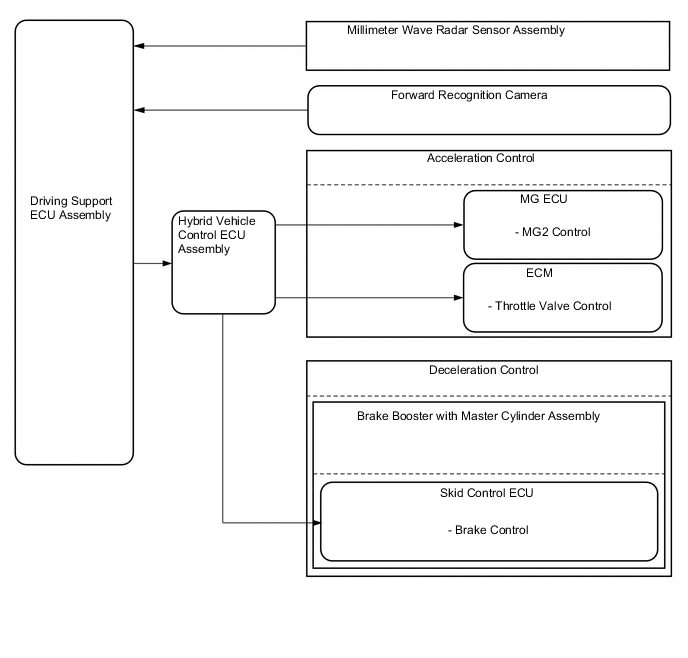
The driving support ECU assembly, millimeter wave radar sensor assembly, forward recognition camera and hybrid vehicle control ECU assembly control this system.
-
The combination meter assembly informs the driver of the control conditions.
-
For vehicles with the dynamic radar cruise control system, constant speed control mode is controlled by the hybrid vehicle control ECU assembly, which outputs signals to the MG ECU.
-
Vehicle-to-vehicle distance control mode is controlled by the millimeter wave radar sensor assembly, forward recognition camera and driving support ECU assembly. Thus, the signals are output to the actuators and the ECU while exchanging data as indicated below.
-
-
FUNCTION
-
Function List
-
The control of the dynamic radar cruise control system varies depending on the mode:
A: Constant Speed Control Mode
B: Vehicle-to-vehicle Distance Control Mode
Function Outline Mode A B Constant Speed Control Controls the motive force through the hybrid vehicle control ECU assembly and skid control ECU, and adjusts the vehicle speed to the set vehicle speed. ○ ○ Deceleration Control Performs engine, MG2 and brake control in order to decelerate the vehicle so that the vehicle-to-vehicle distance between the driver's own vehicle and the vehicle ahead is maintained at the set distance. - ○ Follow-up Control After performing deceleration control, the driver's own vehicle follows the vehicle ahead in order to maintain the proper vehicle-to-vehicle distance. The actual distance maintained for each distance level (long, medium and short) varies in accordance with vehicle speed. - ○ Acceleration Control Accelerates the vehicle in order to attain the set vehicle speed if the vehicle ahead or the driver's own vehicle has changed lanes. - ○ Set Control
-
When the cruise control system has been turned on using the ON-OFF button on the cruise control switch, either of the relevant vehicle speed conditions shown below is met, and the cruise control switch is moved to the -SET side and released, the hybrid vehicle control ECU assembly stores the vehicle speed and maintains the vehicle constantly at that speed.
○ ○ The vehicle is traveling at a speed within the range of approximately 50 to 200 km/h (30 to 125 mph). ○ - The vehicle is traveling at a speed within the range of approximately 50 to 180 km/h (30 to 110 mph). - ○ Low Speed Limit Control The low speed limit is the lowest speed that cruise control can be operated at and it is designed to be approximately 40 km/h (25 mph). The cruise control cannot be operated below that speed. If the vehicle speed drops below that speed while the cruise control is set and working to maintain vehicle speed, the cruise control will be canceled automatically. The set vehicle speed is kept in memory. ○ ○ COAST Switch Control When the cruise control switch is held to the -SET side, the vehicle speed and the set vehicle speed change as follows according to the mode: ○ ○
-
The vehicle decelerates constantly.
-
The set vehicle speed changes to the speed at which the switch is released.
○ -
-
The set vehicle speed decreases in increments of 5 km/h or 5 mph. (Example: 103 → 100 → 95 → 90 → 85 km/h [mph])
-
The vehicle will remain at the speed at which the vehicle is being driven when the -SET switch is released.
- ○ Tap Down Control When the cruise control switch is moved momentarily (approximately 0.6 seconds or less) to the -SET side, the vehicle speed and the set vehicle speed change as follows according to the mode: ○ ○
-
The vehicle will decelerate in increments of approximately 1 km/h (1 mph) for each time the switch is moved.
-
However, if the difference between the actual vehicle speed and the set vehicle speed is greater than 5 km/h or 3 mph, the set vehicle speed will change to the speed at which the vehicle is being driven when the switch is pushed.
○ - The vehicle will decelerate in increments of approximately 1 km/h or 1 mph for each time the switch is moved. - ○ ACC Switch Control When the cruise control switch is held to the +RES side, the vehicle speed and the set vehicle speed change as follows according to the mode: ○ ○
-
The vehicle will accelerate constantly.
-
The set vehicle speed changes to the speed at which the switch is released.
○ -
-
The set vehicle speed increases in increments of 5 km/h or 5 mph. (Example: 83 → 85 → 90 → 95 → 100 km/h [mph])
-
The vehicle will accelerate to the speed that is set at the time the switch is released. However, only the set vehicle speed will change during follow-up control.
- ○ Tap Up Control When the cruise control switch is moved momentarily (approximately 0.6 seconds or less) to the +RES side, the vehicle speed and the set vehicle speed change as follows: ○ ○
-
The vehicle will accelerate in increments of approximately 1 km/h (1 mph) for each time the switch is moved.
-
However, if the difference between the actual vehicle speed and the set vehicle speed is greater than 5 km/h (3 mph), the set vehicle speed will not change.
○ - The vehicle will accelerate in increments of approximately 1 km/h or 1 mph for each time the switch is moved. - ○ RES Switch Control When the vehicle speed is above the low speed limit, the cruise control system resumes operation (when the cruise control switch is subsequently moved to the +RES side) to reach the vehicle speed that was set at the time the driver canceled cruise control. Even if the vehicle speed dropped below the low speed limit, the set speed can be resumed after the vehicle speed increases above the low speed limit. Also, If the vehicle speed memory is deleted, the return control cannot be performed. ○ ○ When the vehicle ahead changes driving lanes during follow-up control, the vehicle speed is gradually increased to the set speed. At this time, the vehicle speed can be increased promptly by pushing the cruise control switch to the +RES direction. - ○ Manual Cancel Control
-
If any of the following signals are sent to the hybrid vehicle control ECU assembly, cruise control speed control operation is canceled accordingly.
-
Stop light switch on signal (The brake pedal is depressed.)
-
Signals indicating a change in the shift state from drive (D) to another state. (The shift lever is moved from D or S to N.)
-
When 1st, 2nd or 3rd shift range is selected manually while in S.
-
CANCEL switch on signal (The cruise control switch moved to the CANCEL side.)
-
Cruise control switch (ON-OFF button) off signal.
○ ○ Automatic Cancel Control When an automatic cancel signal is sent to the driving support ECU assembly, cruise control speed control operation is canceled. At this time, the type of warning sent to the driver and the control resumption condition vary according to the cancel signal. ○ ○ Other Cancel Conditions
-
TRC operates for a certain period of time while the cruise control.
-
VSC operation.
○ ○ Mode Switching Control
-
The following operations switch the mode:
-
Turn the cruise control system on using the ON-OFF button on the cruise control switch (the cruise control will start in vehicle-to-vehicle distance control mode).
-
Hold the cruise control switch to the MODE side for approximately 1 second or more.
-
If the switch is moved to any other side before the modes are switched, turn the cruise control system off and then perform steps (a) and (b) again.
○ ○ Tech Tips
○: Available
-: Not Available
-
-
-
Constant Speed Control
-
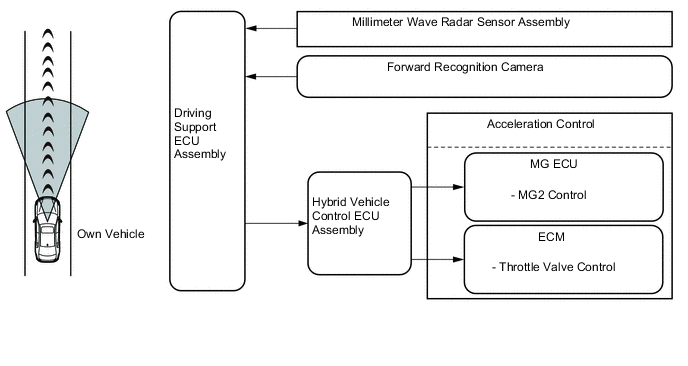
The millimeter wave radar sensor assembly and forward recognition camera transmits the information about the vehicle ahead to the driving support ECU assembly and also transmits a millimeter wave radar sensor assembly operation signal to the hybrid vehicle control ECU assembly via the driving support ECU assembly. The hybrid vehicle control ECU assembly compares the set vehicle speed and the actual vehicle speed, and performs constant speed control by regulating the throttle in order to attain the set vehicle speed.
-
In vehicle-to-vehicle distance control mode, the driving support ECU assembly performs deceleration control, follow-up control or acceleration control based on the information about the vehicle ahead transmitted from the millimeter wave radar sensor assembly and forward recognition camera.
-
-
Deceleration Control
-
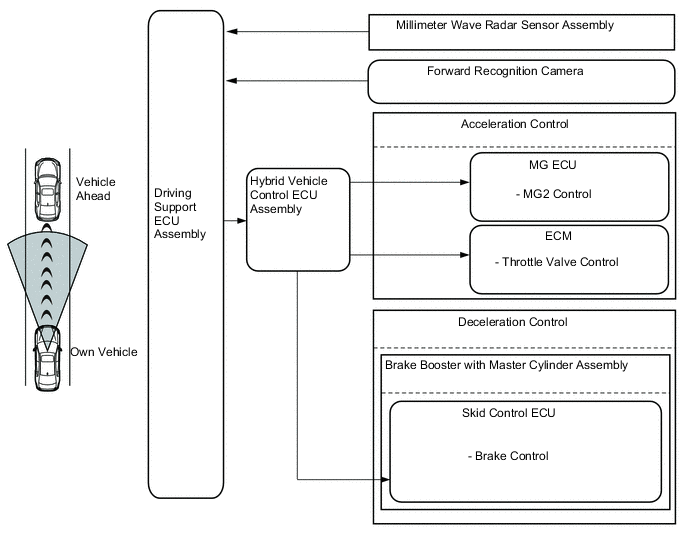
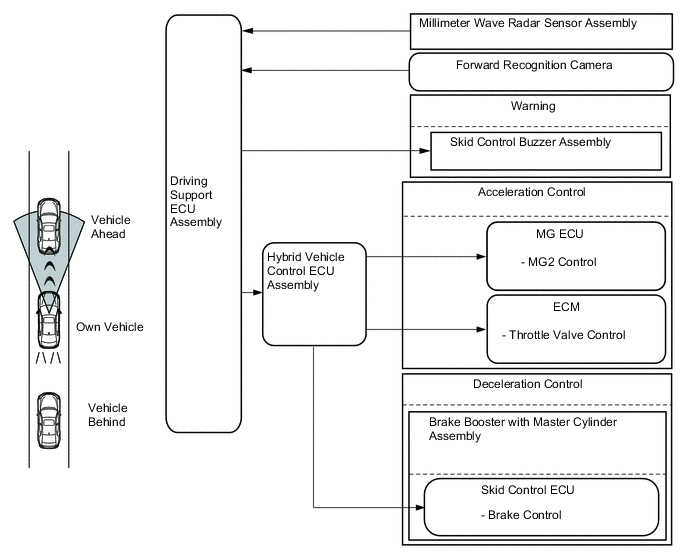
The driving support ECU assembly calculates the target deceleration rate in accordance with signals from the millimeter wave radar sensor assembly, forward recognition camera and transmits a deceleration request signal to the hybrid vehicle control ECU assembly. Upon receiving this signal, the hybrid vehicle control ECU assembly performs engine, MG2 and brake control in order to cause the vehicle to decelerate.
-
This control is not performed in the presence of a parked vehicle or object, or below the settable vehicle speed range.
-
If the driving support ECU assembly determines that further deceleration is necessary, it transmits a brake request signal to the skid control ECU. Upon receiving this signal, the skid control ECU then activates the brake actuator to apply the brakes.
-
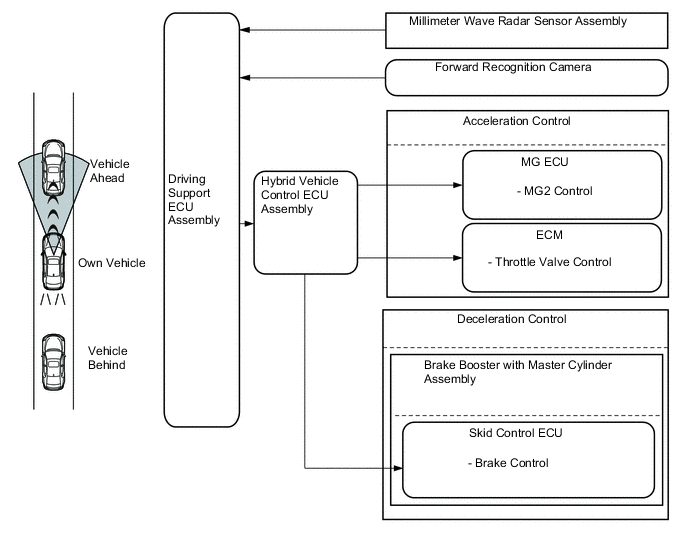
At this time, if the deceleration rate is higher than a predetermined value, the skid control ECU outputs a stop light illumination request signal to the stop light control relay in order to inform anyone who might be following the vehicle.
-
If the vehicle is not decelerating adequately, the skid control ECU sounds the skid control buzzer assembly based on a request signal from the driving support ECU assembly. The buzzer is sounded to urge the driver to depress the brake pedal.
-
-
Follow-up Control
-
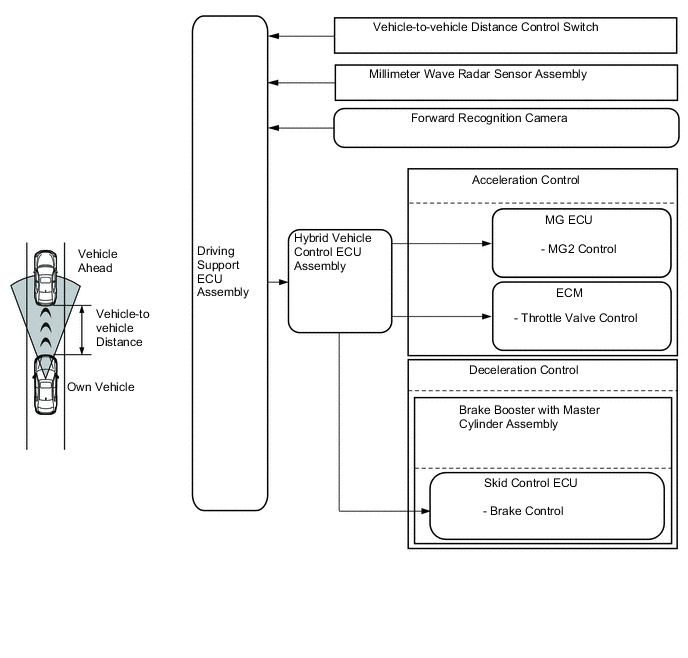
After performing deceleration control, the driving support ECU assembly transmits request signals to the hybrid vehicle control ECU assembly so that the vehicle can follow the vehicle ahead while maintaining the proper vehicle-to-vehicle distance. The actual distance maintained for each distance level (long, middle and short) varies in accordance with vehicle speed. Upon receiving these signals, these ECUs control the motive force in order to perform follow-up control.
-
3 levels (long, middle, and short) of vehicle-to-vehicle distance can be selected by operating the vehicle-to-vehicle distance control switch.
-
-
Acceleration Control
-
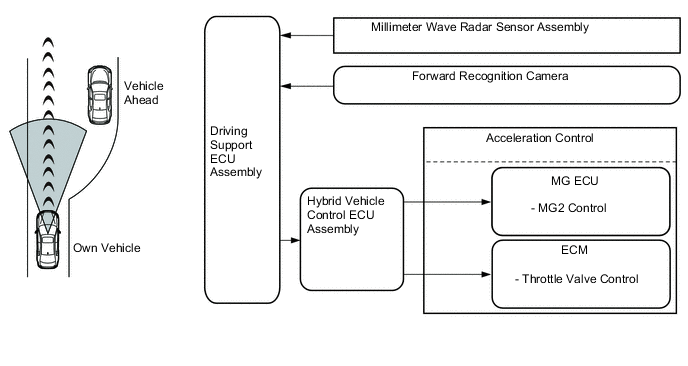
If the driving support ECU assembly detects that either the vehicle ahead or own vehicle has changed lanes, request signal is transmitted to the hybrid vehicle control ECU assembly in order to attain the set vehicle speed. Upon receiving this signal, the hybrid vehicle control ECU assembly controls the motive force of the engine and MG2 in order to perform acceleration control.
-
-
Automatic Cancel Control
-
If any of the conditions listed below occur while the vehicle is being driven using cruise control, speed control by the cruise control system will be canceled. Then, the following warning items will appear for the driver.
Constant Speed Control Mode: Situation Warning Multi-information Display 
Buzzer in the combination meter assembly
-
If the condition listed below occurs, the driving support ECU assembly clears the set vehicle speed and cancels speed control by the cruise control system.
-
Stop light switch open or short circuit
-
Speed control by the cruise control system is disabled until the conditions is corrected or the cruise control system is turned off and back on again using the ON-OFF button on the cruise control switch.
Cruise Control Malfunction Visit Your Dealer Illuminates Sounds Once
-
If any of the conditions listed below occur, the driving support ECU assembly clears the set vehicle speed and cancels speed control by the cruise control system.
-
Malfunction in the dynamic radar cruise control system other than those given above
-
Speed control by the cruise control system is disabled until the power switch is turned off (IG) again.
Cruise Control Malfunction Visit Your Dealer Illuminates Sounds Once
-
If the condition listed below occurs, the driving support ECU assembly clears the set vehicle speed and cancels speed control by the cruise control system.
-
Malfunction in the hybrid system
-
Speed control by the cruise control system is disabled until the condition is corrected or the cruise control system is turned off and back on again using the ON-OFF button on the cruise control switch.
- Does not illuminate -
-
If the condition listed below occurs, the driving support ECU assembly clears the set vehicle speed and cancels speed control by the cruise control system.
-
The vehicle speed drops more than 16 km/h (10 mph) below the set vehicle speed.
- Does not illuminate -
-
If the condition listed below occurs, the driving support ECU assembly cancels speed control by the cruise control system while retaining the set vehicle speed in its memory.
-
The vehicle speed drops below low speed limit (approximately 40 km/h [25 mph]).
- Does not illuminate - Vehicle-to-vehicle Distance Control Mode: Situation Warning Multi-information Display Buzzer in the combination meter assembly
-
If the condition listed below occurs, the driving support ECU assembly clears the set vehicle speed and cancels speed control by the cruise control system.
-
Stop light switch open or short circuit
-
Speed control by the cruise control system is disabled until the condition is corrected or the cruise control system is turned off and back on again using the ON-OFF button on the cruise control switch.
Cruise Control Malfunction Visit Your Dealer Illuminates Sounds Once
-
If any of the conditions listed below occur, the driving support ECU assembly clears the set vehicle speed and cancels speed control by the cruise control system.
-
Malfunction of the millimeter wave radar sensor
-
Misalignment of the axis of the millimeter wave radar sensor assembly
-
Malfunction in the dynamic radar cruise control system other than those given above
-
Speed control by the cruise control system is disabled until the power switch is turned off (IG) again.
Cruise Control Malfunction Visit Your Dealer Illuminates Sounds Once
-
If the condition listed below occurs, the driving support ECU assembly clears the set vehicle speed and cancels speed control by the cruise control system.
-
Malfunction in the hybrid system
-
Speed control by the cruise control system is disabled until the condition is corrected or the cruise control system is turned off and back on again using the ON-OFF button on the cruise control switch.
- Does not illuminate -
-
If the condition listed below occurs, the driving support ECU assembly cancels speed control by the cruise control system while retaining the set vehicle speed in its memory.
-
The millimeter wave radar sensor assembly is dirty.
-
Speed control by the cruise control system is disabled until the condition is corrected or the cruise control system is turned off and back on again using the ON-OFF button on the cruise control switch.
Radar Cruise Control Unavailable Clean Radar Sensor Illuminates Sounds Once
-
If either of the conditions listed below occurs, the driving support ECU assembly cancels speed control by the cruise control system while retaining the set vehicle speed in its memory.
-
The measurement becomes extremely unstable due to poor weather conditions.
-
Misalignment of the axis of the millimeter wave radar sensor assembly.
-
Forward recognition camera temporarily not available.
-
A malfunction in the forward recognition camera.
-
Speed control by the cruise control system is disabled until the condition is corrected or the cruise control system is turned off and back on again using the ON-OFF button on the cruise control switch.
Radar Cruise Control Unavailable Illuminates Sounds Once
-
If the condition listed below occurs, the driving support ECU assembly cancels speed control by the cruise control system while retaining the set vehicle speed in its memory.
-
The vehicle speed drops below the low speed limit (approximately 40 km/h [25 mph]).
- Does not illuminate Sounds Twice -
-
-
-
CONSTRUCTION
-
Cruise Control Switch
-
The cruise control switch consists of the ON-OFF/ Mode button and the +RES, -SET and CANCEL switches. The ON-OFF/ Mode button, +RES, -SET and CANCEL switches are operated by moving the lever in the 4 directions indicated.
-
The cruise control switch is an automatic reset (normally open) type that turns on only when the switch is being operated and turns off as soon as the driver releases the switch. Furthermore, the functions of the control switch are active only when the cruise control system has been turned on using the ON-OFF button on the cruise control switch.
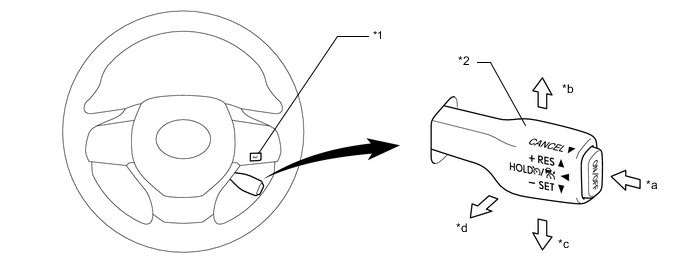
Text in Illustration *1 Vehicle-to-vehicle Distance Control Switch *2 Cruise Control Switch *a ON-OFF/ Mode Button *b +RES Switch *c -SET Switch *d CANCEL Switch
-
-
Main switch (ON-OFF)/ Mode Button
-
When the cruise control system is turned on using the main switch (ON-OFF button), the system starts in vehicle-to-vehicle distance control mode. When the main switch (ON-OFF button) is pressed and held for 1.5 seconds or more, the system changes to constant control mode.
-
-
Vehicle-to-vehicle Distance Control Switch
-
While the vehicle is being driven in vehicle-to-vehicle distance control mode, the vehicle-to-vehicle distance setting can be changed as follows each time the distance control switch is pressed; long → middle → short → long.
-
If the power switch is turned off and back on (IG), the system will default to "long".
-
The vehicle-to-vehicle distance is as follows:
Mode Vehicle-to-vehicle Distance* Long Approximately 50 m (160 ft.) Middle Approximately 40 m (130 ft.) Short Approximately 30 m (100 ft.) Tech Tips
*: While driving at a speed of 80 km/h (50 mph).
-
-
Millimeter Wave Radar Sensor Assembly
-
The millimeter wave radar sensor assembly consists of a millimeter wave radar circuit, signal processing circuit, and CPU.
-
The millimeter wave radar outputs waves when the vehicle speed is above 0 km/h (0 mph), and it does not when the vehicle speed is at 0 km/h (0 mph). The millimeter wave radar uses frequencies in the 76 GHz band.*
Tech Tips
*: The millimeter wave radar sensor assembly outputs varies by destination.
-
The antennas receive the reflected millimeter waves.
-
The signal processing circuit detects the distance, relative speed, and the direction of the object by generating millimeter waves and calculating the signals received by the antennas.
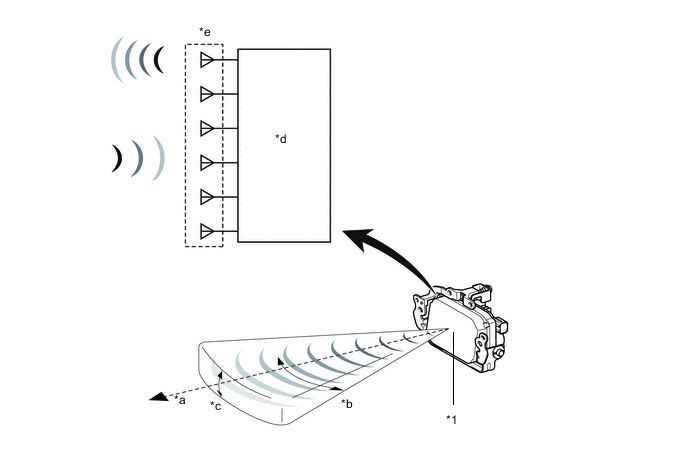
Text in Illustration *1 Millimeter Wave Radar Sensor Assembly - - *a Detection Distance: Approximately 150 m (490 ft.) *b Horizontal Angle: Approximately 20° *c Vertical Angle: Approximately 4° *d Signal Processing Circuit *e Millimeter Wave Radar Circuit - - -
The distance to the object, azimuth, and relative speed are calculated from the information that is provided by the reflected millimeter wave radar waves as described below.
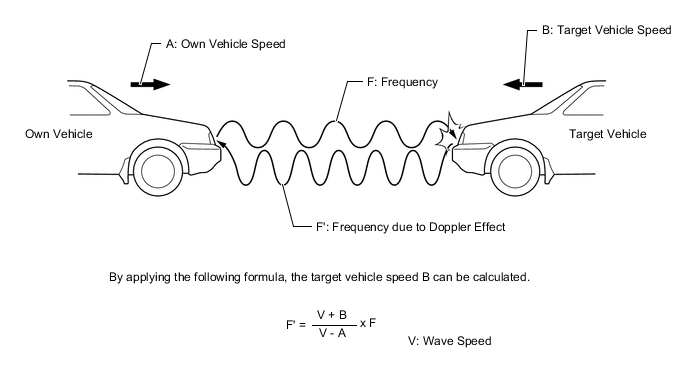
Item Calculation Method Distance Calculated from the length of time that has elapsed from the time the waves of the millimeter wave radar have been emitted, until the reflected waves are received by the millimeter wave radar circuit. The detection distance is approximately 150 m (490 ft.). Azimuth Calculated from the reception angle of the reflected millimeter wave radar waves. The detection angle has a horizontal range of approximately 20°and a vertical range of approximately 4°. Relative Speed Calculated by utilizing the change (Doppler effect*) that occurs in the frequency of the reflected millimeter wave radar waves. Tech Tips
*: The Doppler effect causes the observer to perceive the radio waves emitted by a moving object to be a higher frequency as it approaches, and to be a lower frequency at it recedes. This phenomenon is created because when an object is located far away, the radio waves are perceived at higher frequency than those of the radio source.
Tech Tips
-
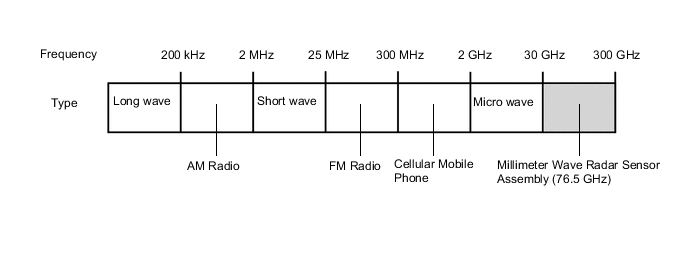
Millimeter wave radar uses an extremely high frequency band between 30 GHz and 300 GHz, with an extremely short wavelength between 1 and 10 mm (0.04 to 0.40 in.) in a vacuum. The millimeter wave radar sensor of the pre-collision system uses frequencies in the 76 GHz band.
-
Millimeter wave radar is less affected by weather conditions such as rain, fog, or snow, and provides excellent characteristics for recognizing objects. Therefore, it is well suited to the pre-collision system and the dynamic radar cruise control system.
-
An SST is used if radar axis adjustment is needed. For details, refer to the Repair Manual.
-
-
-
Forward Recognition Camera
-
Forward recognition camera is mounted in the upper center of the windshield glass. The sensor detects vehicles and other objects on the road ahead using the image captured by the built-in monocular camera and determines their distance. With this, the recognition performance and reliability of the dynamic radar cruise control system has been enhanced.
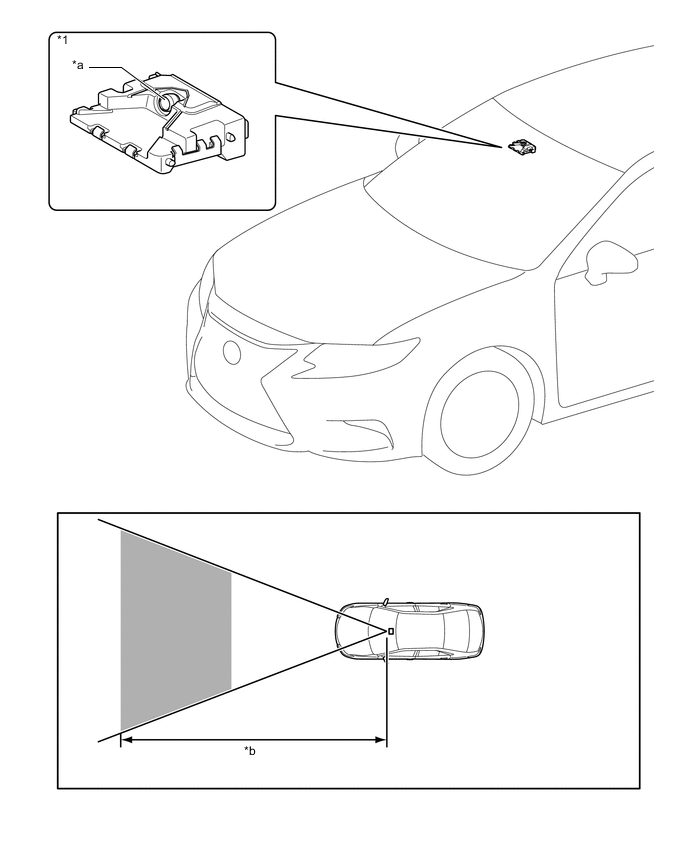
Text in Illustration *1 Forward Recognition Camera - - *a Monocular Camera *b Approximately 50 m (164 ft.)
-
-
-
OPERATION
-
Combination Meter Assembly
-
The combination meter assembly has a master warning light, cruise control indicator (constant speed control mode), cruise control indicator (vehicle-to-vehicle distance control mode), cruise control SET indicator, buzzer, and multi-information display to provide warnings and messages regarding the dynamic radar cruise control system.
-
The multi-information display displays the set vehicle speed, vehicle ahead mark, and warning message.
-
Examples are shown below for the illumination or display of each indicator, warning light or multi-information display.
Constant Speed Control Mode: Condition Multi-information Display 


Buzzer Being Controlled* 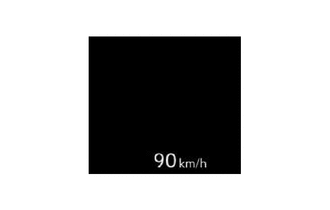
Does not illuminate Illuminates Does not illuminate Illuminates - System Check Cruise Control Malfunction Visit Your Dealer Illuminates Does not illuminate Does not illuminate Does not illuminate Buzzer in the combination meter assembly sounds once Tech Tips
*: While driving at a set speed of 97 km/h (60 mph).
Vehicle-to-vehicle Distance Control Mode: Condition Multi-information Display Buzzer Set Standby 
Does not illuminate Does not illuminate Illuminates Does not illuminate - Under Constant Speed Control (No Vehicle Ahead, Short)* 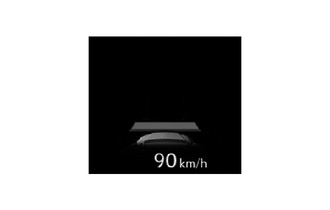
Does not illuminate Does not illuminate Illuminates Illuminates - Under Follow-up Control (Vehicle Ahead, Long)* 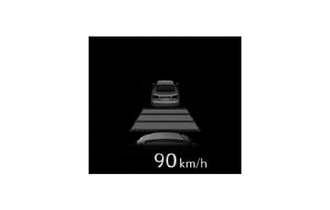
Does not illuminate Does not illuminate Illuminates Illuminates - Deceleration Control/Vehicle Approach Warning (Vehicle Ahead, Middle)* 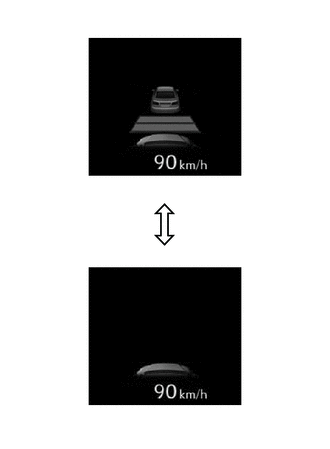
Does not illuminate Does not illuminate Illuminates Illuminates Skid control buzzer sounds continuously Blinks Millimeter Wave Radar Sensor Assembly is Dirty. Radar Cruise Control Unavailable Clean Sensor Illuminates Does not illuminate Does not illuminate Does not illuminate Buzzer in the combination meter assembly sounds once - Poor Weather Conditions
- camera Misalignment of the axis of the millimeter wave radar sensor assembly.
Radar Cruise Control Unavailable Illuminates Does not illuminate Does not illuminate Does not illuminate Buzzer in the combination meter assembly sounds once System Check Cruise Control Malfunction Visit Your Dealer Illuminates Does not illuminate Does not illuminate Does not illuminate Buzzer in the combination meter assembly sounds once Beam Axis Adjustment Adjusting Front Radar Beam Does not illuminate Does not illuminate Does not illuminate Does not illuminate - Tech Tips
*: While driving at a set speed of 90 km/h (56 mph).
-
-
-
DIAGNOSIS
-
If a malfunction occurs in the dynamic radar cruise control system during cruise control operation, the driving support ECU assembly cancels cruise control operation, illuminates the master warning light and turns off the cruise control indicator (constant speed control mode) or cruise control indicator (vehicle-to-vehicle distance control mode), and cruise control SET indicator. Also, "Cruise Control Malfunction Visit Your Dealer" is displayed on the multi-information display to inform the driver of a malfunction. At the same time, the malfunction is stored in memory as a 5-digit Diagnostic Trouble Code (DTC).
-
The DTC can be read when the Global TechStream (GTS) is connected to the DLC3. For details, refer to the Repair Manual.
-