SEAT ASSEMBLY DETAILS
-
FUNCTION
-
Front Seat
-
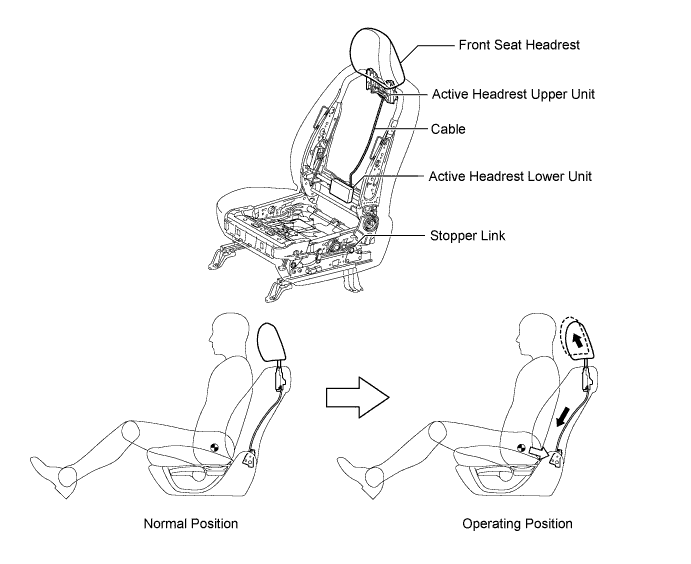
A stopper link has been provided on the hinge area. This prevents the lifters from collapsing in collisions in order to help alleviate neck injury during a rear-end collision.
-
An active headrest mechanism have been provided, to help alleviate neck injury during a rear-end collision. The active headrest moves forward almost instantly in the event of a rear-end collision when the inertial force of the occupant's body is applied to the seatback and the distance between the occupant's head and the headrest is reduced. The active headrest consists of an active headrest lower unit, a cable, an active headrest upper unit and a front seat headrest. When the active headrest lower unit built into the seatback is pressed by the occupant's lumber region as the occupant's body slides down during a rear-end collision, the cable is pulled and the headrest is moved forward, reducing the distance between the occupant's head and the headrest.
-
-
Rear No. 1 Seat
-
When the seatback is returned from the walk-in to the reclining position, it returns to the seated position instead of the upright position, thus improving the usability of the seats.
-
An L-shaped headrest is used to allow excellent rear vision from the front seat.
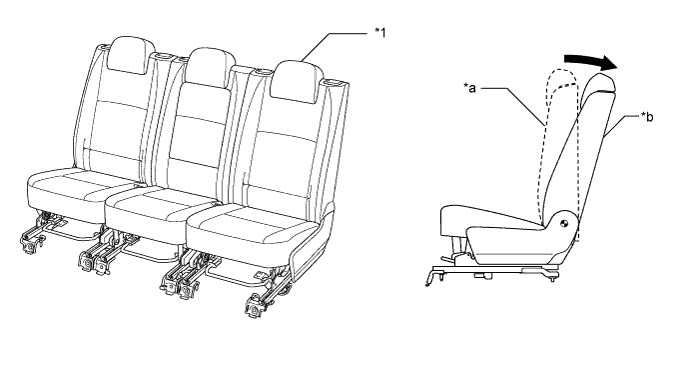
Text in Illustration *1 L-shaped Headrest - - *a Upright Position *b Seated Position
-
-
Rear No. 2 Seat
-
The rear No. 2 seat can be restored from the tilt down position to the seated position by one action, thus improving usability.
-
Seat reclining has been made adjustable, comfort has been improved, and a larger storage area can be utilized, thus ensuring usability.
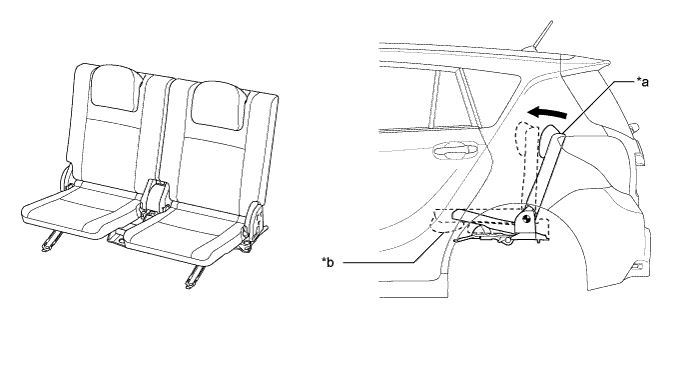
Text in Illustration *a Seated Position *b Tilt Down Position
-
-
Child Restraint System
-
A child restraint seat anchor bracket for securing child seats has been provided behind the seat cushion of the rear No. 1 outer seats.
-
Child restraint seat tether anchor brackets are provided behind the seat cushion of the rear No. 1 outer seats.
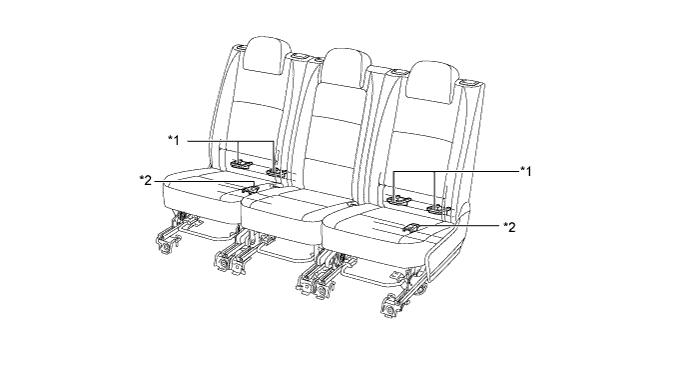
Text in Illustration *1 Child Restraint Seat Anchor Bracket *2 Child Restrain Seat Tether Anchor Bracket
-
-