ENGINE UNIT GENERAL
-
OUTLINE
-
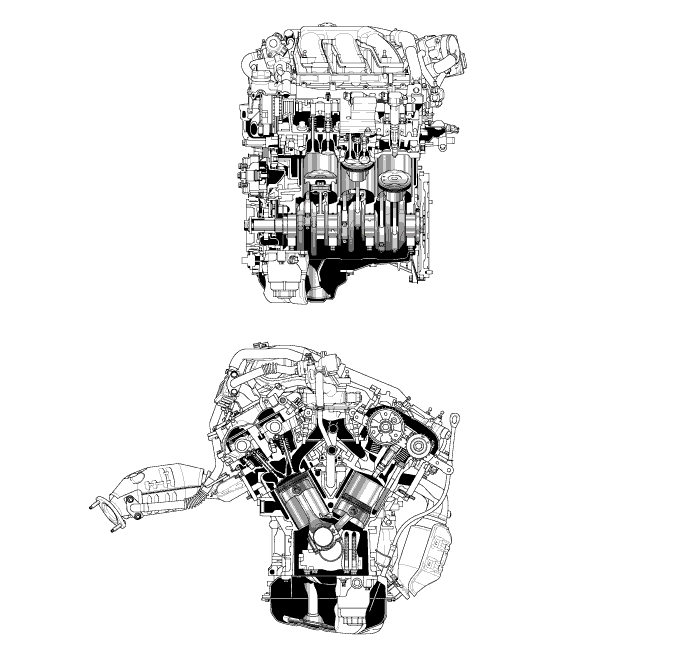
The 2GR-FXE engine is a 3.5 liter, 24-valve DOHC V6 engine. This engine uses a Variable Valve Timing-intelligent (VVT-i) system, Direct Ignition System (DIS), Electronic Throttle Control System-intelligent (ETCS-i), and cooled Exhaust Gas Recirculation (EGR) control system. These control functions achieve improved engine performance, fuel economy, and clean emissions.
-
The 2GR-FXE engine, a high-expansion ratio engine that uses the Atkinson cycle, is adopted in order to enhance thermal efficiency and support improved fuel economy.
-
-
MAJOR DIFFERENCE
-
The ECM software has been changed, realizing compliance with the EURO V emission regulations.
-
-
SPECIFICATION
-
The specifications of the 2GR-FXE engine are shown in the following table.
Engine Type 2GR-FXE No. of Cyls. & Arrangement 6-Cylinder, V Type Valve Mechanism 24-Valve DOHC, Chain Drive (With VVT-i) Combustion Chamber Pentroof Type Flow of Intake and Exhaust Gasses Cross-flow Fuel System SFI Ignition System DIS Displacement 3456 cm3(210.9 cu. in.)
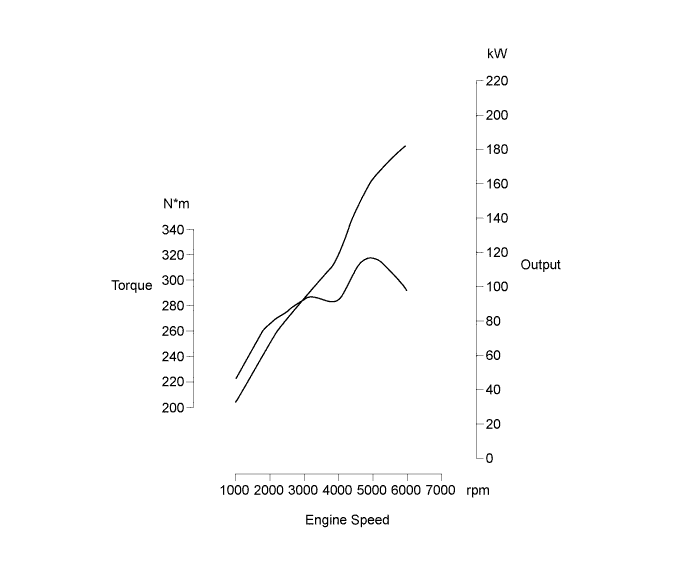
Bore X Stroke 94.0 mm X 83.0 mm (3.70 in. X 3.27 in.) Compression Ratio 12.5 : 1 Max. Output (EEC) 183 kW@6000 rpm Max. Torque (EEC) 317 N*m@4800 rpm Oil Capacity Dry 6.8 liters (7.2 US qts, 6.0 Imp. qts) With Oil Filter 6.1 liters (6.4 US qts, 5.3 Imp. qts) Without Oil Filter 5.7 liters (6.0 US qts, 5.0 Imp. qts) Oil Grade API grade SL "Energy-Conserving", SM "Energy- Conserving" or ILSAC Engine Coolant Type TOYOTA Genuine Super Long Life Coolant or the following*1 Capacity 11.7 liters (12.3 US qts, 10.3 Imp. qts) Spark Plug Type DENSO Made FK20HR11 (Iridium) Plug Gap 1.0 mm -1.1 mm (0.0394 in. - 0.0433 in.) Firing Order 1 - 2 - 3 - 4 - 5 - 6 Research Octane Number 95 or higher Emission Regulation EURO V Engine Service Mass*2 (Reference) 165 kg (364 lb)
-
*1: Similar high quality ethylene glycol based non-silicate, non-amine, non-nitrite, and non-borate coolant with long-life hybrid organic acid technology (Coolant with long-life hybrid organic acid technology is a combination of low phosphates and organic acids).
-
*2: The figure shown is the weight of the part without coolant and oil.
-
-
The performance curves of the 2GR-FXE engine are shown in the following graph.
-
-
MAIN FEATURES
-
The 2GR-FXE engine has achieved the following performance through the use of the items listed in the table below.
-
High performance and reliability
-
Low noise and vibration
-
Lightweight and compact design
-
Good serviceability
-
Clean emission and fuel economy
Item (1) (2) (3) (4) (5) The high-expansion ratio Atkinson cycle is adopted. ○ Engine Proper A steel laminate type cylinder head gasket is used. ○ A taper squish shape is used for combustion chamber. ○ ○ A cylinder block sub-assembly made of aluminum alloy is used. ○ The skirt portion of each piston has a resin coating applied to reduce friction. ○ ○ ○ A No. 1 oil pan made of aluminum alloy is used. ○ ○ Valve Mechanism The Variable Valve Timing-intelligent (VVT-i) system is used. ○ ○ Hydraulic valve lash adjuster assemblies are used. ○ ○ ○ A timing chain sub-assembly, chain tensioner assembly (primary), and No. 2 chain tensioner assembly (secondary) are used. ○ ○ ○ Roller No. 1 valve rocker arm sub-assemblies are used. ○ ○ Lubrication System An oil filter with a replaceable element is used. ○ Cooling System Toyota Genuine Super Long Life Coolant (SLLC) is used. ○ Intake and Exhaust Systems A cable-less type throttle body is used. ○ ○ An intake air surge tank made of plastic is used. ○ Stainless steel exhaust manifold sub-assemblies (RH and LH) are used. ○ ○ An ultra thin-wall, high-cell density ceramic type Three-Way Catalytic converter (TWC) is used. ○ The exhaust heat recirculation system is used. ○ Fuel System A fuel returnless system is used. ○ ○ ○ A fuel delivery pipe sub-assembly made of plastic is used. ○ Compact 12-hole type fuel injector assembly is used. ○ ○ Quick connectors are used to connect the fuel hose with the fuel pipe. ○ Ignition System The Direct Ignition System (DIS) is used. ○ ○ ○ Long-reach type iridium-tipped spark plugs are used. ○ ○ ○ V-ribbed Belt Drive System An automatic V-ribbed belt tensioner is used. ○ ○ Emission Control System Cooled Exhaust Gas Recirculation (EGR) control is used. ○ An evaporative emission control system is used. ○ Engine Control System Magnetic Resistance Element (MRE) type VVT sensors are used. ○ The Electronic Throttle Control System-intelligent (ETCS-i) is used. ○ ○
-
-
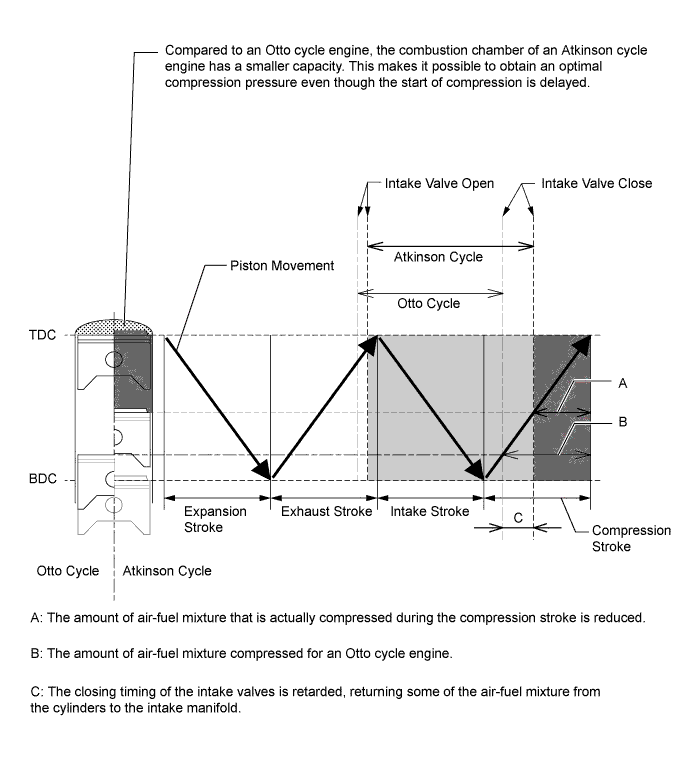
The 2GR-FXE engine, a high-expansion ratio engine that uses the Atkinson cycle, is adopted in order to enhance thermal efficiency and support improved fuel economy.
-
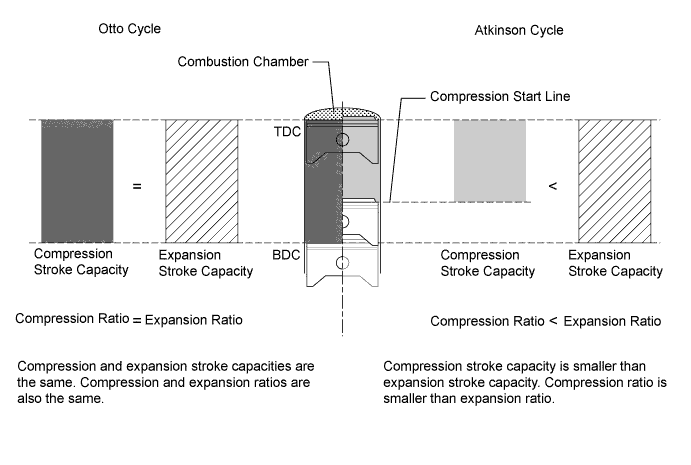
For this engine, the closing timing of the intake valves is retarded, resultantly retarding the actual start of compression. This shortens the compression stroke. The coexistence of a smaller compression ratio and a larger expansion ratio is ensured, enhancing thermal efficiency.
-
The difference between this engine (using the Atkinson cycle) and an Otto cycle engine of the same displacement is as shown below.
-
The following illustration shows the stroke difference compared to an Otto cycle engine.
-
The following illustration shows the compression ratio difference compared to an Otto cycle engine.
-
The following illustration shows the loss difference compared to an Otto cycle engine.
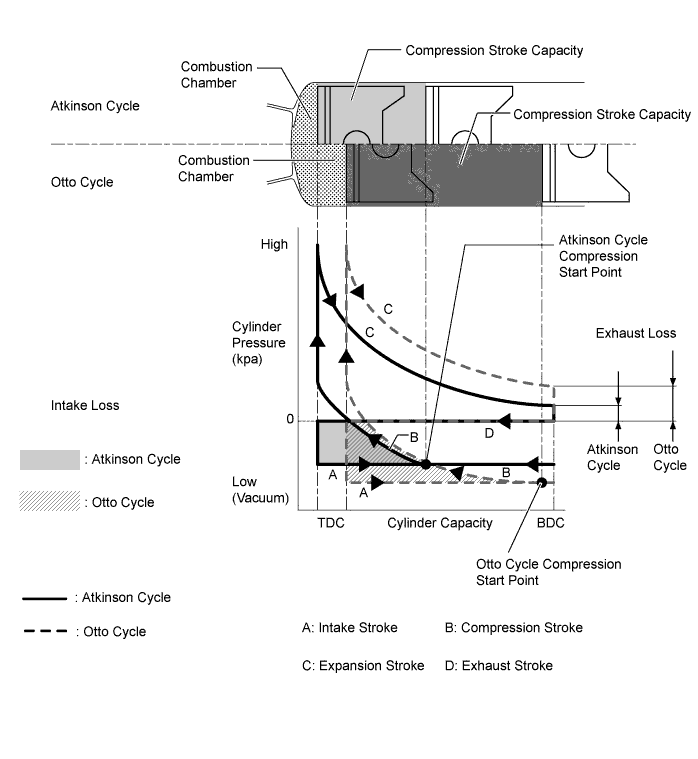
Tech Tips
-
Cause of reduced intake losses: The closing timing of the intake valves is retarded, returning some of the air-fuel mixture from the cylinders to the intake manifold. Thus, the vacuum in the intake manifold is reduced.
-
Cause of reduced exhaust losses: The combustion chamber capacity is small, allowing the expansion ratio to be high. This enables the exhaust stroke to start after the expansion pressure has dropped.
-
-
-
-