FEATURES PERFORMANCE
-
OUTLINE
-
TOYOTA Hybrid System-II Plug-in (THS-II Plug-in)
-
The THS-II Plug-in system employs a HV battery that has a larger capacity than that of conventional hybrid vehicles, and the extra battery capacity is used to store the power charged from an external power source. Utilizing the plug-in charging power significantly enhances the EV mode drive performance, which allows the vehicle to run principally with the motive force of the electric motor only, minimizing the consumption of gasoline (a fossil fuel) as well as reducing CO2emitted by fuel combustion.
-
For long distance, high speed driving or high power driving, the vehicle may be driven in the same manner as conventional hybrid vehicles, using the engine and electric motor, and the traveling range is less restrictive than electric only vehicles because the existing infrastructure, including gas stations, can be used.
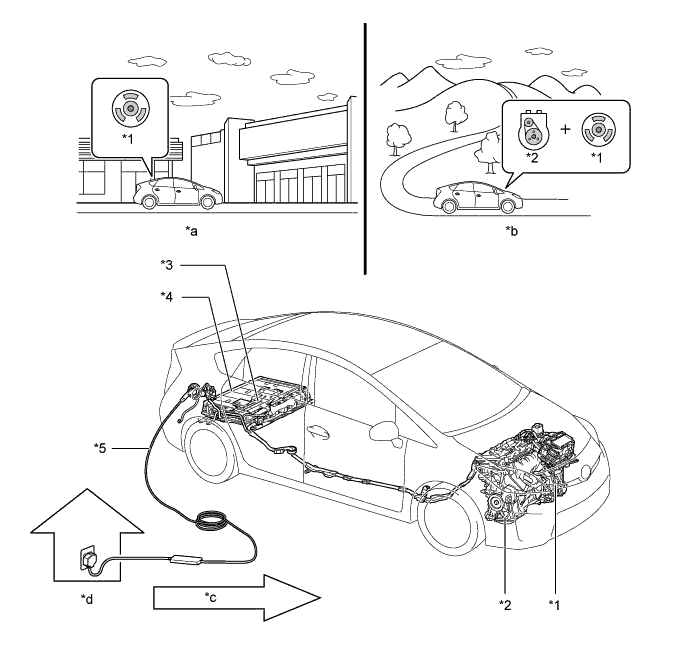
Text in Illustration *1 Electric Motor *2 Engine *3 Electric Vehicle Charger Assembly *4 HV Battery *5 Charging Cable (Electric Vehicle Charger Cable Assembly) - - *a For short distance driving, principally drives with the electric motor. *b For long distance or high speed driving, the engine is used appropriately in conjunction with the electric motor. *c AC 220 V to 240 V *d Household Electric Energy System Performance Item Specification Maximum System Output* kW 100 Maximum Speed km/h (mph) Approximately 180 (112) Tech Tips
*: Maximum system output is engine output and electric motor output controlled by THS-II Plug-in.
-
-
2ZR-FXE Engine
-
The 2ZR-FXE is an in-line 4-cylinder, 1.8-liter, 16-valve DOHC engine.
-
This engine uses a high-expansion ratio Atkinson cycle, Variable Valve Timing-intelligent (VVT-i) system, Electric Throttle Control System-intelligent (ETCS-i) and Exhaust Gas Recirculation (EGR) system employing a highly efficient EGR cooler. In addition, use of an electric water pump has eliminated the V-ribbed belt. Thus, improved engine performance, quietness, fuel economy, and cleaner emissions have been achieved.
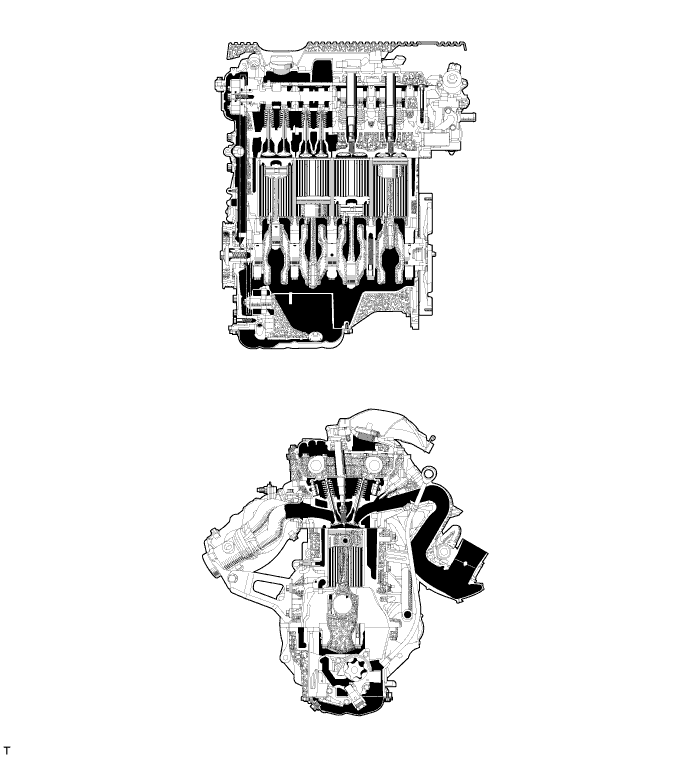
Item Specification No. of Cyls. & Arrangement 4-cylinder, In-line Valve Mechanism 16-valve, DOHC Chain Drive with VVT-i Fuel System SFI Displacement cm3(cu. in.)
1798 (109.7) Max. Output (EEC) kW@rpm 73@5200 Max. Torque (EEC) N*m@rpm 142@4000
-
-
P410 Hybrid Vehicle Transaxle
-
The P410 hybrid vehicle transaxle contains Motor Generator No. 1 (MG1) and Motor Generator No. 2 (MG2).
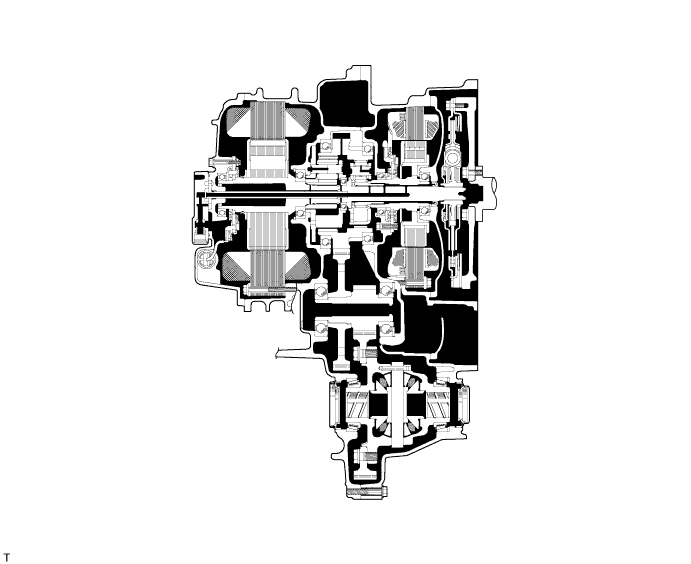
Item Specification Motor Generator No. 1 (MG1) Motor Generator No. 2 (MG2) Type Permanent Magnet Motor Permanent Magnet Motor Function Generate Electricity, Engine Starter Generate Electricity, Drive Wheels Maximum Output kW - 60 Maximum Torque N*m - 207
-
-
Suspension
-
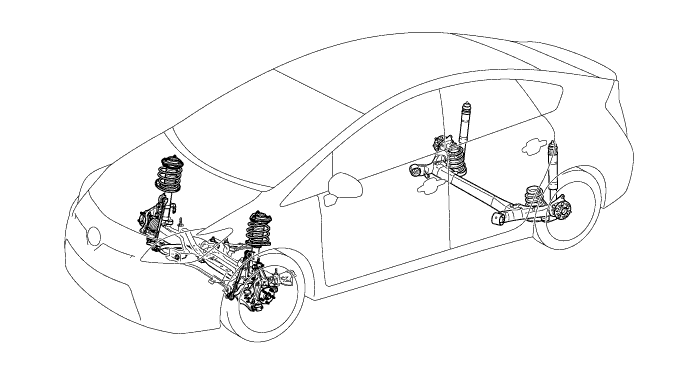
A MacPherson strut type independent suspension is used for the front.
-
A torsion-beam type suspension is used for the rear.
-
-
Steering
-
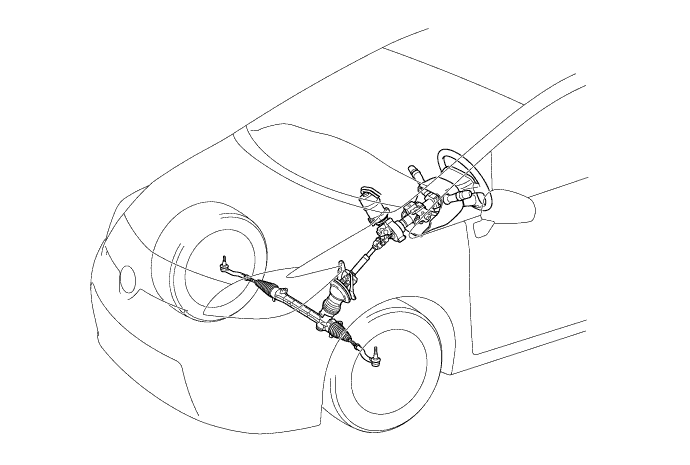
An Electric Power Steering (EPS) system is used.
-
-
Brake
Item Specification Front Brake Type Ventilated Disc Rotor Size (D x T)* mm (in.) 255 x 25 (10.04 x 0.98) Rear Brake Type Solid Disc Rotor Size (D x T)* mm (in.) 259 x 9 (10.20 x 0.35) Brake Control System ABS with EBD, Brake Assist, TRC, VSC+ and Hill-start Assist Control *: Diameter x Thickness
-