DIFFERENTIAL SYSTEM DETAILS
-
FUNCTION OF MAIN COMPONENTS
Models with Rear Differential Lock System Component Function Differential Lock Shift Actuator Rear Differential Lock Shift Motor Switches the rear differential between free and lock in accordance with signals from the rear differential lock ECU. Rear Differential Lock Limit Switch Detects the position of the rear differential lock shift motor and transmits a signal to the rear differential lock ECU. Rear Differential Lock Position Switch Detects the lock position of the rear differential and transmits a signal to the rear differential lock ECU and so on. Rear Differential Lock Control Switch Switches the rear differential between free and lock and transmits a signal to the rear differential lock ECU. Transfer Indicator Switch (L4 Position)*1 Detects that the transfer gear position is low and transmits a signal to the rear differential lock ECU. Rear Differential Lock ECU Controls the rear differential lock shift motor in response to a signal from each switch. Skid Control ECU*2 Detects the drive mode signal. Combination Meter Assembly Rear Differential Lock Indicator Light
-
Blinks while the rear differential is being switched between free and lock, and turns on when in lock.
-
Blinks when the switching conditions are not met while the rear differential is being switched between free and lock.
ABS Warning Light*2 Illuminates to alert the driver when ABS is not operating while the rear differential lock system is switching to lock.
-
*1: 4WD models
-
*2: Models with brake control system
-
-
OPERATING CONDITION
-
Rear Differential Lock System
-
On the 2WD models, the rear differential can only be switched to lock when driving at 8 km/h (5 mph) or less. However, the rear differential should not be switched from free to lock while the vehicle is turning or while the wheels are spinning.
-
On the 4WD models, the rear differential can only be switched to lock when the drive mode is set to LL, and when driving at 8 km/h (5 mph) or less. However, the rear differential should not be switched from free to lock while the vehicle is turning or while the wheels are spinning.
-
The ABS function in the brake control system stops while the rear differential lock system is operating.
-
-
-
CONSTRUCTION
-
Front Differential (4WD Models)
-
A double-row tapered roller bearing is used for the front differential drive pinion bearing to reduce friction loss, thus improving fuel consumption.
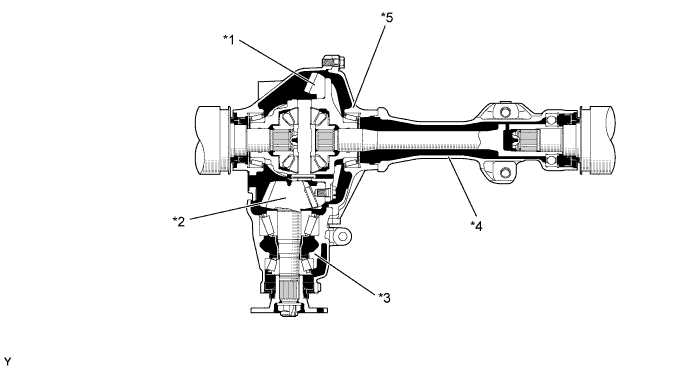
Text in Illustration *1 Ring Gear *2 Front Differential Drive Pinion *3 Front Differential Carrier Sub-assembly *4 Front Differential Tube *5 Differential Retainer - -
-
-
Rear Differential
-
A double-row tapered roller bearing is used for the rear differential drive pinion bearing to reduce friction loss, thus improving fuel consumption.
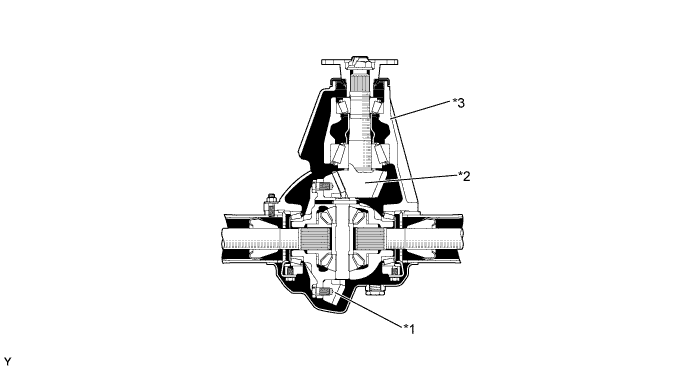
Text in Illustration (Models without Rear Differential Lock System:) *1 Ring Gear *2 Rear Differential Drive Pinion *3 Rear Differential Carrier Sub-assembly - - 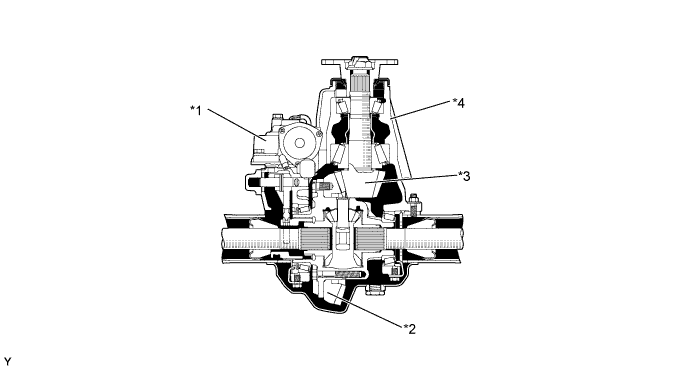
Text in Illustration (Models with Rear Differential Lock System:) *1 Differential Lock Shift Actuator *2 Ring Gear *3 Rear Differential Drive Pinion *4 Rear Differential Carrier Sub-assembly
-
-
Differential Lock Shift Actuator and Rear Differential Lock Position Switch (Models with Rear Differential Lock System)
-
By rotating the rear differential lock shift motor clockwise or counterclockwise in accordance with a signal from the rear differential lock ECU, the rear differential lock shift fork shaft is transferred to switch the rear differential between free and lock.
-
The rear differential lock limit switch, provided in the differential lock shift actuator, detects the position of the rear differential lock shift motor.
-
The rear differential lock position switch, provided on the rear differential carrier sub-assembly, detects that the rear differential lock shift fork is in the lock position.
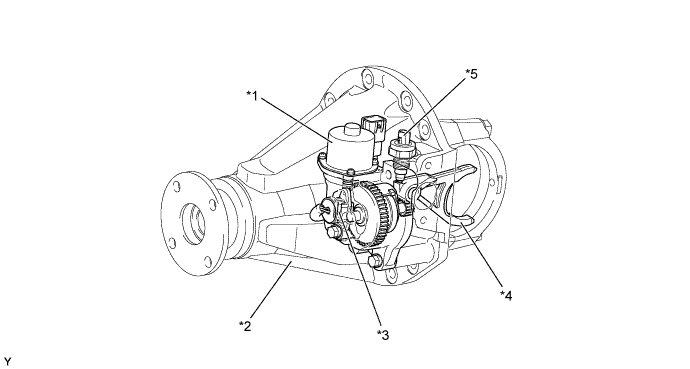
Text in Illustration *1 Rear Differential Lock Shift Motor *2 Rear Differential Carrier Sub-assembly *3 Rear Differential Lock Limit Switch *4 Rear Differential Lock Shift Fork *5 Rear Differential Lock Position Switch - - 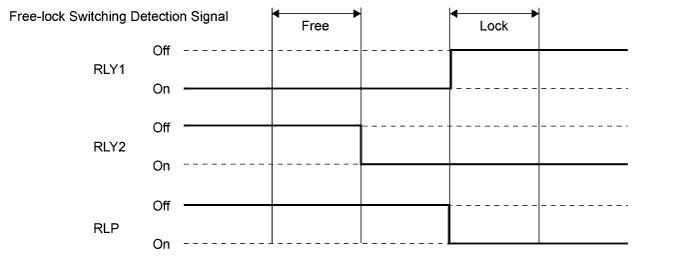
-
-
-
OPERATION
-
Free-lock Switching of Rear Differential
-
When the rear differential lock control switch is turned on, the rear differential lock ECU outputs drive voltage to the rear differential lock shift motor (M1), and moves the rear differential lock shift fork to the lock side. At this time, the rear differential lock ECU uses the rear differential lock limit switch (RLY1, RLY2) to detect the position of the rear differential lock shift motor, and uses the rear differential lock position switch (RLP) to detect the lock position of the rear differential lock shift fork. When the lock position is reached, the rear differential lock ECU stops the output of drive voltage. Also, it causes the rear differential lock indicator light to flash while switching the rear differential between free and lock, and turns on the light after the operation has been completed.
-
When the differential lock switch is turned off, the rear differential lock ECU outputs drive voltage to the rear differential lock shift motor (M2), and moves the rear differential lock shift fork to the free side. When the free position is reached, drive voltage output is stopped and the rear differential lock indicator light is extinguished.
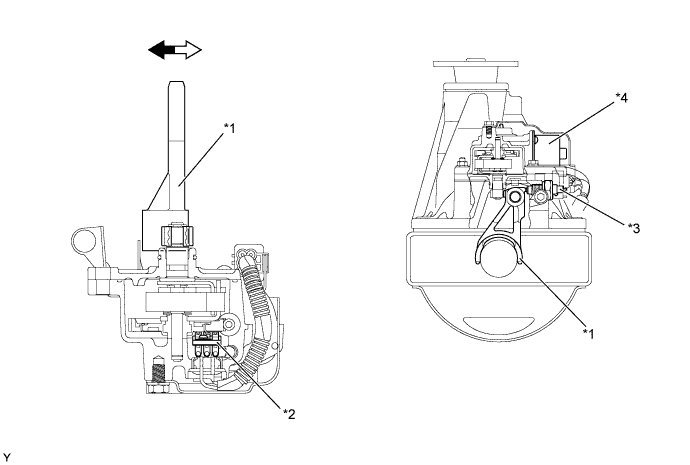
Text in Illustration *1 Rear Differential Lock Shift Fork *2 Rear Differential Lock Limit Switch *3 Rear Differential Lock Position Switch *4 Rear Differential Lock Shift Motor 
Free Side 
Lock Side
-
-