LUBRICATION SYSTEM
-
CONSTRUCTION
-
Oil Pump
-
A compact cycloid rotor type oil pump directly driven by the crankshaft is used.
-
This oil pump uses an internal relief method which circulates relief oil to the suction passage in the oil pump. This aims to minimize oil level change in the oil pan, reduce friction, and reduce the air mixing rate in the oil.
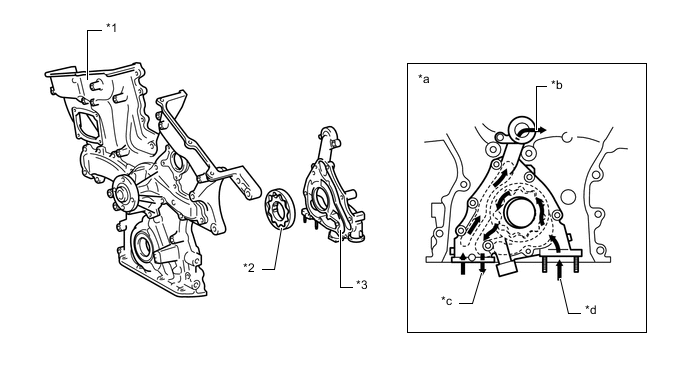
Text in Illustration *1 Timing Chain Cover *2 Oil Pump Rotor *3 Oil Pump Cover - - *a Oil Passage in Oil Pump *b To Cylinder Block *c To Oil Filter *d From Oil Strainer
-
-
Oil Nozzle Sub-assembly
-
Oil nozzles are provided in the center of the right and left banks of the cylinder block for cooling and lubricating the pistons.
-
These oil nozzles contain a check valve to prevent oil from being fed when the oil pressure is low. This prevents the overall oil pressure in the engine from dropping.
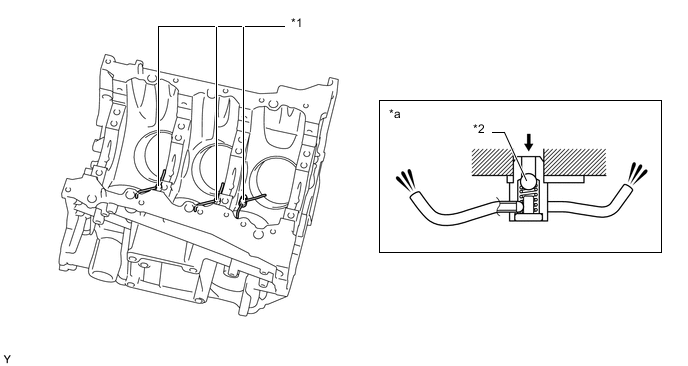
Text in Illustration *1 Oil Nozzle Sub-assembly *2 Check Valve *a Oil Nozzle Sub-assembly Cross Section - - 
Oil - -
-
-
Oil Filter
-
An oil filter with a replaceable oil filter element is used. The oil filter element uses a high-performance filter paper to improve filtration performance. The paper is also combustible for environmental protection.
-
An aluminum alloy filter cap sub-assembly is used to extend its life.
-
An oil drain construction, in which oil is drained by aligning the cutouts on the case and the cap, is used. This prevents oil from splashing while the oil filter element is being replaced, thus allowing the operation to be performed without touching the hot engine oil.
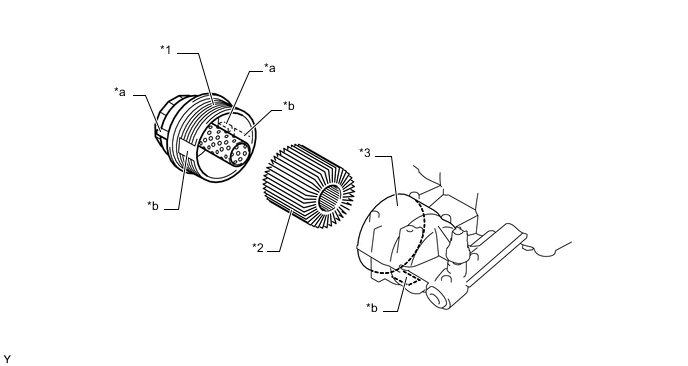
Text in Illustration *1 Oil Filter Cap *2 Oil Filter Element *3 Oil Filter Case - - *a Rib *b Cutout Tech Tips
To drain oil, rotate the cap approximately four turns, and align the cutouts on the cap and the case by using the rib as a reference.
-
-