HEATED AND VENTILATED SEAT SYSTEM
-
Seat Heater Control (Models with Seat Heater System)
-
When the user turns the seat heater & ventilation volume switch on, the seat climate control ECU detects thetemperature that is set at the seat heater & ventilation volume switch.
-
At the same time, the seat climate control ECU detects the temperature of the seat cover by way of the thermistor*1that is provided in the seat cushion.
-
Then, the seat climate control ECU applies a quantity of electricity in accordance with the circumstances in orderto adjust the seat cover temperature to the set temperature.
-
When the seat cover temperature reaches approximately 50°C (122°F) [Hi]/40°C (104°F) [Mid]/30°C(86°F) [Lo], the thermostat*2 in the seat cushion heater cuts off the current to the seat heaters (andrestores the current when the seat cover temperature reaches 49°C (120°F) [Hi]/39°C (102°F) [Mid]/29°C(84°F) [Lo]).
-
*1: An element that uses a semiconductor (the resistance starts out high at low temperatures and the resistance dropsas the temperature rises) in which the electrical resistance changes considerably with slight changes in temperature.
-
*2: A temperature adjustment device that automatically controls the heat source through the use of a mechanism suchas a bimetal switch.
-
-
-
Seat Ventilation Control
-
By turning the seat heater & ventilation volume switch counterclockwise from off (off is located in the centerposition of the dial), the ventilation volume can be adjusted to 4 levels. The indicator light illuminates green toindicate that the ventilation function is operating.
-
When the user operates the seat heater & ventilation volume switch located forward of the console box, the blowermotor in the seat cushion climate control blower operates to direct the air that is drawn in from behind the seatclimate control blower to both the seat back and seat cushion pads.
-
After the air is directed to both the seat back and seat cushion pads, it travels throughout the pads along the groovesthat are provided in the pads. Then, it spreads to the entire seat along the slab urethane layer, and becomesdischarged through the perforations in the genuine leather seat cover.
Figure 1. Ventilation Function
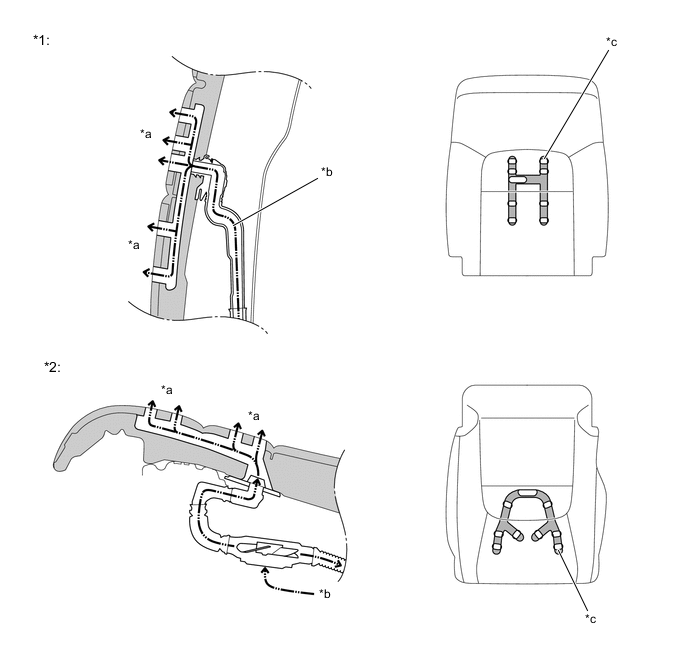
*1 Seat Back *2 Seat Cushion *a Airflow *b Interior Air *c Hole of Surface Pad - -
-